

Guest Bloggers

World Oceans Day 2026

World Oceans Day is observed every year on June 8 to raise awareness about the importance of the ocean and the need to protect it. First proposed at the 1992 Earth Summit in Rio de Janeiro by Canada’s International Centre for Ocean Development and the Ocean Institute of Canada, the day was officially recognized by the United Nations in 2008. It encourages people everywhere to support ocean health, sustainable resource use, and global efforts tied to the Sustainable Development Goals.

The 2026 theme is “Reimagine”, inviting us to rethink our relationship with the ocean. For too long, many of us have treated the ocean as something distant and separate from daily life, when in fact it shapes the air we breathe, the food we eat, and the climate that sustains us. The ocean covers more than 70% of Earth’s surface, produces at least half of the world’s oxygen, absorbs a significant share of carbon dioxide, feeds billions of people, and supports livelihoods around the globe. Reimagining our connection to the ocean means moving from appreciation to responsibility.

My mother was from Ireland and lived in three countries during her life. She was always drawn to holidays where she could stand at the water’s edge and put her feet in the ocean. She said it made her feel connected to her family in Ireland and Great Britain. That memory reminds me that the ocean is not only a natural resource; for many people, it is also a source of belonging, memory, and identity.

What kind of connection do you have to the ocean, and is it strong enough to inspire action in return for all that it gives us? Even if it is too late to plan a major event this year, it is never too late to learn more and make meaningful choices. You might support organizations that remove plastic from the water, protect marine life from abandoned fishing gear, or restore fragile habitats. You could host a sustainable seafood dinner, attend an educational event at a nature centre, reduce single-use plastics, or simply start conversations about why ocean protection matters. Every action, however small, helps bring us closer to a healthier future for our blue planet.

-Maureen Condon, csj Associate

Images: Andrzej Kryszpiniuk/ Shifaaz shamoon | Unsplash

Looking at Environmental Justice on World Environment Day

Environmental Justice in Canada’s Chemical Valley

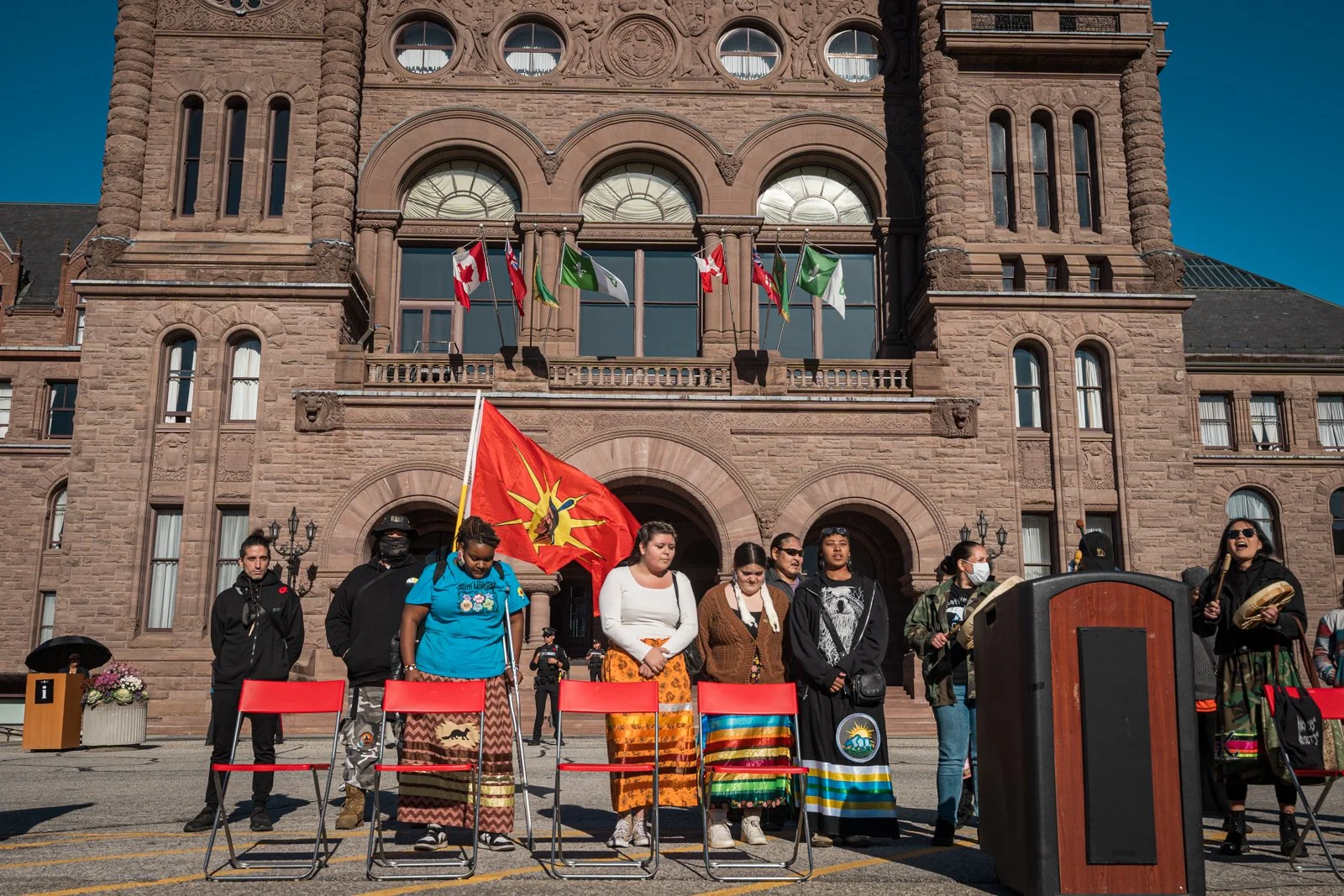
photo: Joshua Best

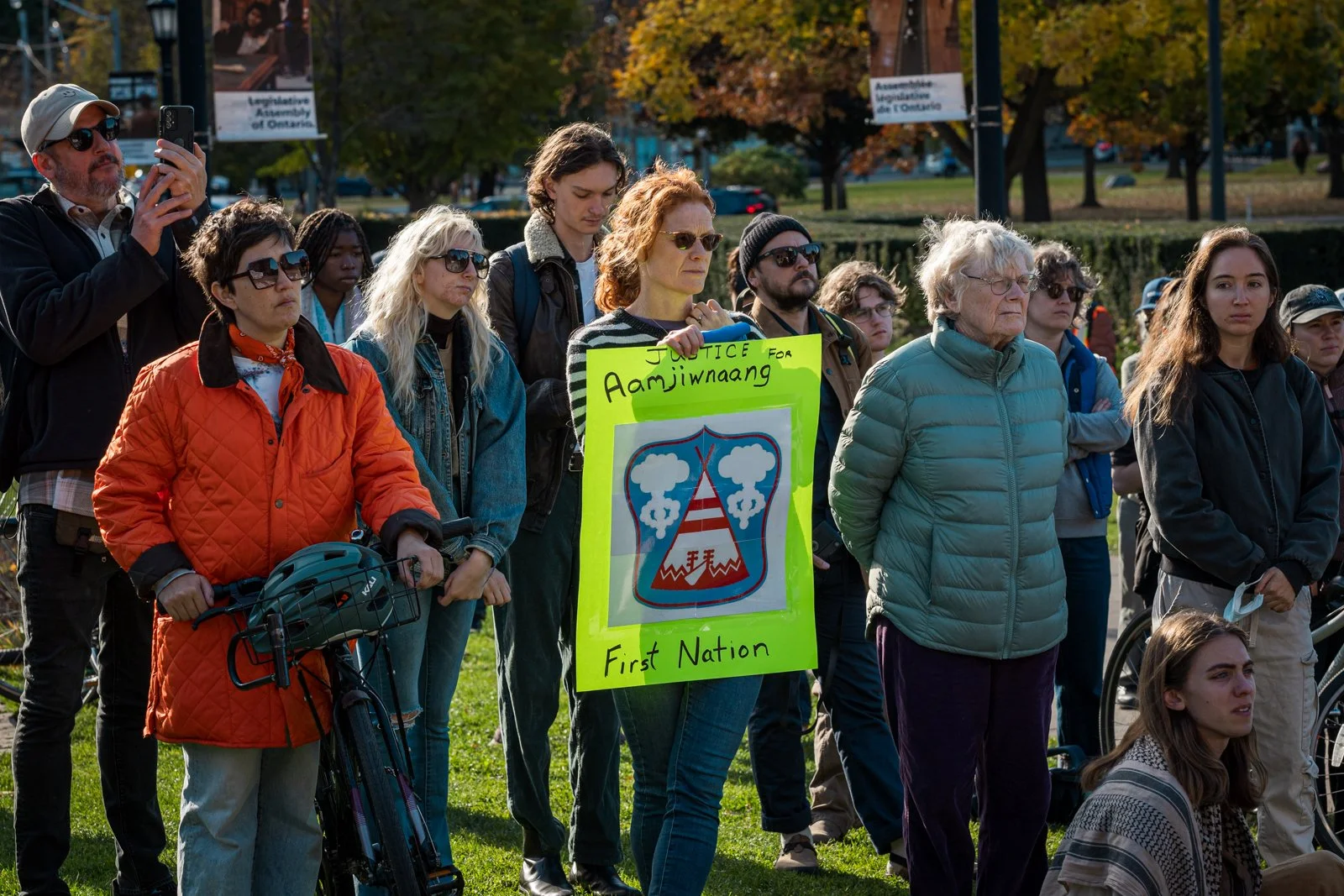
For decades, families in the community of Aamjiwnaang First Nation near Sarnia, Ontario, have lived beside one of the most concentrated industrial zones in the country: Chemical Valley.

More than 60 petrochemical and refining facilities operate in the region, representing roughly 40 percent of Canada’s chemical industry. For neighbouring communities, the economic footprint of this industry comes with serious concerns about air pollution, toxic exposures, and the impact on their health and the environment. Chemical Valley releases tens of thousands of tonnes of pollutants each year that are linked to respiratory illness, cancer risk, and other long-term health impacts.

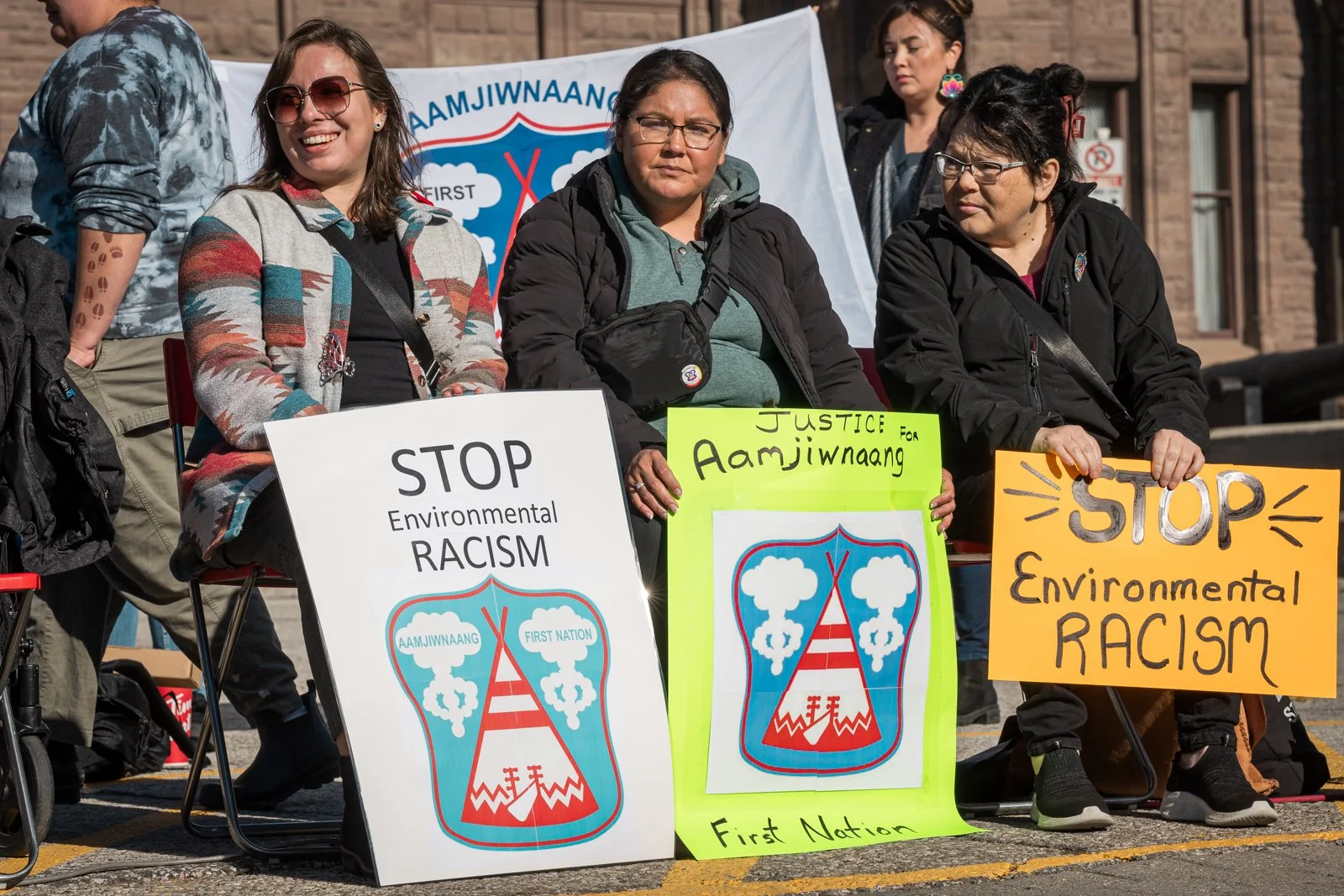
photo: Joshua Best

For years, residents of Aamjiwnaang have raised alarms about the cumulative effects of industrial emissions surrounding their territory. Ecojustice has worked alongside them for over a decade to bring these concerns into the public eye and push for stronger environmental protections.

This work has taken many forms. Ecojustice has supported research on pollution levels in Chemical Valley, helped amplify the voices of community advocates, and pursued legal strategies, including a charter challenge, to hold governments accountable for failing to adequately protect the health and rights of nearby residents.

photo: Joshua Best

Community leadership has been at the heart of this effort. Aamjiwnaang advocates have documented pollution incidents, spoken out about the impacts on their families, and called for stronger safeguards to ensure future generations can grow up in a safe and healthy environment.

Environmental justice means that no community should bear a disproportionate burden of pollution. Yet communities like Aamjiwnaang continue to face environmental risks that many others do not.

At Ecojustice, we are committed to ensuring environmental laws are enforced and that everyone in Canada has the right to a healthy environment.

We are deeply grateful to the Sisters of St. Joseph for their support. Their commitment helps make it possible to partner with communities like Aamjiwnaang First Nation and others across the country, strengthening protections, upholding environmental laws and working towards a healthier, more just future.

-Manan Kohli, former Healthy Communities Communication Strategist, Ecojustice.  

Header Image: Nikolett Emmert/Unsplash

65 Years of Amnesty International: A Movement That Changed the World

On May 25, 1961, President John F. Kennedy shared his bold vision of landing a man on the moon. Eight years later, Neil Armstrong set foot on the lunar surface. This astonishing achievement, immortalized by his words, “This is one small step for man, one giant leap for mankind,” prove what vision and sustained commitment can accomplish.

May 28 is Amnesty International's 65th anniversary. Like the moon mission, our movement has reached goals that once seemed unattainable. The Sisters of St. Joseph— through letters written, petitions signed, and generous financial support- have helped make this possible. (Pictured below, Sisters over the years participating in various Amnesty initiatives).

Here are some results of that unwavering commitment over the decades:

  • 1962 — Amnesty sent a lawyer to observe Nelson Mandela's trial in South Africa. Mandela later wrote that his presence "was a source of tremendous inspiration and encouragement to us."

  • 1970s — Amnesty secured access to Chile under Pinochet to investigate human rights violations and published a list of 2,665 people who had "disappeared" in Argentina, helping families demand accountability. For this work, Amnesty was awarded the Nobel Peace Prize in 1977.

  • 1977 — When Amnesty began campaigning against the death penalty, only 16 countries had abolished it. Today, more than half the world — 113 countries — has done so.

  • 1990s — Amnesty drew global attention to the plight of 300,000 child soldiers, helping launch the Coalition to Stop the Use of Child Soldiers.

  • 2002 — Decades of pressure from Amnesty supporters helped bring about the creation of the International Criminal Court to prosecute those responsible for crimes against humanity, genocide, and war crimes.

  • 2014 — The global Arms Trade Treaty came into force after sustained advocacy by Amnesty and others— a landmark step toward stemming the flow of weapons that fuel conflict and human rights abuses worldwide.

  • 2016 — Albert Woodfox was released from a Louisiana prison after a U.S. record-breaking 43 years and 10 months in solitary confinement. "I can't emphasize enough how important getting letters from people around the world is," he said. "It gave me strength."

  • 2018 — Teodora del Carmen Vasquez was freed in El Salvador after serving a decade of a 30-year sentence for suffering a stillbirth. Amnesty supporters had campaigned for her since 2015.

  • 2021 — Amnesty's Security Lab exposed the widespread use of Pegasus spyware against journalists, activists, and human rights defenders globally, triggering government inquiries and bans in multiple countries.

  • 2025 — Former Philippine President Rodrigo Duterte was arrested and transferred to the International Criminal Court to face charges of crimes against humanity. In their written charges against Duterte, ICC prosecutors cited Amnesty International reports more than 60 times.

©International Criminal Court/Handout/Anadolu via Getty Images

Over the past 65 years, tens of millions of letters have reached people in cells, in exile, and in fear — reminding them they are not forgotten or alone. You are among those who wrote these letters.

No one knows what the next 65 years will bring. But the last 65 have shown that as long as people keep standing up for rights and accountability, the world will keep moving — however haltingly — toward justice for everyone.

-Amnesty International Canada

Exile Then and Now: Remembering the Displaced

I am watching a video series on the Old Testament (usually called the First Testament in recent scholarship) through the Great Courses study series presented by Dr. Amy Jill Levine, Professor of Jewish Studies and New Testament Studies at Vanderbilt University. She relates history, archeology and scriptural scholarship in lectures on the prophet Jeremiah and the deportation to Babylon. I have read briefly about the 2 deportations in scripture of the Israelite people into exile. 

What shocked me is how little most of us, myself included, know about that suffering in history.

As deportations are happening across North America and other parts of the world, I realized we are ignorant of our own story and historic sufferings of displaced people.  About 1400 parents are deported each month in the United States (with 27,000 children being separated from their parents).  That is a horrific scandal that we seem powerless to address. Worse still, recent reporting states that up to 200 million people are displaced through war, famine, flooding or oppression in the past few years. 

I was staggered to realize that our world is aware but mostly indifferent to the plight of millions of suffering people. The gospel calls us to be aware and active in seeking out the marginal, the disposed and the oppressed of our world.  

I pray that these scandalous realities may be addressed and people given hope, help, and refuge.

-Father D.M.Vere

Reference: UNHCR reports 132 million people are forcibly displaced with 36.3 being refugees, 73.5million being internally displaced (in their own country) and 8.4 million asylum seekers fleeing oppression or seeking safer surroundings. There are differing number from various years within the United Nations data sources 2024/2025. (Some 8 million have returned to their home region in the past two years)

Earth Day: Rooted in Relationship: Forests, Faith, and Care for the Land

GUEST BLOG

At Ignatius Jesuit Centre, care for the land is not separate from spiritual life. It is part of it.

Set on over 600 acres in Guelph, Ontario, the land at IJC holds forests, fields, wetlands, and trails that are actively cared for through conservation, farming, and community engagement. For us, ecological stewardship is not only about protecting natural spaces, but about restoring right relationship — with the land, with one another, and with God’s creation as a whole.

As we mark Earth Day, we are reminded that forests are more than landscapes to be preserved. They are living communities. They hold memory, shelter biodiversity, regulate climate, and offer spaces for reflection and renewal. They also require ongoing care.

At IJC, this care takes many forms. Through our conservation work, we are restoring native habitats, managing invasive species, and working to establish long-term protections for the land. Our Old Growth Forest Project, in particular, is a commitment to thinking beyond our own lifetimes; to steward a forest that future generations may inherit, even if we will never see it fully mature.

This long view is deeply connected to our spiritual practice. In a culture that often prioritizes immediacy and extraction, both faith and ecology invite us into something slower and more attentive. Forests teach patience. They remind us that growth happens over decades, that resilience is built through interconnected systems, and that care is often quiet and unseen.

Alongside conservation, Ignatius Farm continues to be a place where people learn through direct relationship with the land — growing food, tending soil, and participating in ecological cycles. Increasingly, this work is being integrated with opportunities for reflection, retreat, and education through our emerging Centre for Integral Ecology. The Centre is being developed as a place of formation, where people can engage the ecological and spiritual dimensions of life together through hands-on learning, shared reflection, and dialogue. In this way, we are responding, in a practical and grounded way, to Laudato Si’’s call to care for our common home — bringing faith, ecological understanding, and lived practice into closer relationship.

This invitation is already being lived out through the participation of volunteers and community members. On any given week, people gather to remove invasive species, helping native plants and trees to regenerate. Others join in planting trees, tending the community orchard, or supporting restoration projects across the property. On the farm, volunteers seed, harvest, and care for the soil, learning directly from the rhythms and limits of the land. These are not abstract acts of care, but physical, relational ones — ways of coming back into contact with the living systems that sustain us.

At its core, this work is an invitation. Not only to protect the natural world, but to reconsider how we live within it.

Prayer Intentions

We invite you to join us in holding these intentions in prayer:

  • For the healing and restoration of forests and ecosystems under pressure around the world

  • For the plants, animals, birds, and unseen life that share this Earth with us, in gratitude for their presence and with hope for their healing where they have been harmed

  • For the patience and long-term vision needed to care for the land across generations

  • For all who work in conservation, farming, and ecological education, that they may be sustained in their efforts

  • For deeper awareness of our interconnectedness with all of creation, and the courage to live differently in response

Courtesy of the Ignatius Jesuit Centre