
Advocacy

World Oceans Day 2026

World Oceans Day is observed every year on June 8 to raise awareness about the importance of the ocean and the need to protect it. First proposed at the 1992 Earth Summit in Rio de Janeiro by Canada’s International Centre for Ocean Development and the Ocean Institute of Canada, the day was officially recognized by the United Nations in 2008. It encourages people everywhere to support ocean health, sustainable resource use, and global efforts tied to the Sustainable Development Goals.

The 2026 theme is “Reimagine”, inviting us to rethink our relationship with the ocean. For too long, many of us have treated the ocean as something distant and separate from daily life, when in fact it shapes the air we breathe, the food we eat, and the climate that sustains us. The ocean covers more than 70% of Earth’s surface, produces at least half of the world’s oxygen, absorbs a significant share of carbon dioxide, feeds billions of people, and supports livelihoods around the globe. Reimagining our connection to the ocean means moving from appreciation to responsibility.

My mother was from Ireland and lived in three countries during her life. She was always drawn to holidays where she could stand at the water’s edge and put her feet in the ocean. She said it made her feel connected to her family in Ireland and Great Britain. That memory reminds me that the ocean is not only a natural resource; for many people, it is also a source of belonging, memory, and identity.

What kind of connection do you have to the ocean, and is it strong enough to inspire action in return for all that it gives us? Even if it is too late to plan a major event this year, it is never too late to learn more and make meaningful choices. You might support organizations that remove plastic from the water, protect marine life from abandoned fishing gear, or restore fragile habitats. You could host a sustainable seafood dinner, attend an educational event at a nature centre, reduce single-use plastics, or simply start conversations about why ocean protection matters. Every action, however small, helps bring us closer to a healthier future for our blue planet.

-Maureen Condon, csj Associate

Images: Andrzej Kryszpiniuk/ Shifaaz shamoon | Unsplash

Partners in Hope: Supporting Housing, Dignity, and Community in London

On the Closure of House of Hope

The Sisters of St. Joseph in Canada partner with London Cares Homeless Outreach and Regional HIV/AIDS Connection. Across London, organizations have worked deliberately to build a community where everyone can access the housing and support they need to live with stability and dignity.

House of Hope is a vital part of that housing continuum. For many residents, it bridged the gap between encampments or shelters and more stable supportive or affordable housing. Closing this deeply supportive housing creates a serious void and leaves both residents and staff facing renewed uncertainty and distress.

Too much of the time and energy of London Cares leadership—and of many across the social service sector—is consumed by securing, protecting, and renegotiating funding. That outlay of energy is needed in supporting frontline staff, and helping residents move toward stability. This work strengthens not only the lives of House of Hope residents, but the well-being of the wider London community.

Displacing residents and staff is an avoidable setback to the Whole of Community Response to Homelessness. We trust that the province and the city along with those most affected can resolve this together. At a time when communities are already under strain, preserving effective supportive housing is both necessary and do-able.

-Sister Margo Ritchie, csj

image: Adam Papp/Unsplash

Read about it here.

How about a little ethics with our politics?

Many governments have an ethics commissioner. Generally, this person’s job is to ensure that public officials avoid conflicts of interest (that they don’t use their position for personal or financial gain).

What an ethics commissioner does not do is give an ethical evaluation of the impacts of budgets, policies, and government choices. That’s up to the public. It’s up to us. But to do so, we need to pay attention to what governments are doing. We need to ask: What patterns and priorities are emerging in their policy choices?

Consider how some of the lowest-income people in Ontario are being impacted by government policies:

  • First, at a time when many companies aren’t hiring due to trade disruptions, and costs are soaring, Ontario Works’ basic rate (social assistance) is stuck at $733 monthly. That amount hasn’t changed since 2018. In those intervening years, inflation has eroded the purchasing power of $733 by more than 20 %. What does one have to do to survive on so little money? And how could one possibly get job-ready when one is just trying to survive?

  • Second, in June, provincial funding for Ontario’s last eight publicly funded supervised consumption sites will end. Will these closures lead to more overdose deaths and increased health-care costs?

  • Third, given the provincial government’s closure of these supervised consumption sites, and the earlier push to get people out of encampments, one would imagine that the government would be “all in” when it comes to supporting programs such as London’s House of Hope.  

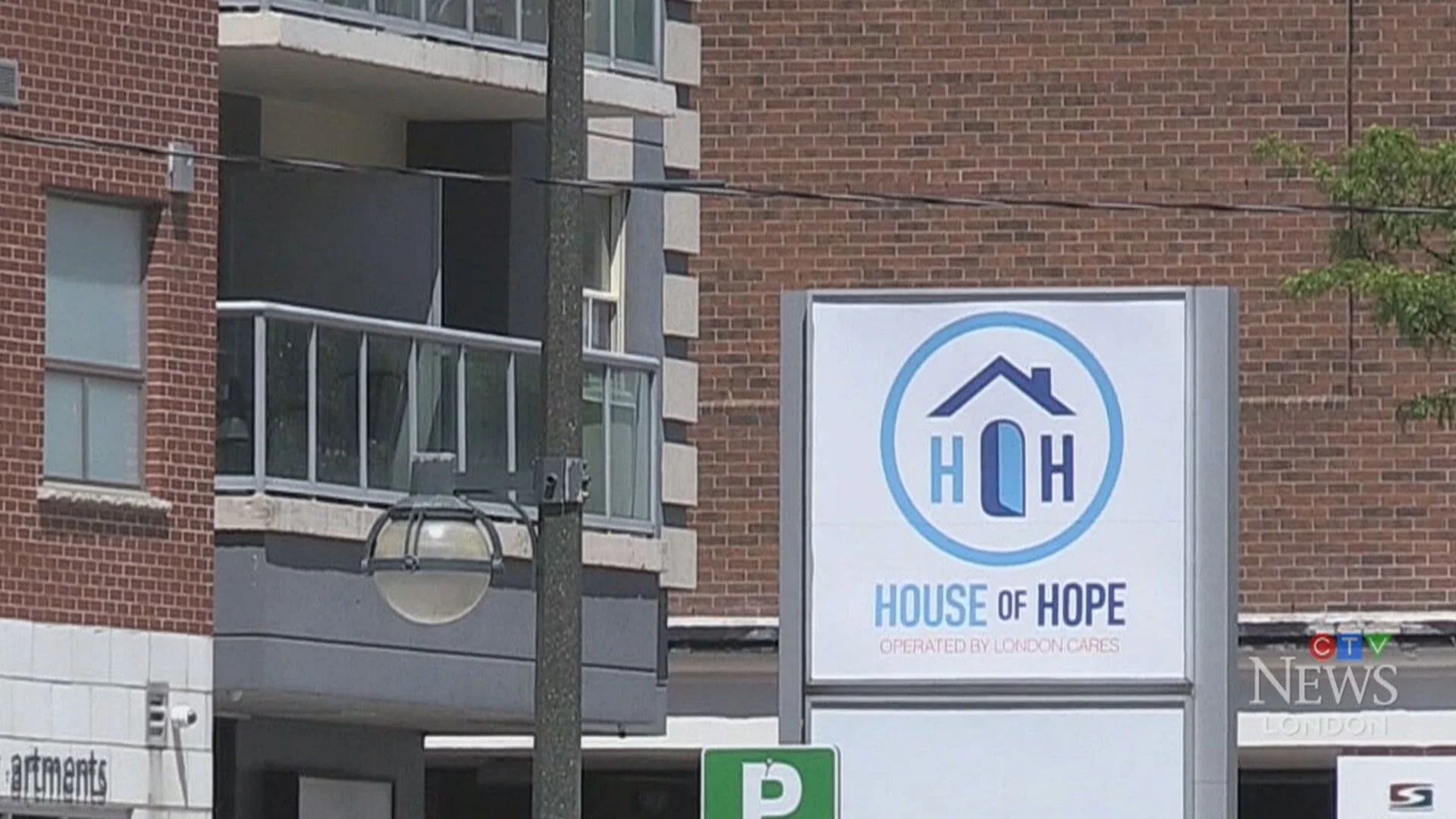
London, Ontario’s House of Hope set to close after province denies funding.

House of Hope has 48 units and has been supporting people with physical and mental health issues, including addiction. In less than three years of operation it has proven to be effective in providing the wrap-around services that help people stay off the street. It has also reduced pressure on shelters, hospitals, and emergency services. And yet, so far, House of Hope has been unsuccessful in securing $1.37 million in ongoing provincial funding. Without this funding, House of Hope will be forced to close when its funding runs out in November. And how many similar stories are occurring in communities across Ontario? In your community?

The political conversation has been predictable. The city council blames the province for cutting funding. The provincial government lists all the money it spends on such services province-wide, and insists the city needs to better allocate its money. Who does one believe? And is there any point to the “blaming game” other than skirting responsibility?

Might the people of Ontario make a difference by taking an ethical stance?  

It’s just not right for people who live on the lowest incomes to continually be the target of insufficient funding and loss of services, be it OW, safe consumption sites, or wrap-around services. When we have programs that work, we need to fund them.

-Sister Sue Wilson, CSJ | Executive Director, Office for Systemic Justice

Image: Lady Justice statue, Philippe Oursel@ourselp/Unsplash

65 Years of Amnesty International: A Movement That Changed the World

On May 25, 1961, President John F. Kennedy shared his bold vision of landing a man on the moon. Eight years later, Neil Armstrong set foot on the lunar surface. This astonishing achievement, immortalized by his words, “This is one small step for man, one giant leap for mankind,” prove what vision and sustained commitment can accomplish.

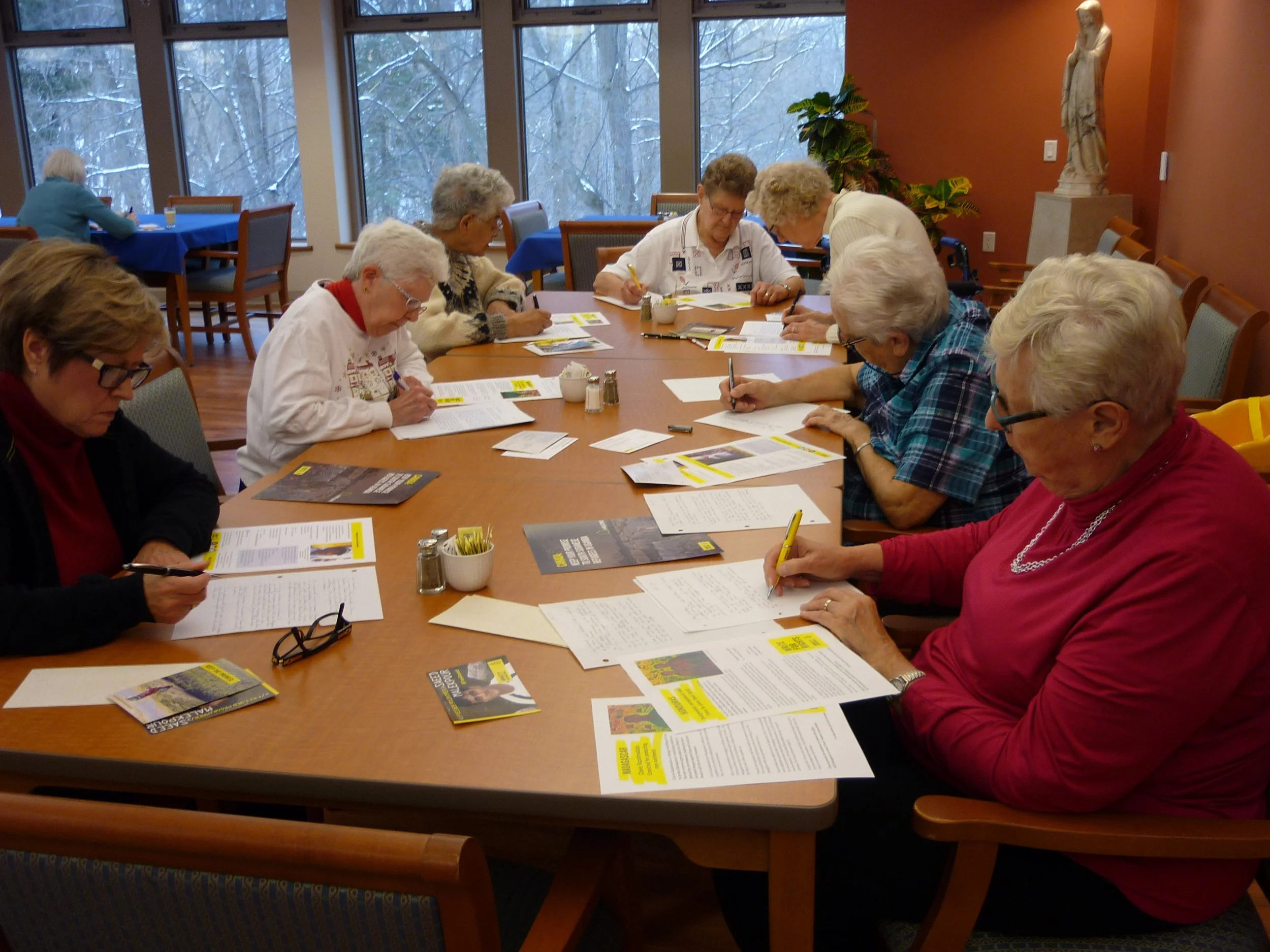
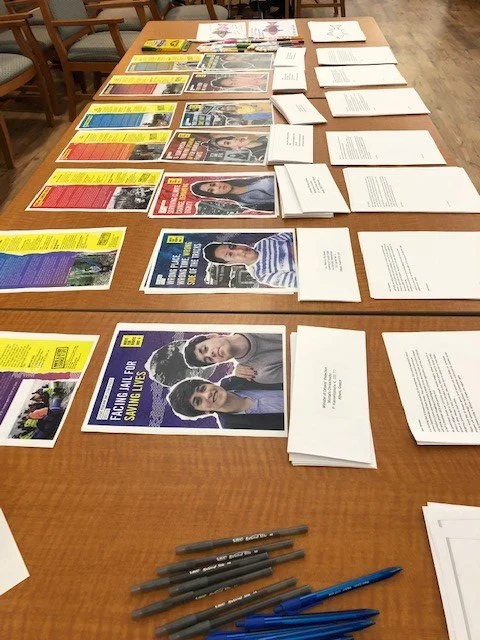
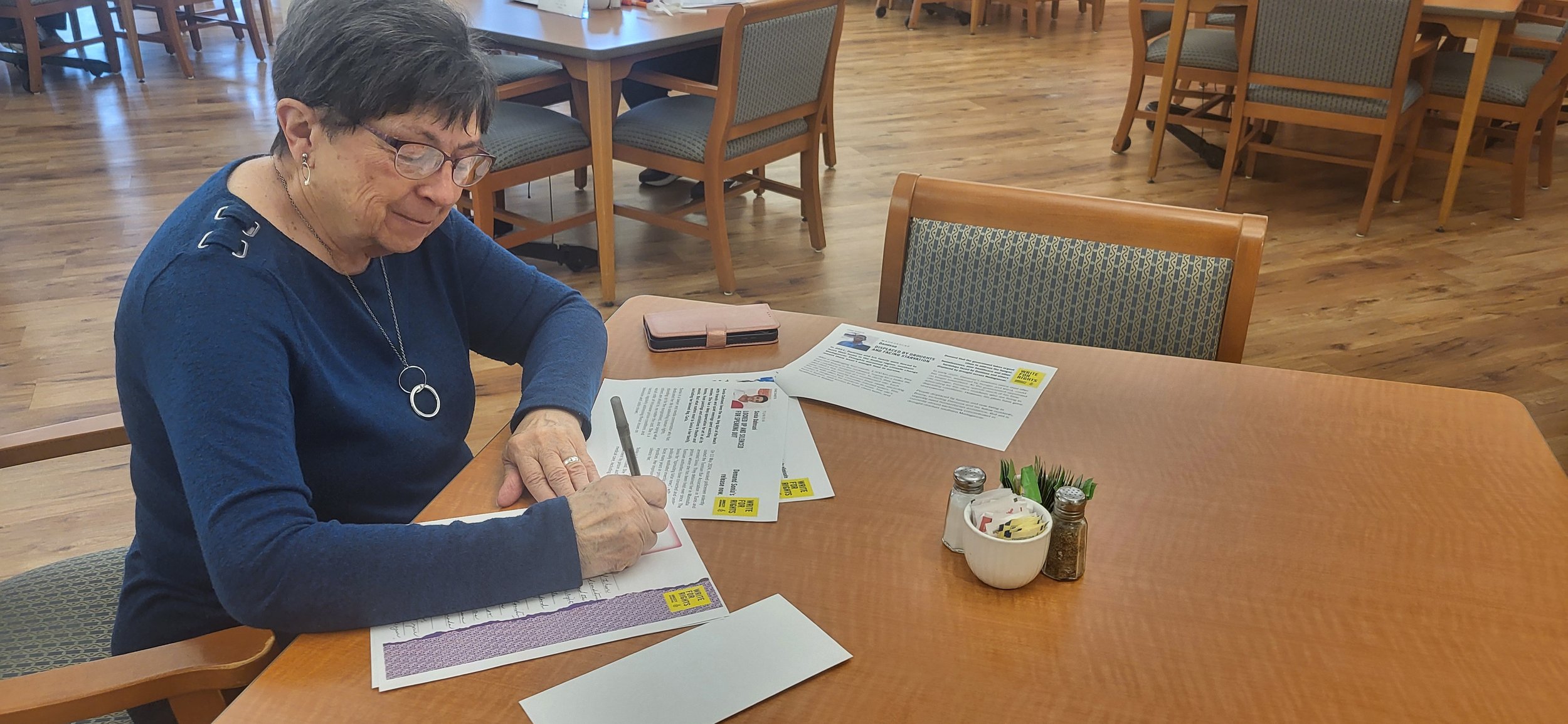
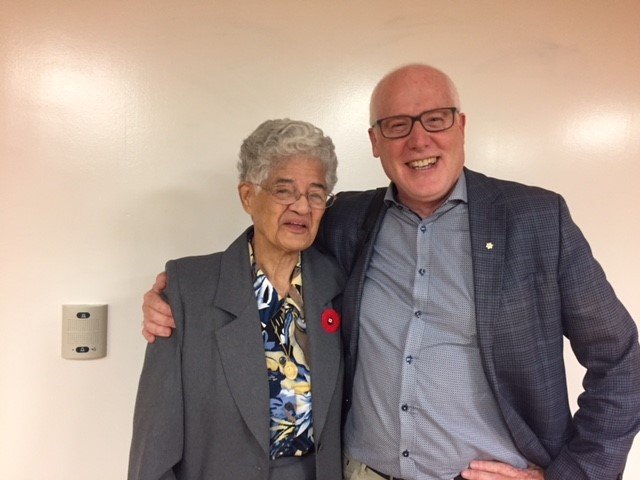
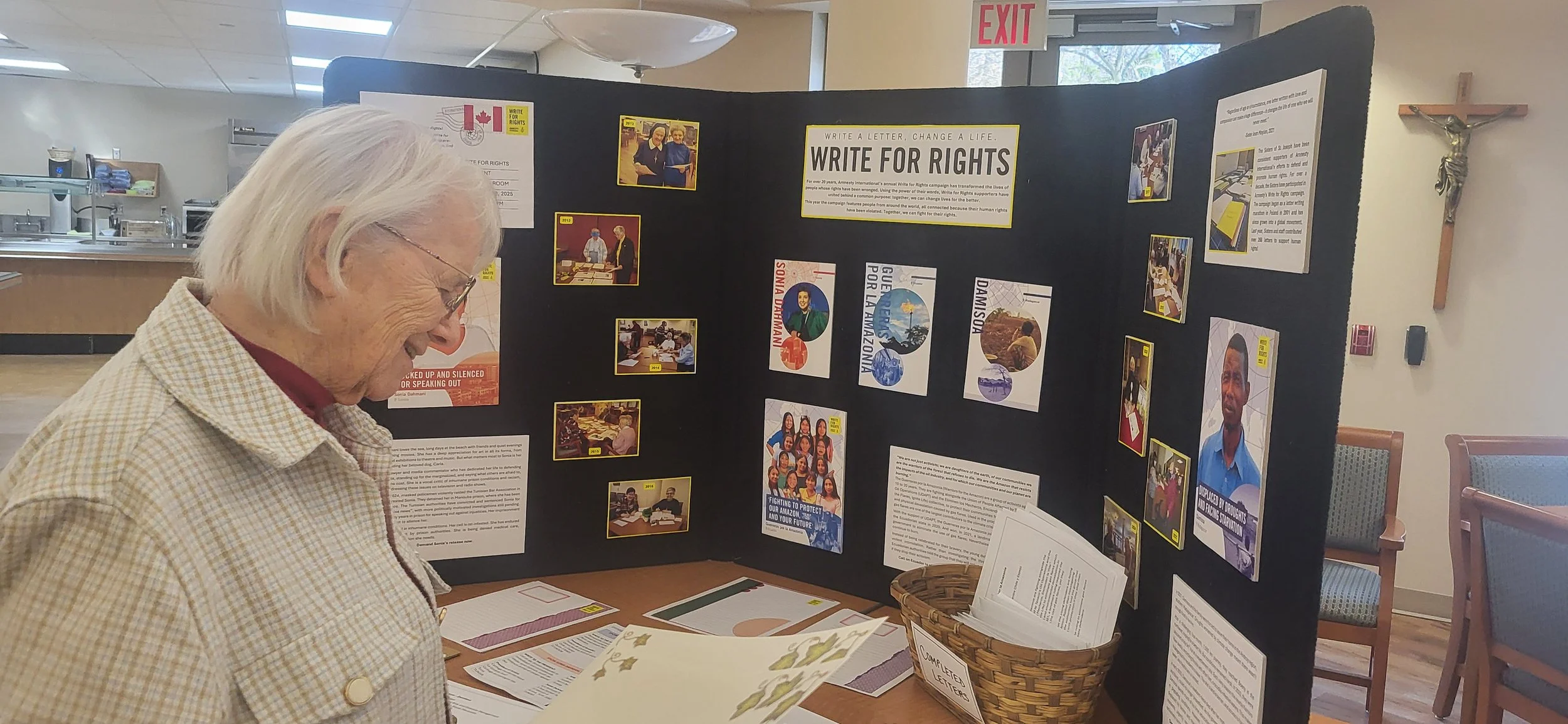
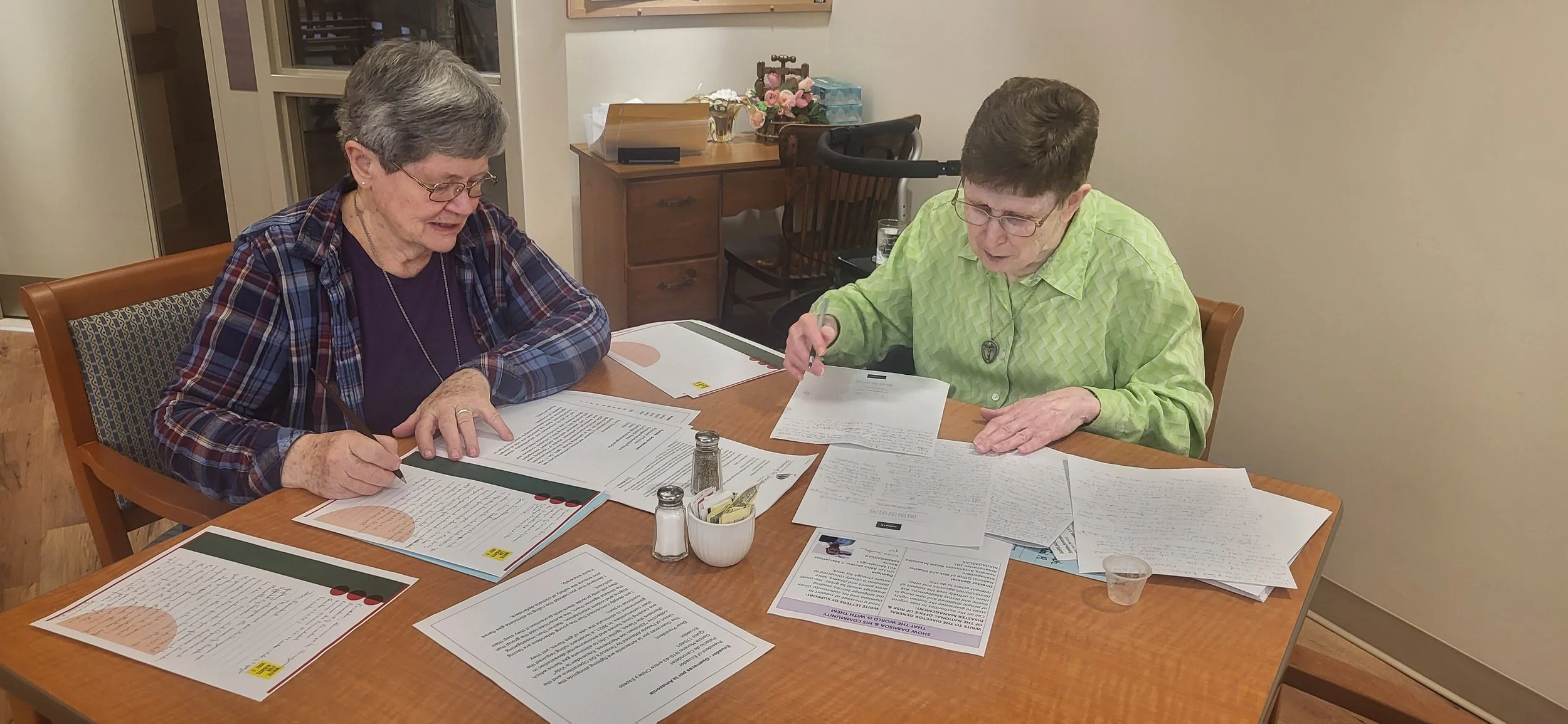
May 28 is Amnesty International's 65th anniversary. Like the moon mission, our movement has reached goals that once seemed unattainable. The Sisters of St. Joseph— through letters written, petitions signed, and generous financial support- have helped make this possible. (Pictured below, Sisters over the years participating in various Amnesty initiatives).

Here are some results of that unwavering commitment over the decades:

  • 1962 — Amnesty sent a lawyer to observe Nelson Mandela's trial in South Africa. Mandela later wrote that his presence "was a source of tremendous inspiration and encouragement to us."

  • 1970s — Amnesty secured access to Chile under Pinochet to investigate human rights violations and published a list of 2,665 people who had "disappeared" in Argentina, helping families demand accountability. For this work, Amnesty was awarded the Nobel Peace Prize in 1977.

  • 1977 — When Amnesty began campaigning against the death penalty, only 16 countries had abolished it. Today, more than half the world — 113 countries — has done so.

  • 1990s — Amnesty drew global attention to the plight of 300,000 child soldiers, helping launch the Coalition to Stop the Use of Child Soldiers.

  • 2002 — Decades of pressure from Amnesty supporters helped bring about the creation of the International Criminal Court to prosecute those responsible for crimes against humanity, genocide, and war crimes.

  • 2014 — The global Arms Trade Treaty came into force after sustained advocacy by Amnesty and others— a landmark step toward stemming the flow of weapons that fuel conflict and human rights abuses worldwide.

  • 2016 — Albert Woodfox was released from a Louisiana prison after a U.S. record-breaking 43 years and 10 months in solitary confinement. "I can't emphasize enough how important getting letters from people around the world is," he said. "It gave me strength."

  • 2018 — Teodora del Carmen Vasquez was freed in El Salvador after serving a decade of a 30-year sentence for suffering a stillbirth. Amnesty supporters had campaigned for her since 2015.

  • 2021 — Amnesty's Security Lab exposed the widespread use of Pegasus spyware against journalists, activists, and human rights defenders globally, triggering government inquiries and bans in multiple countries.

  • 2025 — Former Philippine President Rodrigo Duterte was arrested and transferred to the International Criminal Court to face charges of crimes against humanity. In their written charges against Duterte, ICC prosecutors cited Amnesty International reports more than 60 times.

©International Criminal Court/Handout/Anadolu via Getty Images

Over the past 65 years, tens of millions of letters have reached people in cells, in exile, and in fear — reminding them they are not forgotten or alone. You are among those who wrote these letters.

No one knows what the next 65 years will bring. But the last 65 have shown that as long as people keep standing up for rights and accountability, the world will keep moving — however haltingly — toward justice for everyone.

-Amnesty International Canada

Protecting the Wellbeing of Water: A Letter to Premier Ford

Ontario's water sources are under stress from climate change, land development, and population growth. That's why water permits (an important tool in assessing, monitoring and managing water sources) are important. They can help Ontario to pursue economic development within a wider vision that protects the wellbeing of water.

We invite you to read the attached letter from our Federation Office for Systemic Justice to Premier Ford expressing concerns about water and reminding the government that “it is more important than ever to have ongoing and careful assessments of the frequency and quantity of water-taking permits [which] requires strong structures for tracking, evaluating, and managing cumulative withdrawals across water sources…”.

Read the letter here.

-Sister Sue Wilson, csj

Image: David Becker @beckerworks/Unsplash