Neighbours on Downie Street

From my second-floor window – at 7:30 a.m. each day I watch a young mother, a teacher, wheel her 2-year-old twin daughters down the steps and get them settled in their van.  This daily routine also includes her interaction with a middle-aged man from our neighborhood.  His name is Kelly and he is a regular visitor sharing his news early in the morning in a rather loud tone – which could be about his dog or what his plans are for the day.  The mom, while getting her children settled takes time to listen to Kelly and offers encouraging words to him as he retells (a couple of times over) the story about his dog and what his plans are for the day. 

BE KIND.jpg

Kelly approaches the window of the van and offers a wave and blows kisses to the children and then crosses the street and returns to his own home, giving this mother some positive affirmations as she heads to her classroom for another day.

With this pandemic and my own inability to volunteer with the marginalized, I think I have received a gift that is happening right outside my window every morning.  I feel that I am participating in this exchange between these neighbors – as I witness the respect for one another, and kindness being given freely to Kelly – who represents many in our society today who are not treated with respect or dignity.

I am realizing that being present can happen in many different ways…

-Sister Ann MacDonald, csj

Goodbye and Good Riddance!

Canada to ban six single-use plastic items next year.

This month, the federal government announced it would be adding plastics to the Toxic Substance List under the Canadian Environmental Protection Act (CEPA). This is a crucial step towards regulations that would reduce plastic production, use and disposal. It’s about time.

plastic2.jpg

Canada to ban six single-use plastic items

Photo credit: Ruth Hartnup/Flickr Creative Commons

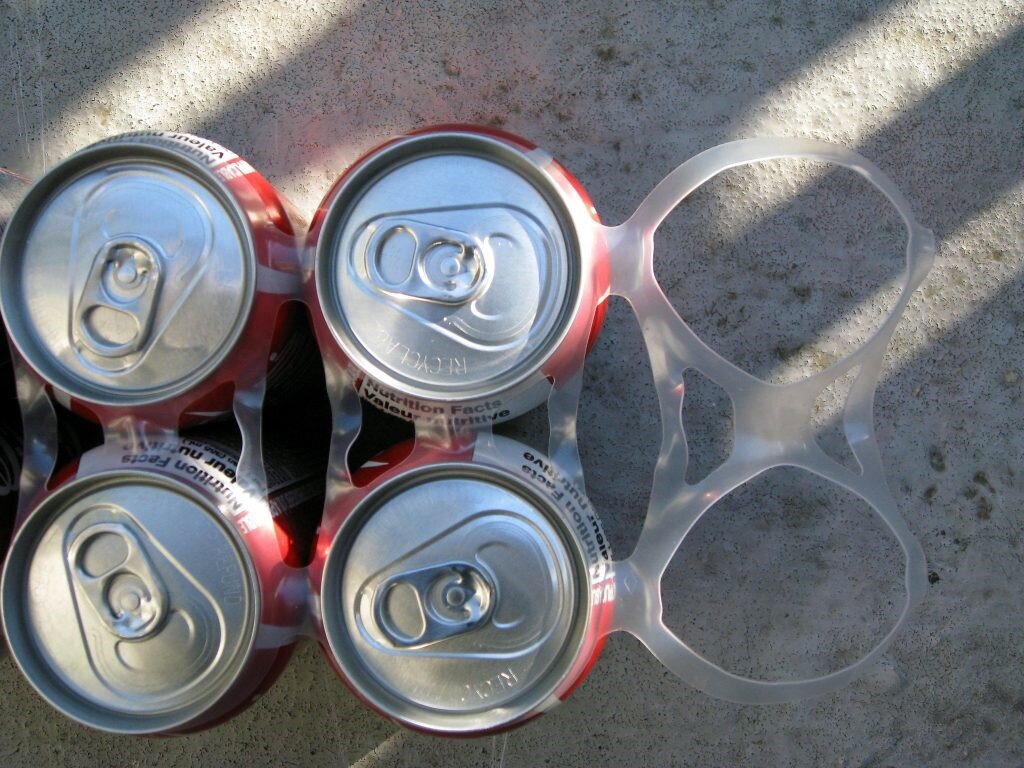
As part of the same announcement, Environment Minister Jonathan Wilkinson released a draft management plan outlining the actions his ministry is considering to eliminate plastic waste. One of those actions is banning some single-use plastic items, specifically: grocery bags, straws, cutlery, six-pack rings, some takeout containers, and stir sticks.

The list itself is a good start. Canada has obviously been taking cues from the European Union (EU), which already moved to ban most of the same items last year. But Canada needs to do much more than ban plastic straws and spoons if it’s serious about a zero plastic waste future.

Much more is needed to tackle the plastic crisis

The truth is that our current, linear economy—where disposable products and packaging are the norm—is unsustainable. Instead, we need to transition to a circular economy, where reduction, reuse, and repair are prioritized and materials stay in the economy and out of landfills, incinerators and the environment.

Unfortunately, notwithstanding the bans, it looks like the government is going all-in on recycling as a silver bullet solution to plastic waste. But the reality is that recycling was a lie sold to us by the same industry committed to filling our cabinets, landfills and oceans with plastic —the petrochemical lobby.

Beyond the fact that many kinds of plastic are impractical or impossible to recycle, there are limits on the number of times plastic can be recycled before the polymers are too degraded and the material needs to be thrown away.

That’s why Canada needs to impose and enforce reduction and reuse targets, in addition to recycling and recycled content targets.

Next steps for Canada to tackle plastic pollution

plastic3.jpg

Between now and December 9, the government is asking Canadians, businesses, and other stakeholders to provide feedback on their proposed management plan. We’ll be at the table, pushing hard for the regulations we need to eliminate plastic waste in Canada, including:

  1. Finalizing the addition of plastics to the Toxic Substance List, under Schedule 1 of the Canadian Environmental Protection Act, 1999 by the end of 2020;

  2. Banning at a minimum the six items proposed in the draft management plan by the end of 2021, and adding additional plastic items to the ban list in future years;

  3. Working with provinces and territories to make the companies that produce plastic products and packaging financially and operationally responsible for plastic waste (Extended Producer Responsibility, EPR), and ensuring harmonization from coast-to-coast-to-coast; and

  4. Establishing and enforcing high reduction, reuse, recycling, and recycled content targets to support Canada’s transition to a circular economy.

The plastic crisis has been growing for decades, and there is no immediate solution. It will take actions from all levels of governments, industry and society to overcome it. But this announcement is a step in the right direction.

- Ashley Wallis, Plastics Program Manager, Environmental Defence

World Food Day

WORLD FOOD DAY.jpg

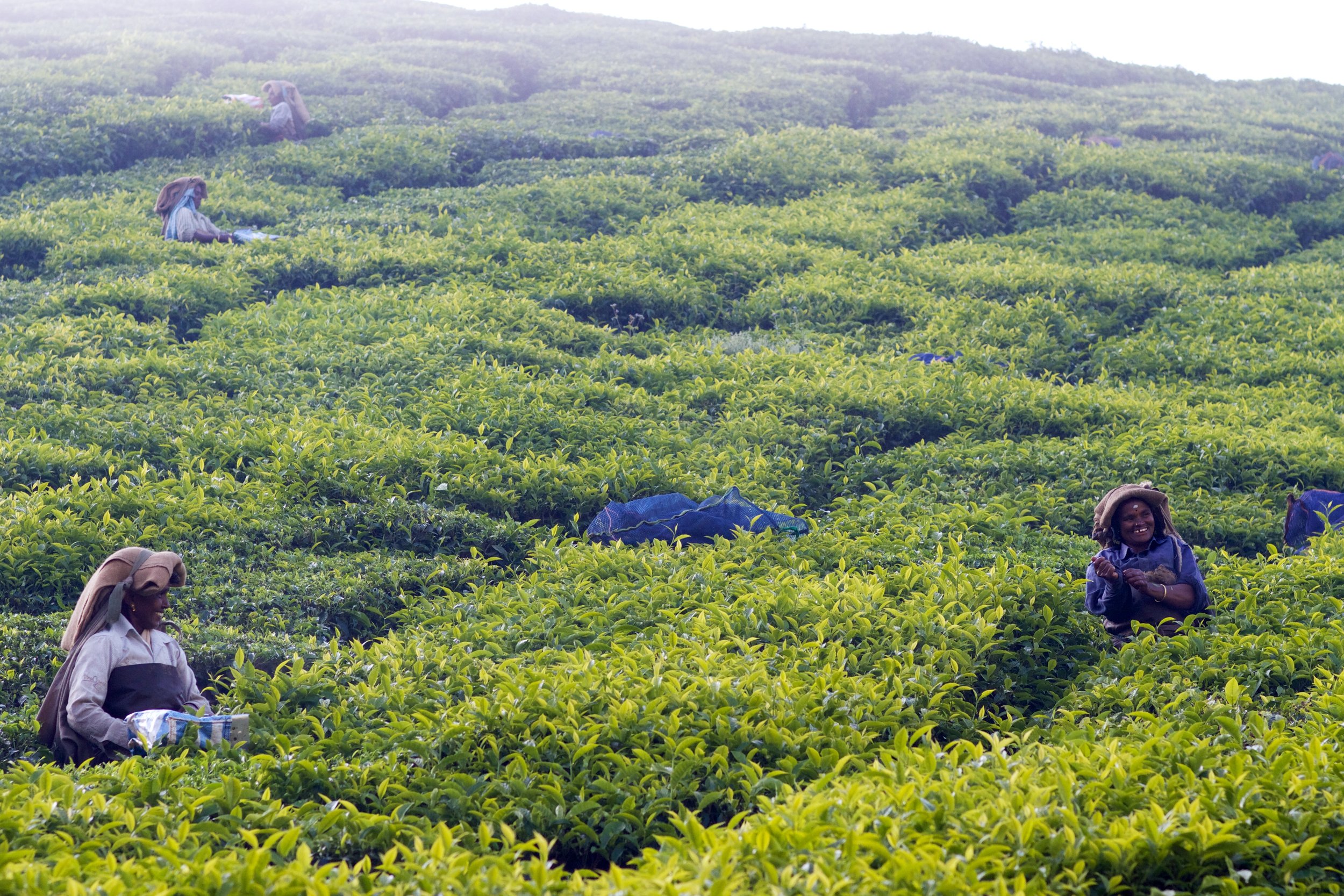
Children, thin and bone-weary, and mothers too emaciated to feed their young line up with empty bowls before a UN Food truck – a scene in too many countries in our world today. This is the stark reality for millions of people in our world, in our global community.

Recently the headlines gave us the glad news that the United Nations World Food Program had won the 2020 Nobel Peace Prize. It was a spotlight on the need to eradicate hunger, a mandate the UN has faithfully done its very best to fulfill for 50 years. It has been said that Canadians can rightly share in this recognition as our country has been the seventh-largest donor to this program for 50 years.[1]

But what causes world Hunger? Is it a lack of the right technological agricultural fix because we can’t grow enough food? No.  Here are some facts:

  • The world produces enough food to feed everyone, yet, about 800 million people suffer from hunger. That is one in nine people. 60% of them are women.[2]

  • Hunger kills more people every year than malaria, tuberculosis and aids combined.

  • Around 45% of infant deaths are related to malnutrition.

  • 1.9 billion people – more than a quarter of the world’s population – are overweight.

  • One third of the food produced worldwide is lost or wasted.

  • War, climate change and troubled economies are the key reason for the rise of hunger in the world,[3]

So what can we possibly do, as individuals, as communities in the First World? Here are some words from an Eco-theologian Sallie McFague and Pope Francis for reflection:

First: The eco-theologian Sallie McFague tells us that,

“we cannot in good conscience ‘love the world’ -its snow-capped mountains and panda bears -while at the same time destroying it and allowing our less well-off sisters and brothers to sink into deeper poverty”[4]…hence I believe Christian discipleship for the 21st century North Americans means ‘cruciform living,’ an
alternative notion of the abundant life, which involve a notion of enoughness”
[5]

She is calling us to a philosophy and practice of “enoughness” with limitations on energy and sacrifice for others. It is the call to turn back from a consumerist culture that always wants more -whether its variety for our jaded appetites of food, clothing, technology – and turn to the freedom of learning to live with less.

Second: In a recent speech to the UN, Pope Francis said,

The pandemic “can represent a concrete opportunity for conversion, for transformation, for re-thinking our way of life and our economic and social systems which are widening the gap between rich and poor countries with its unjust distribution of resources… or the pandemic can be an occasion for a defensive retreat into greater individualism and elitism.”[6]

What are some choices everyday people can make on World Food Day?

1. Listen to the above facts and pick one issue that you can pledge to do something about.

2. Eat leftovers – yes, they can be boring but be inventive or make it an act of prayer and solidarity.

3. Reduce food waste by the above or composting. Most urban centres now have a compost stream - or compost at home.

4. Have a Fast Day once a week for world hunger.

5. Eat less red meat or become vegetarian.

6. Buy local & organic if possible -transportation costs drive up the carbon footprint

7. Donate to your local food bank or support local food groups.

8. Enjoy your food and give thanks!
A Table Grace

We pray a blessing of gratitude in this season of Autumn

Our hearts are thankful for the breath of wind, the warmth of sun

The waving fields of grain, the landscape of hills turning gold

Giving light to our souls and wonder in our being

We give thanks to our Creator and all the Earth who hold us close

We give thanks for our friends- our Elders the trees, flowers of beauty and the sparkling waters, the soaring winged ones and the precious human friends who hold our heart

May our lives bring life to others and all the Earth

May our gratitude be a Thanksgiving for all.
Amen.

                                                                                     - Sister Linda Gregg, csj

[1] Toronto Star, World Food Program Wins Nobel Peace Prize, Oct.10,2020, A23

[2]  Kerry Health and Nutrition Institute. https://khni.kerry.com/news/articles/ten-facts-you-need-to-know-about-hunger-on-world-food-day/ 

[3]  The Star Tribune, “World hunger continues rising amid war, climate change, UN reports” July 16, 2019,  https://www.startribune.com/world-hunger-continues-rising-amid-war-climate-change-u-n-reports/512801492/  

[5] Sallie McFague, Life Abundant: Rethinking Theology and Economy for a Planet in Peril,(Minn.MN  Augsburg Fortress, 2001), 14. 

[6] Catholic Register, “Pope Charts a Post-Pandemic Course,” Oct. 4, 2020, 4.

The Sport and Prey of Capitalists

SPORT AND PREY.jpg

The front cover of the 2019 book by the brilliant journalist, Linda McQuaig, captures in six words and one picture the theme of her latest work, an exposé of the blatant betrayals the Canadian people have endured at the hands of their own governments.  The words SPORT and PREY above the dying Canada goose plummeting to earth, its feathers trailing behind it, encapsulate a century of greed, arrogance, and robbery of our nation’s public institutions.

The phrase “the sport and prey of Capitalists” was coined by James P. Whitney, Premier of Ontario in 1905. He was expressing his wish that the Hydro system in Ontario forever remain in the hands of the citizens and not fall victim to privatization.

McQuaig introduces her examination of 20th-century institutions transferred from public to private hands with this story of the scandalous current case of the Canadian Infrastructure Bank promised by Justin Trudeau following his election in 2015.

monopoly man.jpg

The Prime Minister’s team to head up the creation of the bank was led by Bill Morneau, former Canadian finance minister, who chose for his advisors several Wall Street profiteers anxious to lend their millions to a project that would bring them ample returns. Consequently, the plan presented to Parliament for approval was molded to fit the dream of the private investors for significant returns.  The original plan to borrow from “the people’s bank” the Bank of Canada, at a modest rate was replaced by one that suited the greed of a small team of avaricious millionaires from the United States. Thus, Canadian citizens will be required to pay unnecessary millions for their own roads and bridges while a few investors proceed to, as Kevin Page, the first parliamentary budget officer, declared, “rob us blind”. (p.30)

Following this example from our own time and place, McQuaig plunges into the scandalous historical details of some of the worst deals done by prime ministers and premiers against the best interests of the citizenry. The sale of the Connaught Laboratories,  and the privatization of Hwy. 407 are two examples.  

The give-away of Alberta’s oil for the most meager of royalties, combined with the Alberta government’s deference to Big Oil, resulted in massive losses for Alberta’s citizens who owned the resource but were denied the profits.

McQuaig compares successive Alberta governments to the national government of Norway that insisted that the oil in Norway’s territories belonged to the Norwegian people, not the big oil companies. “…Norwegians have managed to save up about one trillion dollars more in their rainy-day fund than Alberta.” (pg. 198)

Thankfully, when the reader has turned the last page of chapter seven, now scandalized and outraged, she or he will find that Linda McQuaig sings the praises of “the common”, which Canadians know, have experienced, and are good at. In most of her examples of Canadians being sold out, the institutions in question were being well run, were self-sustaining, and sometimes made a profit for the people. Once in private hands, it was the share-holders that mattered. The workers and the general public mattered not a whit, as we all witnessed at the closing of Sears Canada on December 18, 2017.

The author's last words are to urge us who care to practice the courage of the Norwegians who realized early on that even if a corporation left because it didn’t like how the government defended its citizens, it couldn’t take the oil with it.

Reviewed by Joan Tinkess

Our guest blogger, Joan Tinkess, is an avid book club participant of nonfiction. Her years of empowering women’s groups in the Dominican Republic broadened her local and worldview.

For a deeper dive, and some interviews with the author