
Creating a Beloved Community

Creating a Beloved Community…. It’s still our desire

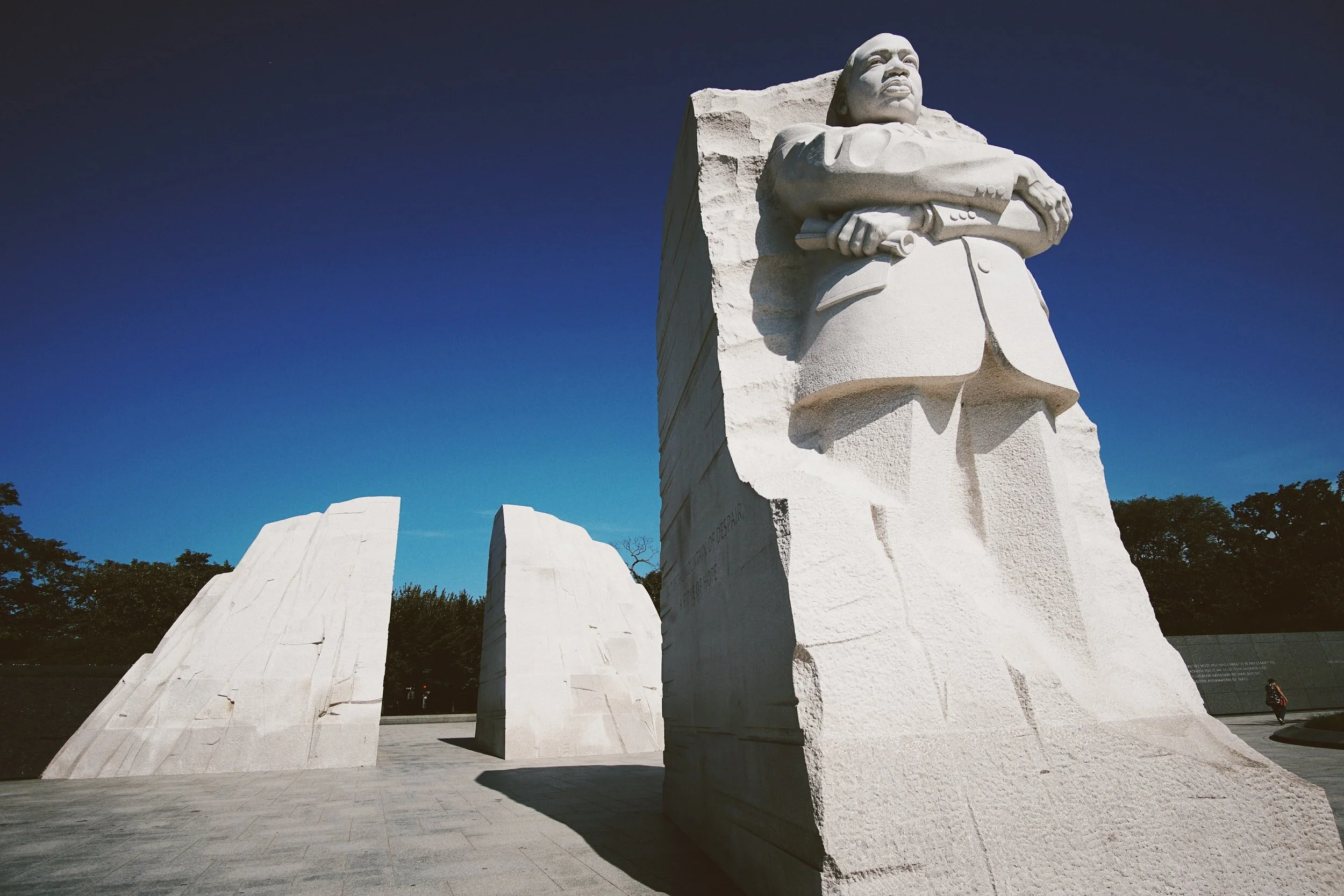
“Our goal is to create a beloved community, and this will require a qualitative change in our souls as well as a quantitative change in our lives.”  -Martin Luther King

These words of Dr. King have a call that reaches to needs of our world even more urgently.  They are as true today and needed even more so, given the many tragic events unfolding in the United States and around the world.  In this blog, the story I want to shed some light on is the millions of migrants and refugees on the move seeking a more safe and secure life for themselves and their families. However, this is a story not just about the difficult and tragic circumstances of the lives of these people, but it is a story that is also about us. 

I think most of us came from somewhere else in our home country or in a new country.  According to the UN, 244 million live in a country other than where they were born; 20 million of these we call refugees and asylum seekers escaping violence or persecution and a pandemic in their home countries.  They are seeking home somewhere else, and some among and with us. We are part of this story and we contribute to how this story will evolve.

let love lead.jpg

So many of us are yearning for a better ending to many stories we see on our TV screens or in the books we are reading.  We long for stories of love rather than hate, or creativity rather than destruction, of win-win cooperation rather than a win-lose competition of peace rather than war.  I am unable to do this alone, and it must be more than a wish.  Our wish is part of the qualitative change that happens internally in our souls, but it also calls for a quantitative change in our lives.  We can all be involved. To be part of creating a “beloved community” starts with some very practical actions and one person at a time.  It is letting love lead the next chapters of this story. Part of this story is one of justice and joy, love, and peace, and we still get to win, just not at everyone else’s expense.  We can move into a reality in which we can live in harmony with one another.  Then we can be part of creating conditions in which peace and well-being are not only possible but normal, and in which inevitable conflicts can be resolved through justice, kindness, wisdom, and love.  Let’s each contribute to writing the next chapters of this story.

-Joan Atkinson, CSJ

Sailing to America - A Story from the Calendar of Remembrance

1836-Carondolet.jpg

In 1836 six Sisters of St. Joseph of Lyon set sail from Le Havre, France for the St. Louis Diocese in the United States. Sisters Fébronie and Delphine Fontbonne, Marguerite-Félicité Bouté, Fébronie Chapellon, St. Protaise Deboille and Philomène Vilaine were the first missionaries to North America.

We mark this day in remembrance that our Canadian communities are rooted in this history. It is said that when Mother St. John Fontbonne became the first superior after the French Revolution, the birth of new CSJ communities proliferated “like a swarm of bees”.

For an interesting commentary, we invite you to view:


This video was made by Mount Saint Mary’s University - History of the Sisters of St. Joseph - Mother St. John, Part II. The story of being missioned to America begins at 4:32.

Angels on Earth

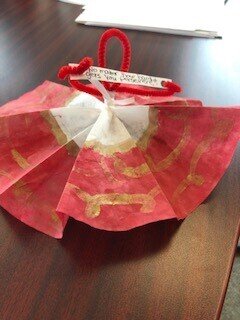
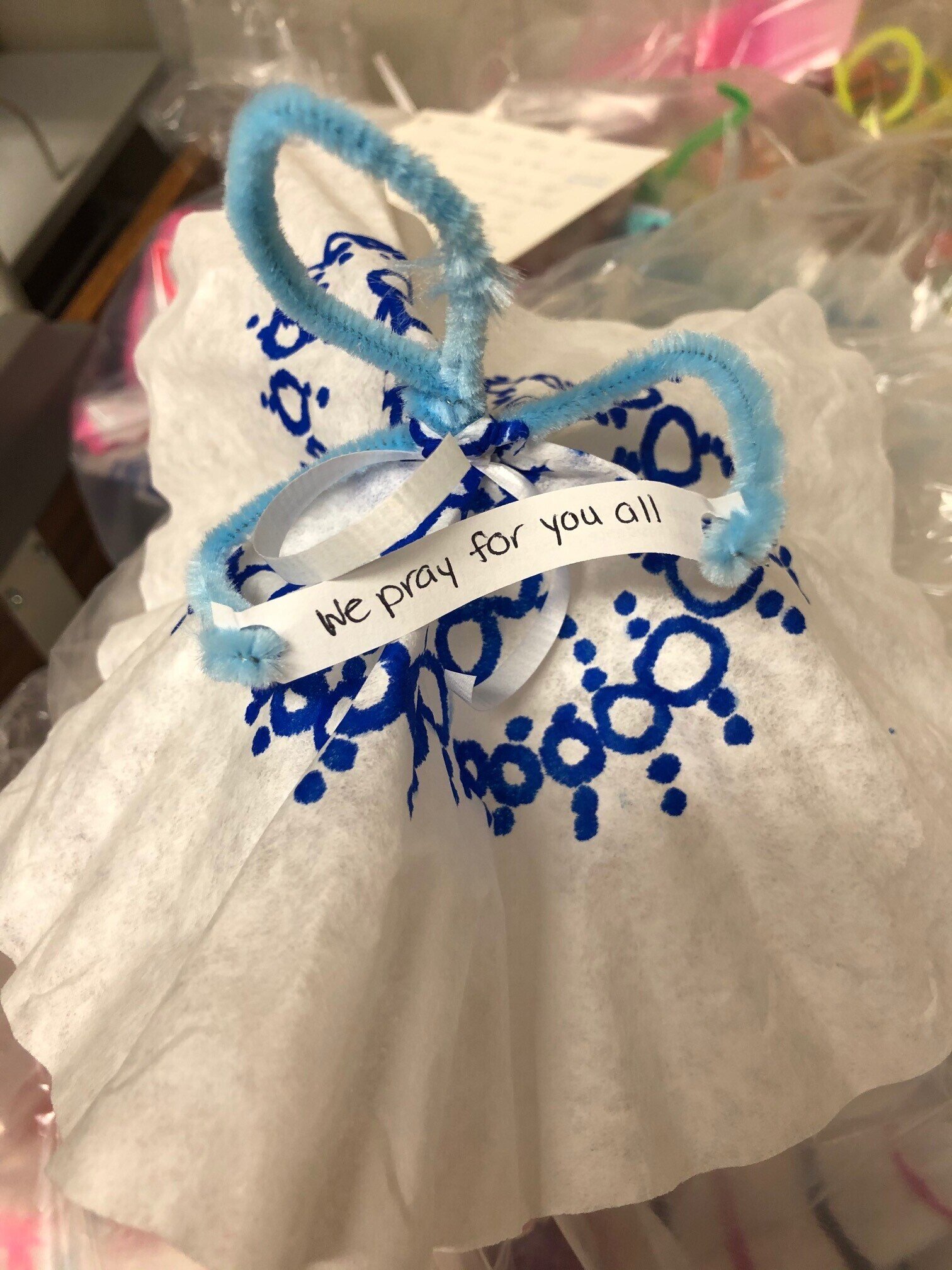
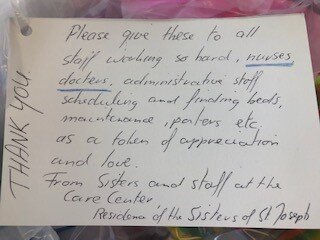
Sisters & staff in our Care Centre handmade and delivered paper angels for the staff at University Hospital in London, ON with this note:

Please give these to the staff who are working so hard. Nurses, doctors, administrative staff etc. As a token of our appreciation and love

From the Sisters and Staff,

The Sisters of St. Joseph

A Story of Empowerment and Transformation in Guatemala

Jesus Christ, by His Incarnation committed Himself to the social and cultural circumstances of the people among whom He lived. Through His church, in 1963, the Sisters of St. Joseph of Hamilton, Ontario, Canada, answered the call of Pope John XXIII, to heed the cry of the poor in Teculután, Guatemala. This was a call and mandate to foster evangelization, dignity, justice, and freedom through the dynamics of education.

Teculután.jpg

In a welcome address by Doña Aida de Cordón, the representative of the local committee who purchased the land for the future school, the founding Sisters were reminded that “they had arrived in Teculután in the favour of the faith and Latin Culture and were to bring the honour of reading and writing to the children of Teculután.”

Thus, the Sisters were prompted to keep in mind that those who learn to read and to write come to a new knowledge of selfhood and begin to look critically at the reality in which they find themselves. They are enabled to take the initiative to try and transform the society that has denied them opportunity and hope.

The Sisters in Guatemala, 1963.

The Sisters in Guatemala, 1963.

An empty field greeted the Sisters on groundbreaking day. In time, that field gave way to an excellent education facility named “Colegio San José” for our patron St. Joseph. The school was fully approved by the Guatemalan Ministry of Education and offered both elementary and secondary programs. This establishment offered employment for many and hope was born for a better tomorrow.

Because education was the key to that better tomorrow many Sisters who served in Teculután tapped into their own gifts, talents, and insights and in time, education became very diverse according to the needs of the people. Some Sisters saw to the needs of the school which included teaching methodology and religion to the native teachers. Literacy methods of consciousness-raising were provided both through the school and later through a very successful radio program. The Christian Children’s Fund brought help from affluent countries to the poorest of children.

The Sister nurses tended to the needs of the sick with a special focus on pregnant mothers and hungry children. Nutrition, sewing and carpentry classes were encouraged by these Sisters.

Eventually, our own diocesan priests arrived and not only ministered to the sacramental and pastoral needs of the people but also built and renovated churches, chapels and dental clinics. Block making and bakery shops were established. As a team the Sisters and Priests undertook large social programs such as bringing in portable water and electricity to poor areas. Housing projects were developed both before and after the earthquake of 1976. Winning the trust of the people was most important in all of these works.

Education created the hope to dream, to be free

In the midst of all this activity, the work of evangelization went on through catechetics in the schools, in the parish and via radio. The Family of God prayer groups were alive as was the Cursillo movement. Benefactors in Canada made possible all these works of charity and co-workers in Teculután supported us in many ways.

As suggested by this brief look at the Teculután mission, education paid attention to the formation of the whole person and promoted the common good of society. Teculután today gives witness to the empowerment inherent in education and “Colegio San José” remains a beneficial presence. Education created the hope to dream, to be free, and be transformed into Easter people!

To have served the Church in Guatemala elicits from all of us a deep sense of gratitude to our Community who sent us, to our benefactors who supported us, and to the gentle people of Teculután who received us. To become part of another culture was an incarnational event in our lives that brought us into a greater awareness of Christ’s Salvific action in the world.

As Jesus did, the Sisters and priests tried to return the world to the father and in doing so some planted, some hoed, some reaped and in this plurality of ways all gave expression to the vocation of the church which proclaims the ongoing Incarnation of Christ in the world.

We praise You, O Lord, for enabling the empty field to be transformed into an empowering people.

-Sister Joan McMahon, csj