
A Statement from the Federation of Sisters of St. Joseph of Canada

How are we connected to the Kamloops tragedy?

It is heart-wrenching to learn of the remains of 215 children found at the former Kamloops residential school.  Yes, the Truth and Reconciliation report told us about these missing children but to hear about a mass grave of children in Canada, and to know there are likely more such graves, as yet undiscovered, is deeply disturbing.

Given that this residential school was a Catholic-run institution, it is important to turn to the statements released by the Kamloops Bishop and the Vancouver Archbishop.  Bishop Nguyen of Kamloops joined his voice with others who are “heartbroken and horrified” and expressed his deepest sympathy to Chief Rosanne Casimir of the Tk’emlups te Secwépemc.  He also offered assurance of personal support, prayers and accompaniment.”  The statement from Archbishop Miller wrote about the “ongoing need to bring to light every tragic situation that occurred in residential schools run by the Church.”

Such statements matter.  Still, the moment requires more. 

Steps of St. Peter’s Basilica, London, ON | May 31, 2021 (Photo: Mark Wright)

Steps of St. Peter’s Basilica, London, ON | May 31, 2021 (Photo: Mark Wright)

It is not enough to see this tragedy simply as an event from the past.  Catholics, in particular, are challenged to acknowledge how we, today, are connected to these deaths.  How have we internalized the colonial assumptions and attitudes that have shaped our social, cultural, economic, and political systems?  Where have racist assumptions become rooted in our subconscious?  What are we doing to decolonize our minds and hearts? 

the moment requires more

Here’s one action that might move us forward as a Church. 

We, the Federation of Sisters of St. Joseph of Canada, commit to urging the local bishops in the dioceses in which we live and work, to join with all Canadian bishops to request that Pope Francis visit Canada and offer a formal apology to the Indigenous peoples of this land, as has been requested by many Indigenous groups.  Will you join us?

Sister Sue Wilson, CSJ | Office for Systemic Justice | Federation of Sisters of St. Joseph of Canada

For more information, please read the press release from the Tk'emlúps te Secwépemc.

Photos: Mark Wright

Amnesty International: 60 Years of Humanity in Action

amnesty.jpg

60 years ago, on May 28, 1961, the worldwide movement for human rights that is now Amnesty International was born.

A few weeks earlier, British lawyer Peter Benenson was on a commuter train heading into London when he read a news story about two Portuguese students who were sent to prison for several years just for having raised a toast to freedom in a restaurant. Outraged at this injustice, when he disembarked from the train Benenson went into the Church of St. Martin-in-the-Fields near Trafalgar Square and prayed for guidance. The inspiration for what was to become the world’s largest grassroots human rights movement was born.

On May 28, 1961, The London Observer published an article on their front page written by Peter Benenson titled “The Forgotten Prisoners” which launched the “Appeal for Amnesty 1961” – a campaign calling for the release of all people imprisoned in various parts of the world because of the peaceful expression of their beliefs.

In the article, Benenson made the case for the students’ release and urged readers to write letters of protest to the Portuguese government. The article also drew attention to the variety of human rights violations taking place around the world and coined the term “prisoners of conscience” to describe “any person who is physically restrained (by imprisonment or otherwise) from expressing … any opinion which he honestly holds and does not advocate or condone personal violence.”

Reprinted in newspapers around the world, Benenson’s campaign for amnesty received hundreds of offers of support. In July 1961, delegates from Belgium, the United Kingdom, France, the United States, Germany, Ireland, and Switzerland met to begin “a permanent international movement in defense of freedom of opinion and religion.” The following year, this movement would officially become the human rights organization Amnesty International.

Amnesty International took its mandate from the United Nations Universal Declaration of Human Rights, which was adopted in 1948, which holds that all people have fundamental rights that transcend national, cultural, religious, and ideological boundaries.

Amnesty canada.png

The Canadian Section of Amnesty International was officially incorporated in 1973, but there were Amnesty activists in this country almost from the moment the movement was born globally.

60 years later, on this May 28, more than 10 million people in over 150 countries around the world are part of the Amnesty International movement. Amnesty members believe that all people in our world – regardless of who they are, where they were born, the language they speak, their spiritual beliefs, their age, or gender – are deserving of the same human rights. They also believe that there is something each one of us can do to take action to improve the lives of people experiencing human rights violations.

The Sisters of St. Joseph in London have been stalwart supporters of, and partners in, Amnesty International’s work for justice and dignity for all people for decades.  

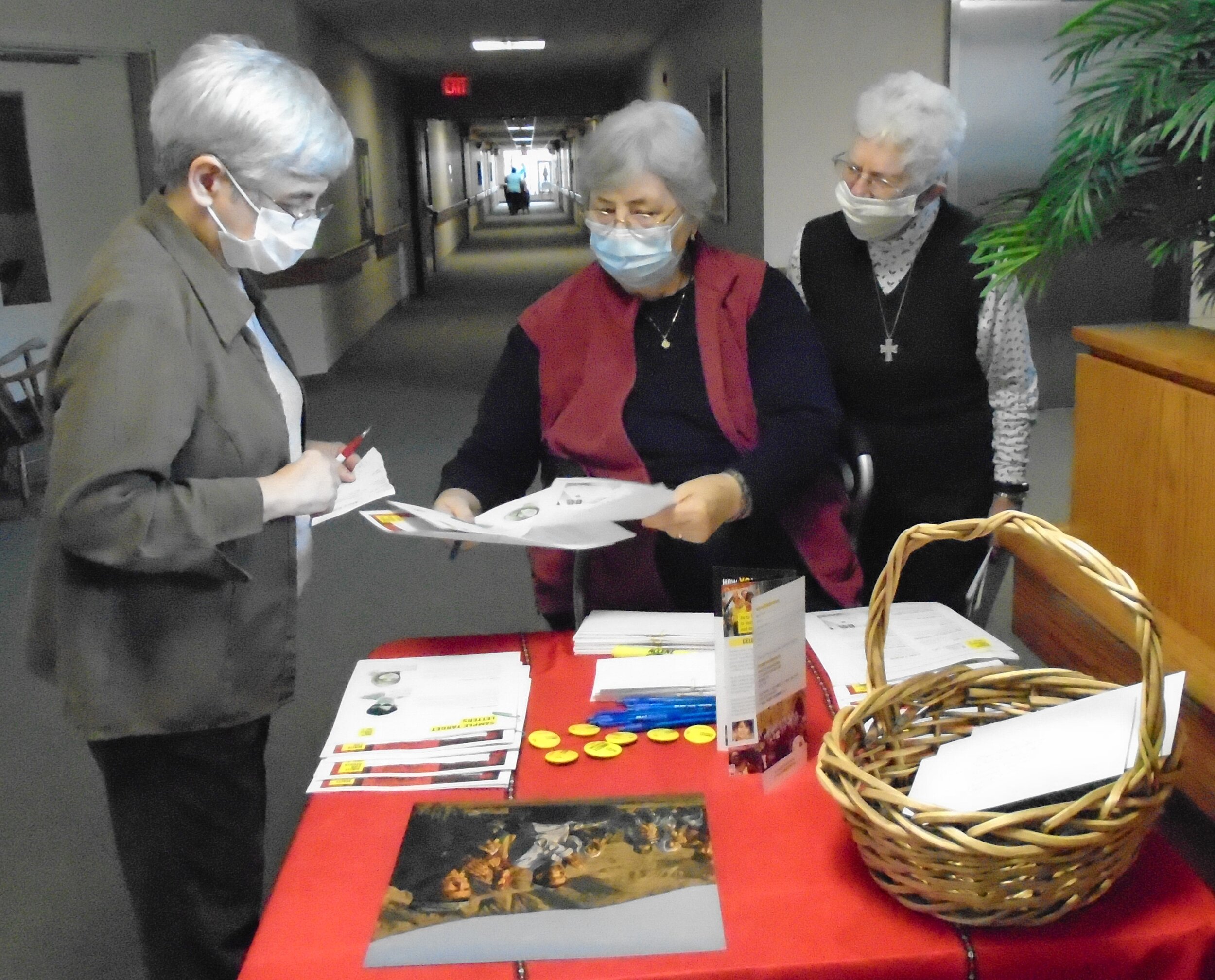
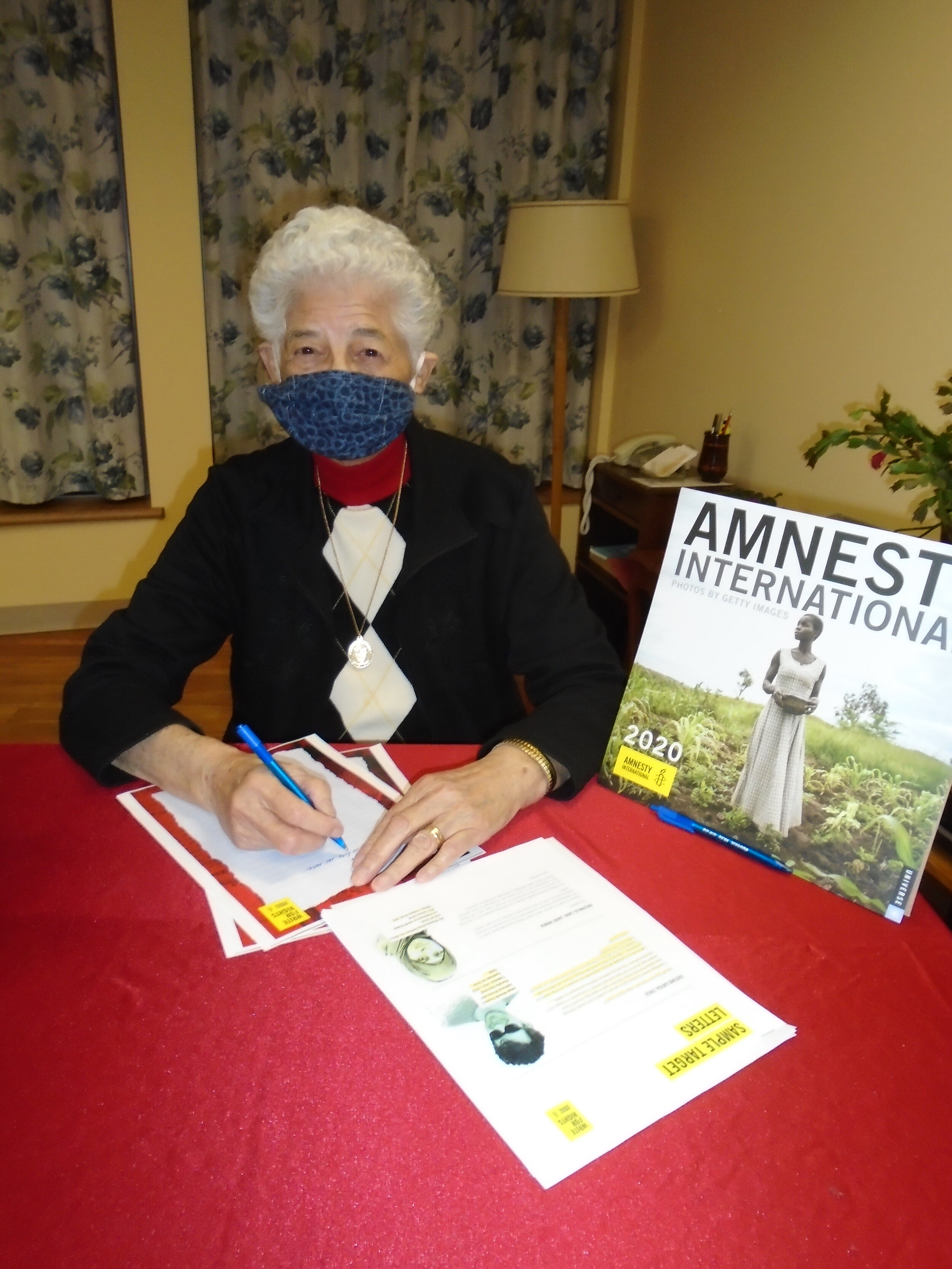
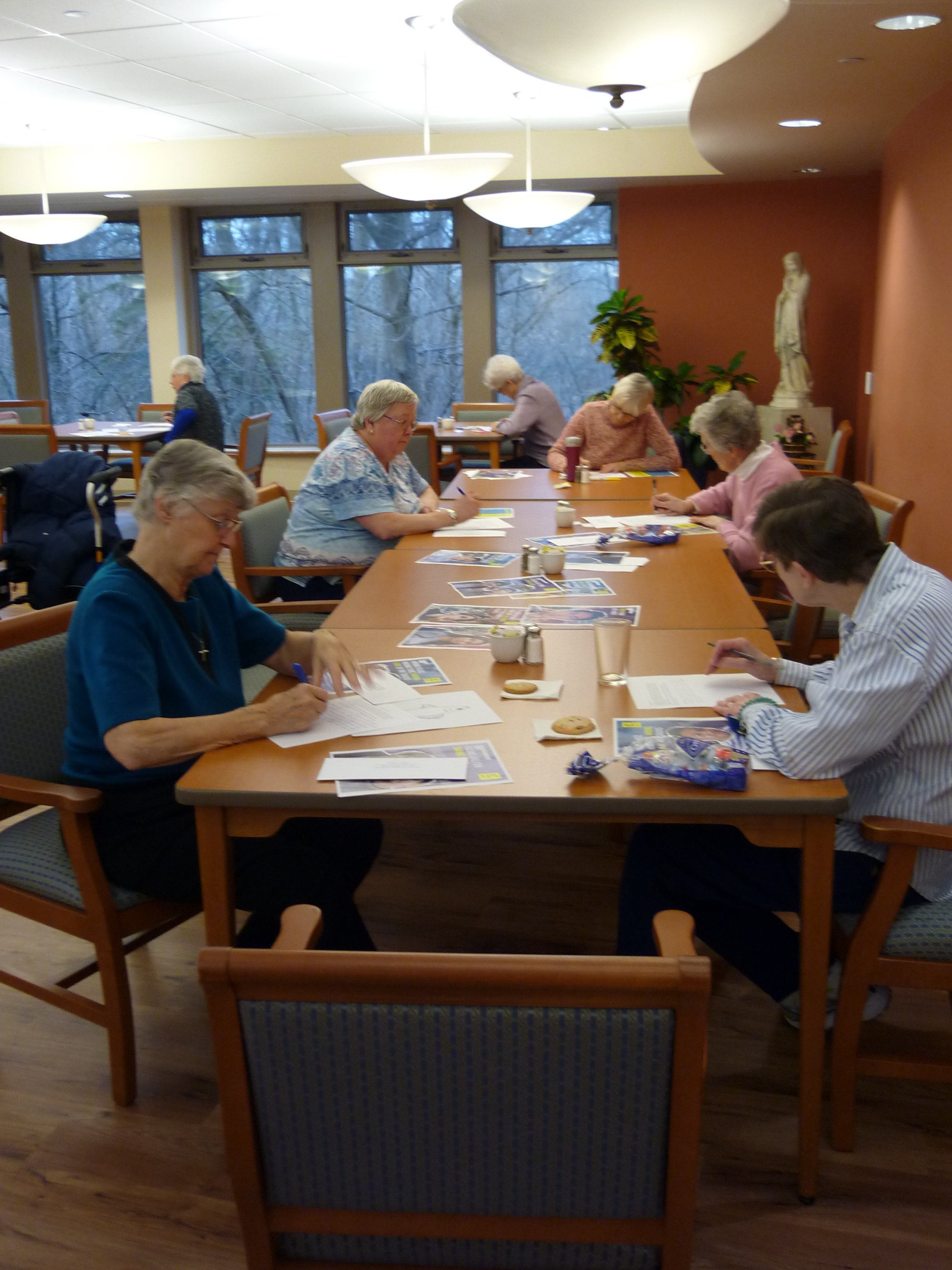
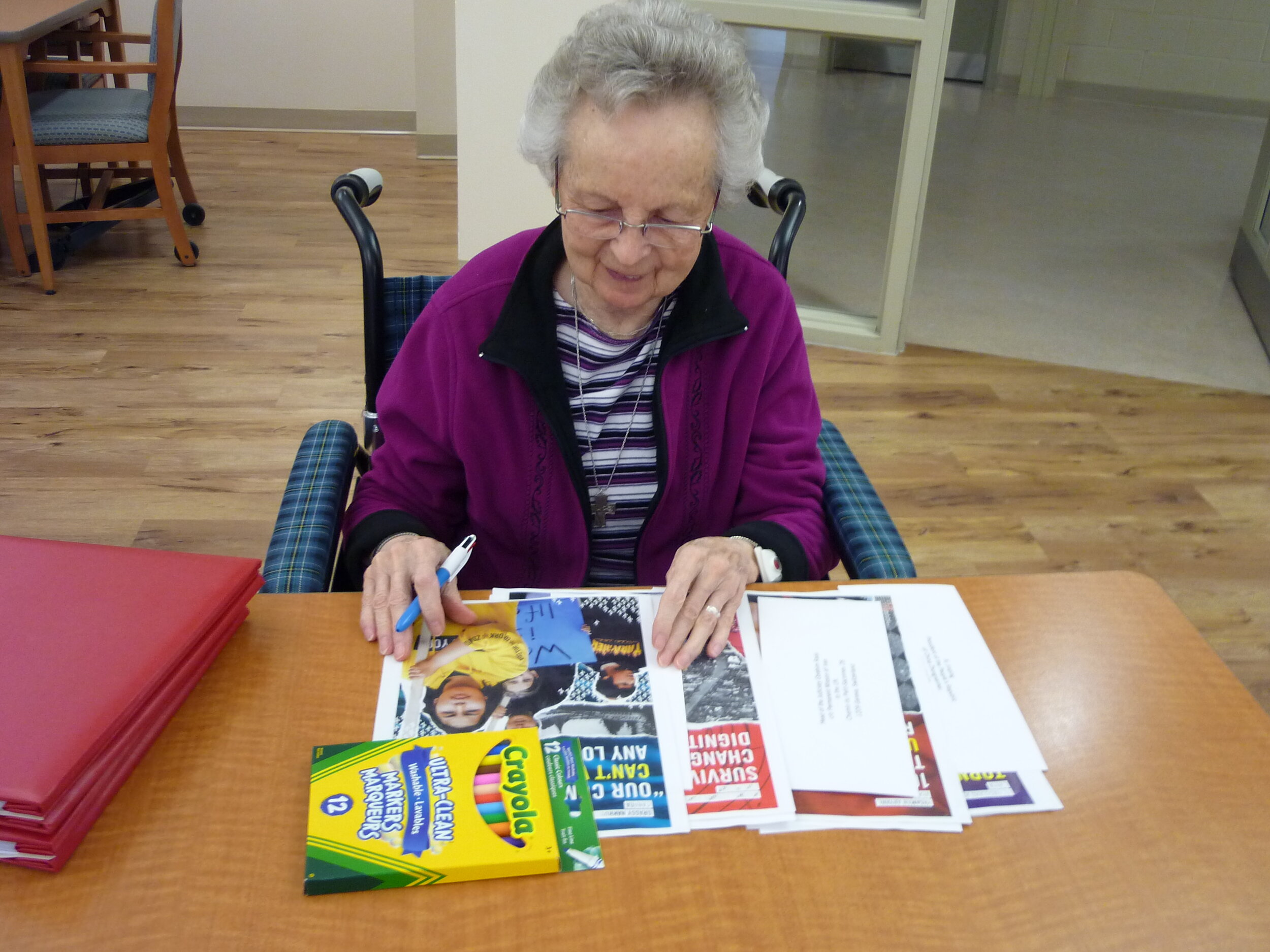
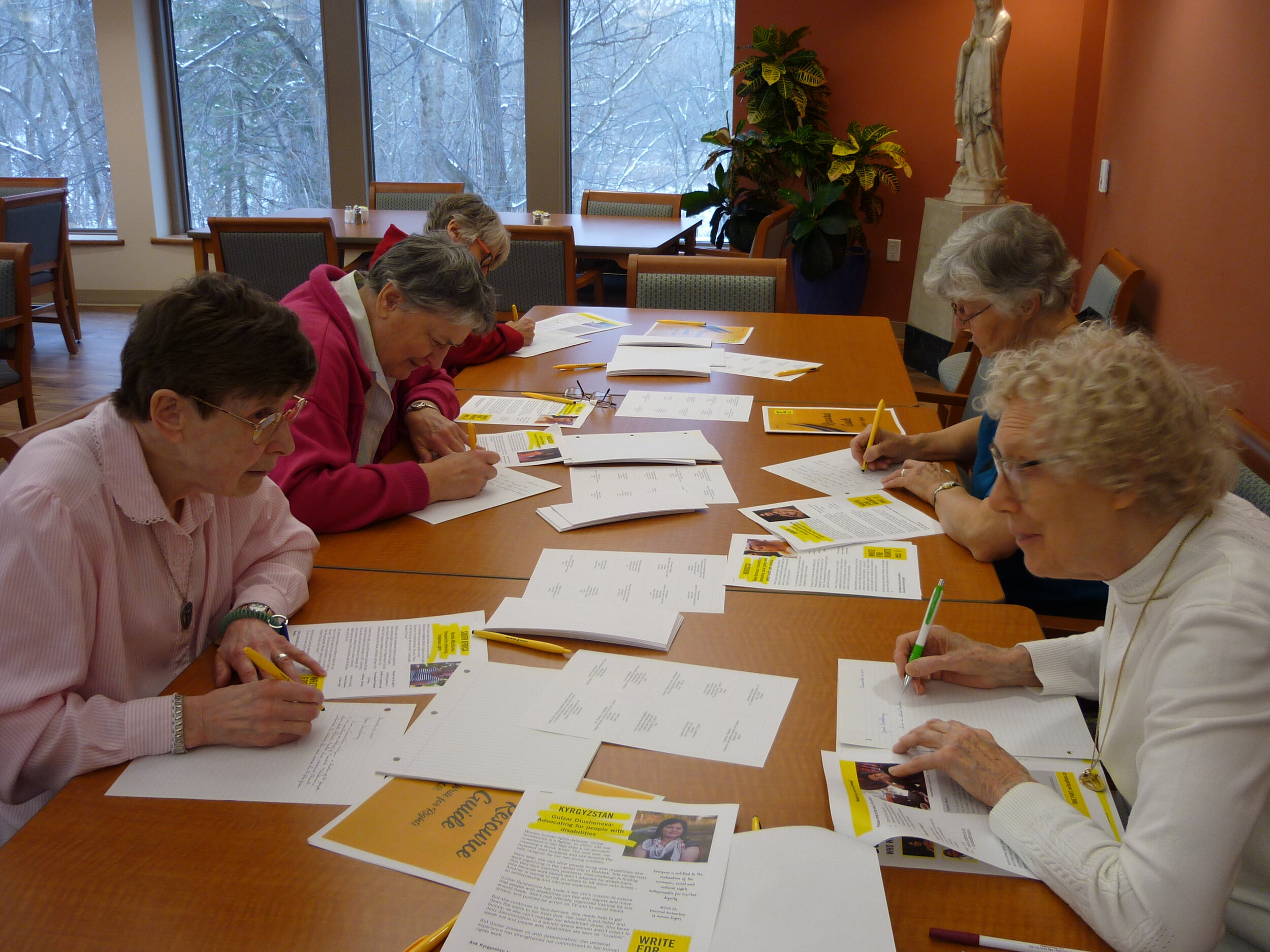
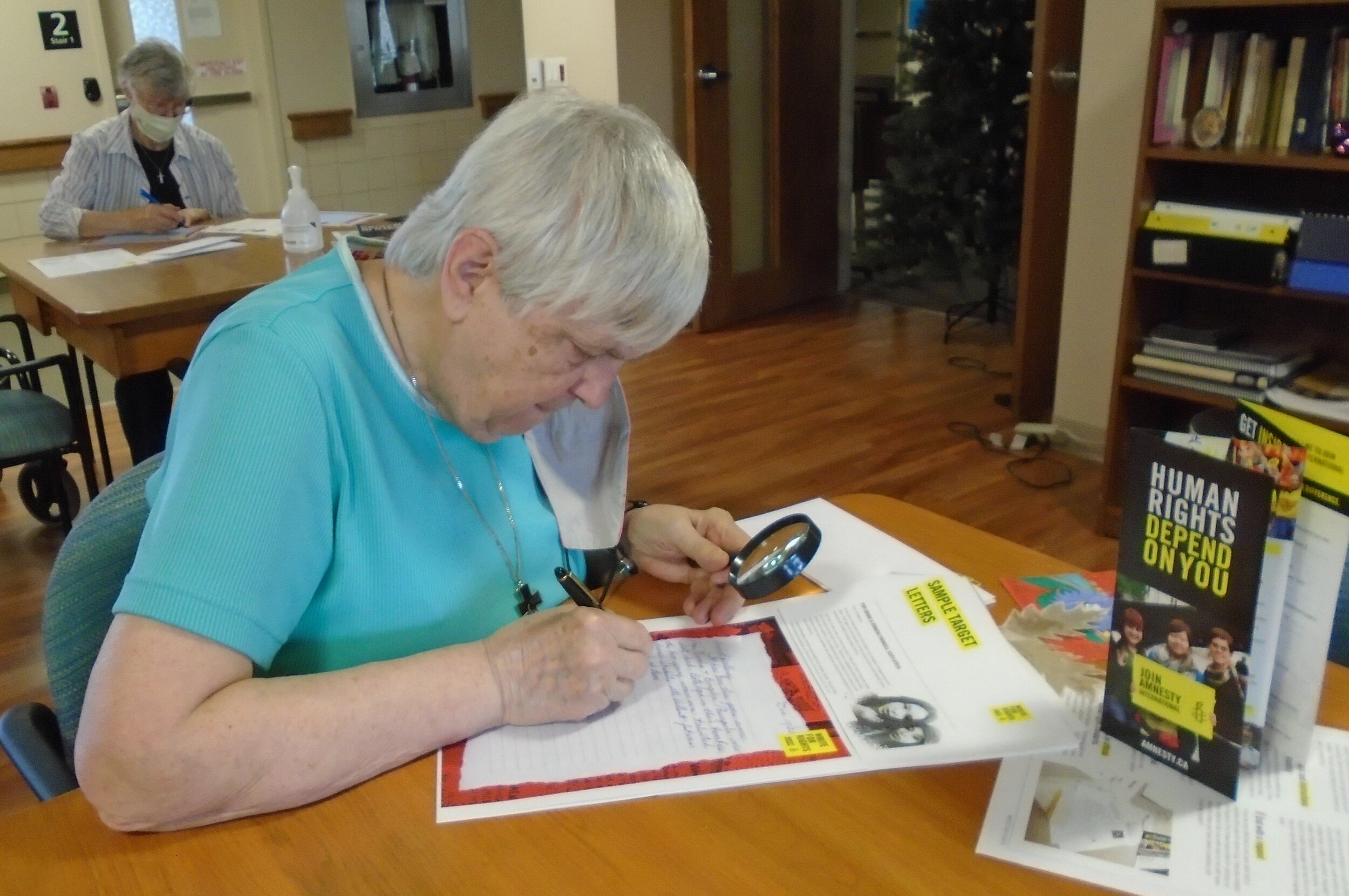
Sisters work on writing Amnesty Letters

Sisters work on writing Amnesty Letters

Over the past several years, the financial and spiritual support from the Sisters of St. Joseph has been instrumental in advancing Amnesty International’s work in solidarity with Indigenous Peoples and communities in Canada.  In 2004, the Sisters of St. Joseph provided the funding needed for our first research project on the national crisis of Missing and Murdered Indigenous Women and Girls. Our first report, Stolen Sisters, published in 2004, and the follow-up No More Stolen Sisters in 2009, were instrumental in our work in solidarity with Indigenous communities in demanding a national inquiry and national action plan for this human rights crisis.

The compassionate and caring support from the Sisters of St. Joseph for individuals like Maher Arar and his family, after his return to Canada from Syria where he had been tortured and imprisoned for more than a year, were remarkable. Your constant interest in the case of Omar Khadr was also notable.

More recently, generous contributions from the Community of the Sisters of St. Joseph have funded urgent work on refugees, crisis work in Yemen and Syria, advocating for the Uyghurs held in prison camps in China, and much more. The Sisters of St. Joseph have helped protect the rights of protestors in Hong Kong, helped outlaw child marriage in Burkina Faso, helped educate the next generation of activists in South East Asia, and helped free unjustly detained human rights defenders like Loujain Al-Hathloul in Saudi Arabia, imprisoned solely for her advocacy for women’s rights in that country.

Amnesty International is only able to do our human rights work with the activism and support of extraordinary donors like the Community of the Sisters of St. Joseph in the Diocese of London.

We send our heartfelt thanks for your partnership in our shared goal of a world with more justice and dignity for all people. We look forward to working with you over the next 60 years!

With heartfelt appreciation from all of us at Amnesty International.

Zooming for Fun

Tired of all the zoom meetings?

Let’s change the picture and use this technology for FUN. It does provide a means of connecting, although second best to actual face-to-face contact.

Changing the picture might have various landscapes:

unsplash-image-smgTvepind4.jpg

Family Zooms can be informal or semi-formal:

- a weekly zoom is helpful to just visit with close siblings or others.

- a  semi-formal monthly family zoom may suit others.  I have numerous first and second cousins on my Dad’s Mennonite side of my family and we have a family zoom as the spirit seems to move 3 of us to initiate.  This June, we will be inviting up to 84 cousins and second cousins to take part.  If it turns out to be a large group, we will use chat rooms in which each person will be invited to introduce him/her self in terms of who their parents were and what is one gift or legacy that was left by our parents. Then we will come back to the large group and ask for a few to share how that experience was for them. We have found that storytelling has been a great way of connecting with each other.

Faith sharing groups: this would involve a group that regularly meets (weekly) and it is customary that each person takes her turn in preparing a brief reflection for the group which is sent to the group a day or two ahead of time.  Screen sharing can be used if requested by the person presenting for that week. The group, by coming together weekly, to share in a respectful way of just listening to each other, develops a close bond.

Nurturing relationships groups: I have the privilege and opportunity to engage with a group that we have named “the Monthly Musers” which consists of 6 settler women and 4 Indigenous women all of whom have been co-facilitators of the Kairos Blanket Exercise.  At first, we met monthly and “checked in”. It does get to a point, though, when “checking in” is not enough, so we do a brief checking in, followed by a Land acknowledgment, some brief input ( a 20-minute YouTube or video on some aspect of the TRC). Then one of the Indigenous women leads us in an Indigenous style sharing Circle.  Our experience of these “Monthly Musings” together has proved to be very meaningful in getting to know each other and appreciate the struggles we all have, telling the TRUTH of our respective past histories, and working together towards restoring harmonious relationships with each other as settlers and Indigenous women.

Formal Teaching and Sharing Circles provided by Kairos:

Register Today – June is National Indigenous History Month

KAIROS blanket.jpg

This National Indigenous History month you can help to build bridges of reconciliation! Register today for a KBE Teaching & Sharing Circle – Indigenous-led, interactive online sessions that help to foster ‘right relations’ between Indigenous and non-Indigenous people through truth, sharing, and open dialogue.  The Summer sessions are now open for registration ($25) at:  https://www.kairosblanketexercise.org/event/

  • Tuesday, June 1 (7-9 pm ET) -- The Impacts of Residential Schools

  • Tuesday, June 15 (7-9 pm ET) -- Métis Teachings

  • Monday, June 21 (7-9 pm ET) -- We are All Treaty People (*National Indigenous History Day)

  • Tuesday, June 29 (7-9 pm ET) -- Social Injustice in the Courts

Prerequisites:

  1. a desire to connect

  2. a Zoom account to invite participants  (40 minutes is free); with ONE other person the time is unlimited

  3. ability to share screen is helpful

  4. the incentive to ask for help if needed.

Happy Zooming for fun!  It is well worth it.

 Submitted by: Sister Kathleen Lichti, CSJ

We Won’t Give Up: We Can’t Stop Now

It has been more than a year since several senior Sisters of St. Joseph began making approximately 130 sandwiches a day - Monday to Friday every week - since COVID-19 took our world by storm. Our assistance augments the reduced work of our soup kitchen help during the pandemic.

Sisters Stephanie and Mary Raphael hard at work

Sisters Stephanie and Mary Raphael hard at work

To expedite our sandwich-making project, early morning dietary staff set up several dining-room tables with the tools of our trade: white and brown bread, butter, meat, cheese, lettuce, wraps, etc.  At 9:15 a.m. the Sisters arrive on the scene and the work begins in earnest.  Three Sisters butter the bread, five build and wrap the sandwiches and one Sister serves as “gofer” running back and forth replenishing supplies.  Christian, our talented chef keeps an eye on production and listens to our advice and comments.  In less than an hour, the tables are laden with nutritious sandwiches and packed into sturdy brown boxes.  Mark, our trusty driver, hurries the boxes into the van and heads to our soup kitchen with the precious cargo.

There are unseen heroes in the sandwich-making process. Generous grocery store owners and private individuals donate the meat to our hospitality centre.  Bill, who supervises this downtown ministry in London, Ontario, sends these food donations to our home.  We supply the bread, butter, cheese, lettuce, various treats, drinks and especially, the labour.  “Sister-power” finishes the sandwich-making process in short order.

The ongoing community support of this ministry is such a continued blessing to our guests, our volunteers, and our congregation.

Yes, sometimes, like everyone caught in this pandemic, we sigh and wish that Mr. COVID and Mrs. Variant would pack up and leave town.  However, we are determined throughout the pandemic to provide our loving service to the dear neighbours who depend on St. Joseph’s Hospitality Centre.

-Sister Jean Moylan, csj

Sisters Loretta and Nancy continue the work

Sisters Loretta and Nancy continue the work