
A Call for Clear and Courageous Leadership - Developing a National Catholic Reconciliation Plan

Catholic Religious Communities Urge the Canadian Conference of Catholic Bishops to Take Decisive Leadership in Advancing Reconciliation in Canada

TORONTO, ONTARIO/FOR IMMEDIATE RELEASE/ JULY 5, 2021:

Twenty-one Catholic congregations of men and women religious across Canada have signed a letter to the Canadian Conference of Catholic Bishops (CCCB) calling on them to demonstrate “clear and courageous leadership” in developing a National Catholic Reconciliation Plan.

As Catholics invested in the reconciliation process, we see as vital next steps that you:

  • Support the Indigenous invitation to the Holy Father, as the spiritual leader of the Catholic Church, to come and deliver a formal apology in person.

  • Encourage openness and transparency in the disclosure of all outstanding records and information about the running of residential schools.

  • Develop and fund a national and Indigenous-led Catholic reconciliation plan that:

    • addresses intergenerational trauma

    • supports survivors

    • supports the reclamation of Indigenous language and culture

    • creates educational and awareness-raising materials to decolonize our minds and hearts, and

    • produces other programs essential to the healing process.

Father Erik Oland, Provincial of the Jesuits of Canada, said:

 “Thousands of Indigenous children have made their journey to their Creator in the spirit world. In this tragic and propitious moment, they are now speaking to us from their anonymous graves. Are we listening? Will we heed their voices? Apology is a risk, opening archives is a risk, committing to develop programs is a risk, but more importantly, these are essential steps on the path to true healing and right relations."

His words echo the sentiments expressed by Sister Margo Ritchie, the Congregational Leader of the Sisters of St. Joseph in Canada. In her words:

“We are experiencing the searing grace of a new collective consciousness among all of us as a Catholic community. There is no doubt that some choices have been made to respond to the calls of the Truth and Reconciliation Report. And yet… and now, we are called into the depths of a reconciliation that can give space for a new future of healed relationship.”

The letter was delivered Monday, June 28 to the Rev. Richard Gagnon, President of the CCCB.

For more information, contact:

Sue Wilson, CSJ

Office for Systemic Justice

Federation of Sisters of St. Joseph of Canada

519-432-3781 ext. 402

swilson@csjcanada.org

 *Joint Ecological Ministry (JEM) is a collaboration of religious communities and partners using their resources to promote caring for Creation and living within planetary limits.


Les communautés religieuses catholiques exhortent fortement la Conférence des évêques catholiques du Canada à jouer un role de leadership décisif pour faire avancer la réconciliation au Canada

TORONTO, ONTARIO/POUR DIFFUSION IMMÉDIATE / LE 5 JUILLET 2021 :

Vingt-et-un congrégations religieuses catholiques à travers le Canada ont signé une lettre adressée à la Conférence des évêques catholiques du Canada (CECC), lui demandant de faire preuve d'un "leadership clair et courageux" dans l'élaboration d'un Plan national de réconciliation catholique.

En tant que catholiques investis dans le processus de réconciliation, nous considérons comme les prochaines étapes vitales que vous :

  • soutenir l'invitation de peuples autochtones au Saint-Père, en tant que chef spirituel de l'Église catholique, à venir présenter des excuses officielles en personne.

  • encourager l'ouverture et la transparence dans la divulgation de tous les dossiers et informations en suspens concernant le fonctionnement des pensionnats.

  • élaborer et financer un plan de réconciliation catholique national dirigé par les autochtones qui:

o   s'attaque aux traumatismes intergénérationnels

o   soutient les survivants,

o   soutient la récupération de la langue et de la culture autochtones,

o   crée du matériel éducatif et de prise de conscience pour décoloniser nos esprits et nos cœurs, et

o   produit d'autres programmes essentiels au processus de guérison.

 Le père Erik Olan, responsable provincial des Jésuites, a déclaré :

 "Des milliers d'enfants autochtones ont entrepris leur voyage vers leur Créateur dans le monde des esprits. En ce moment tragique et propice, ils nous parlent maintenant à partir de leurs tombes anonymes. Les écoutons-nous ? Tiendrons-nous compte de leurs voix ? S'excuser pose un risque, ouvrir des archives pose un risque, s'engager à développer des programmes pose un risque, mais plus important encore, ce sont des étapes essentielles en vue d’une véritable guérison et des relations justes."

Ses paroles font écho aux sentiments exprimés par Sœur Margo Ritchie, leader d’une des congrégations de Sœurs de Saint-Joseph au Canada. Selon elle:

"Nous ressentons parmi nous présentement la brûlante grâce d'une nouvelle conscience collective en tant que communauté catholique. Il ne fait aucun doute que certains choix ont été faits pour répondre aux appels du Rapport sur la vérité et la réconciliation. Et pourtant... et maintenant, nous sommes appelés à entrer dans les profondeurs d'une réconciliation qui peut créer un espace pour de nouvelles relations guéries."

La lettre a été remise le lundi 28 juin au Révérend Richard Gagnon, président de la CECC.

Pour plus d'informations, contactez:

Sue Wilson, CSJ

Office for Systemic Justice

Federation of Sisters of St. Joseph of Canada

519-432-3781 ext. 402

swilson@csjcanada.org

 *Le “Joint Ecological Ministry” (JEM) [Ministère écologique conjoint - MÉC] est une collaboration entre communautés et leurs partenaires religieux qui utilisent leurs ressources pour promouvoir le respect de la Création et une vie qui tienne compte des limites de la planète.

Childhood Pastimes Revisited

Photo credit: Clément Fatize on Unsplash

Photo credit: Clément Fatize on Unsplash

Cleaning out my cloth carrying bag on the eve of my annual retreat I came across a small, wrinkled scrap of paper. The little note was almost completely covered with my scrawly handwriting. It was so tiny that it has stayed tucked, unnoticed at the bottom of the bag since the early days of the pandemic. Are you wondering what was written on it?

I need to offer a little background history before the reveal. My childhood friends and I used to employ our creative juices in creating imaginary book titles and their authors. One such title I recall was Cliff Life by Eileen Over. As childhood chums, we tried to outdo one another with our latest soon to be, “New Best Seller”.

Back to my paper find. I don’t actually recall when my list of imaginary titles and authors was composed. The titles suggest earlier rather than later in the pandemic timetable. Anyway, before I relegate my list to wastepaper basket in a spirit of lightheartedness, I share my pandemic titles.

Vaccines Distribution by Nee Del Sharp

Pandemic Price Gouging by Ethyl Alcohol

Unusual Symptoms of CCOVID by R. U. Well

As you enjoy summertime leisure perhaps my tale will activate your own creativity to try your own hand at creating relevant titles for future books.

Sister Nancy Wales, csj

Hooked!

unsplash-image-7mJj0Boa4jc.jpg

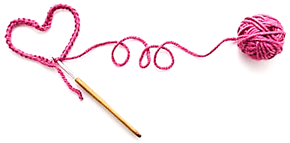
I could say I am hooked on crocheting during this latter part of the pandemic. It is incredible what a ball of yarn and a crochet hook can do for you.  Did you know research found knitting and crocheting lowers heart rate and blood pressure? Besides many other benefits, it also calms anxiety.  Perfect during this long pandemic, for what could make any of us more anxious than this pandemic with its numerous unfathomable unknowns. Studies also show that people in my age range and up who are “knitters and crocheters have the healthiest brains and memories.” (https://littlethings.com/lifestyle)  

Besides the mental and psychological benefits of crocheting, there are also physical ones, such as improved hand-eye dexterity and coordination.  It is not surprising, then, that crocheting has been popular for a long time.  For one thing, it is portable, as all you need are a simple hook and yarn. I would say, let us keep knitting or crocheting and if you do not know how, this just may be the perfect time to learn these skills.

Perhaps you are wondering what causes me to write about a hook and yarn in this reflection. Trust me, I am not about to spin a yarn, but here is my tale. While crocheting a baby blanket recently, I began to cogitate about how this pandemic continues to impact our lives in so many ways. While looking at the crochet hook in my hand, and the yarn wrapped around my fingers, it struck me what a great symbol a hook and yarn are for what we are busy doing right now during this pandemic - shaping a new reality.

Life tends to be bittersweet much of the time. I dare say, this pandemic is no different. When planet earth hooked the Covid-19 virus, we were thrust into this global catastrophe. For many, this pandemic has been a devastating experience.  Yet, if we take a moment to cast a backward glance over these past fourteen months, we may just be amazed to also discover many blessings.  We all know about the many tragedies and how much in our world has changed during this pandemic. It has not only changed our lives, it has changed us, or as author Charlie Mackesy puts it, "Isn't it odd, we can only see our outsides, but nearly everything happens on the inside.”

yarn.png

Yes, so much of what has happened has impacted and changed our innermost being. You may have come upon the saying doing the rounds on social media, “There are 4 ways you can come out this pandemic. A chunk, a drunk, a monk, or a hunk.” There is undoubtedly some truth to this, which brings me back to the hook. In response to the stress of the pandemic, what may have happened on our insides that got us hooked on things on the outside?  Are we now hooked on something lifegiving, like crocheting for example? Or are we hooked on something destructive, causing us to flounder or even to fall for it, hook, line, and sinker? Getting unhooked from any destructive habits, whatever they may be, is never easy.  However, getting unhooked from such habits triggered by the pandemic is a step in the right direction to reclaim our happiness and freedom, especially now that there seems to be light at the end of the tunnel.

In crocheting a hook is used to interlock loops of yarn.  Not all hooks or yarns are created equal; neither are we. Our individual life threads are unique ‘yarns’ and we each have unique hooks (talents) to interlock the threads of our present reality into a new, life-giving reality. What has been unveiled during this pandemic, is that we really are one, and not merely one in a virtual reality. We need each other to shape the new reality we all long for.

book invisible string.jpg

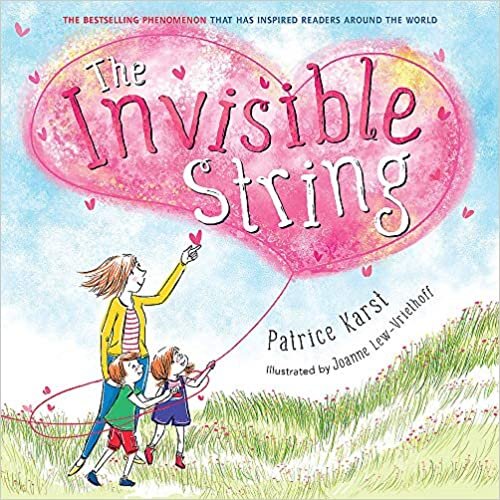
To create such a reality, we all need to discover anew our own hook, our own gifts.  Even if it is just one hook, let us use it for the good of all, for the future of all of us.  In her delightful children’s book, The Invisible String, Patrice Karst writes about people being connected by love over long distances by an ‘invisible string.’ If this pandemic has taught us nothing else, it has shown us how our invisible, individual life threads are hooked and interlocked with the threads of everyone else throughout the entire world. Even more importantly, let us remember, we are interlocked by a life-giving ‘invisible string’ with God, gracing us with all we need to shape our new reality. 

we are interlocked by a life-giving ‘invisible string’ with God, gracing us with all we need to shape our new reality.

Blessed and strengthened by this grace, and relying on each other’s goodwill, we can shape a new future, a life-giving reality. I dare say if we are hooked on hope - we can do it, together.

-Sister Magdalena Vogt, cps