
Learning to Read and Reading to Learn

Just reading this blog means that you can count yourself among those in the world who are literate. Being able to read and understand what you are reading brings many privileges into your daily life that you probably don’t even think about: following a recipe, reading the newspaper, helping your child with their homework, and simply enjoying a good book.

CODEpic.jpg

Today is International Literacy Day. Each September 8th since 1967, the world has set aside this day to advocate for closing the gap in global literacy. In Canada, literacy rates are 99% but many other places around the world are not so fortunate. In the Republic of South Sudan, for example, only 26.8 percent of people aged 15 or older are literate. How can a child reach their full potential if they cannot read and understand a simple sentence?

We know too that literacy drives all other forms of development. Gains in education are linked to improved health, fewer child marriages, economic growth, a greener planet, and more peaceful societies. Education is life-changing.

Eight years before UNESCO designated International Literacy Day, CODE was born in a church basement in Toronto. In 1959, a group of educators, librarians, and publishing professionals began packing unused books to ship to Africa in tea chests.  Today we intentionally supply schools in Ghana, Liberia, Mozambique, and Sierra Leone with books that are written and illustrated by local authors and illustrators, often in African languages, so that children can relate to the stories and see themselves and their culture valued.

CODE is Canada’s leading international development agency focused uniquely on education and literacy. In addition to books, CODE provides training to teachers in the use of instructional strategies that transform education from a one-way transfer of information (rote learning) to a dynamic process where the student is reading the text themselves, engaged, asking questions and developing critical thinking skills. Students are not only learning to read but reading to learn.

Before coming to CODE, I had lived for almost 20 years in Africa. While the state of education and quality of schools varied from place to place, I observed that the push for education and the drive to break the cycle of poverty is universal.

In September 2019 I had the pleasure to meet Whyteline, a 12-year-old girl living with her mother in Ashanti Region in Ghana where CODE has been working since 1990. Whyteline is in her first year of junior high school and is eager to learn. Each morning she walks 45 minutes to get to school and every afternoon makes the same trek home. She loves to read the books that CODE has provided to her school. She reads them aloud to her mother whose English is poor.  Whyteline said this to me,

"My grandmother didn’t go to school because in those days, that is what happened. My mother finished junior high school, but I will go even further…. I want to be a doctor.”

I believe and CODE believes that Whyteline has the potential to be a doctor and contribute to the health of her community and the development of her country. On this International Literacy Day, take a moment to be thankful for your own opportunity to learn to read, and read to learn - and remember those around the world who are yearning for the same chance.  

 -Janet Phillips | Fund Development Manager | www.code.ngo


The Sisters of St. Joseph are proud to support the work of CODE.

The Days of Awe

unsplash-image-98R8hu4cwes.jpg

ROSH HASHANAH AND YOM KIPPUR

Falling in autumn, the Jewish Days of Awe, or High Holy Days are the most sacred holidays in the Jewish calendar.

This is the time of year for introspection and examination of one’s self.

Rosh Hashanah means head of the year or New Year.  Celebrations take place at festive family dinners and in Synagogue.  This year, during Covid, many synagogues are offering masked, distanced services for members who are fully vaccinated or the option for online services.

During the meals, we dip apples into honey for a Sweet New Year, or a year of goodness—Shanah Tova.

YOM.jpg

Yom Kippur, or Day of Repentance,  is a solemn holiday where Jews over the age of Bar or Bat Mitzvah, age  13, fast from sundown to sundown. At this time we ask G-d for forgiveness for sins we have committed during the year.

Yom Kippur ends at sundown, with a meal including family and friends to Break the Fast.

Guest Blog from Judy Rochwerg.

Election 2021

A pattern has emerged on the federal election campaign trail: Party leaders and local candidates announce what they’re going to do for “you and your family.”  In so doing, they encourage us to think small and to focus on ourselves. 

unsplash-image-hzp_aT02R48.jpg

But we are interconnected with earth and each other.  And here’s the tension we must hold.  On the one hand, the crises which affect our lives (pandemic, colonialism, racism and other forms of bias, poverty, climate change, loss of biodiversity, pollution, and the deterioration of public dialogue, to name some of the key issues) affect us as a whole society (and indeed as a whole world), interacting with each other in ways which exacerbate their impacts.  On the other hand, we are all affected differently, with harsher impacts on people who are socially or economically marginalized. 

This means it’s not enough to consider how ‘we’ are affected, be it individually or as a social grouping.  If we are to address these crises, we need to identify who is most impacted and start there.  We elect governments to facilitate our efforts to do so.

Here are two different election bulletins that reflect on the current social, environmental, and economic context in ways that acknowledge our interconnectedness with earth and each other, identify key justice concerns, and offer questions for candidates.  The first is from Citizens for Public Justice and the second from KAIROS Canada.

-Sister Sue Wilson, CSJ

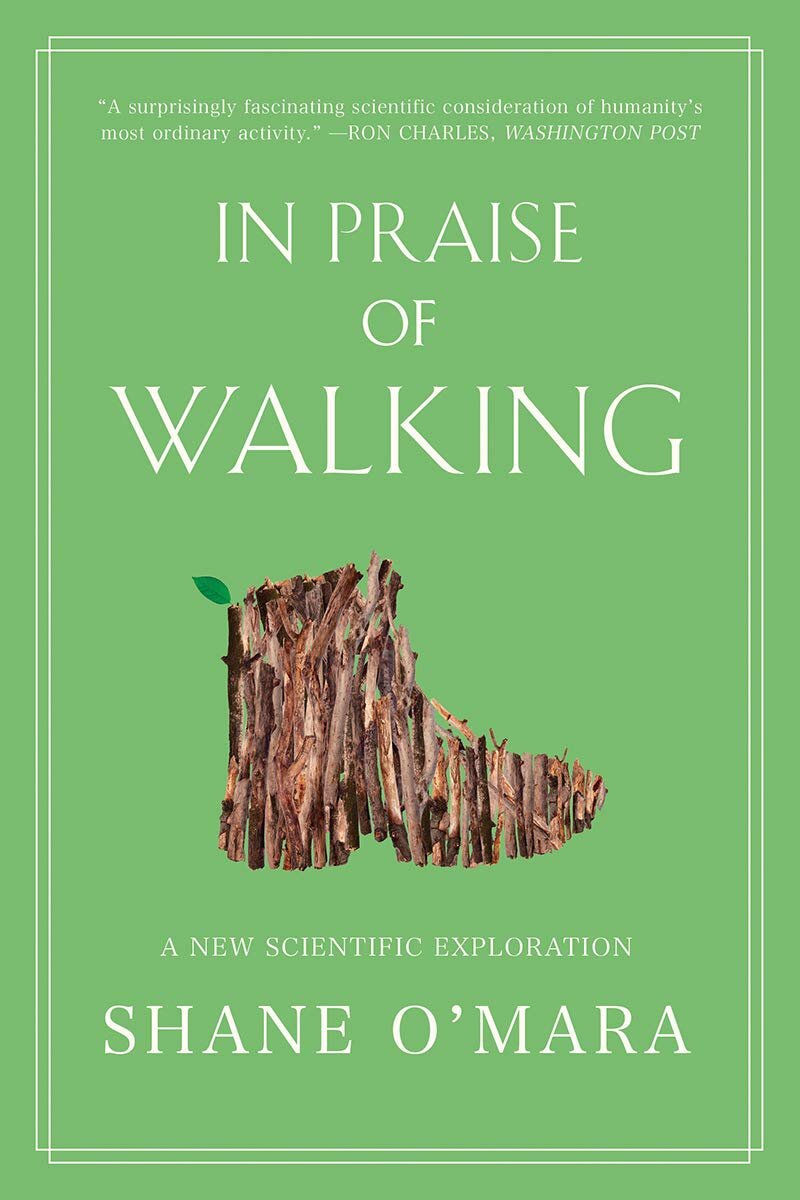
In Praise of Walking: A Book Review

WALKING.jpg

Before, and especially during the Covid-19 pandemic, I have acquired the habit of daily walking outdoors. I was not totally aware, however, of the benefits that walking provides until I read Shane O’Mara’s book.

O’Mara entitles one of his chapters “A Balm for Body and Brain”. He asks: “How does walking affect mood, mental health, and brain function? Regular walkers claim that being deprived of the opportunity to walk for even a few days, makes them feel sluggish and tired, and often a little bit down, and that the self-administered cure is simple – to go out for a good walk”. Exercising the heart by walking brings benefits to the head-heart axis. About 20% of the output of the heart goes to the oxygen-energy hungry brain.

A very interesting point that O’ Mara underscores is that when in a study he conducted, the participants were asked to estimate how they currently felt, then estimate how they would feel after a seventeen -minute walk outdoors compared to the same walk indoors in an underground tunnel. The effect of walking outdoors was compelling. Self-rated mood scores improved by about one-third.

the self-administered cure is simple – to go out for a good walk

Regular exposure to nature, which is backed up by scientific evidence, has effects on human health and welfare which are positive, measurable, and enduring.

O’Mara states “that the core lesson of his book is this: walking enhances every aspect of our social, psychological and neural functioning. It is the simple, life-enhancing, health building prescription we all need, one that we should take in regular doses, large and small, at a good pace, day in, day out, in nature and in our towns and cities.”    

-Sister Valerie Van Cauwenberghe, CSJ