
Autumn is the season that teaches us that change can be beautiful.
Cranberries…A Beautiful Gift from the Creator
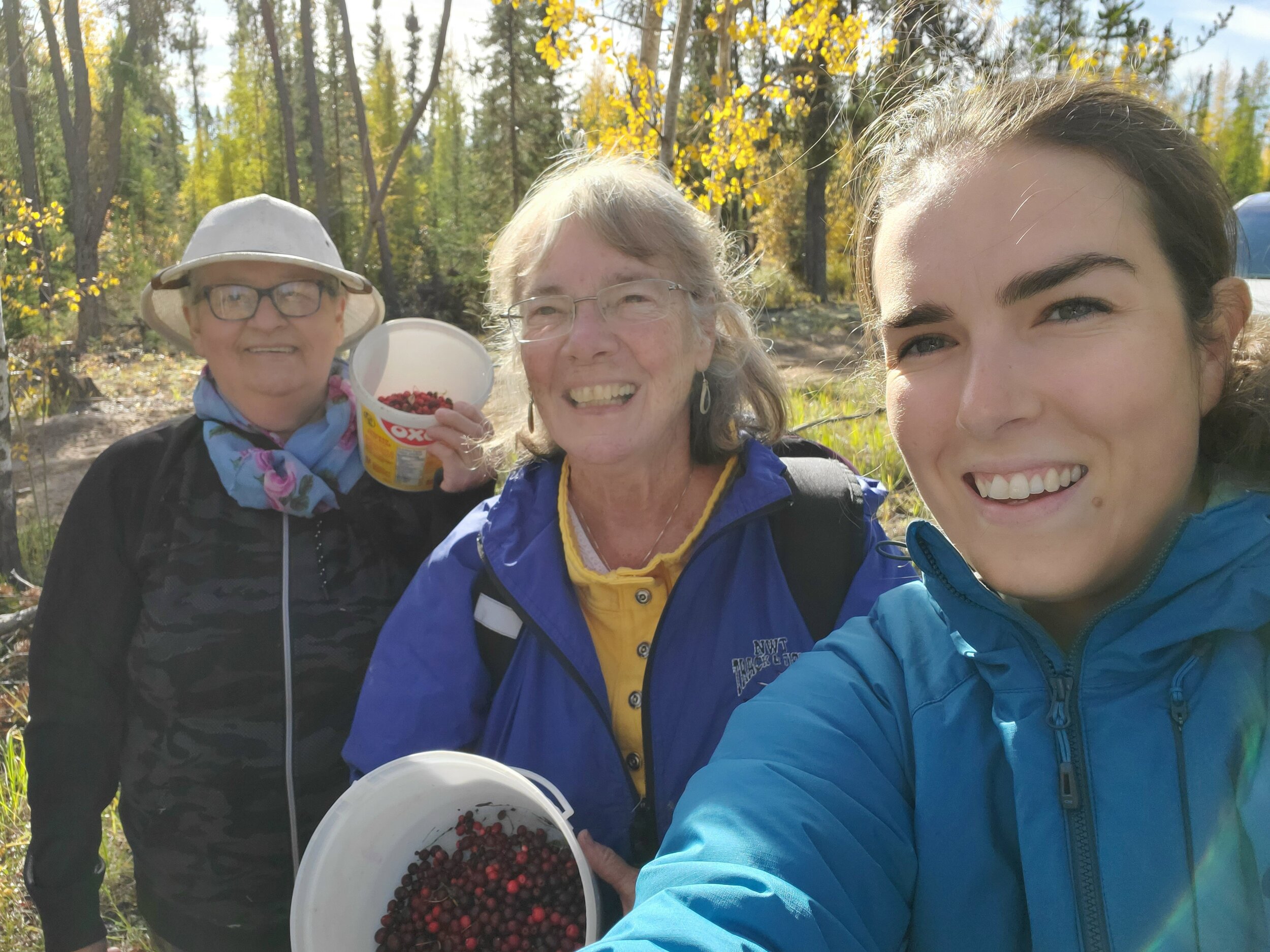
Cranberry Season, Sister Maggie in the middle with Beatrice and Julia
Every season, spring, summer, autumn, and winter holds a particular beauty for me. The later weeks of summer are some of my favourite because it is cranberry picking season!
When I visit “down south” and talk about picking cranberries, many people think that I am wearing hip waders and standing in ponds of water…perhaps, if I lived in B.C. However, did you know that there are highbush and lowbush cranberries? In Hay River, Northwest Territories where I live, I am surrounded with cranberries, both highbush and lowbush.


Pictured above: Left to right: highbush cranberries, lowbush cranberries, Sister Maggie with Beatrice & Julia, Sister Maggie’s special sauce!
Beginning in August I can be found along the trails or in the wooded area on my property picking highbush cranberries. The leaves resemble a narrow maple leaf, and the berries grow in clusters on a stem. Red in colour, the berries are small, juicy, and quite tart and have a small, flat stone. The bushes around the vicinity grow waist high. As the summer season progresses and cooler days come, the foliage turns a beautiful pinkish red and you can smell the scent of the berries in the air. Cranberries are an excellent source of Vitamin C. I make a wonderful barbeque type sauce with the berries. Although labour intensive, the process, and the aroma of the seven spices makes the task worthwhile.
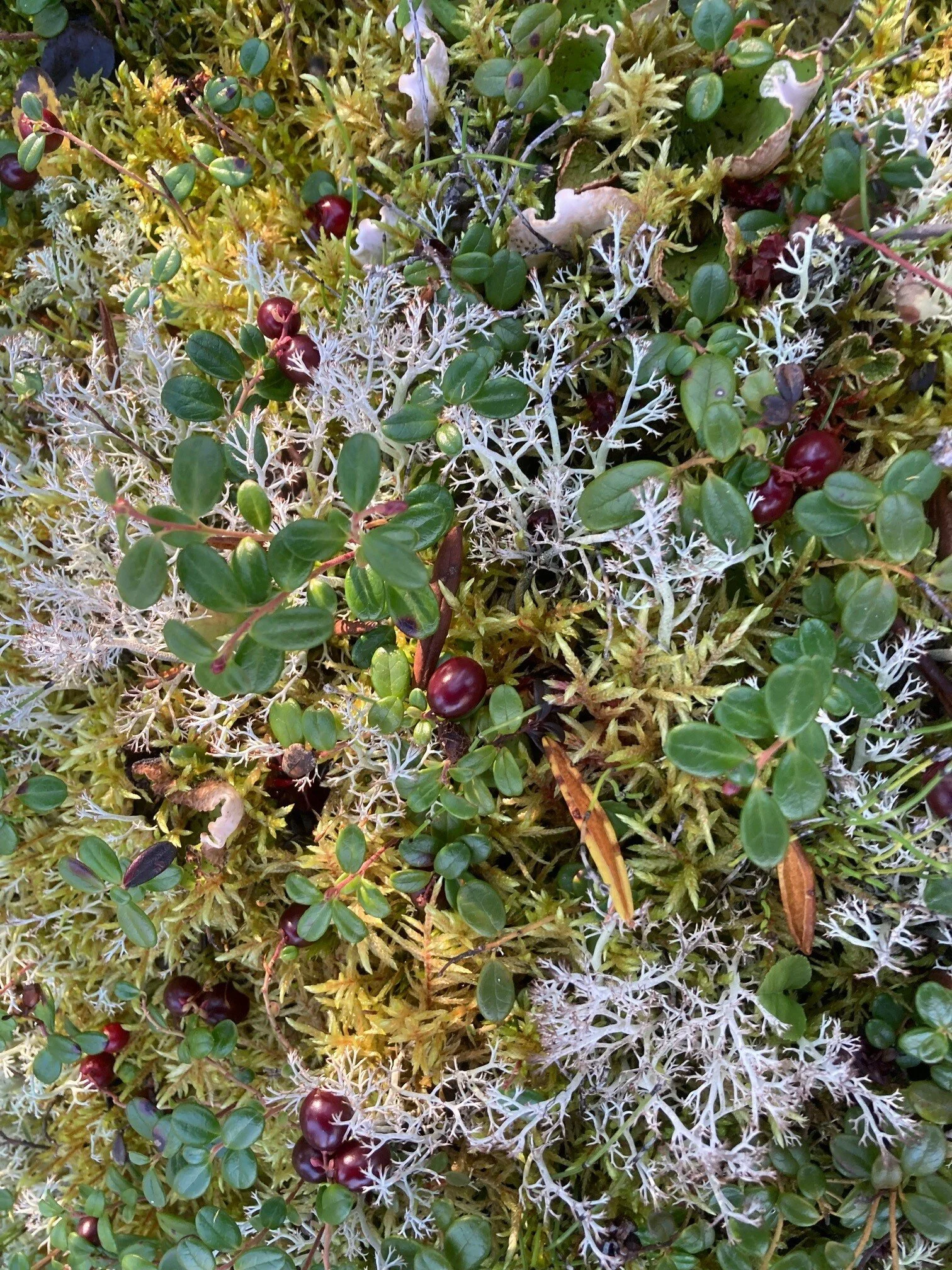
Low bush cranberries grow on the ground, so I am on my hands and knees picking these beautiful berries. I can spend hours picking, always aware of bears. To that end, I wear bells and seldom pick alone. Low bush cranberries are picked usually in September until the snow arrives. They are very tasty after the first frost. The leaves are leathery and shiny, and the berries are found at the end of the stem. Unlike high bush, these berries are sweet in taste and do not have a stone. The plants grow on muskeg, moss, around the trunks of trees and in tall grass. Some seasons the forest floor is carpeted with berries. The berries range in colour from red to a deep purple depending on the place they are growing. Sometimes they are found on white lichen or muskeg and their shiny gloss has the appearance of beautiful Christmas decorations within the whiteness of the lichen. In other places, I dig into the wet moss with my fingers to find the berries which grow to a good size and remind me of chocolate covered almonds in shape! These berries I simply clean and freeze in three cup portions. They are used in muffins, loaves, jam, and sauce.

lowbush cranberries
The season of cranberry picking is a time for moments of quiet reflection, time spent with friends, an opportunity to be aware and grateful for the gifts of the land. I try not to pick all the berries in an area, leaving some for the bears and birds and, also time to reproduce.
Cranberries are a beautiful gift from the Creator!
-Sister Maggie Beaudette, csj
Saluting Hospice Volunteers

The days leading up to Thanksgiving formed an appropriate time for the staff of St. Joseph’s Hospice of London to pay tribute to their generous volunteers in a method that has become popular during the pandemic months. On a sunny Wednesday morning, staff invited volunteers to a drive-by in front of the hospice area.
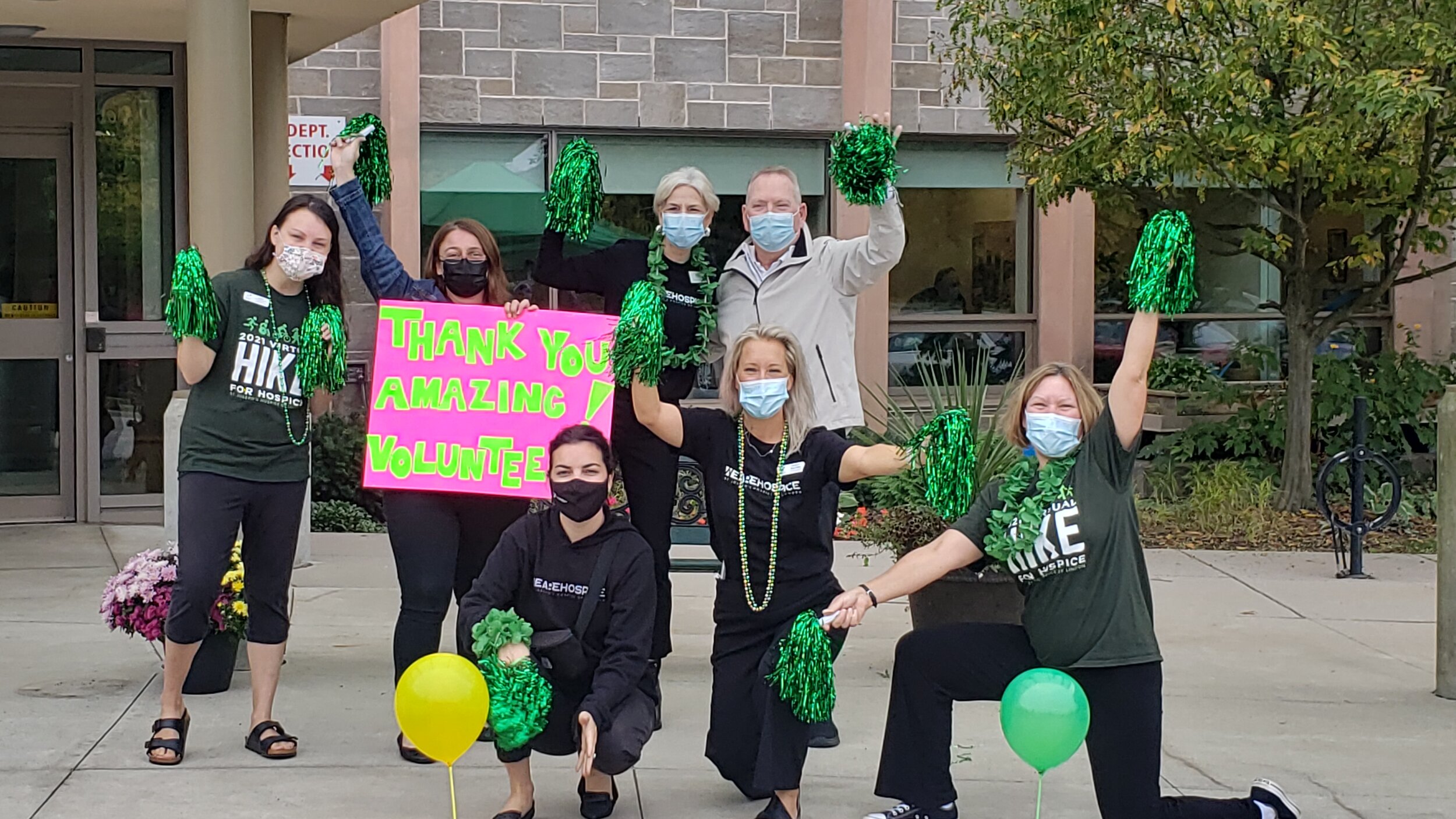
As the volunteers approached the circular driveway, they were greeted by vivacious young staff members dressed as cheerleaders in bright green, waving green pom poms and displaying placards of praise and support. They surrounded the cars and delivered words of praise and appreciation to the volunteers. From their brightly colored stands, they offered special coffee and refreshments. The expressions of gratitude were graciously received by those who came to be acknowledged for their generous assistance.

The hospice organization and staff recognize that volunteers are crucial to the ongoing operation of underfunded hospices. They work at the reception desk and help in the kitchen area. They give direct support in the hospice wing and in the wider community. They also take part in fundraising initiatives. Even the enclosed garden and grounds are thriving under the capable hands of volunteers. In fact, some volunteers are giving back to hospice in appreciation for the care given to a family member who spent his/her final days in hospice.

Volunteer appreciation day was a beautiful occasion for staff to reach out and recognize people who see how they can make a difference. They put their plans into action. Volunteers make a city a strong, vibrant, caring place to live.
Thank you for bringing your generous spirit to St. Joseph’s Hospice of London!
-Sister Jean Moylan, csj
St. Joseph’s Hospice of London is our neighbour here in London, Ontario. To find out more about the incredible work they do, you can visit their website here.
A Fine Fall Fair
Ilderton’s Fine Fall Fair

Who can resist attending a fall fair on a sunny October Saturday? Apparently, not Sister Florian and me as we found ourselves driving a short distance north of London to attend Ilderton’s Fall Fair. Although I didn’t meet the town’s famed Scott Moir of ice dancing fame at the little gas station as I did several years ago, I did see his, and dancing partner, Tessa Virtue’s names emblazoned on the large arena wall as we neared the fair venue.
Already, at 10:30am, the entrance lineup was forming as excited children were eager to run and take part in the day’s events. Florian and I headed to the large agricultural building where we were welcomed by happy volunteers. Looking around the venue, we met a couple of interested llamas, an Angus cow and her calf as well as several other animals. One large wall featured a display of quilting patterns alongside information booths and huge implements. Upon leaving the building, we jumped to attention with the loud, formidable bray of a nearby donkey.

The enticing aroma of grilled hotdogs and hamburgers whetted our appetites to partake of traditional fall food fare. As we sat at picnic tables alongside the food pavilion, we were awed by the obvious fact that fair day is family day. Happy, enthralled children sat with their loving, attentive parents. Many were infants and toddlers. I know that Ilderton is a growing community and so many young families assure me of its continued growth.

Our final walk was through the busy Midway. For a small-town fair, the number of vendors was considerable and the diversity of rides, amazing. A huge Ferris wheel and the stomach-churning, whirling, dipping octopus rides kept the young crowd in screaming hilarity. Meanwhile, adoring grandparents took their tiny charges on a carefully turning teacup ride. Since neither my companion nor I were brave enough to spend time in the air and our feet were tired, we decided to head for home.
Looking back, I marvel that after many decades, rural country fairs continue to survive even in the face of constant societal change. Fall fairs speak to the strength of community ties and the resilience of local people who keep it alive. They are a testament to the hard work and solidarity of rural neighbors and the timeless values of sharing and caring that are crucial for every age and time.
-Sister Jean Moylan, csj
Weekly Pause and Ponder

Gratitude is “a thankful appreciation for what an individual receives, whether tangible or intangible. With gratitude people acknowledge the goodness in their lives…as a result, gratitude also helps people connect to something larger than themselves as individuals – whether to other people, nature, or a higher power.”
-Harvard Medical School