

We Also Remember....
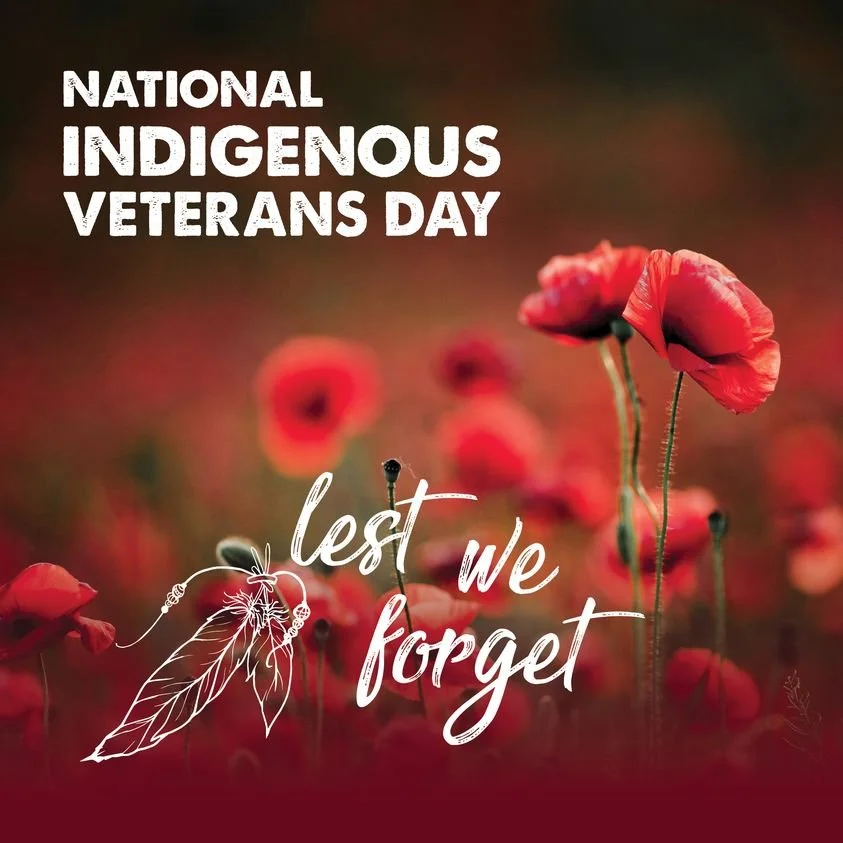
National Indigenous Veterans Day, observed on November 8, is a time to honour and remember the Indigenous peoples who have served Canada in times of war and peace for more than 200 years, from the War of 1812 and the two World Wars to Afghanistan and beyond. First observed in Winnipeg in 1994 as National Aboriginal Veterans Day, it recognizes the contributions of approximately 23,000 Indigenous Veterans, as well as the more than 2,700 Indigenous people currently serving in Canada's military.
As we honour their courage, service and sacrifice, we must also remember the injustices many experienced upon returning home. During and after the Second World War and the Korean War, Indigenous Veterans were often denied the same benefits and opportunities offered to other Veterans. Some lost access to their reserve lands, while others were required to give up their First Nations status to receive benefits. Their service deserves not only our gratitude but also our recognition of the hardships and inequalities they endured.
However, this rich heritage has been recognized in many ways. The names given to several Royal Canadian Navy warships over the years, like HMCS Iroquois, Cayuga and Huron, are just one indication of our country's lasting respect for the contributions of Indigenous Veterans. This long tradition of military service is also commemorated with the striking National Aboriginal Veterans Monument in Ottawa. This deeply symbolic memorial features a large bronze eagle at its top, with four men and women from different Indigenous groups from across Canada immediately below. A wolf, bear, bison and caribou—powerful animals that represent "spiritual guides" which have long been seen by Indigenous cultures as important to military success—look out from each corner. Remembrance ceremonies are held at this special monument, including on Indigenous Veterans Day which is observed each year on November 8.
-Sister Kathleen Lichti, csj
image: Dejan Zakic/Unsplash