
Guest Bloggers

Empty seats in lifeboats

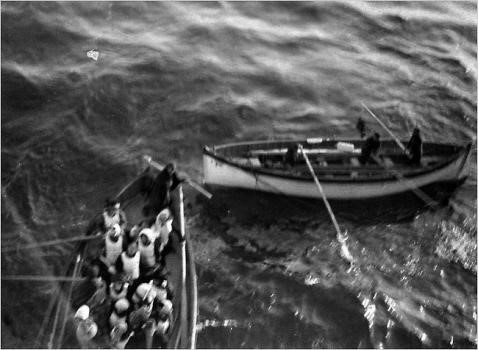
April 15th was the 104th anniversary of the sinking of the RMS Titanic.  That day in 1912, some 1,514 people perished in the frigid waters of the Atlantic. That is tragedy enough but 468 of those 1,514 people drowned entirely needlessly. There were exactly 468 empty seats in the lifeboats launched from the Titanic.

Perhaps it is not so easy to count the avoidable deaths in today’s refugee crisis. But a clear analogy can be drawn. The wealthy States of 2016 represent a lifeboat for the forcibly displaced. How many lives are lost every day, as a result of States’ failure to respond adequately to the current refugee crisis? Many States have the capacity, but lack the leadership to accept and protect more refugees, leaving empty seats in the lifeboats. The developing world shoulders a disproportionate share of the responsibility to protect refugees. Wealthier states can and must do more.

Canada has been rightly commended for resettling 25,000 Syrian refugees between November 2015 and March 2016. This is an important accomplishment that will make a tremendous difference in the lives of these 25,000 new permanent residents of Canada. It will also enrich the lives of the thousands of Canadians who are contributing to the resettlement effort. 

The United Nations High Commissioner for Refugees (UNHCR) has called Canada’s contribution “extraordinary,” and it is. Not because of its magnitude in the global context: the UNHCR has estimated that in the current crisis, over 1,150,000 vulnerable refugees require resettlement. Canada has helped only 2% of those in urgent need right now. Neither is Canada’s resettlement effort extraordinary because of its magnitude at home: Canada hosts only about 4 refugees per 1,000 population. Compare this to the contribution of Lebanon, which hosts over 200 refugees per 1,000 population. In Lebanon, one in every four or five people is a refugee! 

Our contribution is extraordinary because even as Canada sails to the rescue of these few, many States are rowing in the opposite direction. Although the United States of America historically has resettled about 85,000 refugees each year, the hurtful rhetoric currently being used in the presidential primaries prompts the question: how long will that policy last? Thus, the leadership of Canada is quite timely and patently necessary.

Amnesty International has proposed a 2016 Human Rights Agenda for Canada, outlining several policy recommendations to protect the rights of refugees and migrants.  Amnesty is also collaborating on the Refugees Welcome Here! Campaign with the Canadian Council for Refugees.  Here are three ways that the campaign partners assert Canada can continue -- and expand -- its leadership on refugee protection:

  • Reunite refugee families;
  • Recognize refugees, respecting non-discrimination principles; and
  • Resettle more refugees.

●  Reunite refugee families

Canada should introduce Express Entry family reunification for refugee families so that children are reunited with their parents in 6 months or less. The current waiting time for these children is staggering: 3 years.  Furthermore, Canada does not expedite processing of family members, even when children are living in a country at war. 

Arash is just six years old. He has been waiting over 2 years in Afghanistan to reunite with his parents, who were recognized as refugees in Canada in 2013.

●  Recognize refugees, respecting non-discrimination principles

Canada should eliminate the Designated Countries of Origin (DCO) regime in its refugee determination system. Refugee claimants from DCOs must counter a presumption that their country is “safe.” Their process has shortened timelines that do not afford claimants a fair and reasonable opportunity to prove their claim. This discriminatory treatment particularly affects Roma, women fleeing gender-based persecution and LGBT refugees. 

In July 2015, the Federal Court of Canada ruled that the DCO regime violated the Canadian Charter of Rights and Freedoms because it discriminated against refugee claimants on the basis of national origin. Yet aspects of the regime remain in place. 

●  Resettle more refugees 

Canada should open the door to refugees from around the world by sustaining the increased resettlement numbers and resolving the restrictions and delays that have been undermining private sponsorship.  Canada can and should commit to resettling 20,000 Government-Assisted Refugees each year.  Moreover, Canada should improve the very slow processing times for private sponsorship:

  • The average processing time is 51 months.
  • Processing times are truly glacial in parts of Africa, reaching nearly 70 months in Nairobi, Kenya.

he eyes of the world are on Canada, with its unique measures supporting refugee protection.  There is a role, both for government and for individuals to continue this leadership.  Will you make a personal commitment to be a part of refugee protection in Canada?  Please take the Refugees Welcome Here! Pledge.  The greater the number of pledges taken, the stronger our evidence of Canadians' support for refugee protection and the greater the likelihood we can effect positive changes in Canada’s refugee policy.  Together, Canadians and our government must do our part to ensure that there are no more empty seats in lifeboats.

Used with Permission

Guest Blogger: This article was written by Christine Harrison Baird and is part of the Refugees Welcome Here! Campaign, a collaboration between the Canadian Council for Refugees, Amnistie internationale Canada and Amnesty International Canada. The pledge and a wealth of campaign materials are available at:  http://www.refugeeswelcomehere.ca/.


The Reason You Walk: A Book Review

The title of the book comes from an Anishinaabe travelling song used to close their gatherings in the Lake of the Woods country. It is sung from the perspective of the Creator singing to you:

“I have created you and therefore you walk, I am your motivation, I am that spark inside you call love, which animates you and allows you to live by Anishinaabe values, I am the destination at the end of your life that you are walking toward.”                        

Wab Kinew’s memoir is a tribute to his father and the effect residential life had on three generations; his grandfather, father and himself. It is also a story of reconciliation. Kinew begins his memoir with descriptions of his father’s early life. He was a happy youngster living at home with his family and relatives until that day when a man in a black robe came to the reservation to take him away to St. Mary’s Indian Residential School outside Kenora Ontario. Only after 60 years, from the vantage of old age did Wab Kinew’s father, Ndede, open up to his son about the abuse he suffered and the experience he had watching his young Indian friend being killed by a group of men, of his being raped and humiliated and being made to kneel at his father’s funeral when Indian custom dictated that he stand. These are very personal stories and knowing them makes the latter part of Ndede’s life all the more remarkable. The residential schools were a social experiment with the aim of “taking the Indian” out of the child which we now recognize as “Cultural Genocide”.

One of the worst legacies of the residentials schools was “the emotional, physical, and familial gulf confronting survivors who never learned how to parent their children.” Ndede overcame the pitfalls, surviving alcoholism, racism, a failed marriage and finally returning to his Indian roots. He was a traditional chief who married a non-Indian, Wab’s mother. In his memoir Wab relates his own struggle in his youth. He was a former rapper, immersed in alcoholism, drugs and spent time in jail. Then, finally taking responsibility for his life just as his father had, he became an academic, a hereditary chief, a journalist and a father. He worked for the CBC and has become an urban activist and has recently announced he is seeking a political life

When Ndede was diagnosed with cancer Wab left his work at the CBC to be with his father during the last months of his life. His sister also returned from Europe putting her doctoral studies on hold. During this time father and son worked on an Internet App for the Anishinaabe language. The bonding that took place between these two men is a heartwarming story. Both men worked at the university promoting courses in Indian Studies. When Ndede died there was a funeral service on the reserve and a memorial service in Winnipeg. It was attended by many dignitaries including Archbishop James Weisgerber who had been a friend, as well as many politicians, the premier, cabinet ministers, university colleagues, students, First Nations elders, and two former national chiefs. Forgiveness became Ndede’s way of finding peace. He had met Pope Benedict XVI in 2009 and was present at Kateri’s canonization in 2012 .

Both Wab and his father were Sundancers. This Indian Spiritual Ceremony had been outlawed in the USA in 1895 and in Canada in 1904. It did continue in secret and is now being recognized as a legitimate religious ceremony. Wab’s description of his own piercing on the last day of the four day ritual was fascinating to read. The memoir ends almost as a meditation on the meaning of life.

To be hurt, yet forgive, to do wrong, but forgive yourself, to depart from this world
leaving only love. This is the reason you walk
”.

This is a must read book that will help us to understand the way forward. Kinew wants us to realize that there are three groups at the conference table in Canada. The Federal, Provincial and First Nations Governments.                                                  

Guest blogger Janet Brisson

Book Review The Reason You Walk: Wab Kinew, Penquin Canada, 2015.


Federal budget a step toward Indigenous reconciliation

The Trudeau government's budgetary promise to Canada’s Indigenous communities is as encouraging as it is overdue

  “I commit to you that the Government of Canada will walk with you on a path of true reconciliation, in partnership and friendship.”

So vowed Prime Minister Justin Trudeau as he donned the traditional headdress accompanying honorary membership in the Tsuut’ina Nation earlier this month. The ceremony, held near Calgary, Alberta, involved over 100 Treaty Chiefs from across Canada.

Trudeau was also awarded the name Gumistiyi, “The One Who Keeps Trying.”

As evidenced by the government’s inquiry into murdered and missing aboriginal women, as well as last week’s budget, which directs billions in new funding toward indigenous communities, Trudeau is indeed trying to signal a new federal relationship with Canada’s indigenous citizens. As the prime minister claimed, there was no relationship “more important to me and to Canada” than the one involving “First Nations, the Métis Nation, and the Inuit.”

In the budget released last Tuesday by Finance Minister Bill Morneau, $8.4 billion has been earmarked over the next five years, in phases, for infrastructure, health and education initiatives. Declaring the new investment “historic,” Assembly of First Nations National Chief Perry Bellegarde claimed the new funding will be a “very significant step” in improving the quality of life “for our people.”

The new spending is unparalleled, pledging $3.4 billion more than the moribund 2005 Kelowna Accord, which was endorsed by Paul Martin but eschewed by Stephen Harper.

This budgetary promise to Canada’s indigenous communities is as encouraging as it is overdue. As a CBC investigation released last fall revealed, many of Canada’s First Nations still experience appalling health, housing, and sanitation services, mirroring in some cases the desperate conditions of the most impoverished nations in the global south (conditions of special concern for MP Carolyn Bennett, herself a physician and now Minister of Indigenous and Northern Affairs).

Two-thirds of all Canada’s First Nations communities, for example, have been under a drinking water advisory during the past decade, with the Neskantaga First Nation of Ontario suffering under a “boil water” order for 20 years. Imagine having to boil your city tap water for 20 days, let alone 20 years, and you get a droplet of what our indigenous brothers and sisters have to endure each day. For years.

And as UN human rights observers, government reports, and media investigations have repeatedly observed, First Nations housing across the nation is deplorable, with severe shortages, overcrowding, and ramshackle homes the norm rather than the exception. In the devastating case of the northern Ontario Cree community of Attawapiskat, for example, the Cree leadership was forced to declare a state of emergency five years ago. With dozens of families living in non-insulated tents and makeshift sheds, sans heat or water, and many more living in condemned buildings, conditions are death-dealing. The average temperature for January in Attawapiskat is -27C.

While indigenous leaders such as Chief Bellegarde have welcomed the increased resources heralded in the new budget, others, such as Cindy Blackstock, President of the First Nation Child and Family Caring Society, have been less enthusiastic. She notes that $634.8 million pledged to child welfare is spread out over five years, when there is urgent need now for help. Moreover, she notes, the largest portion is slated for the fall of 2019, after the next federal election.

For Timothy Leduc, a scholar whose research touches on indigenous world views and climate change, such critiques reflect a sense that Canada needs to move eventually to a federal budget that “totally revisions” the status quo. Leduc, a professor at Wilfrid Laurier University and author of the forthcoming book, A Climate of Mind: Passages from Fur to Energy and Beyond, notes there is a “deep historic discord” between Canada’s historical resource-based economy and Indigenous lifeways entailing profound connections to the land. We are in a time, he avers, “when fast and broad changes are needed; changes that have cultural depth and practical implications for all.”

As Leduc’s work suggests, the healing of relations and the fostering of friendship among indigenous persons, the Canadian government, and the entire multicultural skein of Canada, will involve deep shifts in our reigning social, economic, cultural and ecological patterns.

This healing will require that all of us, not just the prime minister, “keep trying.”

By: Stephen Bede Scharper  republished with his permission.

 Stephen Bede Scharper is an associate professor of environment at the University of Toronto. His column appears monthly.  


I Saw a Cross Upon a Hill : A Donkey's Tale

Are you enamoured by my cousins, Eeyore, that loveable donkey from the tales of Winnie the Pooh or is your style more a moviegoer’s favourite, tough guy, Donkey, Shrek’s talkative sidekick?  Do you sometimes find yourself humming that delightful Donkey Serenade, keeping company with a mule?  Such light hearted fun; but let’s put aside talk of my fictitious cousins.  Since truth is often stranger than fiction, let me tell you a little about myself, my humble self whom Chesterton once described in his humourous little poem as one:

With monstrous head and sickening cry,
And ears like errant wings,
The devil’s walking parody
Of all four-footed things.

But let me back track a little. About thirty three years ago, as legend has it, a humble little burro was chosen to carry pregnant Mary to Bethlehem to give birth to her Child. Did this not foreshadow the day I would be chosen to carry her Son into Jerusalem?  I will never forget that day! How could I forget our humble God enthroned upon my back?  I carried him that day, cautiously weaving through the cheering crowds, when all at once ‘There was a shout about my ears, and palms before my feet.’

His mission almost finished, I heard him warn his disciples that He would soon be put to death. Put to death, how could that be?  Surely, I had gotten it all wrong! 

I’m just a donkey, just the ‘devil’s walking-parody on all four footed things.’  Perhaps that’s all you think I am. However, when a distant rumble, ‘Crucify him’, pierced my ears, I stood and shuddered.   In the distance I saw a cross upon a hill and wished I could have carried it for him. 

No ludicrous buffoon am I.  No donkey ever was. You see, because I carried the King, donkeys, generations after me, bear a cross upon their backs.  May you, my friend, I beg you, think twice before you call someone an ass – for she or he, too, bears the divine.

Guest blogger Sr. Magdalena Vogt, Missionary Sisters of the Precious Blood

                The Donkey

When fishes flew and forests walked,
And figs grew upon thorn,
Some moment when the moon was blood,
Then surely I was born.

With monstrous head and sickening cry,
And ears like errant wings,
The devil’s walking parody
Of all four-footed things.

The tattered outlaw of the earth,
Of ancient, crooked will;
Starve, scourge, deride me: I am dumb,
I keep my secret still.

Fools! For I also had my hour;
One far fierce hour and sweet:
There was a shout about my ears,
And palms before my feet.

         C. K. Chesterton


International Women’s Day

Monday, March 7th is International Women’s Day, celebrating the progress of women. Over the last year we have seen continued growth in our world towards greater equality, justice, and meaning for the lives of female identified people. Women and girls are courageously claiming their space and becoming a visible presence in the public domain. Through their social, economic, cultural and political achievements they are boldly demonstrating a collective response to ending poverty and violence. Award winning journalist Sally Armstrong in her book, Ascent of Women, compellingly tells their empowering stories of making change happen.

The 2016 theme for International Women’s Day is Planet 50-50 by 2030: Step It Up for Gender Equality. We do indeed need to step up as a global community to strengthen commitments on gender equality, women’s empowerment and women’s human rights.  We must re-commit daily to end violence against women in all its forms.

Even in adversity there is cause to celebrate. We are made aware of this in Canada, as we witness the struggles of Indigenous Women throughout their lands. In their daily lives, these women encounter multiple layers of violence that continue to threaten their existence, well-being and spirituality.  While facing such dramatic challenges they continue to emphasize the importance of action, community and care of Earth as a process of healing.

Indigenous women’s leadership is informing us that gender equality is a compass to how we share our world.  They are tackling issues of identity, culture, empowerment and opportunity through land defense, risking their liberties to stop the environmental impact of pipeline construction and shale gas mining. Raising their voices, they are demanding both human justice and equality and eco-justice for the land. They are reminding us that the struggles of women are indivisible from the destruction of planetary eco-systems. To reverence one is to love the other. They are sharing the wisdom that their healing – the healing of the global community- is intrinsically connected to the healing of our wounded Earth.

On this International Women’s Day, together let us set our intention to end violence against women. Let us raise up the many courageous women who are beacons of hope to us all and who reflect so clearly our interconnectedness with all creation. 

Guest blogger,    Janet Speth, Sister of St. Joseph of Toronto

Find out more about the new commitments under the UN Women’s Step It Up Initiative

http://www.unwomen.org/en/get-involved/step-it-up