

Guest Bloggers

St. Patrick’s Day

Family Roots and Irish Tradition

Patrick was my father’s name. He grew up in Douro, a small, distinctly Irish township situated just east of Peterborough, Ontario. My mother, Bridget, was born in Newbridge, County Kildare, Ireland. When she married my father and met the people of Douro, she remarked that their accents were even more Irish than those in Ireland itself! This background meant that St. Patrick’s Day was always a special occasion for our family. Our celebrations included attending morning Mass, watching a parade, enjoying Irish music, and sharing a meal of Irish stew and soda bread. We continue to honor these traditions to this day.

The Legacy of St. Patrick

St. Patrick was never formally canonized by the church because he lived and died before the official process of canonization began in the 12th century. Instead, he was recognized as a saint by the people, admired for his remarkable achievements in spreading the Christian faith to nearly every part of Ireland.

Prayer and Pilgrimage

St. Patrick was renowned for his preaching and his deep devotion to prayer. Much like Jesus, he would retreat to quiet places for prayer and reflection. One such place is Croagh Patrick, a mountain in County Mayo, which remains a site of pilgrimage to this day. Perhaps this March 17th, you will join me in reciting this beautiful Prayer of St. Patrick or listen on to Rita Connolly singing “The Deer’s Cry”.

The Prayer of St. Patrick

Christ with me, Christ before me, Christ behind me, Christ in me, Christ beneath me, Christ above me, Christ on my right, Christ on my left, Christ when I lie down, Christ when I sit down, Christ when I arise, Christ in the heart of everyone who thinks for me, Christ in the mouth of everyone who speaks of me, Christ in every eye that sees me, Christ in every ear that hears me.

-Maureen Condon, csj associate

Images: Quentin Rey/Allec Gomes/K. Mitch Hodge | Unsplash

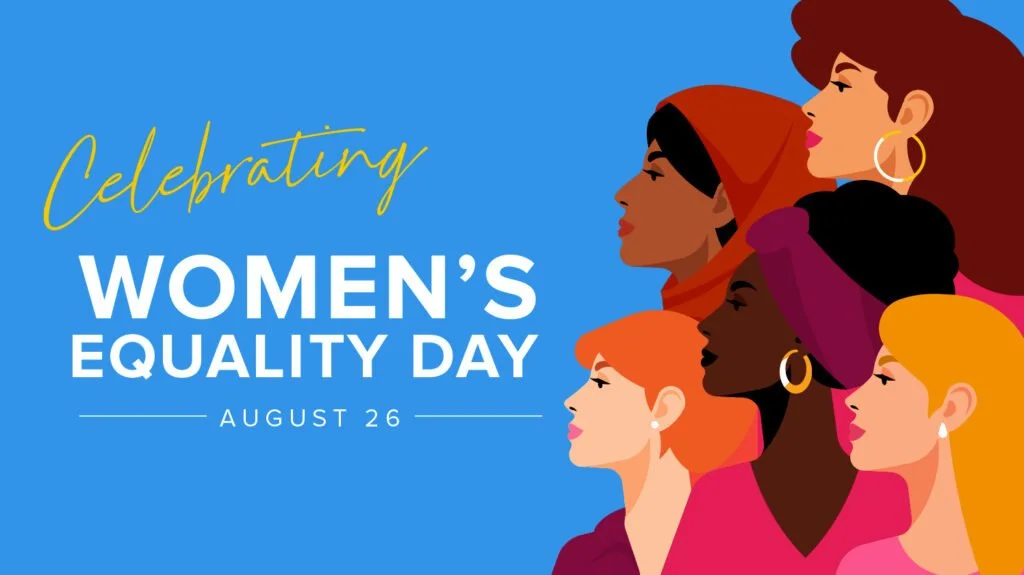
International Women’s Day: Honouring Resistance, Demanding Equality

Ketty Nivyabandi, Amnesty Int’l Canada [Photo Credit: Dave Chan]

As we approach International Women's Day, I am called to reflect on the extraordinary courage of women human rights defenders around the world who are leading, organizing, and resisting injustice in the face of unprecedented pressure and risk. Women like Yanar Mohammed, gunned down only last week outside her home in Baghdad.  

As authoritarian practices gain ground globally, we are facing a global, coordinated, and well-funded crackdown against hard-fought human rights gains. History reminds us that gendered violence has so often been used as a political tool to divide society and concentrate power.

Women who speak out face harassment, surveillance, detention and physical harm. Economic exclusion is used to limit their independence, and digital spaces are manipulated to silence their voices.

In Afghanistan, women have been systematically erased from public life. Girls who could attend school only a few years ago are now forbidden to do so. Women working to provide for their families and drive forward progress are now forced to remain at home, venturing out only when a male companion is present.

In Canada, the rights of Indigenous women to live in safety and raise families in traditional manners to keep cultures alive are threatened by apathy and antiquated laws designed to suppress their identities and rights. 

And yet—despite all such odds stacked against us—women remain the most integral of threads in the social, economic, cultural, and political fabric of life everywhere.

Women the world over are pushing the boundaries of what is acceptable. Of what we will tolerate.

In Ecuador, the Guerreras por la Amazonía remind us that women and girls of all ages are fierce defenders of their homes and communities. In Mexico, women have led the search for thousands of disappeared people and continue their pursuit for truth and justice, in the face of unrelenting threat.

I am firm believer in the power of women to reshape our world. To all the women across the globe fighting against immense odds to protect the rights of all, we salute your courage, but we do not salute it from the sidelines. We salute it in solidarity and action alongside you.

-Ketty | Ketty Nivyabandi is the Secretary General of Amnesty International Canada.

Image: Unsplash

The Journey Through Lent

I remember our parish’s Good Friday pilgrimages, when we walked from our small village to the neighboring one, taking turns carrying the cross. It was a trek marked by enthusiasm, joy and excitement where we would transfer the cross from one pair to another so each of us would reach the end without a sense of agonizing pain. Some ran ahead with youthful abandon while others lagged.

Likewise, the journey through Lent follows a determined course that proceeds from beginning to end. Some actively count off the days and weeks until we reach Holy Thursday with a final focus on Christ’s journey during the Triduum. Even as I write, there is a temptation to note that we are in the Third Week of Lent – partway through – as if the destination is the goal. “Keep your eye on the prize,” as the saying goes.

Christ suffered agonizing pain in his final hours; did he know beforehand the pain he would endure on our behalf? He did not pass the cross to another to make it easier on himself. In fact, each step he took throughout his mission required a dying to self so that we might live.

The 15-week Buddhist "Walk for Peace" from Fort Worth, Texas, to Washington, D.C. that concluded on February 10, 2026 has inspired me. In one of his daily teachings, the The Venerable Monk Bhikkhu Pannakara spoke of the need to look at ourselves in the mirror when brushing our teeth each day and then immediately wipe the spots of toothpaste off the reflection staring back at us. “Don’t leave it for later when it's much harder to get off,” he said.

“A journey of a thousand miles begins with a single step,” says the old Chinese saying or as my Spanish teacher used to say, “Poco a poco, se va legos” (little by little, one goes a long way). Focusing on each step, and the presence of God’s spirit within those steps, is what makes the Lent journey meaningful. Travelling the spiritual journey is a step by step walk on God’s Holy Ground.

-Susan Hendricks, csj associate

images: Jamie Ginsberg/Art Institute of Chicago @artchicago | Unsplash


I have been crucified with Christ and I no longer live, but Christ lives in me. The life I now live in the body, I live by faith in the Son of God, who loved me and gave himself for me. Galatians 2:20

Embracing the Journey of Lent

First Week of Lent 2026

Embracing the Journey of Lent

A Scriptural Reminder

Matthew’s gospel sets the tone for the first week of Lent by recalling that “Jesus was led by the Spirit into the wilderness” (Mt 4:1). During this time, Jesus fasted, prayed, and faced numerous temptations over forty days. Through steadfast fidelity to the Father, He overcame each challenge. Maintaining such fidelity can be difficult, but it remains essential in our spiritual journey.

Invitation to Reflection and Growth

As Lent begins, we too are called to listen intently to the Spirit and allow ourselves to be guided to spaces of reflection and growth within our daily spiritual lives. The invitation extends to fasting, prayer, and performing acts of kindness. These practices are gifts—gentle reminders to focus on what matters most, even as daily life becomes hectic and crowded with news, routine tasks, work, studies, parenting, and the distractions of social media.

Responding with Enthusiasm

Let us respond wholeheartedly to God, who desires to draw us closer. Through this journey, we can deepen our understanding of ourselves and our relationships and recognize God’s presence both in our neighbors and in our own lives. The effort is always worthwhile.

Scriptural Encouragement

“Let the hearts that seek the Lord rejoice” (Psalm 104:3)

-Maureen Condon, CSJ Associate
Lent: A New Focus

Welcome to Lent!  Lent can be a wonderful time of renewal and refreshment if we put the time to good use. Although Lent can be seen, in part, as “do good and avoid evil” it is more than that. More also than give up something bad or add something good.

We can consider new attitudes and refocus our lives and efforts and resources. We can see where we stand in life and make efforts to "steer the ship "carefully .

Finally, we can let go of grievances, regrets, illusions and renounce what maybe holds us back or holds us down in life .

-Father Daniel Vere, Guest Blogger

Father Dan hails from Stratford and is the Priest-Chaplain of the London Health Sciences Centre and St Joseph’s Health Care. He works as on-call chaplain at the 4 London hospitals and occasionally at hospice.