
Remembrance Day

Remembrance Day

It is a privilege to acknowledge and honour the bravery, commitment and life-giving sacrifices of Canadian Veterans each year but this year I would like to highlight two intertwined celebrations.
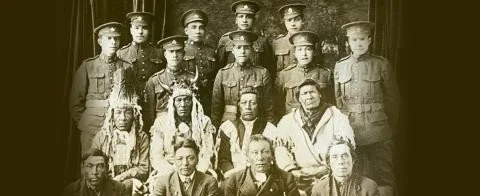
Starting in 1994 in Winnipeg, National Indigenous Veterans Day has been celebrated on Nov 8th. This day acknowledges the significant contribution of Metis, First nations and Inuit veterans in various conflicts who faced systemic inequality and denial of the same post war benefits as their non-indigenous counterparts. Always resilient, they worked diligently, especially in the light of reconciliation efforts, to develop this day of special recognition. The local celebrations include such cultural features as drumming, smudging, singing, dancing and a sacred fire. It is a time to spend with family and community in a less formal setting.

November 11th, the traditional Remembrance day continues in all municipalities in Canada, noted by the singing of our national anthem, prayers speeches in honour of our veterans and their sacrifices, children singing “In Flanders Fields” and more often now welcome and significant involvement of our First Nation, Metis and Inuit brother and sisters. May we continue to move toward oneness of celebration and reconciliation on all fronts.            

Thanks Dad and ALL VETERANS !        

-Maureen Condon, CSJ Associate

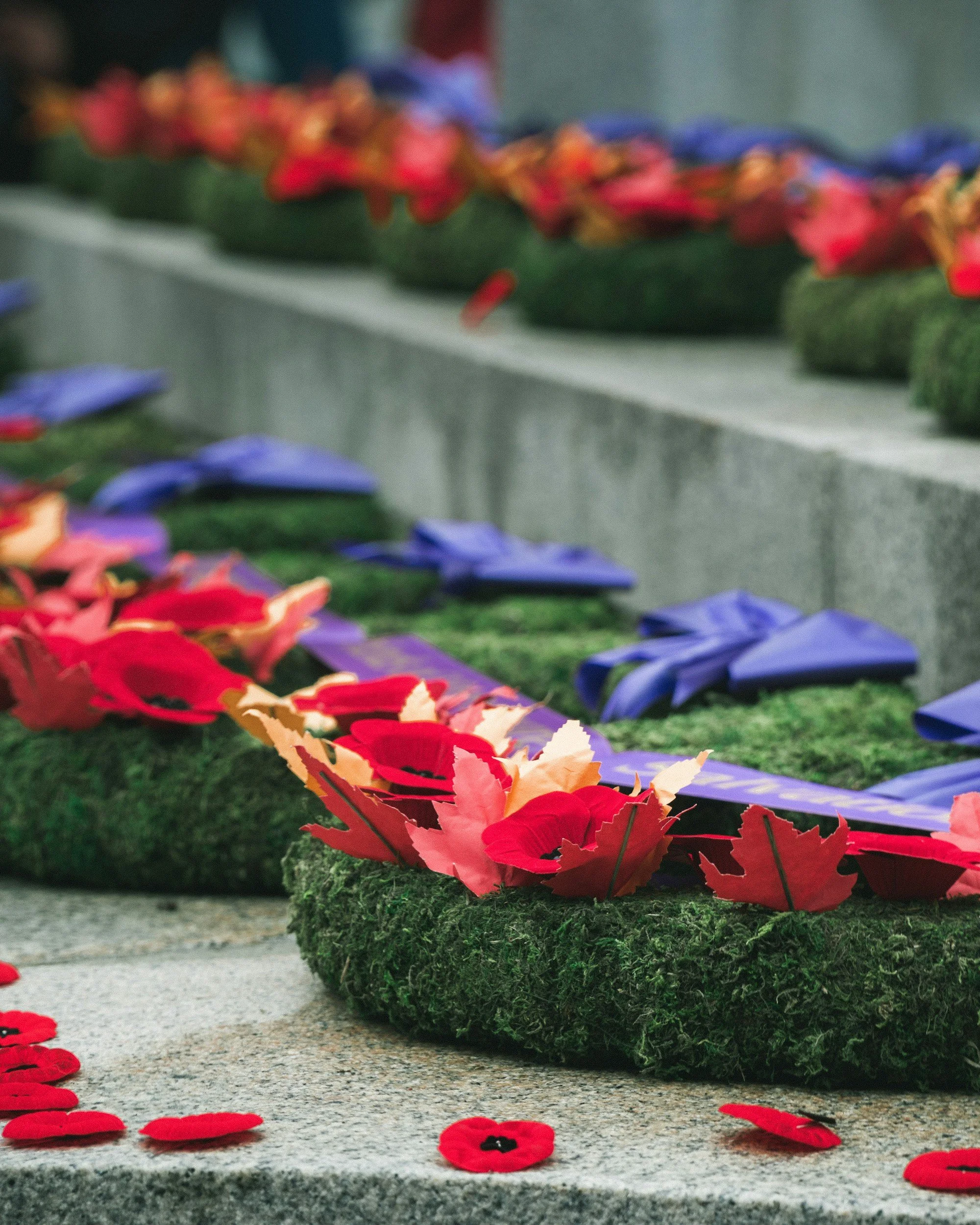
Image: Annie Spratt @anniesprattGlib Albovsky @albovsky | Unsplash
Honouring Our Veterans

On November 11 each year we remember the men and women who have served in our armed forces.  We honour those who have given their lives to bring about peace in our world. On Remembrance Day, when I watch the ceremonies televised from the National War Memorial in Ottawa, participate in London’s solemn remembrance of our veterans, or listen to radio broadcasts of the stories and soul-stirring songs of World War Two, I am profoundly affected.   The aging veterans of WWII marching in Ottawa, wearing medals and berets, present a powerful image of the human costs of war.  In WWII, Canadian soldiers or their forefathers were likely to have immigrated from the British Isle or France. Canadians were united in fighting for their own country as well as for Britain and France.  WWII was our war fought by our citizens for our Country. 

Today our population is more diverse. Wars in far-off places are perceived as less relevant. Brigadier Romeo Dallaire took command of a lightly armed force of 2,500 troops in Rwanda in 1993.  When the situation worsened Dallaire’s urgent request to the United Nations headquarters in New York for more troops and was turned down. The murder of Rwanda’s president shortly afterwards initiated a war in which the Hutu populations exterminated the Tutsis; 8,000 persons were murdered, and 2,000,000 persons became refugees. Canadian Armed Forces have served as peacekeepers in Rwanda (1993-95), Cyprus (1964- 93), Afghanistan (2001-2014), The Bosnia-Herzegovina (1992-2010), Namibia (1989-1990), Mali (2018.2023).  Our military personnel have engaged in battles or assisted other nations by training troops, providing transportation, logistics, and stabilizing emerging countries. 

Today, conflicts in Africa, Afghanistan and the Balkans seem peripheral and less relevant to us. I was told by an officer who fought in Afghanistan that the war there seemed to accomplish nothing; there was little enthusiasm for joining in this venture. Many veterans of these wars have suffered greatly but their stories receive little public recognition. At home Canadian veterans of foreign wars and peacekeeping services do not “fit” in the culture of the Canadian Legion.  Participation in the many branches of this organization throughout Canada has declined significantly.  However, concern for our veterans, pride in their service to Canada, and a desire to honour them still flourish.

Romeo Dallaire’s open stories of his post-traumatic stress have taught us the terrifying price of war for our combatants. In London, Veterans’ Parkway honours our veterans and reminds us of their sacrifices. This year the Invictus Games for veterans wounded in war will take place in February 2025 in Whistler, BC.  These games validate the courage of our veterans, arouse pride, and instill hope. Let us continue to honour and thank our veterans in national and local memorial ceremonies, monuments, and public recognition.  May we work towards peace in all our relationships, and hope for a future that is free of wars.

“God shall wipe away all tears from our eyes; and there shall be no more death, neither sorrow, nor crying, neither shall there be any more pain: for the former things are passed away”. Book of Revelations, 21:4

-Sister Patricia McKeon

Image: Unsplash/Ellie Pourreza @ellieeepr  |

Remembrance Day 2023

As a child of the 50’s, preparation for and attendance at Remembrance Day ceremonies was exciting and significant. My Dad and two uncles had served in World War II so it was very exciting to watch them parade down our main street with their comrades proud with the thought there would be no more war. In school we prepared by memorizing and reciting “In Flanders Fields”. Though I am sure our teachers told us the story of the poem’s origin, now in my 70s, I have lost memory of those details and wonder if you may have too.

John McCrae, The author of “In Flanders Fields” was born in Guelph, Ontario to Scottish parents. John was described as warm and sensitive to people and animals. A bright student, he showed interest in the military and in writing poetry. He was the first student from Guelph to win a scholarship to the University of Toronto. There he completed his medical training while also publishing many poems and short stories. He joined the military and led a battery with the Canadian field artillery during the South African war. In 1914, when Britain declared war with Germany, John McRae enlisted - along with the 45,000 other Canadians stepping forward to serve. He was 42 at the time so was posted as a medical officer. In 1915 while in Ypres, Belgium, his friend, Lieutenant Alexis Helmer, was brutally killed in action. Lieutenant Helmer’s remains were buried in a makeshift grave in a field where many crosses marked the graves of so many unknown soldiers. The poppies were just beginning to bloom. The next day John, while sitting on the footboard of an ambulance reflecting on the tragedy of the day before, penned “In Flanders Fields” in 20 minutes. It is the most widely read poem in honour of those who have given their lives in the hope for peace.

I would invite you to read his beautiful poem with me every day we pray for peace.

-Maureen Condon, Associate, Sisters of St. Joseph