
Guest Bloggers

BLOOD the STUFF of LIFE

Once again, I find myself blindsided. Don’t get me wrong; as a Missionary Sister of the Precious Blood, I believe in the power of the Precious Blood of Jesus. However, we live in deeply disturbing times or should I say, ‘in a world gone mad’? We live in a world where the blood of 49 innocent people stained an Orlando nightclub a deep crimson red. ‘Why did they die?’ is the question posed most recently by Time Magazine. Why indeed? 

In the midst of trying to cope with one tragedy, the violence continues city after city after city – one can hardly keep track of them all. No wonder so many of us are anxious about our own safety and the safety of our loved ones. Books galore, such as Overcoming Anxiety for Dummies, are geared toward soothing our nerves.  Dummies? Really now. These days many of us seem to be more like experts, rather than dummies, in the anxiety department. For example, with his fear mongering, Donald Trump is raising the anxiety level not only of many Americans, but also people beyond their borders. 

As difficult as the concept may seem, Mr. Trump, just like you and me, is a child of God, as are perpetrators of violence. We are all sisters and brothers, human beings who share the common source of life coursing through our veins – our precious blood. As a sub-stance, there really is no substitute. However, blood is a wily fluid. To various people, it connotes dramatically different things: health, life, death. Indeed, we usually don't give much thought to blood on a regular basis, unless we are watching a vampire movie, donating blood or suffering from a cut - or watching the latest news update about yet another violent death. We all know this much – the approximately 5 liters of blood flowing through our bodies is truly a matter of life and death. It is also the same blood that coursed through the veins of Jesus.

Travelling quite extensively during this Jubilee Year of Mercy, Pope Francis recently in Armenia visited a genocide memorial. In the guest book, he wrote: “Here I pray with pain in my heart that there may never again be tragedies like this, so that humanity may never forget and may know that good wins over evil.”

We, the Missionary Sisters of the Precious Blood, daily pray for peace and safety for all who share this earth, our common home. May we fall into mercy, catch glimpses of the grace daily bestowed on us and may the Precious Blood of Jesus Christ protect us.

Guest blogger, Sr. Magdalena Vogt, CPS

Canadian Muslims aspire to peace, tolerance and justice

It seems as if an invisible weight is placed upon my shoulders every few days, and the hijab on my head feels heavier. All this happens in the four minutes or so that it takes me to catch the radio news as I drive my kids to school in the mornings.

Islamist. Terrorist. Islamic State. Jihadist. Radicalized. These are all words now conflated with Muslim in the minds of the general population.

Let’s be clear. People such as those labelled this way do exist and carry their corrupt ideology, beliefs and agendas that, in their warped minds give them the licence to wreak havoc on society — your society and mine. Not only have they perverted my religion, but they’ve also hijacked my identity, stolen my security and left me captive in society’s basket of “bad apples.”

Their every heinous act piles another layer of weight on my shoulders.

I am a Canadian Muslim woman, proud to wear many hats: Mom, wife, friend, neighbour, community builder, school parent council leader, chauffeur to dance, piano, swimming and martial arts classes, and the loudest soccer mom in the stands. But with each of these hats, I also wear others — head scarves, in my case — that invite the invisible burden of labels that get applied so commonly, without people pausing to reflect upon the impact of these words to render innocents powerless and vulnerable.

Fatima Coovadia picks up her children Ihsaan Patel, Nuha Patel and Muhammad Patel from school in Saskatoon on June 21, 2016. (Michelle Berg / Saskatoon StarPhoenix)

I wish that I could change the lens and transform the image of “Muslim” from the Omar Mateens of the world to just me — the me who is just like you. I pay my taxes. I don’t text and drive. I am a regular at the Tim’s drive-thru. I like and react on Facebook. I weed my garden and shovel my sidewalk, and I bleed green.

I also pray five times a day, meet my charity obligation and fast during Ramadan. I also have completed a pilgrimage to Mecca. This does not make me different from you. It simply makes me closer to my Creator. It makes me more mindful of His bounties and prompts me to reflect on how I can be the best person, the best Canadian that I can be.

I am a regular citizen, a champion for equity, and a mom who wants her daughter to be able to enjoy shopping without self-consciously tugging at her hijab.

I remember a time when society was like a box of chocolates — when each individual brought a unique flavour to the community. The differences brought a new dimension of interest and talent that enriched us all. There was a unique place for each piece within the box.

Then 9-11 happened. Many innocent people died on that day, and in response 100,000 equally innocent people died in a flash in a war that we now know was based on false assumptions. When will this madness end?

There is a great need for us to share our values, and to get to know each other better.

Islam is part of the Abrahamic tradition alongside Christianity and Judaism, and it is practised by more than a billion peaceful people around the globe, transcending gender, race, ethnicity, language, culture and geography.

In Canada, Muslims serve as doctors, builders, accountants, restaurateurs (ever willing to spice up one’s taste buds), teachers and so on. We practise our faith and live our lives as ordinary Canadians — these are not mutually exclusive. We aspire to the same values of peace, tolerance, justice and good neighbourliness as our fellow citizens.

After all, it is the actions of the doer that are most important. Good people have good values and lead good lives.

How good will it be to feel like that unique chocolate again, surrounded by equally unique neighbours, each with their own space within the same box.

Fatima Coovadia is a mom and health-care consultant in Saskatoon. Story first appeared in the Saskatoon StarPhoenix on June 25, 2016. Used with permission.


Poverty Inc.

The subtitle for POVERTY, INC. says it all:Fighting poverty is big business. But who profits the most?” This film draws attention to the many ways in which those of us in developed countries are getting rich at the very expense of the people we want to assist.

Some of us have the opportunity to feel good because we give our old hand me downs we don’t want to others who we pretend will not have them except for our generosity. Some of us can feel good about buying new shoes because at least we know a free pair will be donated to others in need. Some of us are actually able to gain monetary wealth because of our business savvy that “seems” to be doing good. As I watched the movie I found myself wondering how many textile companies have been put out of business by people donating clothes to developing countries. Why buy what you can get for free. How many local economies have come to a standstill because we import all kinds of manufactured goods from our Western cultures that could come from the local community?

Many of the people interviewed from many different countries repeated that it was good to give when people are in need but if donations are still needed five years later there is a problem.

The most striking aspect of the film was the way in which I was confronted by my own prejudices and misconceptions about life in the developing countries. As someone who has been actively engaged in a variety of social justice activities and organizations for a number of years I wasn’t expecting any great surprises. I was wrong. I am embarrassed to admit that I was startled by images of lush foliage as we listened to the words “where nothing ever grows” from the song (Feed the World) Do They Know It’s Christmas Time. Equally surprising were the images of solar street lights being developed in Haiti and computer businesses located in cities in Africa.

Throughout the movie it became absolutely apparent that those in the developing world need to participate in the global economy that they are currently being excluded from because of “paternalism”, the developed countries imposing what we think their needs are upon them. The message is clear – this doesn’t work. It is our responsibility to allow developing countries to develop. We must recognize that these countries can, and in fact need to become active participants in the global economic community to truly raise themselves out of the cycle of poverty.

But don’t take my word for it. I would encourage you to watch the film for yourself and make your own decisions about supporting our sisters and brothers in developing countries. The conversation needs to continue.

Guest Blogger
Annette Donovan-Panchaud
CSJ Associate
Campus Minister, King’s University College, London, ON

Empty seats in lifeboats

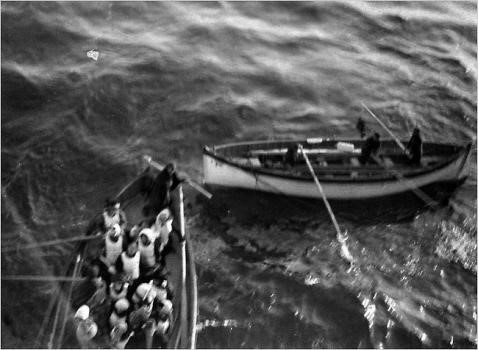
April 15th was the 104th anniversary of the sinking of the RMS Titanic.  That day in 1912, some 1,514 people perished in the frigid waters of the Atlantic. That is tragedy enough but 468 of those 1,514 people drowned entirely needlessly. There were exactly 468 empty seats in the lifeboats launched from the Titanic.

Perhaps it is not so easy to count the avoidable deaths in today’s refugee crisis. But a clear analogy can be drawn. The wealthy States of 2016 represent a lifeboat for the forcibly displaced. How many lives are lost every day, as a result of States’ failure to respond adequately to the current refugee crisis? Many States have the capacity, but lack the leadership to accept and protect more refugees, leaving empty seats in the lifeboats. The developing world shoulders a disproportionate share of the responsibility to protect refugees. Wealthier states can and must do more.

Canada has been rightly commended for resettling 25,000 Syrian refugees between November 2015 and March 2016. This is an important accomplishment that will make a tremendous difference in the lives of these 25,000 new permanent residents of Canada. It will also enrich the lives of the thousands of Canadians who are contributing to the resettlement effort. 

The United Nations High Commissioner for Refugees (UNHCR) has called Canada’s contribution “extraordinary,” and it is. Not because of its magnitude in the global context: the UNHCR has estimated that in the current crisis, over 1,150,000 vulnerable refugees require resettlement. Canada has helped only 2% of those in urgent need right now. Neither is Canada’s resettlement effort extraordinary because of its magnitude at home: Canada hosts only about 4 refugees per 1,000 population. Compare this to the contribution of Lebanon, which hosts over 200 refugees per 1,000 population. In Lebanon, one in every four or five people is a refugee! 

Our contribution is extraordinary because even as Canada sails to the rescue of these few, many States are rowing in the opposite direction. Although the United States of America historically has resettled about 85,000 refugees each year, the hurtful rhetoric currently being used in the presidential primaries prompts the question: how long will that policy last? Thus, the leadership of Canada is quite timely and patently necessary.

Amnesty International has proposed a 2016 Human Rights Agenda for Canada, outlining several policy recommendations to protect the rights of refugees and migrants.  Amnesty is also collaborating on the Refugees Welcome Here! Campaign with the Canadian Council for Refugees.  Here are three ways that the campaign partners assert Canada can continue -- and expand -- its leadership on refugee protection:

  • Reunite refugee families;
  • Recognize refugees, respecting non-discrimination principles; and
  • Resettle more refugees.

●  Reunite refugee families

Canada should introduce Express Entry family reunification for refugee families so that children are reunited with their parents in 6 months or less. The current waiting time for these children is staggering: 3 years.  Furthermore, Canada does not expedite processing of family members, even when children are living in a country at war. 

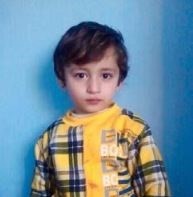
Arash is just six years old. He has been waiting over 2 years in Afghanistan to reunite with his parents, who were recognized as refugees in Canada in 2013.

●  Recognize refugees, respecting non-discrimination principles

Canada should eliminate the Designated Countries of Origin (DCO) regime in its refugee determination system. Refugee claimants from DCOs must counter a presumption that their country is “safe.” Their process has shortened timelines that do not afford claimants a fair and reasonable opportunity to prove their claim. This discriminatory treatment particularly affects Roma, women fleeing gender-based persecution and LGBT refugees. 

In July 2015, the Federal Court of Canada ruled that the DCO regime violated the Canadian Charter of Rights and Freedoms because it discriminated against refugee claimants on the basis of national origin. Yet aspects of the regime remain in place. 

●  Resettle more refugees 

Canada should open the door to refugees from around the world by sustaining the increased resettlement numbers and resolving the restrictions and delays that have been undermining private sponsorship.  Canada can and should commit to resettling 20,000 Government-Assisted Refugees each year.  Moreover, Canada should improve the very slow processing times for private sponsorship:

  • The average processing time is 51 months.
  • Processing times are truly glacial in parts of Africa, reaching nearly 70 months in Nairobi, Kenya.

he eyes of the world are on Canada, with its unique measures supporting refugee protection.  There is a role, both for government and for individuals to continue this leadership.  Will you make a personal commitment to be a part of refugee protection in Canada?  Please take the Refugees Welcome Here! Pledge.  The greater the number of pledges taken, the stronger our evidence of Canadians' support for refugee protection and the greater the likelihood we can effect positive changes in Canada’s refugee policy.  Together, Canadians and our government must do our part to ensure that there are no more empty seats in lifeboats.

Used with Permission

Guest Blogger: This article was written by Christine Harrison Baird and is part of the Refugees Welcome Here! Campaign, a collaboration between the Canadian Council for Refugees, Amnistie internationale Canada and Amnesty International Canada. The pledge and a wealth of campaign materials are available at:  http://www.refugeeswelcomehere.ca/.


The Reason You Walk: A Book Review

The title of the book comes from an Anishinaabe travelling song used to close their gatherings in the Lake of the Woods country. It is sung from the perspective of the Creator singing to you:

“I have created you and therefore you walk, I am your motivation, I am that spark inside you call love, which animates you and allows you to live by Anishinaabe values, I am the destination at the end of your life that you are walking toward.”                        

Wab Kinew’s memoir is a tribute to his father and the effect residential life had on three generations; his grandfather, father and himself. It is also a story of reconciliation. Kinew begins his memoir with descriptions of his father’s early life. He was a happy youngster living at home with his family and relatives until that day when a man in a black robe came to the reservation to take him away to St. Mary’s Indian Residential School outside Kenora Ontario. Only after 60 years, from the vantage of old age did Wab Kinew’s father, Ndede, open up to his son about the abuse he suffered and the experience he had watching his young Indian friend being killed by a group of men, of his being raped and humiliated and being made to kneel at his father’s funeral when Indian custom dictated that he stand. These are very personal stories and knowing them makes the latter part of Ndede’s life all the more remarkable. The residential schools were a social experiment with the aim of “taking the Indian” out of the child which we now recognize as “Cultural Genocide”.

One of the worst legacies of the residentials schools was “the emotional, physical, and familial gulf confronting survivors who never learned how to parent their children.” Ndede overcame the pitfalls, surviving alcoholism, racism, a failed marriage and finally returning to his Indian roots. He was a traditional chief who married a non-Indian, Wab’s mother. In his memoir Wab relates his own struggle in his youth. He was a former rapper, immersed in alcoholism, drugs and spent time in jail. Then, finally taking responsibility for his life just as his father had, he became an academic, a hereditary chief, a journalist and a father. He worked for the CBC and has become an urban activist and has recently announced he is seeking a political life

When Ndede was diagnosed with cancer Wab left his work at the CBC to be with his father during the last months of his life. His sister also returned from Europe putting her doctoral studies on hold. During this time father and son worked on an Internet App for the Anishinaabe language. The bonding that took place between these two men is a heartwarming story. Both men worked at the university promoting courses in Indian Studies. When Ndede died there was a funeral service on the reserve and a memorial service in Winnipeg. It was attended by many dignitaries including Archbishop James Weisgerber who had been a friend, as well as many politicians, the premier, cabinet ministers, university colleagues, students, First Nations elders, and two former national chiefs. Forgiveness became Ndede’s way of finding peace. He had met Pope Benedict XVI in 2009 and was present at Kateri’s canonization in 2012 .

Both Wab and his father were Sundancers. This Indian Spiritual Ceremony had been outlawed in the USA in 1895 and in Canada in 1904. It did continue in secret and is now being recognized as a legitimate religious ceremony. Wab’s description of his own piercing on the last day of the four day ritual was fascinating to read. The memoir ends almost as a meditation on the meaning of life.

To be hurt, yet forgive, to do wrong, but forgive yourself, to depart from this world
leaving only love. This is the reason you walk
”.

This is a must read book that will help us to understand the way forward. Kinew wants us to realize that there are three groups at the conference table in Canada. The Federal, Provincial and First Nations Governments.                                                  

Guest blogger Janet Brisson

Book Review The Reason You Walk: Wab Kinew, Penquin Canada, 2015.