
Guest Bloggers

Sisters of St. Joseph Support the “Global Compact for Migration”

Migration is Complex, Multidimensional and Worthy of Good Public Dialogue

There are tensions in Canada when it comes to migration:  Some Canadians put out signs saying “All are Welcome Here” while others complain about irregular border crossings; some groups sponsor refugee families while others point to a lack of services to address the needs of newcomers; some delight in new and different food choices while others experience discomfort with difference.

There’s room for all these perspectives in a healthy and respectful national dialogue about migration. 

But there’s no room for the fear-mongering and downright silliness which too often has become part of this conversation.  A case in point: Toronto Sun columnist Candice Malcolm referred to the UN’s Global Compact for Migration as a “dystopian UN plan” which “seeks to erase borders, destroy the concept of citizenship, undermine the rule of law and circumvent state sovereignty.”  Worse yet, Andrew Scheer, in a position of responsibility as leader of the Opposition in Canada, suggested the Global Compact could “open the door to foreign bureaucrats telling Canada how to manage our borders.”  Wrong and wrong – on both counts.  Not even close to reality.

What is the Global Compact for Migration?

It’s a 36-page document, developed at the UN level, which lays out a collaborative approach to dealing with global migration.  The Global Compact sets out 23 objectives for responding to migrants in ways which respect their dignity and rights while also creating benefits for the country of destination.

Is it legally binding on countries which sign it?

No, the Global Compact is not legally binding on the nations which sign it.  It is non-enforceable.  Indeed,  The Global Compact  explicitly affirms the sovereign right of states to set their own national migration policies, in conformity to international law.

It’s more of a toolbox to help countries foster inclusive and cohesive societies, integrating migrants so they will enrich their host country and addressing “structural factors that hinder people from building and maintaining sustainable livelihoods in their countries of origin.”

What else is in the Global Compact?

The global compact's 23 objectives include:

  • Collecting and utilizing accurate data to develop evidence-based policies.
  • Minimizing the factors that drive people from their country of origin.
  • Facilitating fair and ethical recruitment of migrant workers and promoting decent work conditions.
  • Strengthening the response to migrant smuggling and stopping the trafficking of persons. 
  • Providing access to basic services for migrants. 
  • Eliminate all forms of discrimination and promote evidence-based public discourse to shape perceptions of migration.

The Global Compact is the basis for treating all people with dignity and fairness; it encourages countries collectively to address factors which push people away from their country of origin; it’s a foundation for a healthy and helpful public dialogue – some of the many reasons the Federation of Sisters of St. Joseph in Canada support the Global Compact for Migration. 

 - Sue Wilson, CSJ | Office for Systemic Justice
Gospel Reflection for the Second Sunday of Advent

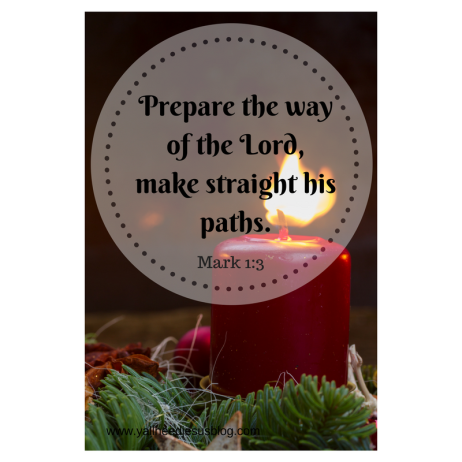
The familiar cry of John the Baptist to prepare the way of the Lord strikes a new chord in me as I listen to current issues and policies that tend to divide and tear apart our society.  How can the paths be made straight in our world that is threatened by conflict, pollution, the rise of dangerous populism and a host of other crises?  To what does this Gospel passage call me in this Advent season of waiting in hope for the coming of the kingdom.  As I become more aware of the power and privilege I hold just because I am a middle -class white person, I am challenged to look more deeply into my relationship with the poor and marginalized in our society.  Traditionally the focus has been on sharing our material abundance with those who do not have at this time, in order to bring joy and peace in the Christmas season.  And this practice continues with astounding generosity and ample good will.  But is there more to the way of the Lord at this time?

In my reflection on the symbols of this Gospel reading, the mountains and hills are where I find myself as part of our white middle-class culture that is favoured by the structures and policies of our society.  The valley holds the poor and disenfranchised, those we traditionally reach out to.  The crooked ways contain those who are without direction, and the rough ways are for those who face difficult challenges in life.  To make the paths straight, it is necessary for the mountains to be brought low, for the safe and secure to leave a place of comfort  and contentment, not just to share goods but to share life with the poor, the lost and the struggling.  The valleys of pain and despair will be filled, the crooked ways made straight and the rough paths smooth when we walk in friendship, not just at Christmas, but in a lasting relationship with someone we see now as different because they don’t live by our norms.  In the meantime, we can be more attentive to the language we use, and the attitudes we express about our brothers and sisters we don’t usually mingle with.  We can become more informed about poverty issues, refugee struggles or gay rights so that we can challenge poor-bashing or distrust of those who are different.  The way of Jesus is a path of unity, and begins with entering into a relationship with one who stands apart from you for a host of reasons.  We wait in hope for the kingdom. Perhaps we are called today to take a step toward creating that kingdom as we prepare the way of the Lord. 

- Sister Joan Driscoll, csj

Let Darkness Bury the Dead

Maureen Jennings’ mystery, Let Darkness Bury the Dead, (2017) is a Murdock Mystery. I did not choose this novel because of the story, but rather because I like Maureen Jennings’ writing and the Murdock character she has created.  It turned out that the novel is a story of the First World War, 100 years ago. I finished reading the novel just before Remembrance Day.

This story presents a very good description of the hardships and horrors of the Great War as well as a vivid portrayal of Victorian life in Toronto Ontario.

Murdock’s young son, 21 years old, has returned from France having personally experienced the scars of battle along with his friend who also is suffering from the horror of war. Meanwhile, Murdock, a senior detective, is called upon to solve a series of murders of men who were exempted from conscription. The author has woven the details of the events of the war into the story in a way that captivates the reader.   

Poetry and historical excerpts also play an important part in the telling of this story. It is a very interesting read.

- Sr. Valerie Van Cauwenberghe, csj

ADVENT I


Ribbons of Hope, Peace, Joy and Love

are woven into the Advent wreath.


I pray that the God of our waiting will weave these ribbons into

my own anxious heart.


The present moment and how fully I receive it

will become my practice this day.


God help me to remember to breathe and tell myself

that I do have enough time, energy, patience and resources.


Help me to remember the ribbon of giving and receiving,

the everlasting ribbon

combining action and contemplation

and remind me

to give equal time to contemplation, quiet and silence.


Help me to learn how fertile is this winter darkness

when I surrender to its embrace.


O Ribbons of Hope, Peace, Joy, and Love,

weave yourselves into my heart, mind and soul

this Advent season,


So that I may be willing to embrace the hope, peace, joy and love

You offer me each moment.

-        Marg Maheu, Associate, Sarnia Medaille group

My Ministry in Peru

I, Pauline Coulterman, went to Peru in 1980 and returned to Canada in 2003.

Living in Peru for twenty-three years, gave me a great appreciation for what we have in Canada and a recognition of my great need to share what I can with the “People of Peru”.

The people with whom we, the Sisters of St. Joseph, are working in Chincha Alta, have a great love for us as we do for them. They are just so willing to give of their time and energies to help in the formation for ‘Basic Christian Communities’, the preparation for the Sacraments and/or any other initiative that is sent their way.

These People have the true Spirit and willingness to help others but often they themselves are in need of medicine, food and /or other basic needs of life. When I was there, I saw so many of our parishioners struggling to put their children into school, or struggling to find a job that would allow them to put food on the table for their family.

My time in Peru helped me to recognize that the ministry that we as Sisters continue to carry-on among the Peruvian People can only be done if the financial support comes from Canada.

I see that I can continue to serve the Peruvian People by being a liaison person between our Canadian Benefactors and our Peruvian Sisters in mission.

A good portion of my time in October is spent soliciting support from our Canadian Benefactors for the needs of the Peruvian People. Usually I send out about 300 letters of reminder to those who have supported us in the past couple of years.

By November and December donations returns are coming in and I spend many hours doing “thank you notes” to all, and pictures of school children to those who have chosen to sponsor the education of a child.

I do the campaigning for the mission in the Fall of the year to have a good picture of what funds might be available in January as the Sisters in Peru plan their Ministry for the New Year.

For ten years, the Pembroke Diocese was twinned with the archdiocese of Lima and I served on the Lima-Pembroke Partnership Committee. Working with this committee has opened the opportunity for me to organize and accompany groups to Peru, who are interested in a third world mission experience.

In the Month of October, I send out an e-mail  invitation to all who have expressed a desire to visit Peru.

This year’s invite is as follows…

Dear Friends:

This is the time of year I start my ‘Fall Campaign’ for our Peruvian Mission in Chincha Alta. As many of you may know, Yvonne and I are no longer organizing Pilgrimages to Peru but I am open to organizing a trip for anyone wishing to visit Peru for the purpose of meeting Christ in the Peruvian People and to see how our Canadian funds are helping the people of Chincha and area.

I wish to invite anyone who wants to spend a week or two visiting the families in our Mission of Chincha Alta, Peru to come and be a part of that experience. Sisters María and Gloria are always happy to have friends from Canada come and visit them and be a part of their living situation for a short time. We also encourage those making the trip to Peru for the first time, to visit Cuzco and Machu Pichhu. (Lost city of the Inca’s in the mountains of Peru.)

I have four people who have already started giving thought to coming with me for a couple of weeks in February 2019 and I want to open it up to anyone else who might be thinking they would like to do this. Just send me an e-mail and I will forward you a tentative outline of the trip and an over-view of cost.

Every year I travel to Peru on the first Monday of February and return in March with the last of the visitors.

You are welcome to pass this message on to any of your family or friends who might be interested in visiting Peru.

Thank you for your interest and support of our Peruvian Mission.

This work gives me a great sense of fulfillment and allows me an opportunity to still a part of our Peruvian Mission without having to live in Peru.

My visit to Peru in February gives me the chance to help start the school children into their new school year, get a report from them regarding their studies of the previous year and pick up notes and pictures for their sponsors. My time in Peru is also spent visiting the ongoing projects that are being supported through Canadian funds. Senior home, nursery schools, water projects, soup kitchens or whatever might need our attention in the new year.  My visit each year helps me stay in tune to the happenings in Chincha and thus more able to speak from experience when addressing school groups, C.W.L. groups and other organizations here in Canada. I take every opportunity I can to do presentations that would help people appreciate what they have and maybe someday be able to share with others.

My heart is with the Peruvian People and as long as I have the stamina to travel, my hope is to continue to introduce Canadians to the Peruvian reality.

Sr. Pauline, csj