 From day one of my life, they were there. First, an invisible, ideological one, then the visible one, dividing east from west Germany. It stretched for 66 miles from north to south. To detain those defecting from oppressive East Germany, the Berlin Wall was erected. But I am running ahead of myself. I was born in East Germany before the wall was built. In Wolfen, just a short distance from Leipzig where such famous people as Richard Wagner and Clara Schumann were born and where Johann Sebastian Bach worked for many years, I was born on the wrong side of the wall.
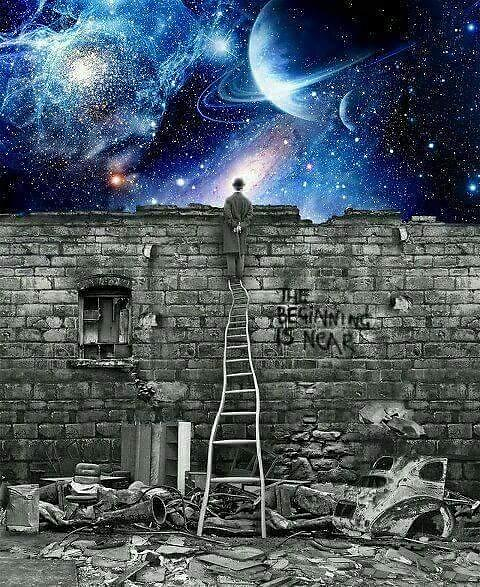
Walls! All this talk about erecting a new wall in-stead of building bridges. It seems we have always built walls. Walls, to either keep people out or in. But, eventually, all walls fail or fall. The wall of Jericho, the oldest city wall built about 8000 BC. The Great Wall of China built around 500 years ago. The Western Wall, also known as The Wailing Wall, built by Herod the Great. These are some of the most iconic walls that have been erected over the years. Perhaps all walls should be dubbed ‘wailing walls’, be they those visible ones made of concrete or brick and mortar, or those invisible ones we put up internally to protect ourselves from those who might harm us. Walls tend to make us wail or weep silently.
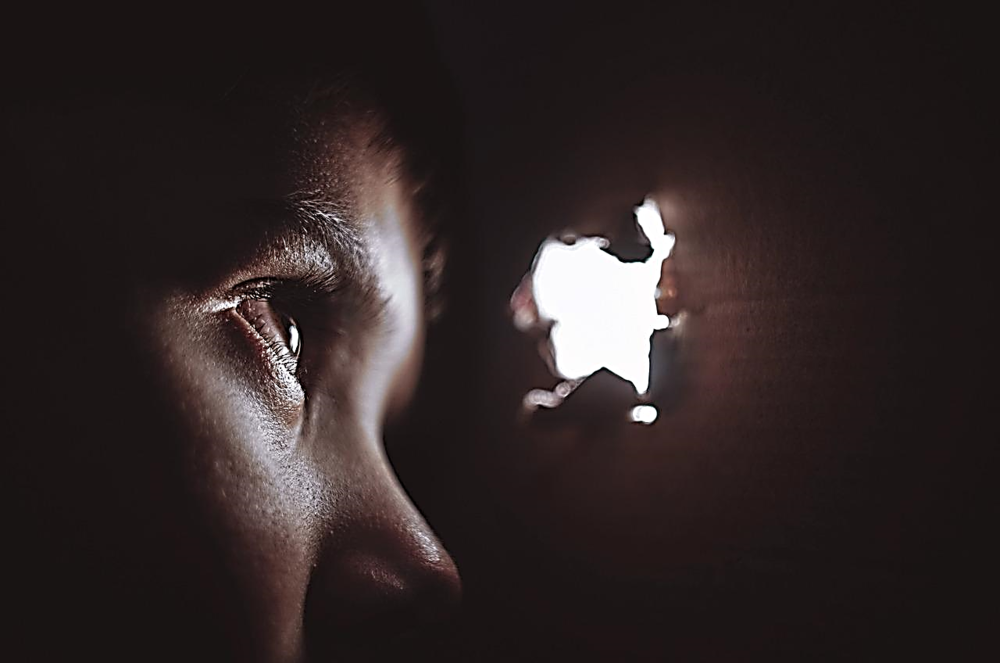 But let me come back to the walls closer to home. As my life began behind a wall, I tend to have a deep-seated dislike for walls of any kind. With all this talk about the Trump wall going up, old memories of walls raise their ugly heads. Long story short, my family managed to flee to West Germany. I have vague memories of time spent in a Flüchtlingslager in the Black Forest. These would have been the equivalent of present-day camps where millions of refugees live these days. Like so many Germans at the time, after a few years we were on the move again. This time we crossed the ocean to South Africa, another country familiar with walls and divisions separating the ‘European’ from the ‘non-European’, the black from the white. It has been a seemingly never-ending story of walls.
 The irony of the never-ending story of walls is this - those made of mortar and bricks can be torn down. The invisible ones we build within our inner sanctum tend to be incredibly resis-tant to being torn down. With blood, sweat and tears, and only brick by brick, so to say, can we set ourselves free. So, how do we live healthy lives while we carry the memories of those old concrete walls as well as the reality of our inner walls? Forgiveness extended to others, and to myself, has been key for me. No, it is not easy. Yes, it takes a very long time. It takes time to recognize the inherent dignity in those who have wronged us. It takes time, a very long time often, to begin to love those who have hurt us. When I struggle to turn the proverbial ‘other cheek’ it helps to recall the guidance Jesus offers, which is always challenging and counterintuitive. Finding common ground with those who have hurt us, is counterintuitive, for our natural inclination is to be angry and resentful instead of loving. However, when we come to a place of understanding of the one who has hurt us, as well as of ourselves, it may also be a place of peace, where walls are no longer needed.
- Sr. Magdalena Vogt, cps

 I recently read an article that immediately shifted my thought back to a dear relative, who practices almsgiving not just during Lent, but every day of the year. I admire her so very much. She has that wonderful ability to hold compassion and common sense in one basket. A solid woman of faith. Whether it be a granola bar or a $5 Tim’s gift card, she is ready to share what little she has with the outstretched hand on the corner, at the intersection, in front of the grocery store. She recognizes struggle and dignity. I see in her actions the sacred. Recognizing another human being, sharing an awareness that the life we all share is life given by God. That brief encounter can be more than one person helping another; it is an exchange of love inherent in all whom God has created. Christ’s birth into human life has raised the bar. Every encounter is a God encounter, concretized in the ordinariness of daily life.
