
Guest Bloggers

NORMAL is overrated (Or is it?)

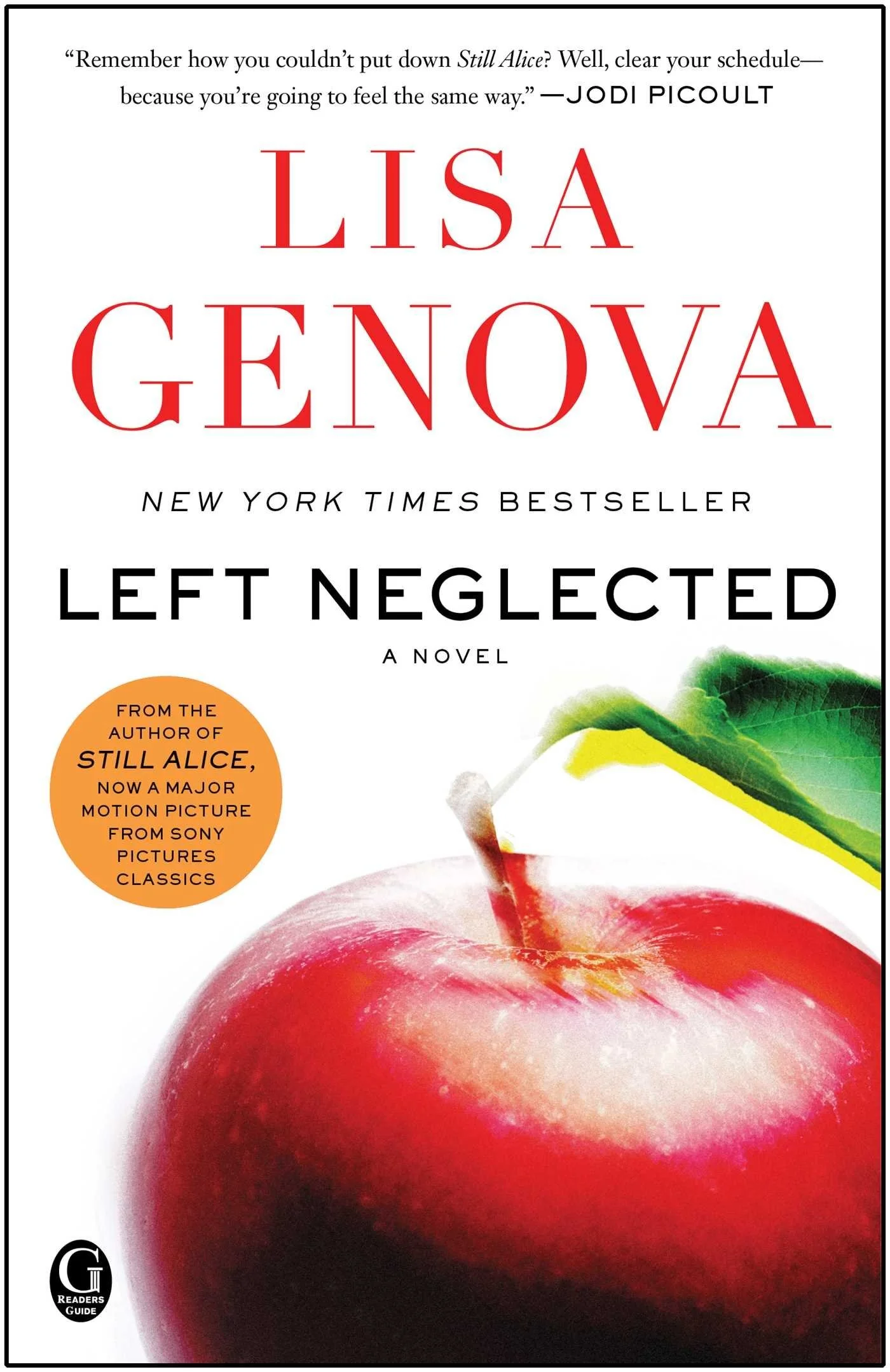
Have you read any of Lisa Genova’s books?  If you have, you know they tend to be both fascinating and disturbing.  I would encourage you to read her books, though, in my humble opinion, they are probably not the type of book you would want to read during a time of isolation. 
LEFT NEGLECTED Book blog.jpg

This morning, while walking the first laps of my daily Camino on my indoor circuit, a phrase from her book Left Neglected which I read weeks prior to the pandemic, sprang to mind: “normal is overrated.”  In her book, Lisa Genova tells a story of resilience in the face of a devastating diagnosis.  After a car crash the protagonist, Sarah Nickerson, a career-driven supermom in her thirties, is left with a traumatic brain disorder called “left neglect.” Sarah’s brain injury completely erases the entire left side of her world. With incredible willpower and endless therapies, she eventually regains some of her mobility. Then one day she joins her husband and two children on a skiing trip. No longer able to ski with her family she sits and watches them from the lobby of the hotel.  Her trusty cane in hand, she goes to check out the rental place for skis and snowboards. Here Sarah meets a man who inadvertently changes her attitude about her life she no longer considers to be normal. The man offers to teach her snowboarding on boards adapted for folks with disabilities. After much coaxing, she agrees to give it a try.  As she begins to gain confidence on the slopes, she learns how to remain upright and maneuver a snowboard. After a few tumbles, she begins to complain about how clumsy and awkward she is, adding, “This isn’t normal. This isn’t how you snowboard.”  Her tutor’s response, “What’s normal anyway? Normal is overrated if you ask me” changes Sarah’s life.  Normal’s overrated.  (Left Neglected, Lisa Genova)

Well, here we are, still in lockdown, and far removed from what we used to call normal, considered to be normal. Here it is yet again, that word, that concept of the normal.  Again, and again we question our need for a new normal.  Yes, the old was overrated.  Since we agree on that, what then are the practicalities that will ensure a new normal?

Some say normal is for people without any courage.

I am beginning to sound like a broken record. Maybe that’s okay, lots of things are broken these days. What is it with this abnormal normal to which I keep returning?  Is it because that old normal was familiar and to a certain degree felt comfortable like an old pair of shoes?  Is it because they fit comfortably without too much thought given to why we don’t do things differently?  Is it because the new and unfamiliar will be challenging, possibly downright scary?  Some say normal is for people without any courage. Others say normal is boring. Collectively we are saying our former lives were not normal, yet many want it back. Surely it is not because they lack courage or are boring. It sounds as if we are caught between a rock and a hard place, midway between what was and is not yet.  Is it the fear of the unknown and how we might get there?  We are faced with a puzzling and disturbing paradox. We feel comfortable and secure in our familiar normal, and yet we say it is overrated, needs to be changed, sigh. We know how hard it is for all of us during this pandemic but especially for the children when everything in our normal lives has been disrupted.  So where do we go from here? While writing this blog, I received an email from Thomas Hübl advertising his upcoming series, “Building Blocks for a New Culture.” I was struck by this topic: “The Global Rite of Passage – Who will We Choose to Be.”  Yes, who?

- Sr. Magdalena Vogt, cps

Laudato Si as a GPS for navigating through this uncertain time

This week we are invited to celebrate the 5th anniversary of the publication of Laudato Si, this key and prophetic encyclical from Pope Francis. As we are in the midst of a global pandemic and sanitary crisis that acts both as a revelation of our ills, dysfunctions and lights, good practices, this text takes on even more prominence. We can’t deny any longer the depth of our social and ecological crisis. At the same time, we are more aware of our interdependency and connectedness. For instance, the last synod on the Amazon has shown us how our choices and lifestyles in western countries have a great impact on the Pan-Amazon region and other places all over the world. This crisis is emphasizing Pope Francis’ teaching “that “Everything is interconnected” (Laudato si’, §70, 138, 240)  and illustrates that “we are all in the same boat” as Pope Francis reminded us during his meditation Urbi et orbi. We realize that the only way to go out from this pandemic is to act together in solidarity. Thus we are called to be in the crew with others to seek together how to navigate on a stormy sea with a lot of different currents. This crisis is a call to think and act collaboratively to design the course to follow and to implement the right maneuvers to move the boat in the right direction.

But the good news is that we are not lost on the ocean, we have already good roadmaps and GPS!  Laudato Si and the synod on the Amazon’s Final Document with its key words – alliance, conversion, integral ecology, synodality, mission, and dialogue – along with Querida Amazonia structured in four chapters – 1/ A social dream 2/ a cultural dream 3/ an ecological dream 4/ an ecclesial dream - give us clear and interesting guidelines that are proving to be truly prophetic in the face of this crisis. It expresses a strong call to change. It reveals how we are at the end of a system that destroys the earth and generates so many inequalities. And it is noticeable to see that the lockdown reinforces this awareness, as many people staying at home have discovered that they could live a simpler life and that it is good for the environment.

This crisis is a test that requires our creativity and audacity. This time is also a “Kairos”, an opportunity to stop and check in to choose a better future and build a better world. As we need to stay at home, we are confronted more closely with sickness and death, we are experimenting with our personal and communal vulnerability at different levels. So we have to go deeper in ourselves, to reflect on our lives and to discern the signs of the times that mean a common listening of the Holy Spirit through an attitude of decentering to listen to the peripheries. In the course of my religious life and my various ministries I have experienced how important and fruitful is it to cross the borders of our own congregation and to promote synergy, inter-congregational reflection and action, and more broadly, sharing with other sisters and brothers from different culture, vocation, spirituality, faith. May this challenging and uncertain time help us to foster the wave of people of goodwill working for the common good.

Sr Nathalie Becquart, xmcj, Boston May 18, 2020

Please Release Me - Refurbished version for 2020

Please release me, let me go

For I just don't love you anymore

To waste our lives would be a sin

Release me and let me love again

I have found a new love dear

And I will always want her near

Her lips are warm while yours are cold

Oh, release me, my darling let me go

Please release me, let me go

For I just don't love you anymore

To waste our lives would be a sin

Release me and let me love again

Let me go, oh release me, my darling

Let me go

(written by Eddie Miller and Robert Yount)

  REFURBISHED for 2020:

Please release us, let us go,

For we can’t stand you anymore

To take our lives is such a waste

Release us, Corona, let us live.


We don’t like this life we live

And yearn to have our old ones back

Your bizarre antics make us sick

Oh, Corona, release us, let us live.


Please release us, let us go.

We just want to see the back of you

To take our lives is such a waste

Release us, Corona, let us live.


Let us go, oh release us, Corona,

Let us live.

- Sister Magdalena Vogt, cps


Sheltering in Place

In our midst

A virus with a mace

But barely a trace

Such shocking disgrace 

Sheltering in place

In this place of grace

Lost in time and space

Shrouded in a haze 

On my couch I laze

Living in a daze

Through this lonely phase

Moving at slow pace

I lift my weary face

Here within this maze

Where I yearn for grace

To survive these days


When this is the case

Covid won’t deface

Nor its steps retrace


Then hands will we lace

All of us embrace

As one human race

On God we will gaze

All our voices raise

To God whom we praise

-Sr. Magdalena Vogt


“Friluftsliv” in Norway

After spending eight months in Norway studying environmental science in perhaps the most beautiful place I have ever been, I have learned a fair amount about how and why Norway prioritizes taking care of its environment.

One of the main reasons I believe Norway is able to prioritize taking care of its environment is simply because people care. Norwegian citizens are active people, not necessarily in the traditional sense that they run every day or go to the gym three times a week, they are active outside. Bouldering up rock walls, hiking mountains, skiing, kayaking, scuba diving, all of these activities are part of a Norwegian concept called Friluftsliv (pronounced free-loofts-liv). This is the concept of getting outside to create a passion for nature which can be translated into a desire to preserve the environment. The relationship Norwegians have with nature begins at a young age and runs deep within their culture. This passion drives citizens to push for greener laws and motivates governors to make sustainable decisions, and it works.

When I got off my seven-hour bus ride north from Oslo to my town of Sogndal, one of the first things I noticed was the air - it was clean, crisp, mountain air, free from any noticeable traces of pollution. This has a lot to do with the fact that Norway is the number one country in the world for the use of electric vehicles as opposed to gasoline-powered vehicles. As well, litter is almost non-existent, driven by this concept of Friluftsliv. I also met plenty of fellow vegetarians during my studies, as the meat industry is a large contributor to atmospheric pollution and again, the concept of Friluftsliv drives this notion. Some decisions are driven by the government, but many are driven directly by every day citizens who actively choose to care and make personal choices that reflect this dedication to the environment.

With Earth Day around the corner (April 22nd), I hope that people are able to search for a personal memory with nature where they felt at home, or at peace, or a responsibility to take care of our Earth. One of the best ways to motivate people to care is to remind them of personal experiences and to get them involved in making new memories in connection with the environment. My time in Norway may have been cut short but I am continuing my studies online and I am looking forward to carrying this idea of Friluftsliv with me, especially in these difficult times where the Coronavirus may cause a disconnect from other people, let us use it as a time to reconnect with nature.

- Hannah St. Louis

Currently, I am working towards completing my third year of my bachelor’s degree in Environmental Science/Studies at Trent University. For my third year of this degree I chose to do a year abroad in Sogndal, Norway. In Norway I participated in the “Mountains to Fjords” program from August until December and the “Geohazards and Climate Change” program from January until June, although this program will be continued online due to the Coronavirus. I am originally from Markham, Ontario, where I still live in the summer with my parents and my two brothers, the rest of the year I live and study in Peterborough, Ontario. I am not certain on what I would like to pursue post-graduation, however, I know I would like to work outside, perhaps surveying the land or sampling certain aspects of the environment, I still have another year of school to help me figure this out. Below, I have provided a couple of extra resources that have helped me through my studies that contain further information for those who are interested.

This is a link to my university’s webpage and it takes you directly to a description of my first semester program “Mountains to Fjords”. https://www.hvl.no/en/studies-at-hvl/study-programmes/2020h/fmf/

This is a link to a resource I found particularly interesting and important when I was working on my final science project of my first semester where we looked at the impacts of the newly built hydropower plant on the Sognefjord and the Barsnesfjord water ways. http://www.vannportalen.no/globalassets/nasjonalt/engelsk/reports-and-publications-in-english/summary-repport-for-norway-wed-article-5-characterisation-mai-2013-report_wfd_art5_norway_results_2013_am1fh.pdf

This is a link to the Sognefjord municipality’s webpage. https://en.sognefjord.no/fjord-villages/towns-and-villages/sogndal