
Guest Bloggers

Learning to Read and Reading to Learn

Just reading this blog means that you can count yourself among those in the world who are literate. Being able to read and understand what you are reading brings many privileges into your daily life that you probably don’t even think about: following a recipe, reading the newspaper, helping your child with their homework, and simply enjoying a good book.

CODEpic.jpg

Today is International Literacy Day. Each September 8th since 1967, the world has set aside this day to advocate for closing the gap in global literacy. In Canada, literacy rates are 99% but many other places around the world are not so fortunate. In the Republic of South Sudan, for example, only 26.8 percent of people aged 15 or older are literate. How can a child reach their full potential if they cannot read and understand a simple sentence?

We know too that literacy drives all other forms of development. Gains in education are linked to improved health, fewer child marriages, economic growth, a greener planet, and more peaceful societies. Education is life-changing.

Eight years before UNESCO designated International Literacy Day, CODE was born in a church basement in Toronto. In 1959, a group of educators, librarians, and publishing professionals began packing unused books to ship to Africa in tea chests.  Today we intentionally supply schools in Ghana, Liberia, Mozambique, and Sierra Leone with books that are written and illustrated by local authors and illustrators, often in African languages, so that children can relate to the stories and see themselves and their culture valued.

CODE is Canada’s leading international development agency focused uniquely on education and literacy. In addition to books, CODE provides training to teachers in the use of instructional strategies that transform education from a one-way transfer of information (rote learning) to a dynamic process where the student is reading the text themselves, engaged, asking questions and developing critical thinking skills. Students are not only learning to read but reading to learn.

Before coming to CODE, I had lived for almost 20 years in Africa. While the state of education and quality of schools varied from place to place, I observed that the push for education and the drive to break the cycle of poverty is universal.

In September 2019 I had the pleasure to meet Whyteline, a 12-year-old girl living with her mother in Ashanti Region in Ghana where CODE has been working since 1990. Whyteline is in her first year of junior high school and is eager to learn. Each morning she walks 45 minutes to get to school and every afternoon makes the same trek home. She loves to read the books that CODE has provided to her school. She reads them aloud to her mother whose English is poor.  Whyteline said this to me,

"My grandmother didn’t go to school because in those days, that is what happened. My mother finished junior high school, but I will go even further…. I want to be a doctor.”

I believe and CODE believes that Whyteline has the potential to be a doctor and contribute to the health of her community and the development of her country. On this International Literacy Day, take a moment to be thankful for your own opportunity to learn to read, and read to learn - and remember those around the world who are yearning for the same chance.  

 -Janet Phillips | Fund Development Manager | www.code.ngo


The Sisters of St. Joseph are proud to support the work of CODE.

The Days of Awe

unsplash-image-98R8hu4cwes.jpg

ROSH HASHANAH AND YOM KIPPUR

Falling in autumn, the Jewish Days of Awe, or High Holy Days are the most sacred holidays in the Jewish calendar.

This is the time of year for introspection and examination of one’s self.

Rosh Hashanah means head of the year or New Year.  Celebrations take place at festive family dinners and in Synagogue.  This year, during Covid, many synagogues are offering masked, distanced services for members who are fully vaccinated or the option for online services.

During the meals, we dip apples into honey for a Sweet New Year, or a year of goodness—Shanah Tova.

YOM.jpg

Yom Kippur, or Day of Repentance,  is a solemn holiday where Jews over the age of Bar or Bat Mitzvah, age  13, fast from sundown to sundown. At this time we ask G-d for forgiveness for sins we have committed during the year.

Yom Kippur ends at sundown, with a meal including family and friends to Break the Fast.

Guest Blog from Judy Rochwerg.

Election 44: Human Rights Op-Ed

Federal election 2021: We need to hear about human rights

by Alex Neve[*]

So, we are now into the second week of the federal election.  Pundits and commentators have been busy offering their assessment and critiques of what the parties appear to be prioritizing in their campaigning.

There is no shortage of pressing contenders, including the health and economic dimensions of COVID-19, the ravages of the climate crisis, accountability for the genocide of residential schools as well as reconciliation with Indigenous peoples more widely, dismantling systemic racism, addressing gender inequality, taking on the challenge of governing the digital world, improving refugee protection, and responding to Afghanistan, Haiti and other humanitarian hotspots and disasters around the world.

unsplash-image-P0JL8np1N6k.jpg

Beyond offering up pledges about those crucial concerns, however, what would be refreshing is to hear genuine, full-fledged readiness to uphold human rights from the leaders. That is the key to meaningful progress with respect to all challenges we face, nationally and globally.

Human rights protection is foundational, yet we rarely hear convincing commitments framed from a human rights perspective in elections. Platitudes and posturing, that’s easy. Heartfelt endorsement of the Charter of Rights and Freedoms is commonplace, from some parties. And commendable positions on specific human rights cases or situations do certainly arise, unevenly and sporadically.

But a compelling vision for concretely putting human rights at the heart of Canada? Not so much. In fact, not at all.

We need leaders to make it clear that they will assess issues, craft policy, reform laws, set budgets, and make decisions, always, through a human rights framework.

Not only when it is convenient. Not as a secondary afterthought. And certainly not just by putting feel-good human rights language in more press releases.

Taking human rights seriously is about equality, agency, accountability, remedies, transparency, and consistency.  That is essential when it comes to COVID recovery, climate justice, Indigenous rights, dismantling racism, advancing gender equality, governing the internet, and protecting refugees. That is fundamental in responding to crises in Afghanistan, Haiti, Ethiopia, China, Israel/Palestine, Venezuela, Syria, Yemen, Colombia, Myanmar, and elsewhere. 

Above all else, it is how we will ultimately realize an equitable and sustainable world.

We could (and certainly should) ask the parties to provide us with human rights laundry lists. How will they rectify Canada’s various human rights shortcomings? What international human rights treaties will they ratify among the many we have not yet taken on board? Will they reconceive our relationships with the many countries with whom we regularly prioritize politics and economics over human rights? That would of course be welcome.

But more crucially, we need commitments that are transformative, not only reactive.  Commitments that are overarching, not piecemeal.  Commitments that are not just in the moment but will stand the test of time.

Here are three that would make a difference.

First, ensure that Canada’s stance on the world stage is consistently guided by international human rights standards. The Trudeau government adopted a feminist international assistance policy in 2017 and has been consulting with civil society towards a broader feminist foreign policy. The government has also put in place new guidelines for our diplomats to better protect human rights defenders around the world. Those are all steps in the right direction. But there is much further to do. Will parties commit to a legislated requirement to implement an international human rights action plan across the entirety of Canada’s global affairs?

Ensuring equitable vaccine availability worldwide, responding to the downward spiral in Afghanistan, selling armoured vehicles to Saudi Arabia, pushing Iran for accountability for shooting down Ukrainian International Airlines flight 752, working to free Canadians imprisoned abroad, acting on concerns about Canadian mining companies in Latin America, setting refugee policy along the US border, calling Israel out on illegal settlements in Occupied Palestinian Territory, or squaring the Beijing Olympics with what is happening to Uyghurs and in Hong Kong? Human rights must reliably be the overriding consideration in setting Canada’s course globally.

Second, shut down the growing inclination to use the Charter of Rights’ problematic notwithstanding clause.  Provincial governments have recently recklessly used this escape hatch three times to avoid human rights obligations: twice in Quebec and once (almost twice) in Ontario.

Ottawa doesn’t write provincial laws. And we aren’t about to amend the Charter, a near-impossible (certainly Herculean) task. It would be helpful, however, for all federal parties to unequivocally promise – backed up by legislation – never to resort to section 33.

unsplash-image-C2keINMOhIE.jpg

Third, it is time for a truly national embrace of human rights across Canada. For decades we have been hobbled by an ineffective and secretive approach among federal, provincial, and territorial governments when it comes to complying with our vital international human rights obligations. Our governments must collaborate to uphold those obligations equally and meaningfully across the country, and do so openly and transparently. They do not. Not even close.

Last year, in a meeting of federal, provincial, and territorial ministers responsible for human rights cohosted by the federal and Nova Scotia governments, which was only the third such gathering in 32 years, an important decision was taken, largely unnoticed at the time or since, to set up a Forum of Ministers on Human Rights.

That’s all we know. It so very much needs to be a gamechanger when it comes to delivering human rights protection across the country. But it could so easily end up being yet another wasted opportunity. We need to hear from federal parties about their vision for this Forum, and what concrete action they will take to make that happen.

We do face immense challenges that understandably feel daunting. Taking human rights seriously, like never before, will put us on the right path.


AlexNeve.jpg

[*] Alex Neve is a Senior Fellow with the Graduate School of Public and International Affairs at the University of Ottawa. He was Secretary General of Amnesty International Canada from 2000-2020.  An edited and shortened version of this blog appeared as an opinion piece in the Ottawa Citizen on August 18, 2021.

Hooked!

unsplash-image-7mJj0Boa4jc.jpg

I could say I am hooked on crocheting during this latter part of the pandemic. It is incredible what a ball of yarn and a crochet hook can do for you.  Did you know research found knitting and crocheting lowers heart rate and blood pressure? Besides many other benefits, it also calms anxiety.  Perfect during this long pandemic, for what could make any of us more anxious than this pandemic with its numerous unfathomable unknowns. Studies also show that people in my age range and up who are “knitters and crocheters have the healthiest brains and memories.” (https://littlethings.com/lifestyle)  

Besides the mental and psychological benefits of crocheting, there are also physical ones, such as improved hand-eye dexterity and coordination.  It is not surprising, then, that crocheting has been popular for a long time.  For one thing, it is portable, as all you need are a simple hook and yarn. I would say, let us keep knitting or crocheting and if you do not know how, this just may be the perfect time to learn these skills.

Perhaps you are wondering what causes me to write about a hook and yarn in this reflection. Trust me, I am not about to spin a yarn, but here is my tale. While crocheting a baby blanket recently, I began to cogitate about how this pandemic continues to impact our lives in so many ways. While looking at the crochet hook in my hand, and the yarn wrapped around my fingers, it struck me what a great symbol a hook and yarn are for what we are busy doing right now during this pandemic - shaping a new reality.

Life tends to be bittersweet much of the time. I dare say, this pandemic is no different. When planet earth hooked the Covid-19 virus, we were thrust into this global catastrophe. For many, this pandemic has been a devastating experience.  Yet, if we take a moment to cast a backward glance over these past fourteen months, we may just be amazed to also discover many blessings.  We all know about the many tragedies and how much in our world has changed during this pandemic. It has not only changed our lives, it has changed us, or as author Charlie Mackesy puts it, "Isn't it odd, we can only see our outsides, but nearly everything happens on the inside.”

yarn.png

Yes, so much of what has happened has impacted and changed our innermost being. You may have come upon the saying doing the rounds on social media, “There are 4 ways you can come out this pandemic. A chunk, a drunk, a monk, or a hunk.” There is undoubtedly some truth to this, which brings me back to the hook. In response to the stress of the pandemic, what may have happened on our insides that got us hooked on things on the outside?  Are we now hooked on something lifegiving, like crocheting for example? Or are we hooked on something destructive, causing us to flounder or even to fall for it, hook, line, and sinker? Getting unhooked from any destructive habits, whatever they may be, is never easy.  However, getting unhooked from such habits triggered by the pandemic is a step in the right direction to reclaim our happiness and freedom, especially now that there seems to be light at the end of the tunnel.

In crocheting a hook is used to interlock loops of yarn.  Not all hooks or yarns are created equal; neither are we. Our individual life threads are unique ‘yarns’ and we each have unique hooks (talents) to interlock the threads of our present reality into a new, life-giving reality. What has been unveiled during this pandemic, is that we really are one, and not merely one in a virtual reality. We need each other to shape the new reality we all long for.

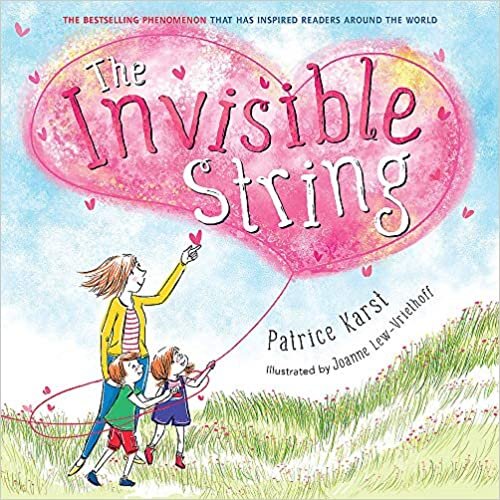
book invisible string.jpg

To create such a reality, we all need to discover anew our own hook, our own gifts.  Even if it is just one hook, let us use it for the good of all, for the future of all of us.  In her delightful children’s book, The Invisible String, Patrice Karst writes about people being connected by love over long distances by an ‘invisible string.’ If this pandemic has taught us nothing else, it has shown us how our invisible, individual life threads are hooked and interlocked with the threads of everyone else throughout the entire world. Even more importantly, let us remember, we are interlocked by a life-giving ‘invisible string’ with God, gracing us with all we need to shape our new reality. 

we are interlocked by a life-giving ‘invisible string’ with God, gracing us with all we need to shape our new reality.

Blessed and strengthened by this grace, and relying on each other’s goodwill, we can shape a new future, a life-giving reality. I dare say if we are hooked on hope - we can do it, together.

-Sister Magdalena Vogt, cps 

Pt. II - A Peruvian Story of Living Amid Covid-19

from Our CSJ ASSOCIATES IN ZAÑA, PERU

Part TWO

Between August and September 2020, the lockdowns and restrictions were still in place, but by October, the Peruvian Government permitted people to leave their homes 3 days per week, at certain times (e.g., only after 11AM) and on certain days, including children and the elderly, but all citizens had to stay at home on Sundays. Churches would not open until November. However, new cases continued to emerge, especially because of crowding at the markets. Sadly, on October 27th, 2020, Delicia’s father, Armando Romero, died – he was 99 years old, and had served the community of Zaña especially in the agriculture sector, most of his life – a man respected and looked upon as friend by all.

By December 1st, another donation had arrived, which was very much needed and very much appreciated by the people - it helped to provide food before/by Christmas, and again, much-needed medicine. Deaths in and around Zaña however, were constant – isolation and restrictions were a constant – and getting in and out of Zaña or surrounding towns were all hardships (police permission was needed, buying gas for whatever vehicle would take one to the city and then paying for this service); also getting food somewhere was a daily hardship, and not having seeds or enough water to plant seeds etc.

2021:

In January, Peru experienced many strikes of doctors, workers, and many other service providers, who had not been paid for many months – as a result, people all over Peru, as well as Zaña and surrounding areas, were experiencing disruptions of all kinds, especially being cut off from supplies and food, as well as not being able to get into the towns and cities for so many needed services. In late March, Associate Pola Montenegro, whose health had been failing since January, caught Covid-19, and her family was experiencing ill health as well. Associate Cecelia Odar had been helping Pola get to medical appointments in Chiclayo since the New Year; now, together with a Zaña nurse, Cecelia was able to get oxygen for her, as well as some nursing help from the Zana Medical Post. Pola began to respond to medicine and the oxygen, but after 2 weeks, the oxygen supply in Zana and the city of Chiclayo had run out. However, Pola was able to breathe easier, and is still slowly recuperating. In April, Covid deaths in Zana continued, and many friends/people from Zaña, who were known to the Sisters of St. Joseph who had lived in Cayalti, Oyutun, and Zaña, had died from Covid.

zana.jpeg

However, in the first week of May, the town of Zaña announced that the first vaccinations would begin on Mother’s Day, May 9th, and asked all the women of Zana over 60 to be available for the vaccination process. Afterward, the younger residents and then all the residents would be able to be vaccinated – a miracle that had been waited and hoped for!!

May God accompany always our 7 Associates in Zaña, and all the people of Zaña and the nearby and surrounding areas, so that people may recuperate, and grow together as a community of love and support, becoming as our Associates in Zaña bear the name, “Milagro de Amor”,  translated in English, “A Miracle of Love” (after a phrase from our Founder, Jean Pierre Medaille’s, writings).

Written by Zana Associates,

Delicia Ampuero and Cecelia Odar, and Janet Zadorsky, CSJ

“Milagro de Amor” /”A Miracle of Love” – Associates in Zaña, Peru 

Rosa    Pola   Delicia   Carmen   Iris   Cecelia   Fela

Rosa    Pola   Delicia   Carmen   Iris   Cecelia   Fela