
Guest Bloggers

It All Started With A Dream

There is evidence from many sources about the importance and significance of dreams. In 1999 two Pembroke associates, Susan and Richard Schmaltz, retired educators, had an experience that changed their lives and ultimately the lives of many when Susan had a dream that they were to go to Guatemala. She didn’t know why, but as the dreams persisted Susan was certain that they must go. With the support and encouragement of Richard, the Pembroke Sisters, associates and many other people they were able to follow the compelling message of Susan’s dream. This inspiring story has been written and published by Susan in her book, “Beyond Belief.”

The Schmaltzes began their work in Guatemala with Richard leading teams to build houses and Susan developing preschools and training teachers. In the evenings they would make lunches which they handed to the homeless as they walked the streets. They partnered with Safe Passage, an organization working with the poor at the Guatemala City dump, where Susan established a daycare program. Eventually they developed a non-governmental organization called Oneness Through Service, which was changed in 2017 to Planting Seeds International.

The educational programs based on the Planting Seeds Methodology created by Susan grew beyond Guatemala City dump. Teams of volunteers from the Ottawa Valley, among them many associates, Marjorie FitzPatrick, a Sister of St. Joseph, family and friends from other parts of Canada and the United States joined the Schmaltzes. They helped establish schools by building furniture for 23 classrooms, painting, creating learning activities, setting up a Teacher Training Centre, and one group undertook the planning, engineering, and funding for digging a well and bringing water to the mountain village of Sacala, where one of the preschool programs had been established.

Planting Seeds Methodology, an alternative approach to the rote learning used in Guatemala schools, is a child-centered, hands-on, activity-based learning philosophy and methodology that encourages the students to be creative, to become critical thinkers and decision makers. Respect and love for self and care about others is its essence, recognizing everyone’s value and goodness. In 2014 following several years of continued success the methodology was accredited by the Guatemala Department of Education to teach children from preschool to grade six.

That same year Richard and Susan made the decision to retire to Canada. After a time of discernment and searching, the Schmaltzes passed the torch on to two young volunteers who had worked with them since 2006. Shannon Moyle from Ottawa and Maclane Phillips from Chicago became co-executive directors of Planting Seeds International.
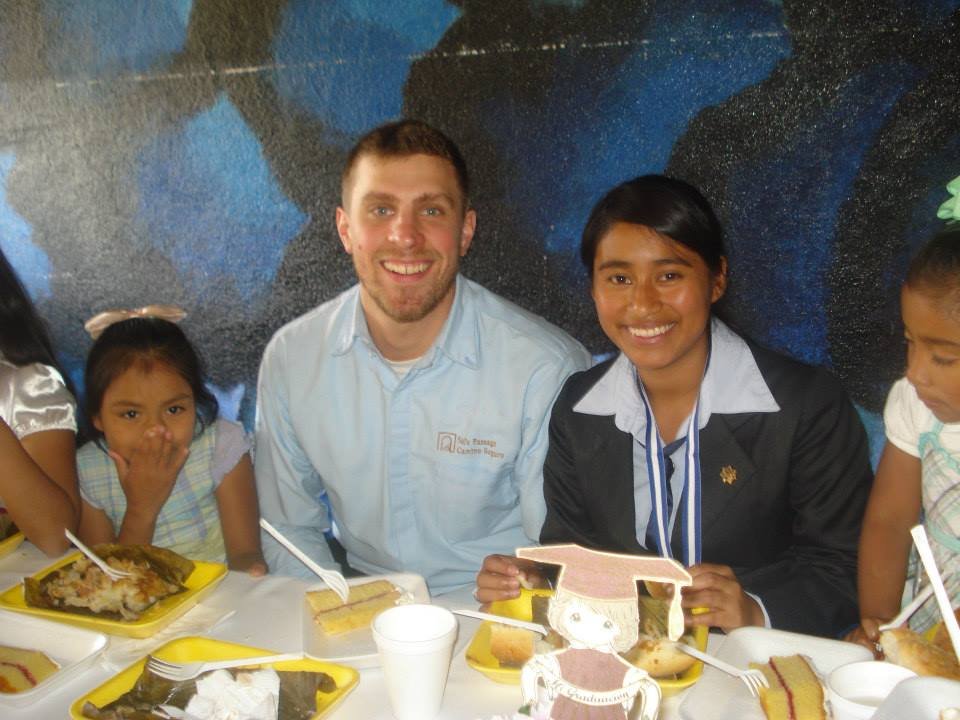
Pictured from left, Mac and Shannon in Guatemala

On December 12, 2021, a 20-year anniversary event was held in the Conference Room of The Best Western in Pembroke where supporters, Sisters and associates gathered to hear Shannon Moyle share experiences that happened over the course of the year, telling of successes and future plans.

20th Anniversary event in Pembroke, ON

Through a PowerPoint presentation she highlighted school and community activities and initiatives depicting children, teachers, youth and parents in the various programs operated by Planting Seeds International. Shannon’s love and passion for what she does shone through in her words:

“Every time I see the Ottawa Valley crew I get re-energized. I think what we have to be really, really grateful for is the fact that we’re all here together, 20 years later. It really warms my heart. We can’t all change the world, but we can be that person for somebody else, where they know they can count on you. They know they can come to you and trust you to be that one person. What else can we ask for.” (Pembroke Observer)

It is a daunting task to attempt to tell this story because there is so much more to it than recorded here. I hope their dream has inspired you.

-Grace McGuire, Associate

For more information and inquiries re: Beyond Belief please visit: www.plantingseedsinternational.org 

A Poem for Truth and Reconciliation

A Poem for Truth and Reconciliation

Today we share a poem written by Thamer Linklater, friend and partner of the Sisters of St. Joseph.

We are the granddaughters of survivors.

We are the nieces of people who never came home.

This entire year has been excruciating for us.

Not like a punch to the stomach,

One you don't see coming,

Taking your breath all at once.

But like an avalanche.

The slow collection of snow on a mountaintop.

Until, one day, a sound sets off a cascade,

Wrecking everything in its path.


We all saw the building snow.

Our bodies knew the horrors untold.

You see, we live near the mountains.


Towns, however, that are crushed by snow,

Are shielded by walls and roads.

Existing so far away from mountaintops.


A sea of orange now floods the landscape.

T-shirts, signs, banners, handprints

Take up the space cleared by snow.

Some wear the colour to commemorate

Grandparents, Aunts, Uncles, Cousins.

Some wear the colour to honour

The childhood that was stolen from them.

Some wear the colour as a sign of atonement.

Refusing to let history be buried.

Some wear the colour to blend in.

Using apologies, holidays, and shirts

To cover the gap.

Meanwhile pipelines, legal action, and police raids

Tear the rift further and further apart.


We are the granddaughters of survivors.

We are the nieces of those who never came home.

We are apart of the avalanche.

We had our hearts unburied with every child found.

Where do you fit in this story unfolding?


Thamer Linklater is a member of Nisichawayasihk Cree Nation and a survivor of the Child Welfare system in Manitoba. She recently graduated from the University of Winnipeg with a B.A. in English and is now working on her Master’s in Indigenous Studies at Trent University. She has worked in various teams for the Six Seasons Project. She has been involved with Manitoba Keewatinowi Okimakanak and is an active First Nations advocate. Thamer has recently started work on her collection of poems and hopes to publish them soon.


Learning to Read and Reading to Learn

Just reading this blog means that you can count yourself among those in the world who are literate. Being able to read and understand what you are reading brings many privileges into your daily life that you probably don’t even think about: following a recipe, reading the newspaper, helping your child with their homework, and simply enjoying a good book.

CODEpic.jpg

Today is International Literacy Day. Each September 8th since 1967, the world has set aside this day to advocate for closing the gap in global literacy. In Canada, literacy rates are 99% but many other places around the world are not so fortunate. In the Republic of South Sudan, for example, only 26.8 percent of people aged 15 or older are literate. How can a child reach their full potential if they cannot read and understand a simple sentence?

We know too that literacy drives all other forms of development. Gains in education are linked to improved health, fewer child marriages, economic growth, a greener planet, and more peaceful societies. Education is life-changing.

Eight years before UNESCO designated International Literacy Day, CODE was born in a church basement in Toronto. In 1959, a group of educators, librarians, and publishing professionals began packing unused books to ship to Africa in tea chests.  Today we intentionally supply schools in Ghana, Liberia, Mozambique, and Sierra Leone with books that are written and illustrated by local authors and illustrators, often in African languages, so that children can relate to the stories and see themselves and their culture valued.

CODE is Canada’s leading international development agency focused uniquely on education and literacy. In addition to books, CODE provides training to teachers in the use of instructional strategies that transform education from a one-way transfer of information (rote learning) to a dynamic process where the student is reading the text themselves, engaged, asking questions and developing critical thinking skills. Students are not only learning to read but reading to learn.

Before coming to CODE, I had lived for almost 20 years in Africa. While the state of education and quality of schools varied from place to place, I observed that the push for education and the drive to break the cycle of poverty is universal.

In September 2019 I had the pleasure to meet Whyteline, a 12-year-old girl living with her mother in Ashanti Region in Ghana where CODE has been working since 1990. Whyteline is in her first year of junior high school and is eager to learn. Each morning she walks 45 minutes to get to school and every afternoon makes the same trek home. She loves to read the books that CODE has provided to her school. She reads them aloud to her mother whose English is poor.  Whyteline said this to me,

"My grandmother didn’t go to school because in those days, that is what happened. My mother finished junior high school, but I will go even further…. I want to be a doctor.”

I believe and CODE believes that Whyteline has the potential to be a doctor and contribute to the health of her community and the development of her country. On this International Literacy Day, take a moment to be thankful for your own opportunity to learn to read, and read to learn - and remember those around the world who are yearning for the same chance.  

 -Janet Phillips | Fund Development Manager | www.code.ngo


The Sisters of St. Joseph are proud to support the work of CODE.

The Days of Awe

unsplash-image-98R8hu4cwes.jpg

ROSH HASHANAH AND YOM KIPPUR

Falling in autumn, the Jewish Days of Awe, or High Holy Days are the most sacred holidays in the Jewish calendar.

This is the time of year for introspection and examination of one’s self.

Rosh Hashanah means head of the year or New Year.  Celebrations take place at festive family dinners and in Synagogue.  This year, during Covid, many synagogues are offering masked, distanced services for members who are fully vaccinated or the option for online services.

During the meals, we dip apples into honey for a Sweet New Year, or a year of goodness—Shanah Tova.

YOM.jpg

Yom Kippur, or Day of Repentance,  is a solemn holiday where Jews over the age of Bar or Bat Mitzvah, age  13, fast from sundown to sundown. At this time we ask G-d for forgiveness for sins we have committed during the year.

Yom Kippur ends at sundown, with a meal including family and friends to Break the Fast.

Guest Blog from Judy Rochwerg.

Election 44: Human Rights Op-Ed

Federal election 2021: We need to hear about human rights

by Alex Neve[*]

So, we are now into the second week of the federal election.  Pundits and commentators have been busy offering their assessment and critiques of what the parties appear to be prioritizing in their campaigning.

There is no shortage of pressing contenders, including the health and economic dimensions of COVID-19, the ravages of the climate crisis, accountability for the genocide of residential schools as well as reconciliation with Indigenous peoples more widely, dismantling systemic racism, addressing gender inequality, taking on the challenge of governing the digital world, improving refugee protection, and responding to Afghanistan, Haiti and other humanitarian hotspots and disasters around the world.

unsplash-image-P0JL8np1N6k.jpg

Beyond offering up pledges about those crucial concerns, however, what would be refreshing is to hear genuine, full-fledged readiness to uphold human rights from the leaders. That is the key to meaningful progress with respect to all challenges we face, nationally and globally.

Human rights protection is foundational, yet we rarely hear convincing commitments framed from a human rights perspective in elections. Platitudes and posturing, that’s easy. Heartfelt endorsement of the Charter of Rights and Freedoms is commonplace, from some parties. And commendable positions on specific human rights cases or situations do certainly arise, unevenly and sporadically.

But a compelling vision for concretely putting human rights at the heart of Canada? Not so much. In fact, not at all.

We need leaders to make it clear that they will assess issues, craft policy, reform laws, set budgets, and make decisions, always, through a human rights framework.

Not only when it is convenient. Not as a secondary afterthought. And certainly not just by putting feel-good human rights language in more press releases.

Taking human rights seriously is about equality, agency, accountability, remedies, transparency, and consistency.  That is essential when it comes to COVID recovery, climate justice, Indigenous rights, dismantling racism, advancing gender equality, governing the internet, and protecting refugees. That is fundamental in responding to crises in Afghanistan, Haiti, Ethiopia, China, Israel/Palestine, Venezuela, Syria, Yemen, Colombia, Myanmar, and elsewhere. 

Above all else, it is how we will ultimately realize an equitable and sustainable world.

We could (and certainly should) ask the parties to provide us with human rights laundry lists. How will they rectify Canada’s various human rights shortcomings? What international human rights treaties will they ratify among the many we have not yet taken on board? Will they reconceive our relationships with the many countries with whom we regularly prioritize politics and economics over human rights? That would of course be welcome.

But more crucially, we need commitments that are transformative, not only reactive.  Commitments that are overarching, not piecemeal.  Commitments that are not just in the moment but will stand the test of time.

Here are three that would make a difference.

First, ensure that Canada’s stance on the world stage is consistently guided by international human rights standards. The Trudeau government adopted a feminist international assistance policy in 2017 and has been consulting with civil society towards a broader feminist foreign policy. The government has also put in place new guidelines for our diplomats to better protect human rights defenders around the world. Those are all steps in the right direction. But there is much further to do. Will parties commit to a legislated requirement to implement an international human rights action plan across the entirety of Canada’s global affairs?

Ensuring equitable vaccine availability worldwide, responding to the downward spiral in Afghanistan, selling armoured vehicles to Saudi Arabia, pushing Iran for accountability for shooting down Ukrainian International Airlines flight 752, working to free Canadians imprisoned abroad, acting on concerns about Canadian mining companies in Latin America, setting refugee policy along the US border, calling Israel out on illegal settlements in Occupied Palestinian Territory, or squaring the Beijing Olympics with what is happening to Uyghurs and in Hong Kong? Human rights must reliably be the overriding consideration in setting Canada’s course globally.

Second, shut down the growing inclination to use the Charter of Rights’ problematic notwithstanding clause.  Provincial governments have recently recklessly used this escape hatch three times to avoid human rights obligations: twice in Quebec and once (almost twice) in Ontario.

Ottawa doesn’t write provincial laws. And we aren’t about to amend the Charter, a near-impossible (certainly Herculean) task. It would be helpful, however, for all federal parties to unequivocally promise – backed up by legislation – never to resort to section 33.

unsplash-image-C2keINMOhIE.jpg

Third, it is time for a truly national embrace of human rights across Canada. For decades we have been hobbled by an ineffective and secretive approach among federal, provincial, and territorial governments when it comes to complying with our vital international human rights obligations. Our governments must collaborate to uphold those obligations equally and meaningfully across the country, and do so openly and transparently. They do not. Not even close.

Last year, in a meeting of federal, provincial, and territorial ministers responsible for human rights cohosted by the federal and Nova Scotia governments, which was only the third such gathering in 32 years, an important decision was taken, largely unnoticed at the time or since, to set up a Forum of Ministers on Human Rights.

That’s all we know. It so very much needs to be a gamechanger when it comes to delivering human rights protection across the country. But it could so easily end up being yet another wasted opportunity. We need to hear from federal parties about their vision for this Forum, and what concrete action they will take to make that happen.

We do face immense challenges that understandably feel daunting. Taking human rights seriously, like never before, will put us on the right path.


AlexNeve.jpg

[*] Alex Neve is a Senior Fellow with the Graduate School of Public and International Affairs at the University of Ottawa. He was Secretary General of Amnesty International Canada from 2000-2020.  An edited and shortened version of this blog appeared as an opinion piece in the Ottawa Citizen on August 18, 2021.