
Lent

The Journey Through Lent

I remember our parish’s Good Friday pilgrimages, when we walked from our small village to the neighboring one, taking turns carrying the cross. It was a trek marked by enthusiasm, joy and excitement where we would transfer the cross from one pair to another so each of us would reach the end without a sense of agonizing pain. Some ran ahead with youthful abandon while others lagged.

Likewise, the journey through Lent follows a determined course that proceeds from beginning to end. Some actively count off the days and weeks until we reach Holy Thursday with a final focus on Christ’s journey during the Triduum. Even as I write, there is a temptation to note that we are in the Third Week of Lent – partway through – as if the destination is the goal. “Keep your eye on the prize,” as the saying goes.
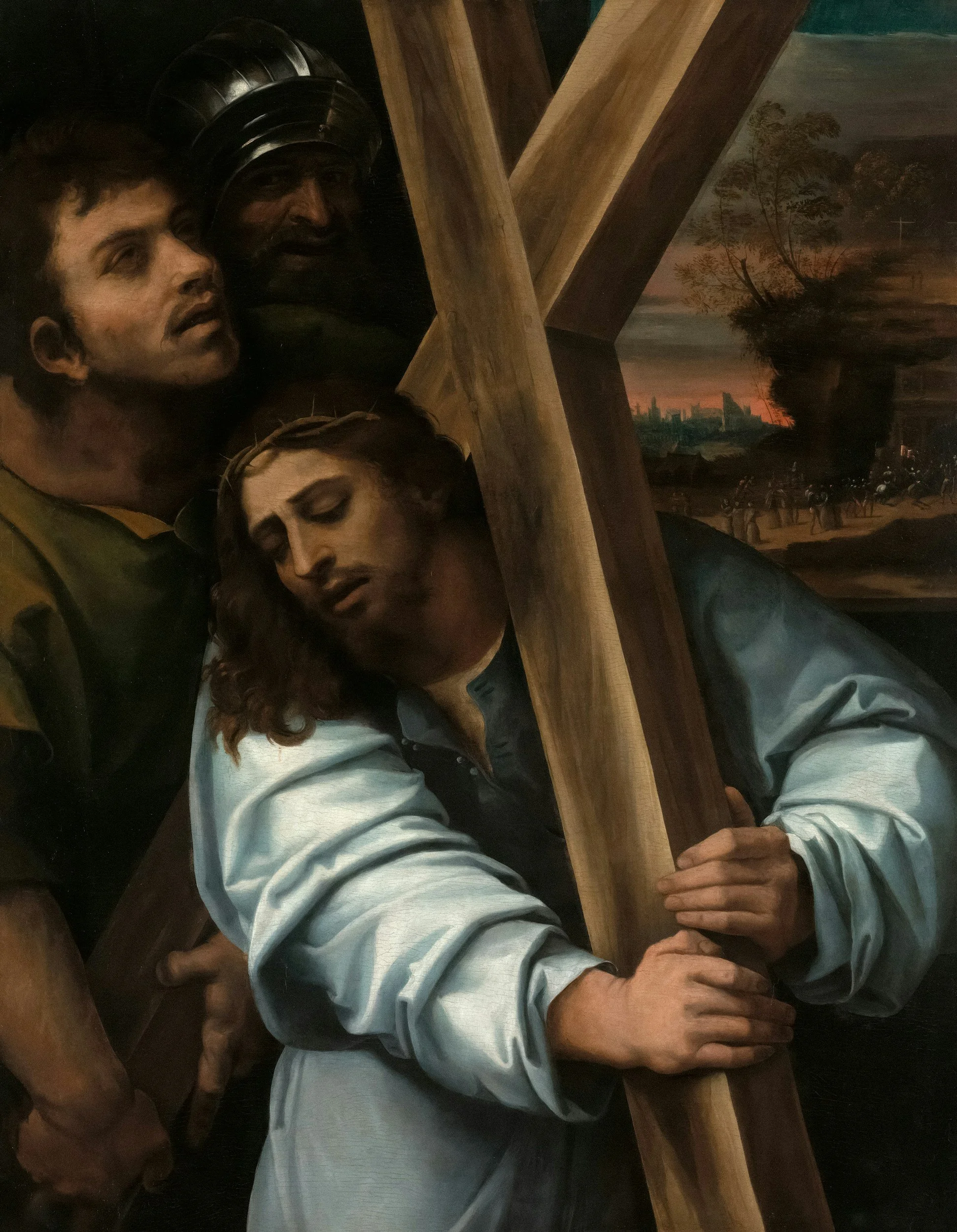
Christ suffered agonizing pain in his final hours; did he know beforehand the pain he would endure on our behalf? He did not pass the cross to another to make it easier on himself. In fact, each step he took throughout his mission required a dying to self so that we might live.

The 15-week Buddhist "Walk for Peace" from Fort Worth, Texas, to Washington, D.C. that concluded on February 10, 2026 has inspired me. In one of his daily teachings, the The Venerable Monk Bhikkhu Pannakara spoke of the need to look at ourselves in the mirror when brushing our teeth each day and then immediately wipe the spots of toothpaste off the reflection staring back at us. “Don’t leave it for later when it's much harder to get off,” he said.

“A journey of a thousand miles begins with a single step,” says the old Chinese saying or as my Spanish teacher used to say, “Poco a poco, se va legos” (little by little, one goes a long way). Focusing on each step, and the presence of God’s spirit within those steps, is what makes the Lent journey meaningful. Travelling the spiritual journey is a step by step walk on God’s Holy Ground.

-Susan Hendricks, csj associate

images: Jamie Ginsberg/Art Institute of Chicago @artchicago | Unsplash


I have been crucified with Christ and I no longer live, but Christ lives in me. The life I now live in the body, I live by faith in the Son of God, who loved me and gave himself for me. Galatians 2:20

The Spiritual Path of Lent  

Lent is that annual time of year when I am challenged to examine the spiritual path I’m walking on.  Am I even walking on a SPIRITUAL PATH?

To walk a spiritual path presumes there have been choices along the way which keep me focused on what I cannot see.  Here is one example.

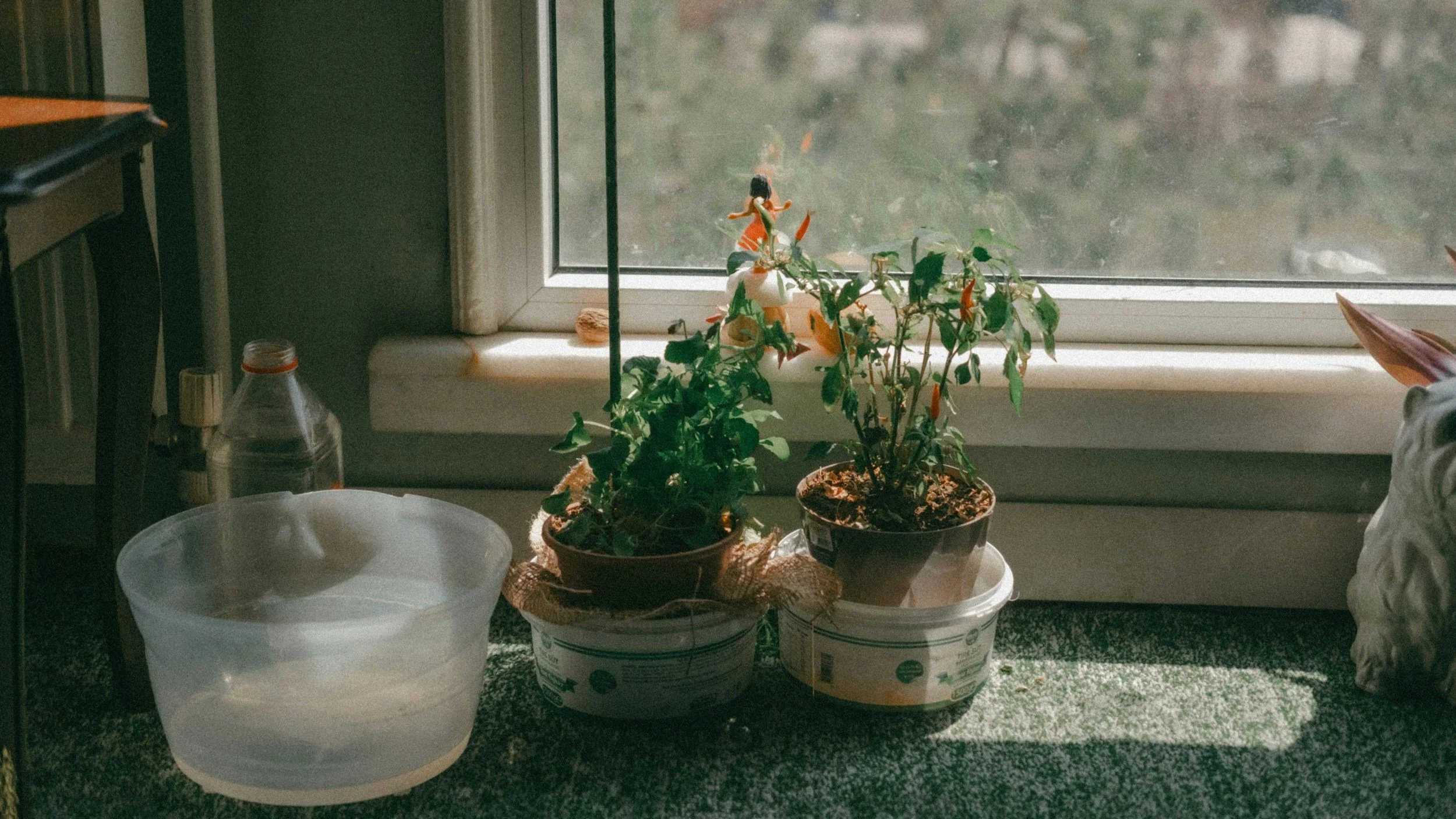
Why are the leaves on my plant all facing toward my window?  If I turn the plant, then over time the leaves again all face toward the window.  Do they have a longing to be outside growing beside that tree in the backyard?  Or do they have some inner awareness that their life depends on the light energy coming from outside my window?  I am a witness, not of the energy my plant is using for its life but I am a witness of the effect the invisible energy is having on the actions of my plant.

I think our lives are more complicated because we have to CHOOSE to face the direction of the energy we need for our lives.  Am I even facing in the direction of the energy I need to walk on a spiritual path?  Love is that energy.  Life is about experiencing being loved and respected and giving love and respect to another.  Life is about relationships, about receiving and about giving.  The way I receive and give love energy is a choice I make. 

During LENT we witness the life of Jesus; we witness all His loving relationships no matter the hardships he suffered.  His primary gaze was loving obedience to the will of the Father and then actively sharing that love with his followers.  Approaching Holy Week, I ask myself, am I even on that spiritual path with Jesus?

Finish this Lent, by going home and letting your plants teach you how to follow the energy you need for saving the life of your soul. 

-Sister Elaine Cole, csj

Images: Erika Osberg/Cemrecan Yurtman/Kelly Sikkema | Unsplash

Re-Igniting The Fire: An Invitation for Ash Wednesday

A couple of days ago, on a drive to Toronto, I found myself thinking of ashes (not my usual sort of thought on the 401!). I was thinking in this vein as I pondered Ash Wednesday upcoming. In Christian Tradition, Ash Wednesday marks the beginning of the season of Lent; a journey of some 40 days with Christ through cross to resurrection culminating in the celebration of Easter. Historically, marking with ashes in our various churches has been associated almost solely with repentance, but this association, while important, is far from the full invitation of the Lenten season. So back to my thoughts on ashes!

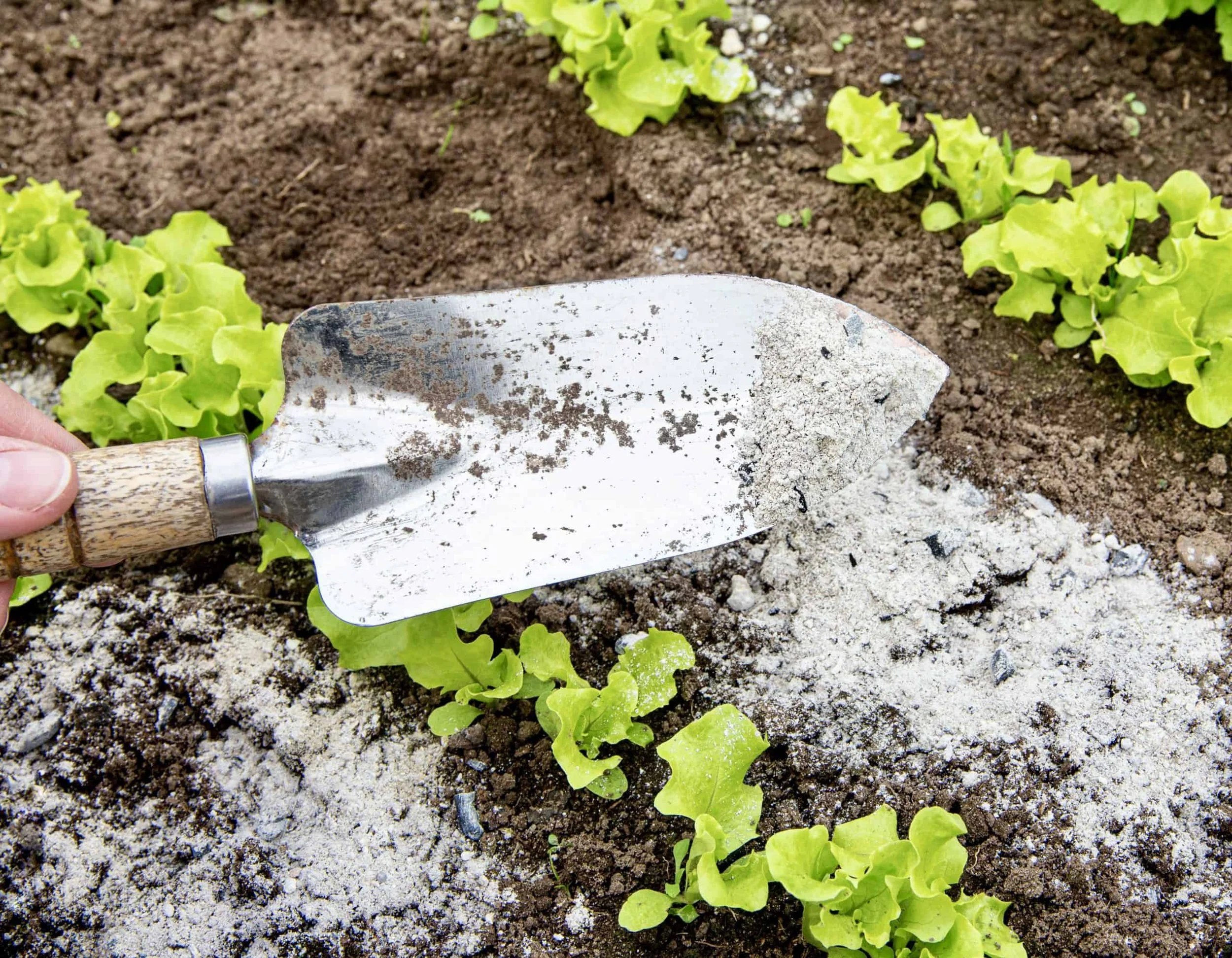
My mind wandered first to a distant memory of childhood when my grandmother would have me help her gather the ashes from the open fire grate to spread on her lovely English garden to enrich the soil for new growth; an act of faith and possibility. Lent is not about becoming stuck in an “ash heap of sinfulness” and negativity toward the self but rather a reaching out to God, for mercy, new growth, for transformation and conversion of heart. In a beautiful poem, “Blessing the Dust”, Jan Richardson reminds us of this hopeful reality and divine invitation. She writes:

All those days
you felt like dust, like dirt,
as if all you had to do was to turn your face
toward the wind
and be scattered to the four corners
or swept away
By the smallest breath
as insubstantial -
did you not know
 what the Holy One  
can do with dust?

What can God do in me as I open myself once again to the graces of Lent? The very existence of ashes pre-supposes earlier fire, fire that has the capacity to purify, energize, and comfort with its warmth. What about the fire in my life and faith now? Has it grown lukewarm or been extinguished perhaps by struggle, doubt, suffering, loss, simple neglect, busyness, or the negativity and division that exist in Church and society today? Perhaps Lent, is above all, an invitation, with God’s love and mercy to rekindle the fire in my spirit, for God, the world and neighbour, near and far. In his 2026 message for Lent, Listening and Fasting: Lent as a Time of Conversion, Pope Leo says,

“Lent is a time that invites us to place the mystery of God back in the centre of our lives, to find renewal in our faith and to keep our hearts from being consumed by the anxieties and distractions of daily life.” It is, he says, a call to restore “the quality of our relationships and dialogue” by listening to the Word of God and to the cry of those who are oppressed.

This is what “constantly challenges our lives, societies, political and economic systems, and not least the Church.” In the spirit of the ‘ever ancient, ever new’, Lenten traditions of prayer, fasting and charitable works, he invites us to the practical, to a deeper prayer and to respectful listening and caring action. He suggests a more profound fasting - a fast from “words that offend and hurt our neighbour”. As we consider the world at this present time how important that is.

May my Lenten practices, this year be prayerful acts of respect, kindness, dialogue, integrity of relationship. On this Ash Wednesday might I first ask myself, “is there warmth in the ashes still?” If so, I pray, rekindle in me the fire of Love.

 -Sister Mary Rowell, csj

Image: Pablo Martinez @pablomp/Ahna Ziegler @artzUnsplash

Feast and Famine

To speak of feasting in these days of famine—especially in war-torn lands—can be a stark reminder of the disparity God calls us to address. Yet, feasting can be a sacred act—an offering of gratitude for the blessings we’ve been given and a call to celebrate. Shrove Tuesday calls us to gather in community, to enjoy the richness of food and fellowship not as indulgence, but as gratitude—using what we have with humility as we prepare for the reflective season of Lent. Feasting becomes a way to remember how deeply we’ve been blessed, and how those blessings can overflow toward neighbors near and far who live with far less.

This day also invites us to rediscover simple joys together—sharing meals, laughter, games, or quiet companionship. As we reflect on our own abundance, we’re gently asked: how might we share from what we have, and how might our feasting open our hearts to those who hunger?

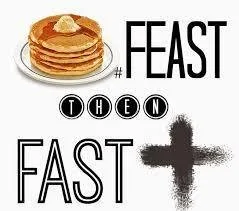
Shrove Tuesday is also “pancake day” when in the Christian tradition, rich foods like eggs sugar and butter are used up by making pancakes.

So let us join the dance of feast and famine, being very mindful of where we dance, why we do so, how we dance and with whom we partner.

WHERE this might happen: in a neighbourhood, in a church gathering, in homes.

WHY we dance: to very intentionally celebrate the many gifts we have been given.

HOW might we dance? We might just decide to loiter with intent with someone with whom we have not spent time in a long while.

With whom might we dance? It might be with a grandchild playing a child’s game or an elderly person playing an elderly person’s game or it might be just talking with someone and listening to their story.

-Sister Kathleen Lichti, CSJ

Image: Milana Burlo @milanana444/Calum Lewis @calumlewisUnsplash

LENTEN SKIN-SHEDDING

As we reach the halfway stage of our Lenten journey, it is good to pause to check in how ‘we’ are doing. Did you notice what I just said? Checking to see how ‘we’ are doing. This Lent I have once again noticed how much I like to be in control of my life, to be “in charge.” Probably most of us think we know what is best for us and tend to forget that we need help and guidance from God.

As the word Lent “stems from the old English word lencten springtime, spring” on Ash Wednesday I decided to do some internal spring cleaning during this Lent. Since I have always liked the prayer, “Create in me a clean heart, O God, and renew a right spirit within me” Psalm 51:10, this was what I prayed for. In hindsight, I remember thinking, “Be careful what you wish [or pray] for.”  Though “my” plans focused on getting ready for some almighty spring-cleaning of my heart, that became secondary to what transpired. An allergic reaction to a new medication caused my skin to peel and shed. 

Then, just before Lent, I stumbled upon the reflection, A Time for Skin-shedding by Joyce Rupp.  As if that were not enough of a ‘God-incidence’, a friend also forwarded her reflection to me. Though the title instantly resonated with me, it was her closing sentence which really got my attention, “May this Lent be a time of skin-shedding for you, my readers, a time when you discern what are your strengths and what are your weaknesses.” As I pondered these words, I thought to myself, “Okay God, I am shedding my skin - what is the message here?”

In the first reading on this Third Sunday of Lent, we hear about Moses at the burning bush, where he hears God tell him, “Remove the sandals from your feet, for the place on which you are standing is holy ground.” I doubt that God was asking me to remove my skin. However, prompted by Joyce Rupp’s reflection, I wondered whether God was wanting me to see how spiritual skin-shedding could help me discover what my strengths are and what weaknesses are keeping me from growing.  Was I encouraged to shed my spiritual skin so I could grow spiritually?” How could I shed my spiritual skin this Lent?  In Ephesians 4:22 we read, “Strip yourself of your former nature [put off and discard your old unrenewed self] … And put on the new nature, [the regenerate self] created in God’s image.” I, who like to be in control of my life, certainly would need God’s help to shed my spiritual skin not just once but again and again.

Lent is the time to remove obstacles to grace. Our gracious God is like the gardener in the Gospel who said to the owner of a fig tree not bearing fruit, let me “dig around it and put manure on it.” God patiently works on the soil of our lives and often in unexpected ways, like using skin-shedding to teach me. The ‘manure’ in our lives tends to be full of surprises. Thankfully, it also contains the graces we need to help us shed spiritually and learn to embrace our weaknesses and bring out the best in us, who are wonderfully made. With God’s grace we can change and grow throughout this Lent so by Easter we will not be the ‘con-version’ of ourselves but the true women and men created in God’s image and likeness and comfortable in our own skin.

Sr. Magdalena Vogt, cps

IMAGES: Josh Applegate/Grant Whitty| Unsplash