
Blue Community Update

EARTH DAY EVENTS

Earthrise Screening Party with Emmanuel Vaughan-Lee

“Earthrise" tells the story of the first image captured of the Earth from space in 1968. This iconic image had a powerful impact on the Apollo 8 astronauts and the world. Told 50 years later, "Earthrise" compels us to remember this shift and to reflect on the Earth as a shared home. There will be time after the screening for a live discussion with Emmanuel and a moderated Q&A with the audience.

When: Apr 22, 2020 3:00 PM

Register: https://zoom.us/webinar/register/WN_HyUfD50sQ_CUbycTEw6bwQ

New 90 minute film: OUR WATER

Four friends kayaked around Lake Superior to help raise awareness of the pristine waters and landscapes they behold. Sharing stories and values of what makes our backyard to important to us and those that live with it. Ryan Busch will be live on Facebook to answer questions.

When: April 22, 2020 from 7:00-8:30 pm EST Watch the film and engage with the makers at: https://www.fourthewater.com/

ENCOURAGING NEWS

Council of Canadians Announcement In an email from Vi Bui (Blue Communities Coordinator for the Council of Canadians) announced:

I’m writing today to bring to you some good news. A few weeks ago, Vancouver City Council voted to become the second largest Blue Community in Canada… That means that one in four residents in British Columbia live in a community that has committed to protecting water as a human right, banning bottled water, and saying no to privatization of water and wastewater services.

See more here.

When youth carry the weight of the world

These young activists have proven to their communities and the world that there is no time like the present to make a change.

  • 11 year-old Stella Bowles wanted to swim in the river near her home in Bridgewater, N.S. but it was contaminated. She took action. After a couple months, Bridgewater officials announced they would be funding $15.7-million to clean the rivers and remove the 600 straight pipes that were contaminating the waters.

  • In her final year of high school, Emma-Jane Burian from Burnaby, B.C. plans climate justice strikes on the first Friday of every month.

  • Known as a water protector, Makaśa Looking Horse is from Six Nations of the Grand River Territory and fights for water rights – especially against Nestlé’s bottled water permits.

    Read the full story

Watch on Netflix/In the News

  • Canadian actor Ellen Page brings attention to the injustices and injuries caused by environmental racism in her home province, in this urgent documentary on Indigenous and African Nova Scotian women fighting to protect their communities, their land, and their futures. From the TIFF website.

  • The CSJ Blue Community project sponsored the documentary, There’s Something in the Water, for a Peterborough community screening. Now you can watch it on Netflix whenever you like.

  • In related news, this CBC article updates us about the recent closure of a mill that polluted Pictou Landing for decades. This story is featured in the above documentary There’s Something in the Water. Read the full story

  • While not specific to water issues, the privatization of long-term health care has dire consequences for the quality of care for society’s most vulnerable. Read the full story that is also playing out across Canada during this COVID-19 virus crisis.

PROJECT UPDATES

Public Health & the Right to Clean Water – a new blog post. The recent spread of COVID-19 across the world shows the gaps in our collective preparedness and many systemic and social inequalities. For instance, how do people wash and disinfect their hands without access to clean and affordable water? Read more

“Friluftsliv” in Norway

After spending eight months in Norway studying environmental science in perhaps the most beautiful place I have ever been, I have learned a fair amount about how and why Norway prioritizes taking care of its environment.

One of the main reasons I believe Norway is able to prioritize taking care of its environment is simply because people care. Norwegian citizens are active people, not necessarily in the traditional sense that they run every day or go to the gym three times a week, they are active outside. Bouldering up rock walls, hiking mountains, skiing, kayaking, scuba diving, all of these activities are part of a Norwegian concept called Friluftsliv (pronounced free-loofts-liv). This is the concept of getting outside to create a passion for nature which can be translated into a desire to preserve the environment. The relationship Norwegians have with nature begins at a young age and runs deep within their culture. This passion drives citizens to push for greener laws and motivates governors to make sustainable decisions, and it works.

When I got off my seven-hour bus ride north from Oslo to my town of Sogndal, one of the first things I noticed was the air - it was clean, crisp, mountain air, free from any noticeable traces of pollution. This has a lot to do with the fact that Norway is the number one country in the world for the use of electric vehicles as opposed to gasoline-powered vehicles. As well, litter is almost non-existent, driven by this concept of Friluftsliv. I also met plenty of fellow vegetarians during my studies, as the meat industry is a large contributor to atmospheric pollution and again, the concept of Friluftsliv drives this notion. Some decisions are driven by the government, but many are driven directly by every day citizens who actively choose to care and make personal choices that reflect this dedication to the environment.

With Earth Day around the corner (April 22nd), I hope that people are able to search for a personal memory with nature where they felt at home, or at peace, or a responsibility to take care of our Earth. One of the best ways to motivate people to care is to remind them of personal experiences and to get them involved in making new memories in connection with the environment. My time in Norway may have been cut short but I am continuing my studies online and I am looking forward to carrying this idea of Friluftsliv with me, especially in these difficult times where the Coronavirus may cause a disconnect from other people, let us use it as a time to reconnect with nature.

- Hannah St. Louis

Currently, I am working towards completing my third year of my bachelor’s degree in Environmental Science/Studies at Trent University. For my third year of this degree I chose to do a year abroad in Sogndal, Norway. In Norway I participated in the “Mountains to Fjords” program from August until December and the “Geohazards and Climate Change” program from January until June, although this program will be continued online due to the Coronavirus. I am originally from Markham, Ontario, where I still live in the summer with my parents and my two brothers, the rest of the year I live and study in Peterborough, Ontario. I am not certain on what I would like to pursue post-graduation, however, I know I would like to work outside, perhaps surveying the land or sampling certain aspects of the environment, I still have another year of school to help me figure this out. Below, I have provided a couple of extra resources that have helped me through my studies that contain further information for those who are interested.

This is a link to my university’s webpage and it takes you directly to a description of my first semester program “Mountains to Fjords”. https://www.hvl.no/en/studies-at-hvl/study-programmes/2020h/fmf/

This is a link to a resource I found particularly interesting and important when I was working on my final science project of my first semester where we looked at the impacts of the newly built hydropower plant on the Sognefjord and the Barsnesfjord water ways. http://www.vannportalen.no/globalassets/nasjonalt/engelsk/reports-and-publications-in-english/summary-repport-for-norway-wed-article-5-characterisation-mai-2013-report_wfd_art5_norway_results_2013_am1fh.pdf

This is a link to the Sognefjord municipality’s webpage. https://en.sognefjord.no/fjord-villages/towns-and-villages/sogndal

Covid 19 Masquerade

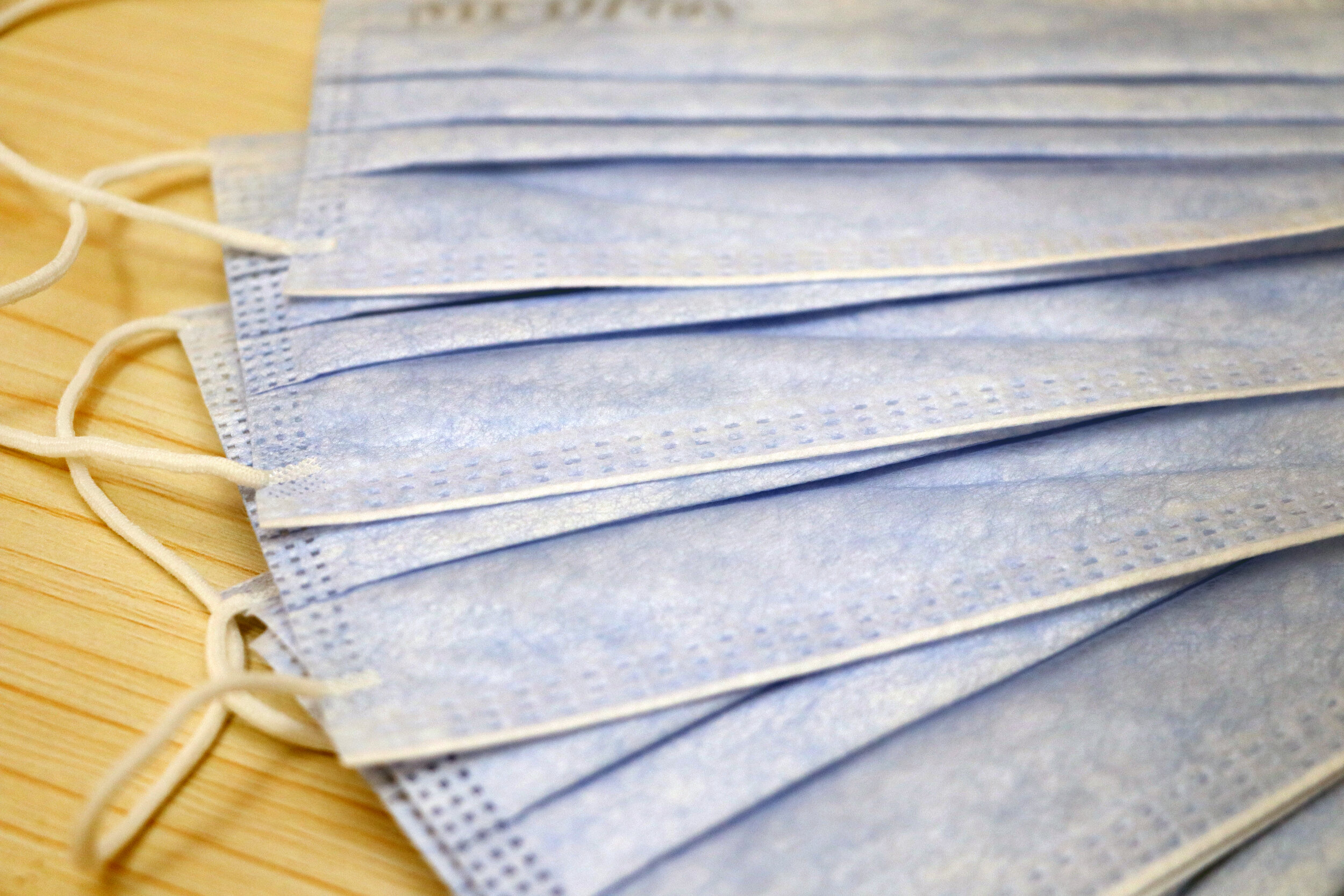
Does the title of this blog puzzle you?  Why?  Don’t you think this bizarre coronavirus pandemic feels somewhat like a masquerade? Everything looks and feels different these days. For one, masked folks are found not only in hospitals, but also on our streets and in our stores.  Masks are generally worn either as a disguise, for protection, for fun, or as a cover up. Just think of Batman and Spiderman, of masked Erik in the Phantom of the Opera, of Darth Vader or Zorro. All of them wear masks as part of their identity.  We all wear masks, invisible masks, all the time. However, wearing masks in today’s pandemic is different; we don real masks to protect ourselves from this dread coronavirus.

The first awareness I had of this new masquerade, was in early January when Donald Trump blatantly stated, “This virus is a hoax.” Masking the truth, covering up the reality, cost the US dearly, for we all know that this pandemic is far from being a hoax.  True enough, when first we heard of its presence in distant Wuhan, we could hardly imagine the horrific impact it would soon have on the rest of the world. It was something we heard about in the news, something happening over there, something that would have no impact on our lives. Wrong.

How drastically everything changed, almost in the blink of an eye!  By March the 6th, there it was, right here in Canada. The pandemic was not merely on our doorstep but right in our midst. When the first Canadian died of the virus in Vancouver, it still seemed quite far away from us in South Western Ontario.  However, within a week Canadians everywhere were isolating themselves and shutting out the rest of the world.  As schools, universities, colleges and public places closed, the first signs of a nationwide masquerade appeared.

Frontline workers, such as doctors and nurses, who usually wear masks while they care for their patients, immediately turned to additional protective gear when those infected by the virus were entrusted to their care.  However, suddenly more and more people could be seen wearing masks. Not in our wildest dreams did we ever imagine masks would become such a hot item.  Ordinarily only used to dress up for a fun masquerade or as a disguise, it suddenly has become an essential piece of protective gear.  Just think. Isn’t it peculiar how quickly it is perfectly acceptable to go to your bank masked and gloved!  No one will even look at you twice when you walk in wearing a mask, though people may look at you askance if you don’t wear one.  It’s a masquerade after all. 

Since we are admonished to stay home, very few people are out and about on our streets. However, if you go walking these days, you may come across people looking a bit like bandits or pirates, Lone Rangers or that masked character from the Phantom of the Opera enjoying solitary walks. Strange sights indeed.  The neighbourhood looks like a masquerade parody sans music, dance and laughter.  No wonder techie people begin asking, “Can we uninstall 2020 and install it again? This version has a virus.”  If only it were that easy to do so.  The answer is a resounding no; this is the world we now live in.  This is our new normal.  Normally, we don’t walk on our streets or in grocery stores wearing masks as if we were at a masquerade or carnival.

Uniquely, we all have our personal way of coping during these abnormal times.  There are those who have become despondent or even depressed, while others rise to the occasion. We hear of exceptionally kind gestures right here in London, be it Western or Fanshawe College lending ventilators and beds or be it the Catholic School Board donating five skids of cleaning supplies and gloves to hospitals.  Then there is the elderly woman feeding exhausted truck drivers or the man who delivers meals to isolated elders.  Also stepping up to the plate, are the Sisters of St. Joseph whose hospitality centre in downtown London is closed to sit-down clients for the duration of the pandemic. Every weekday morning the Sisters have been making 125 bagged lunches which are distributed to their regular clients.

The virus may know no boundaries, but neither do kindness and love. As a gesture of love, the Sisters are contributing to the pandemic masquerade. They not only pray for the needs of all people as covid-19 sweeps across our world, but some ingenious busy bees have also begun to cut, sew, pleat and iron 300 cloth masks.  These masks will be used to protect the vulnerable, elderly Sisters and staff.

Recently, I read online, “Life is a masquerade. Everywhere you look are people hiding behind masks.” These words have taken on a totally different meaning for me. They give me pause.  When the pandemic is behind us, we will no longer need to wear masks. We will have learned many lessons. Might one of these lessons be, as the sign on our front lawn states, “Perhaps, we are learning to live in the shelter of each other.” Perhaps, there will be no need to hide behind our invisible masks. 

- Sr. Magdalena Vogt, cps