
Welcoming the Wild Goose: An Invitation For Pentecost

dove.jpg

Sunday, May 31st this year marks the celebration, in the Christian Church, of the Feast of Pentecost commemorating the descent of the Holy Spirit on the followers of Jesus in Jerusalem. There is something striking about the chosen Scripture readings for the celebration. They present a seeming contradiction! In the selected Gospel (John 20: 19-23) we read of the resurrected Jesus entering the locked room in which his disciples are hiding in fear. It is Jesus in this narrative who breathes the Holy Spirit on them offering them peace as he sends them out. It’s a comforting story. Isn’t it also the way in which we so often depict the Holy Spirit as a peaceful dove; a soothing Presence? Of course, many of us will have experienced God’s Presence in that real, appropriate, and peaceful manner. But there is more …

By contrast, the reading from Acts recounts the “arrival” of the Holy Spirit as “like the rush of a violent wind … as divided tongues of fire”. This dramatic portrayal of the Spirit is a quite different experience. It represents a disturbing, disruptive event.

Pope Francis in a 2013 homily resonates with such an experience of the Holy Spirit. He says, “The Holy Spirit upsets us because the Spirit moves us, makes us walk, pushes us forward.” But “we want to tame the Holy Spirit, and that is wrong.” In a similar vein, the late Irish poet John O’ Donohue remarks, “I think there is a wonderful danger in God that we have totally forgotten. Because one of the things humanoids like to do is they like to bring in the tamers to tame their deities.”(See: John O’ Donohue, “Imagination as the Path of the Spirit” YouTube) There is, O’ Donohue says, a wildness in God and we are called to “make God dangerous again.” The image of the Holy Spirit as a dove isn’t the whole story!
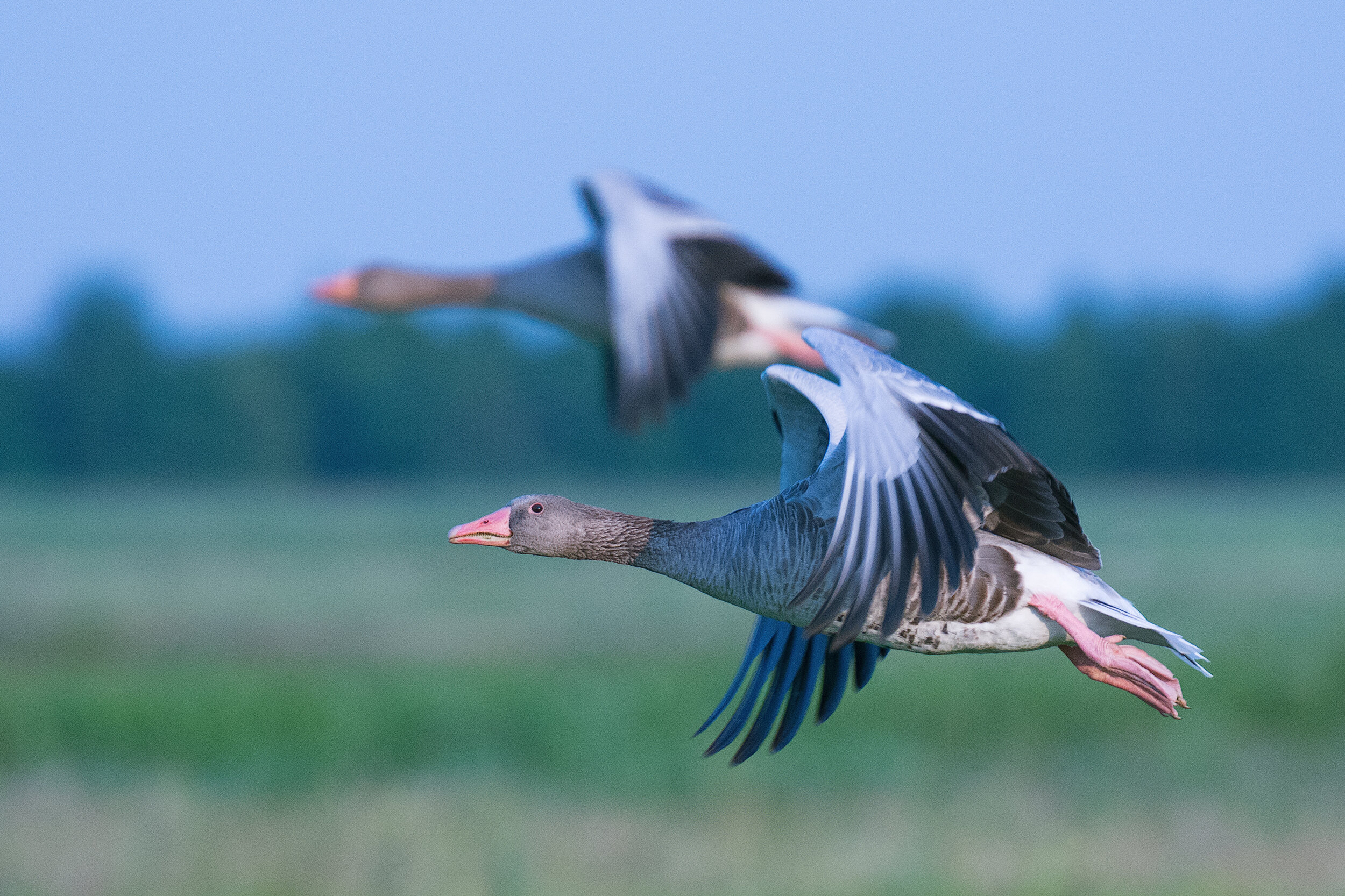
In Celtic Christianity, the wonderful portrayal of the Holy Spirit was rather that of a” Wild Goose”. When I first encountered this early spiritual image, I was taken back to my childhood growing up in Cambridge, England. Often, my mother would take me on walks to the University grounds, to the beautiful so-called “Backs of the Colleges”. We would enter through the gates of Queen’s College where a gaggle of geese (albeit somewhat domesticated) stood guard. They were noisy, erratic, frightening animals. They definitely seemed dangerous to a small child. I couldn’t wait to hurry past them. Perhaps that is also our motivation when we avoid or resist the wildness of God. It is much more comfortable to be with the gentle dove. The dove may comfort me as God comforts, but the dove may not call me to the fullness of the dynamic relationship to which God calls each of us. The Wild Goose does.

The Wild Goose is untameable, uncontrollable, sometimes frightening, a dangerous creature! The Wild Goose invites us to let go of all that is static, to live life on God’s terms rather than from our preconceived and safe ideas of how life should work out. This alternative image of the Holy Spirit beckons us toward the unexpected, to life’s ultimate questions, to fresh horizons and perceptions, to grow into the dynamic world of the Spirit. It calls us to be open to a “dangerous” journey; one in which we have to trust God wholeheartedly remembering at the same time that geese also protect; to a divine adventure impassioned by the Spirit with the tongues of fire gifted to the disciples.

Perhaps this Pentecost invites me to go on “a wild goose chase” where not I but the goose does the chasing - of me!  On this Feast may I welcome the Wild Goose. May I let God act, call me to be and do something different, to risk life in the Spirit, to embrace a dangerous God, but a God, nonetheless, who remains with each of us on the wild and wonderful journey as a dove of peace sending us out like the first disciples, to love and live in freedom and joy.

A prayer of an Anglican priest, writer and founder of a contemporary Celtic community, Ray Simpson, says it all:

Great Spirit, Wild Goose of the Almighty.
Be my eye in dark places;
Be my flight in trapped places;
Be my host in wild places;
Be my brood in barren places;
Be my formation in the lost places.

(Ray Simpson, “A Holy Island Prayer Book: Prayers and Readings from Lindesfarne, Church Publishing Inc., 2002)

A blessed, happy, peaceful, and dangerous Pentecost!

-Sister Mary Rowell, cjs

(Photos: Courtesy of Unsplash.com)

Dear Hearts and Gentle People

These days, I find myself humming a cheery popular tune of the ‘50s which can still be found on the internet.  It begins, “I love those dear hearts and gentle people who live and love in my hometown.”  It echoes how I feel about the special happenings around our residence during these difficult pandemic weeks.  We’ve had our share of rules and regulations, ups and downs, and even weeks of isolation in its various forms.  However, the outpouring acts of kindness that we’ve experienced, compliments of our friends and partners, have lifted our hearts and filled us with gratitude to live in this blessed city.

A host of rituals began several weeks ago when a sparkling red fire engine and three accompanying vehicles using low horns, circled our driveway to honour our healthcare workers as they stood with us waving and social distancing on the sidewalk. It was a beautiful gesture. The insistent honking and flapping of our six resident geese added to the cacophony.

A few days later, one of our dear friends rolled up her sleeves and baked 125 large, delicious chocolate chip cookies and brought them to the front door.  It was a surprise and treat to find them on the ledge outside our suites.  Another friend brought two large bags of candy that was added to our individual pandemic survival bags.  It too, sweetened our stay in isolation.

Visitors in London Ontario, May 24th

Visitors in London Ontario, May 24th

London Fire Department visit, May 23rd

London Fire Department visit, May 23rd

Sunday evening, a group of about 50 women and men arrived to walk around our building waving and chatting to us on our balconies above the drumbeat and ringing bells.  They carried signs which read, “We love you” and various affirming statements.  Among those represented were Kings University College, My Sisters’ Place, Pillar Non-Profit, The Threshold Choir, Anova, St. Peter’s Seminary, and several others.

Most recently, a former staff member of many years at The Mount came with his wife and daughter to attach two beautiful hearts on two trees: one at the front and one at the back of our home.  We watched the process and chatted with this thoughtful family.  As they drove away, I mused on how each gesture of love and affirmation, as well as the continued dedication of our staff above and beyond the call of duty, fills our hearts with profound appreciation.  As Bing sang so many years ago, “Those dear hearts and gentle people will never ever let you down.”

-Sister Jean Moylan, csj

A Book Review

Roses are Difficult Here, by W.O. Mitchell

ROSES are Book Review.jpg

The reader is invited into the town of Shelby, Alberta, a small town in the foothills near the Southern border of the province.   Throughout the novel, the land itself almost becomes a character; life here is difficult with extremes of weather especially freezing temperatures, snow, hail, burning heat, drought and plagues of insects from time to time.  The local ranchers and farmers often walk close to disaster. 

The story is told through the eyes of Matt Stanley, publisher, editor, and lone writer of the Shelby Chronicle.  He introduces us to many of the town’s inhabitants, each with their own foibles.  Indeed combined they are an interesting group of humanity.  There are class distinctions, some folk with earned respect, and others who battle for leadership among the many organizations that make up the life of Shelby.  As always there are those on the bottom.  Here it is Rory Napoleon and his family; his job is to empty septic beds and haul garbage.

Life in the town changes when a university sociologist, Dr. June Melquist, comes to Shelby to put it under a microscope as a ‘typical’ example of a Western small town.  As Matt introduces her to his many neighbours and friends, she ‘interviews’ more and more of the townspeople, making no distinction between narrative, fable, and gossip.  The weaknesses of so many are held to ridicule after she leaves and her book is published.  Apparently the townspeople were a great disappointment having no leadership, culture nor tolerance. 

The strength of the novel lies in its people whom we meet in different situations and see interact with each other.  I enjoyed dusting this off the shelf and rereading it.

- Jackie Potters, an Associate of the Sisters of St. Joseph

A Poem

Mary-Win

Frail, tiny, and still,

She voices no sound

nor moves her rigid limbs.

Unseeing eyes are half-closed.

Does she hear our speech

or feel the hands of those who

turn, move, lift, or cleanse her unresisting body?

She slowly consumes food and water dispensed one spoonful at a time.

Some question the purpose of her altered state of being alive.

Does she suffer?

Is her choice, this shadowed life?

Is MaryWin simply a burden?

Yet in the glow emanating from her face, we are graced with the

glimmer of a different reality.

We glimpse beauty and truth not measured by mere human understanding.

A tree gives praise and glory to the Creator with the voice of a tree.

Mary-Win, in being Mary-Win,

voices praise to God,

and beckons us

to grasp the Love and Truth we yet cannot see.

-Sister Patricia McKeon, csj