
The Transformative Energy of Black Lives Matter

As we experience the transformative energy of the Black Lives Matter movement sweeping around the world, it is a critical moment to reflect on unconscious bias and the racist assumptions which affect Black, Indigenous, and People of Colour communities in our own city and country.  It’s not an easy thing to do.  Our cultural tendency to view things through the lens of the individual blinds us to much of what’s going on in society, including systemic racism. It can also blind us to the graced potential for transformation which exists even within imperfect social actions such as protests marred by the violence of a few.  The challenge is to focus on and follow the graced energy for transformation which is working to bring about greater wholeness and justice. In that spirit, we revisit this short excerpt from a 2019 newsletter from the Federation Office for Systemic Justice.

Robin DiAngelo, who is white, wrote a book called White Fragility (2018). She insists that white people are all racist, and whites who think they’re not racist cause the most damage of all. DiAngelo explains “we are taught to think about racism only as discrete acts committed by individual people, rather than as a complex, interconnected system”.

WHITE FRAGILITY.jpg

The individual framing of the issue means we can focus on changing a few individuals who say or do hateful things. It means we don’t have to examine our own unconscious racist assumptions. It means society doesn’t have to change, just individual ‘bad’ persons.

In our society, whites have held, and continue to hold, nearly all the positions of social, political, and economic power. So, the pre-judgements (thoughts, feelings and assumptions into which we are socialized) which whites tend to hold about people of colour have become institutionalized; that is, white prejudice has shaped the structures and systems of our society.

DiAngelo points to a New York Times article from 2016 which illumines the degree to which white people still hold the seats of power. The article is based on the U.S. context but is relevant to Canada. Here are a few examples:

  • Ten richest people - 100% white

  • Highest-levels of politics – 90% white

  • People who decide which television shows are available – 93% white

  • People who decide which books are available – 90% white

  • People who decide which news is covered – 85% white

  • Teachers – 82% white

These statistics reveal “power and control by a racial group that is in the position to disseminate and protect its own self-image, worldview, and interests across the entire society”. Whiteness becomes the norm, while other races are ‘othered.’ The impacts can be devastating:

• Racialized people in Canada are significantly more likely to live in poverty. The 2016 Census showed that 20.8% of peoples of colour are low-income compared to 12.2% of non-racialized people.

• In 2015, there was a 69% high school graduation rate for Black students and 50% for Indigenous students, versus 84% for White students.

• People of colour living in Ontario have higher unemployment rates than White residents. Racialized men are 24% more likely to be unemployed than non-racialized men. Racialized women are 43% more likely to be unemployed than non-racialized men.
MOSAIC.jpg

(https://colourofpoverty.ca/)

 -Sister Sue Wilson, csj

A Book Review

LITTLE FIRES EVERYWHERE by Celeste Ng

This story takes place in Shaker Heights, Ohio a suburb of Cleveland.   A real place where the author grew up which was the first planned community in America.  And it existed with its own set of rules, from the colour of your house even down to where you could put your garbage bins.  The plot begins dramatically with a blazing fire of a rich house.

little fires book review.jpg

But the characters are the focus.  Elena Richardson is the third generation of her family to live in this community.  She is one of the movers and shakers, living by all the rules, written and unwritten.  As she says, “Rules are meant to keep you safe.  If you follow them you will have success.”  She has four children, all different.  The eldest girl, Lexie, has her path set for going to Yale and she is accepted for the following year.  In high school, she joined the right groups, become involved in the right clubs/activities, and did well academically.  The next child, Tripp, is the handsome jock who attracts girls but loves and leaves them.  Third is Moody, a sensitive artist with a well-hidden rebel inside.  He is belittled by Lexie and Tripp.  Finally, there is Izzy who rejects the rules of her mother and community.  She constantly acts out, pushing angry responses from her mother when she dresses differently, becomes vegetarian, and refuses to comply with her mother’s plans for her life.

Enter Mia Warren who is nomadic and lives in her car with her daughter Pearl while settling into their next community.  She is an artistic photographer who moves from project to project.  She supports herself with odd jobs and devotes her time and energy to her photography and to her daughter Pearl.  Circumstances have Mia renting an apartment from the Richardsons and later, working as a cook/housekeeper in the afternoons at their home.

While the characters appear opposites, their interactions give them nuances that allow for much reflection on parenting, mother/daughter relationships, values that order our lives, and how or if we change.  This is both a good story and a thought-provoking look at daily life.

- Jackie Potters, csj Associate

Speak Up. Speak Out. Pray.

Speak up, speak out.  Pray.  And stay rooted and grounded in love.  Love is the only thing that will get us through these difficult days.  But remember that when love takes to the streets it looks like justice.  We need justice for George Floyd, justice for Ahmaud Arberry, justice for Breonna Taylor, because Black Lives Still Matter. 

And we need justice for all indigenous peoples in Canada who have long suffered the effects of colonialism.

We leave you with a hashtag out of an activist in Toronto to those us who have privilege: #letsgetuncomfortable

Welcoming the Wild Goose: An Invitation For Pentecost

dove.jpg

Sunday, May 31st this year marks the celebration, in the Christian Church, of the Feast of Pentecost commemorating the descent of the Holy Spirit on the followers of Jesus in Jerusalem. There is something striking about the chosen Scripture readings for the celebration. They present a seeming contradiction! In the selected Gospel (John 20: 19-23) we read of the resurrected Jesus entering the locked room in which his disciples are hiding in fear. It is Jesus in this narrative who breathes the Holy Spirit on them offering them peace as he sends them out. It’s a comforting story. Isn’t it also the way in which we so often depict the Holy Spirit as a peaceful dove; a soothing Presence? Of course, many of us will have experienced God’s Presence in that real, appropriate, and peaceful manner. But there is more …

By contrast, the reading from Acts recounts the “arrival” of the Holy Spirit as “like the rush of a violent wind … as divided tongues of fire”. This dramatic portrayal of the Spirit is a quite different experience. It represents a disturbing, disruptive event.

Pope Francis in a 2013 homily resonates with such an experience of the Holy Spirit. He says, “The Holy Spirit upsets us because the Spirit moves us, makes us walk, pushes us forward.” But “we want to tame the Holy Spirit, and that is wrong.” In a similar vein, the late Irish poet John O’ Donohue remarks, “I think there is a wonderful danger in God that we have totally forgotten. Because one of the things humanoids like to do is they like to bring in the tamers to tame their deities.”(See: John O’ Donohue, “Imagination as the Path of the Spirit” YouTube) There is, O’ Donohue says, a wildness in God and we are called to “make God dangerous again.” The image of the Holy Spirit as a dove isn’t the whole story!

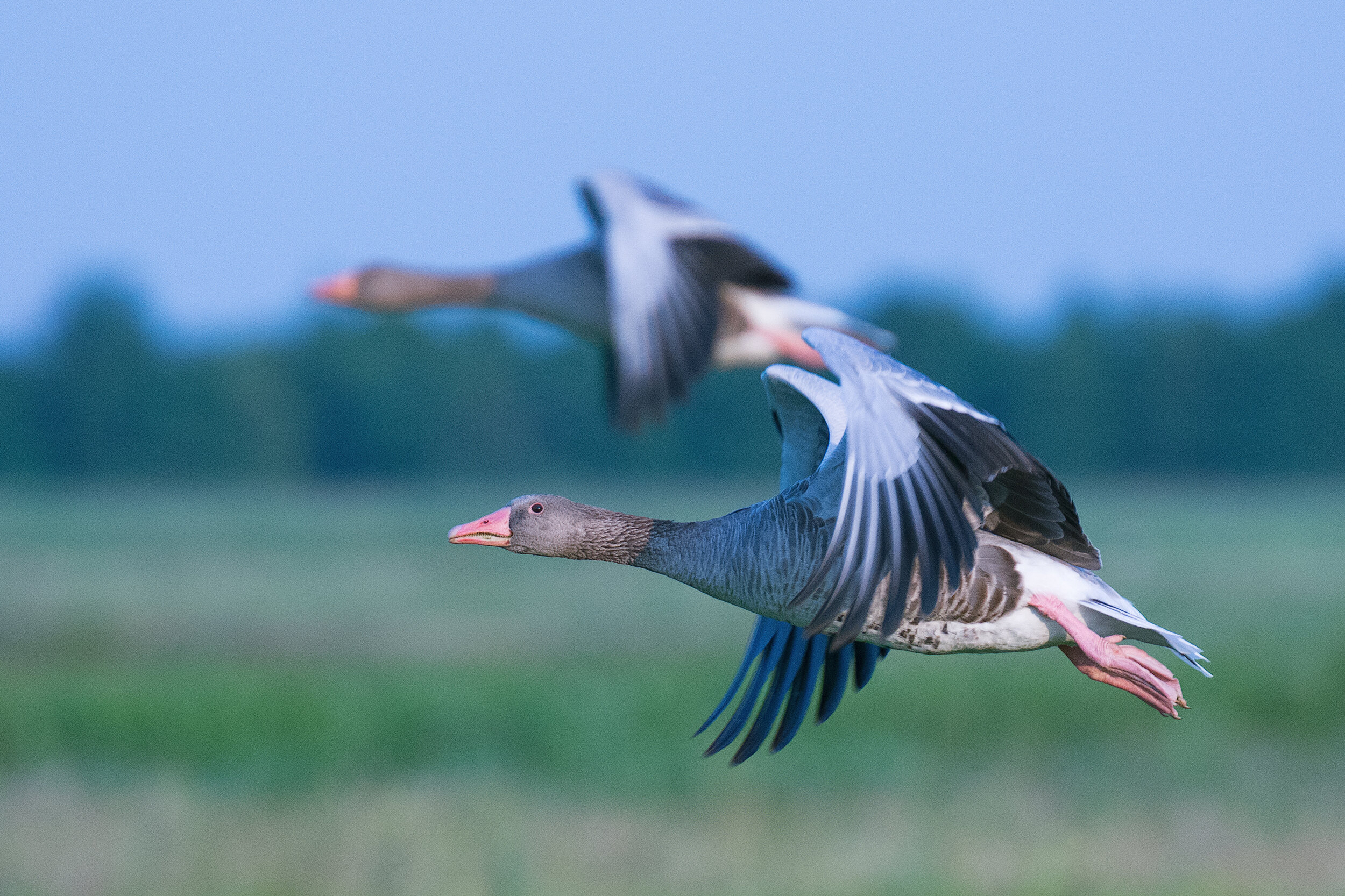
In Celtic Christianity, the wonderful portrayal of the Holy Spirit was rather that of a” Wild Goose”. When I first encountered this early spiritual image, I was taken back to my childhood growing up in Cambridge, England. Often, my mother would take me on walks to the University grounds, to the beautiful so-called “Backs of the Colleges”. We would enter through the gates of Queen’s College where a gaggle of geese (albeit somewhat domesticated) stood guard. They were noisy, erratic, frightening animals. They definitely seemed dangerous to a small child. I couldn’t wait to hurry past them. Perhaps that is also our motivation when we avoid or resist the wildness of God. It is much more comfortable to be with the gentle dove. The dove may comfort me as God comforts, but the dove may not call me to the fullness of the dynamic relationship to which God calls each of us. The Wild Goose does.

The Wild Goose is untameable, uncontrollable, sometimes frightening, a dangerous creature! The Wild Goose invites us to let go of all that is static, to live life on God’s terms rather than from our preconceived and safe ideas of how life should work out. This alternative image of the Holy Spirit beckons us toward the unexpected, to life’s ultimate questions, to fresh horizons and perceptions, to grow into the dynamic world of the Spirit. It calls us to be open to a “dangerous” journey; one in which we have to trust God wholeheartedly remembering at the same time that geese also protect; to a divine adventure impassioned by the Spirit with the tongues of fire gifted to the disciples.

Perhaps this Pentecost invites me to go on “a wild goose chase” where not I but the goose does the chasing - of me!  On this Feast may I welcome the Wild Goose. May I let God act, call me to be and do something different, to risk life in the Spirit, to embrace a dangerous God, but a God, nonetheless, who remains with each of us on the wild and wonderful journey as a dove of peace sending us out like the first disciples, to love and live in freedom and joy.

A prayer of an Anglican priest, writer and founder of a contemporary Celtic community, Ray Simpson, says it all:

Great Spirit, Wild Goose of the Almighty.
Be my eye in dark places;
Be my flight in trapped places;
Be my host in wild places;
Be my brood in barren places;
Be my formation in the lost places.

(Ray Simpson, “A Holy Island Prayer Book: Prayers and Readings from Lindesfarne, Church Publishing Inc., 2002)

A blessed, happy, peaceful, and dangerous Pentecost!

-Sister Mary Rowell, cjs

(Photos: Courtesy of Unsplash.com)