

Any man can be a father but it takes someone special to be a DAD.
Blog
A black Sister, Theresa Maxis, founded the Sisters, Servants of the Immaculate Heart of Mary in Monroe, Michigan. Her name was suppressed in history. Here is a link to an article about her in America magazine -
There is also a book titled “Building Sisterhood” for those who are interested.
Another book to check out is “Hidden and Forgotten: African Absence in the Consciousness of the Catholic Church in Canada” by Dr. Iheanyi M. Enwerem, O.P.
During these times of people rising up against racism and oppression, it is a good time to examine our roles as people of faith, and the history of our institutions. We can heal from learning about history, and go forward more truthfully, prepared to serve as restorers of the breach. According to Isaiah 58:
Is this not, rather, the fast that I choose:
releasing those bound unjustly,
untying the thongs of the yoke;
Setting free the oppressed,
breaking off every yoke?
Is it not sharing your bread with the hungry,
bringing the afflicted and the homeless into your house;
Clothing the naked when you see them,
and not turning your back on your own flesh?
Then your light shall break forth like the dawn,
and your wound shall quickly be healed;
Your vindication shall go before you,
and the glory of the LORD shall be your rear guard.
Then you shall call, and the LORD will answer,
you shall cry for help, and he will say: “Here I am!”
If you remove the yoke from among you,
the accusing finger, and malicious speech;
If you lavish your food on the hungry
and satisfy the afflicted;
Then your light shall rise in the darkness,
and your gloom shall become like midday;
Then the LORD will guide you always
and satisfy your thirst in parched places,
will give strength to your bones
And you shall be like a watered garden,
like a flowing spring whose waters never fail.
Your people shall rebuild the ancient ruins;
the foundations from ages past you shall raise up;
“Repairer of the breach,” they shall call you,
“Restorer of ruined dwellings.”

For those who want to join me in taking part in the digital Poor Peoples’ March on Washington on June 20, 2020, please visit https://www.poorpeoplescampaign.org/
- Mary Kosta, Congregational Archivist
Talking to Strangers - by Malcolm Gladwell

The central question is how do we make sense of strangers, people we don’t know? Using examples from real life, well-known author Gladwell exposes some of our common fallacies about figuring out others. First, we tend to default to the truth in spite of evidence to the contrary. Generally, our bent to believe what people say serves us well but does not help us determine scammers. Second, we believe people are transparent; i.e. that their responses match their feelings or even their guilt/innocence. Thus we build a world that systematically discriminates against those who don’t fit our ideas of transparency.
Dealing with the issue of sexual assault and drunkenness, especially on campuses, he shows the myopia often caused by alcohol. which transforms us into someone else. Our field of emotional and mental vision changes; we are not our true selves. Similarly torture, especially sleep deprivation, like traumatic events, often produces untrue results. In these cases the harder we work at getting strangers to reveal themselves, the more elusive they become.
Central to his book is the concept of coupling where things coincide to produce certain results or the idea context is a large influencing factor. One example he uses is the huge increase in suicides when Great Britain switched their home heating to an inexpensive gas that could be toxic. As soon as the gas was changed, the numbers of suicide returned to normal. Thus, to even begin to ‘see’ a stranger we need to look at the stranger’s world. When we look at strangers without our assumptions and within their context where they appear coupled with other factors, we begin to appreciate the complexity and ambiguity of strangers. He concludes that because we do not know how to talk to strangers when things go awry we often blame the stranger.
I found this latest book by Gladwell as fascinating as his previous ones.
-Jackie Potters, csj Associate
Have you read any of Lisa Genova’s books? If you have, you know they tend to be both fascinating and disturbing. I would encourage you to read her books, though, in my humble opinion, they are probably not the type of book you would want to read during a time of isolation.
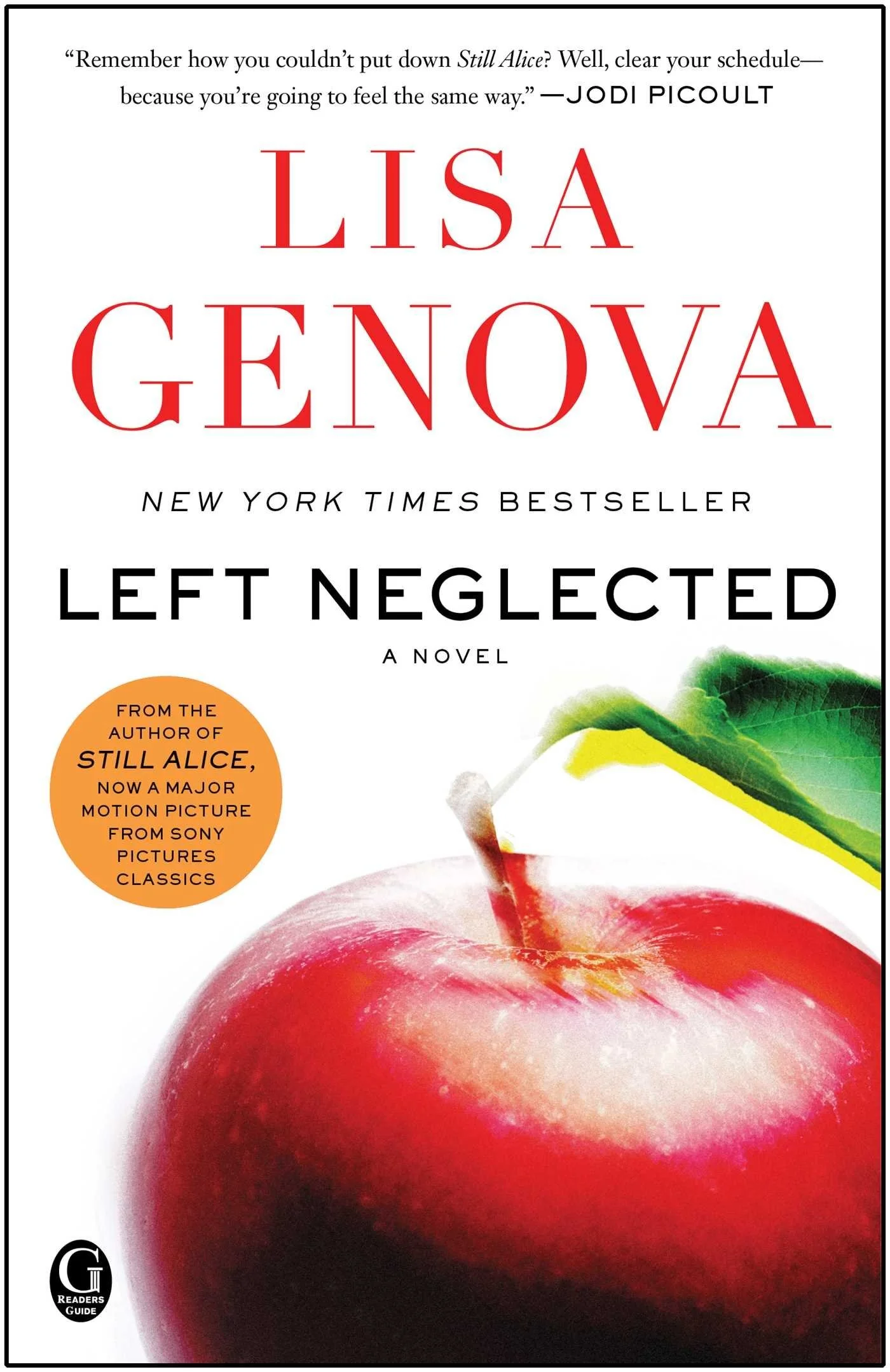
This morning, while walking the first laps of my daily Camino on my indoor circuit, a phrase from her book Left Neglected which I read weeks prior to the pandemic, sprang to mind: “normal is overrated.” In her book, Lisa Genova tells a story of resilience in the face of a devastating diagnosis. After a car crash the protagonist, Sarah Nickerson, a career-driven supermom in her thirties, is left with a traumatic brain disorder called “left neglect.” Sarah’s brain injury completely erases the entire left side of her world. With incredible willpower and endless therapies, she eventually regains some of her mobility. Then one day she joins her husband and two children on a skiing trip. No longer able to ski with her family she sits and watches them from the lobby of the hotel. Her trusty cane in hand, she goes to check out the rental place for skis and snowboards. Here Sarah meets a man who inadvertently changes her attitude about her life she no longer considers to be normal. The man offers to teach her snowboarding on boards adapted for folks with disabilities. After much coaxing, she agrees to give it a try. As she begins to gain confidence on the slopes, she learns how to remain upright and maneuver a snowboard. After a few tumbles, she begins to complain about how clumsy and awkward she is, adding, “This isn’t normal. This isn’t how you snowboard.” Her tutor’s response, “What’s normal anyway? Normal is overrated if you ask me” changes Sarah’s life. Normal’s overrated. (Left Neglected, Lisa Genova)
Well, here we are, still in lockdown, and far removed from what we used to call normal, considered to be normal. Here it is yet again, that word, that concept of the normal. Again, and again we question our need for a new normal. Yes, the old was overrated. Since we agree on that, what then are the practicalities that will ensure a new normal?
“Some say normal is for people without any courage.”
I am beginning to sound like a broken record. Maybe that’s okay, lots of things are broken these days. What is it with this abnormal normal to which I keep returning? Is it because that old normal was familiar and to a certain degree felt comfortable like an old pair of shoes? Is it because they fit comfortably without too much thought given to why we don’t do things differently? Is it because the new and unfamiliar will be challenging, possibly downright scary? Some say normal is for people without any courage. Others say normal is boring. Collectively we are saying our former lives were not normal, yet many want it back. Surely it is not because they lack courage or are boring. It sounds as if we are caught between a rock and a hard place, midway between what was and is not yet. Is it the fear of the unknown and how we might get there? We are faced with a puzzling and disturbing paradox. We feel comfortable and secure in our familiar normal, and yet we say it is overrated, needs to be changed, sigh. We know how hard it is for all of us during this pandemic but especially for the children when everything in our normal lives has been disrupted. So where do we go from here? While writing this blog, I received an email from Thomas Hübl advertising his upcoming series, “Building Blocks for a New Culture.” I was struck by this topic: “The Global Rite of Passage – Who will We Choose to Be.” Yes, who?
- Sr. Magdalena Vogt, cps