
Our World Needs More Women Leaders

For centuries leaders in government, business, and professions were men; women were regarded as unfit for leadership.  We are cognizant of ‘the glass ceiling’ that subtly hampers the advancement of women in politics, business, education, religion, or the law. In our time, there are efforts to correct the gender imbalance of power and end discrimination based on gender. However, there may be more important reasons for promoting female leadership than fairness: Women leaders tend to operate with a perspective, focus, and process which differs from that of male leaders. Although characteristics of excellent leadership are not exclusively male or female, our history and traditional ways of raising children have shaped our expectations of how leadership is exercised.  Some examples of women leaders who changed our society:

Emily Murphy, Canadian women's rights activist, jurist, and author.

Emily Murphy, Canadian women's rights activist, jurist, and author.

In 1916, Emily Murphy, a journalist, and activist became the first female magistrate in Canada and the British Empire.  On her first day on the job she was told by a defense lawyer that she had no jurisdiction to hear his client’s case because under the 1867 founding constitution she was not “a person”.  Nevertheless, Mrs. Murphy retained her position for fifteen years and became the leader of the” Alberta Famous Five” women who successfully fought even Canada’s Supreme Court ruling against them before a 1929 decision of the Judicial Committee of the Privy Council in London agreed that women are persons and therefore eligible to sit in the Canadian Senate.   Emily Murphy fought for the rights of women, looked at what underlies the law to advocate for the plight of prostitutes, and worked to obtain just treatment for immigrants and orphaned children. Emily was undeterred by opposition or ridicule and exhibited unremitting tenacity in her efforts to act with justice and love for the disadvantaged members of society.
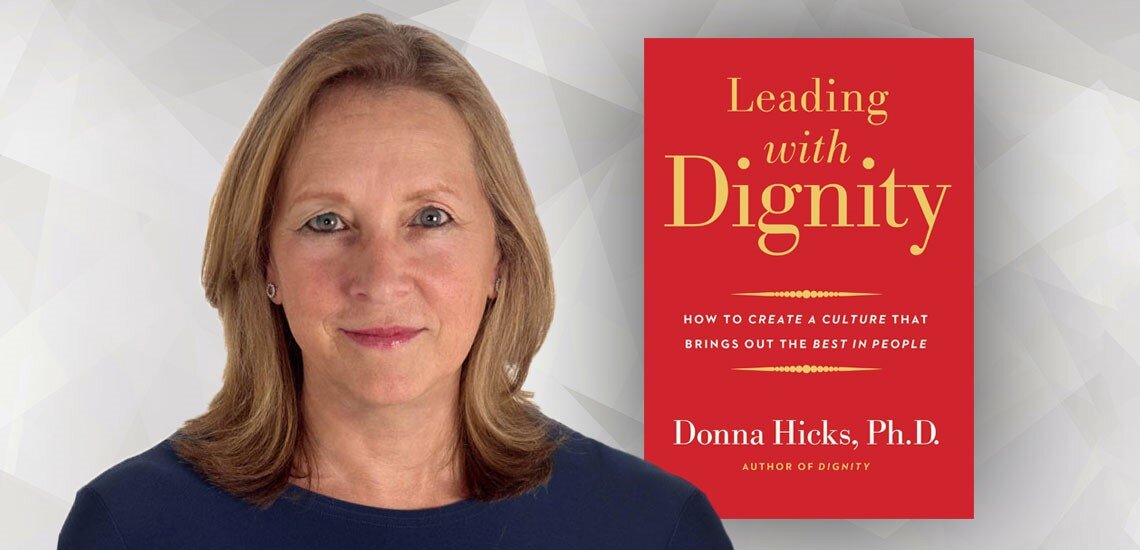
Donna Hicks is an Associate at the Weatherhead Center for International Affairs, Harvard University. 

Donna Hicks is an Associate at the Weatherhead Center for International Affairs, Harvard University.

Donna Hicks, a psychologist, and leader in the field of international conflict was often the sole female member of conflict negotiation teams attempting to bring warring countries together. Whereas men generally focus on logic power and structures, Dr. Hicks focused on violations of human dignity and resolving the unhealed wounds which block exposing vulnerability and prevent open communication and resolution of differences. Yet, this soft power and awareness of the human need to be treated with dignity are far more successful than negotiating from a stance of power.  (See Donna Hicks. Dignity. Yale University Press, 2011).

Florence Nightingale, OM, RRC, DStJ was an English social reformer, statistician, and the founder of modern nursing.

Florence Nightingale, OM, RRC, DStJ was an English social reformer, statistician, and the founder of modern nursing.

Florence Nightingale, who was in charge of nurses in the Crimean War, was a formidable activist who brought about the reform of hospitals, medical care policies, and nursing in the late 1800s.  Jeanne Mance was the first nurse in New France and the founder of the first hospital in Canada: Hotel-Dieu de Montreal in 1645. Women, in particular, religious communities of women were leaders in founding hospitals, schools, and social services to care for the poor prior to governments taking responsibility for these services.  Dorothy Day, a radical Catholic activist, journalist, and founder of the Catholic Worker movement was cited by Pope Francis in his visit to the United States in 2015 as one of four great Americans (along with Abraham Lincoln, Martin Luther King, and Thomas Merton). Yet Dorothy Day, who was endorsed for canonization, was at odds with the Catholic hierarchy, e.g., in her defense of the union of cemetery workers in opposition to Cardinal Spellman of New York, and in her criticism of Cardinal McIntyre and some priests of Los Angeles about their lack of support for human rights. She was repeatedly jailed because of her active stance of pacifism and opposition to the atomic bomb during WWII.  And it is interesting to note that three countries with women leaders, New Zealand, Germany, and Iceland, were remarkably successful in dealing with the coronavirus pandemic.

So, I ponder, How do great women leaders tend to differ from the leadership of men? Some observations:

  1. Women leaders tend to focus their attention and efforts on behalf of those who are poor, sick, deprived, rejected, and needy rather than on building economic wealth or protecting one’s ego.

  2. Women leaders are more inclined to work collaboratively rather than competitively.  They are more sensitive to how words and actions impact others and include this emotional content in the process of making decisions. Male leaders tend to focus on logic and overlook emotional wounds which may constitute hidden barriers to open communication.

  3. Women leaders, as noted above, displayed courage and tenacity in seeking justice in the face of opposition, or ridicule. 

If we want society to change, we need to have more women leaders in places where they can influence governments, religious institutions, business, law, and social structures.

-Sister Patricia McKeon, csj

Reflections from a New Canadian for Canada Day 2020

Reflections of a New Canadian, July 1, 2020

Recently, Sister Ann had the opportunity to interview a young woman from Ethiopia, who immigrated to Canada from Egypt.

After her arrival in 2015, she settled in southwestern Ontario in the home of her sponsoring family. Since that time she has gained her grade 12 certificate.  After graduation, she secured steady employment. She became a Canadian Citizen on Valentine’s Day 2020.

With Canada Day approaching I asked this new Canadian a few questions.

   What inspired you to come to Canada?

Coming to Canada was not my choice. While living in Egypt, I applied through the UN to immigrate to a country where I could live in freedom and peace and get an education.  The UN directed my application to Canada. Thankfully, God chose Canada for me, and I had the opportunity to continue my education. Canada is my home and the home of many other newcomers like me.

Q   What did you have to learn about Canada prior to your arrival?

Before coming to Canada, during orientation, I had to learn about the two official languages: English and French, about rights and responsibilities, customs and traditions, etc.

Q   What are the challenges you faced as a newcomer to Canada?

My biggest challenge was the language and since Canada is a multicultural country I had to accept/accommodate people from many different countries.

Q   What do you love about Canada?

I love everything about Canada especially, for example, equality of women and men, religious freedom.  I especially love how polite, respectful people are and how the dignity of everyone is respected.  Canadians welcome everyone and make a home for them. I’m inspired by how hard Canadians work in order to be successful. I love the way the Government works, I especially like the opportunity everyone has to education and healthcare.  I see taxes as a gift that protects the people when they are in need.  I love Prime Minister Justin Trudeau because he believes in family and supports family reunification.

Q   What are your future hopes and dreams?

My hopes and aspirations for the future are to complete my education, to pay forward what Canada and Canadians have done for me unconditionally. I want to help newcomers understand that Canada is their new home; I want to be of help to newcomers.  I hope someday to bring my family to this great country!  If I am successful, I will fulfill my mission to raise orphans around the world.  Moreover, I want to live a better and healthy life. I thank God for my faith which I know supported me through the difficulties I experienced the first few years as a refugee.    Thank you, Canada.

-An Interview with a new Canadian by Sister Ann Marshall, csj

Praying Our Way Through Covid-19

Praying Our Way Through COVID-19

I sit in our darkened chapel as rain softly pelts the windows and waters the thirsty leaves of trees that kiss the windowpane. My spirit is quiet, yet a deep ennui niggles at my soul.  “Are we near the end of this COVID pandemic”? my burdened heart asks. Deep within, I hear, “Wait and see”.

For months now, we have longed as a group of 70 Sisters, to sit in solidarity in this beautiful place of worship to pray together, sing in chorus, and worship at Eucharist.  However, “Not yet”, I hear, “Not yet”.  Only five are allowed in the chapel and today we’re up to ten. 

During COVID time, rules change daily but not quickly. Nonetheless, we’ve managed quite well, thank you, due to the creativity and ingenuity that we’ve always used to solve a host of problems during our 160-plus years in Canada.

No doubt, most people are aware of television’s Lobby Watch Channel.  Well, we just happen to have it on every tv in our residence.  Every Sister from her room can link to our chapel services. 

No matter where we are in the house, coronavirus has not stopped us from carrying out our spiritual practices and prayer for the world.  Usually, at 11:30 am we tune in to the chapel channel to view and take part in the liturgy’s readings of the Word of God.  Due to Sr. Loretta Manzara’s vast experience and ministry as a liturgist, we have daily scripture readings, responses, meditation, and singing, all led from our technically-equipped chapel.

Evening prayer? No problem.  We know this ritual by heart and participate on Channel 988 with our well-worn psalm books.  We don’t worry that no one can hear us singing alone, yet together, in our rooms.  Sunday liturgies consist of the Word of God with uplifting reflections, intercessions, and prayers given by our Sisters from the chapel lectern.  Yes, it’s all woman power!

Stained Glass in the chapel, Sisters of St. Joseph, London, ON [Artist: Ted Goodden]

Stained Glass in the chapel, Sisters of St. Joseph, London, ON [Artist: Ted Goodden]

Now, as we wait along with the rest of the world for lifted restrictions and better days ahead of us, we join our hearts, hands, and voices in solidarity, waiting, and praying, as promised for these days to end.

As Adrienne Arsenault says, concluding the National, “These days will end, and when they end, we’ll still be here,” faithful to our prayer and good works, ready to embrace the future with hope and resilience.

-Sister Jean Moylan, csj

Virtual Prayer

Multiple voices are weighing in on the experience of Covid-19 – what we are learning, examples of resilience and kindness, hopes for a changed social fabric in the future. I too long for systemic change that brings us to a more humane living of universal acceptance and care of one another and creation.

Sisters of St. Joseph Chapel in London, Ontario

Sisters of St. Joseph Chapel in London, Ontario

Since my life has been very confined these days, I share a minute experience from the reality of our residence. In our community of women religious, like many parishes and faith gatherings, we have not been able to assemble for communal prayer, although our prayer patterns continue privately, in our rooms.

The action of gathering, as an assembly to praise and encounter God, is just as essential as gathering together at the table to enjoy a meal. It is in our DNA. The Jewish community gathers at the synagogue, the Muslim community at the mosque, the various denominations of Christianity strive to assemble in meeting houses, churches, chapels, and outdoor venues. The gathering is the action that says I intentionally want to participate, to engage with others in offering praise and worship. It is a response in relationship with our ever creating God.

So for the past few months, we have tried to continue a sense of gathering in creative but safe ways.

We can’t celebrate Eucharist, but we can celebrate the Word of God, and we can praise in song, and offer lament and intercessory prayer for the sake of our fragile world. And we can do this communally through closed-circuit TV that was planned in the design of our 2007 residence.  This functions like the lobby channel in an apartment building that allows you to see who is at the main entrance ringing your bell. Each individual person is united to the whole community as we intentionally listen to the Word proclaimed over closed-circuit TV, and join in singing and prayer from our rooms.

One day, as I waited alone in the chapel, to start to pray at the appointed time, I  awakened to a new sense of how the many years of song and prayer, joy, and sorrow that had been offered here, somehow continued to resonate in the space. The chapel is the heart space of our life together. It pulses with the rhythm of daily prayer, Eucharist, funerals, Jubilees, special services of gratitude for the gift of creation, feast days of foundresses, etc.

This accumulated wealth of ritual activity and silent contemplative prayer is the foundation of our prayer together while apart. Although separated by walls and floors, each of us at the appointed time intentionally turn our thoughts and mind to the prayer at hand.

Perhaps for the first time, I realized in concrete time and space the church’s phrase the Mystical Body of Christ. Each of us has been baptized into the one Body of Christ. Being one body is obvious to me when we are all gathered around the Eucharistic table and singing our favorite hymn. But there are other times that it is lost on me. That day while leading prayer in the empty chapel I was assured that Christ has drawn us together in great Love.

Covid has challenged us to experience a whole new approach to intentionally praying together. Gratitude is the primary expression that fuels our days. I wonder what else we can learn from this experience . . .

- Sister Loretta Manzara, csj