
Make (Good) Trouble

On July 17, 2020, John Lewis died in Atlanta, Georgia.  Don’t know who John Lewis was?  I didn’t.  Only after his death did I learn what an amazing man he was.  In a nutshell, though nothing about this giant of a man could fit in a nutshell,  “Lewis … fulfilled many key roles in the civil rights movement and its actions to end legalized racial segregation in the United States.”  Also from Wikipedia, I learned that in his later years, Lewis, a Baptist Minister, “was a politician and civil-rights leader who served in the United States House of Representatives … from 1987 until his death in 2020.” And that’s merely the tip of the iceberg of all this Congressman accomplished in his 80 years of life.  Reading more about him, would be well worth your time. 

john lewis rip.jpg

While I read about this man, I was in awe of who he was, but what really struck me was his ability to cause “good trouble.”  One might be tempted to call him, Mr. Good Trouble.  Ever since I read and heard about Mr. Lewis causing “good trouble” I have been cogitating what causing “good trouble” looks like.  I mean, doesn’t “good trouble” sound like an oxymoron? It does, at first sight, though of course, there are many folks, among them good, holy men and women, who caused “good trouble” and were even canonized for causing “good trouble.” 

Perhaps you can guess where this is going.  You might think I’m prejudiced, however, none other springs to mind as a perfect example of someone else who caused “good trouble” than Mary Magdalene whose Feast we celebrated on July 22.  Indeed, while reading about John Lewis’s fierce commitment to ending racial segregation, at huge cost to his life, I had to think of my beloved patron who stood by Jesus when he died, who did not run, who was faithful to the end.  Who knew a Baptist Minister and a Jewish woman, separated by more than 2000 years, have something in common?  Both were extraordinary people who were exceptionally good at making “good trouble.” I mean, think of Mary Magdalene, a Jewish woman, mentioned by name in all four Gospels, not once but twelve times.  If that were not enough proof, she is the woman who loved Jesus fiercely and fearlessly, until the bitter end.  When the disciples left, after a large rock was rolled across the entrance of the tomb where Jesus was laid, “Mary Magdalene and the other Mary stayed, sitting in plain view of the tomb.” (Eugene H. Peterson; The Message) The disciples left. She remained.  Furthermore, as Cynthia Bourgeault conjectures, it was, “No wonder Mary Magdalene came so unerringly to the tomb on Easter morning; she’d stood by in silent, unflinching vigil the whole time Jesus was being laid to rest there. Maybe she never left . . .” (Mary Magdalene: Back to the Gospels July 20, 2020; Center for Action and Contemplation) 

mary magdalene.png

And then there is the poignant moment Mary Magdalene’s fierce devotion is reciprocated by Jesus who endearingly calls her by name, “Mary.”  This moment sealed their relationship forever.  Dissuaded from clinging to him, reassured, confident and radiant, the bearer of stunning news, Magdalene hurried to proclaim to the disciples, “I have seen the Lord.” 

Though commissioned by Jesus himself to be his messenger, to be the first Apostle, over the centuries, as well we know, Mary Magdalene was much maligned. Seemingly forever, she was described as a “penitent” or “sinful woman.” Because she was suspect of being a prostitute, Mary Magdalene was depicted as the “sinful woman” who scandalized the Pharisees when she bathed the feet of Jesus. Finally seeing her for who she really was and officially acknowledging her status as the first Apostle only happened in our lifetime.

Similarly, John Lewis was finally honoured by President Obama in 2010 when he awarded him the Medal of Freedom. Despite being brutally beaten as a young man during the riots Mr. Lewis remained steadfast all his life to causing “good trouble.” As he tended to say, “I was in bad shape. I had concussion.  I thought I was going to die. I thought I saw death.  But with … the help of the Almighty, I’m still here.” (Democrat & Chronical) None of this, however, deterred him to stand up and cause “good trouble” all his life.  What about Mary Magdalene?  I would say unwittingly she, too, caused “good trouble.” Far reaching “good trouble,” and with the help of the Almighty, she is also very much still here. 

Recently, I watched the Mass for the Feast of Mary Magdalene on TV.  Fr. Henk van Meijel, SJ, the celebrant, spoke eloquently about Mary Magdalene, pointing out that she was not only an admirable woman, but that she in fact represents all women in the Church, making her feast a celebration of all women, “who are the pillars of the church, women who always pick up the pieces.”

I would like to add that, like Mary Magdalene, many women quietly go about “causing good trouble” in multiple ways.  All of us probably are blessed to know many such women who, without much fanfare, “cause good trouble” which often goes unnoticed and at other times speaks loud and clear for all to hear.

-Sister Magdalena Vogt, cps
The Power of Small - Why Little Things Make all the Difference.

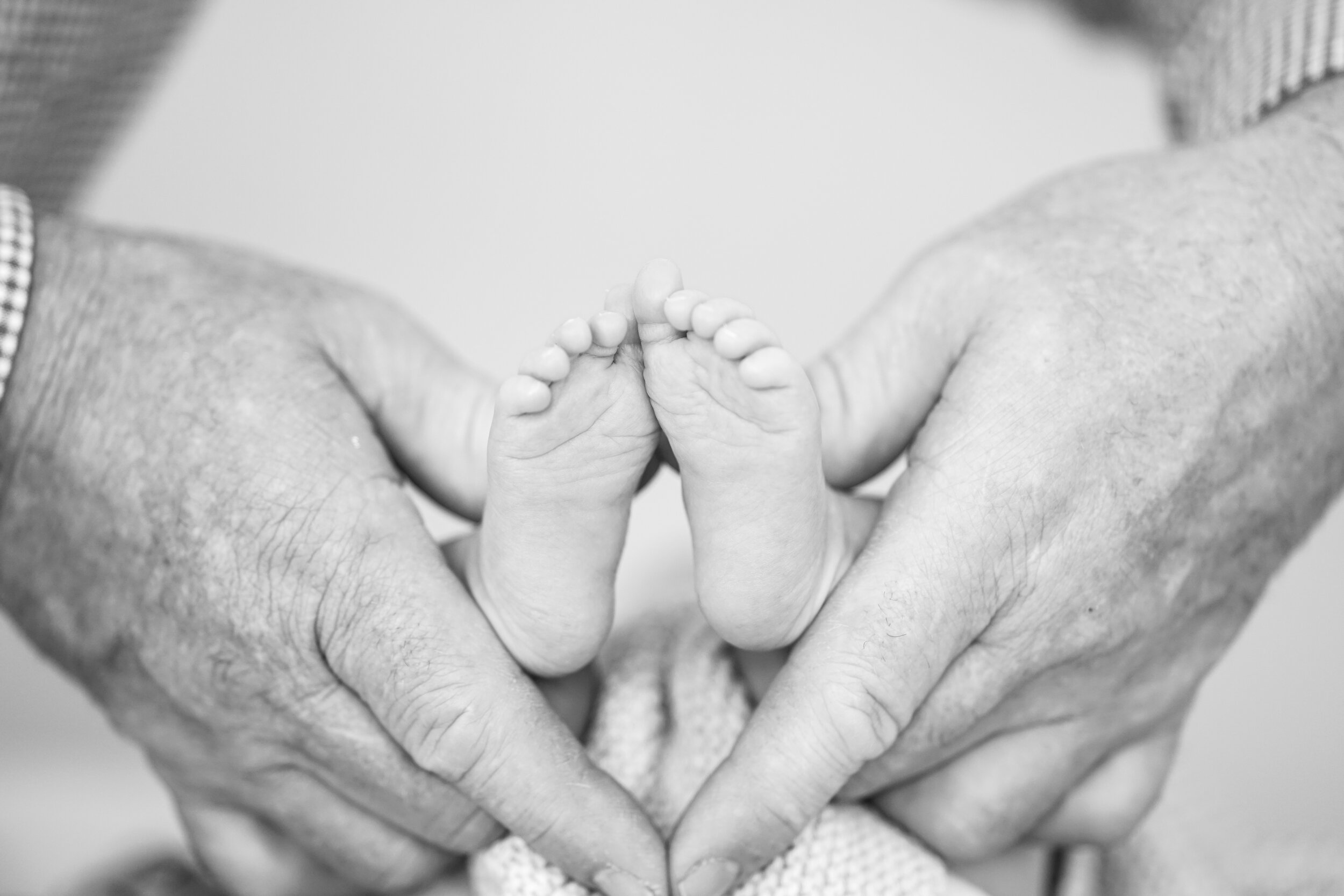
Everything begins small.  You and I did. Everything does.  The mighty oaks began real small as did Beethoven’s Symphony No. 9 perhaps better known as the “Ode to Joy.” Organic things grow from tiny seeds. Likewise, great art, architecture as well as incredible inventions, grew from small ideas. Undoubtedly, we have all experienced the power of small things, of small beginnings.  Think of a newborn baby, one that perhaps only weighed 850 grams at birth and over the years grew into manhood. Which brings to mind the saying, “The child is the father of the man.”  Think of little acorns from which mighty oaks grow. Or, as Ralph Emerson put it, “The creation of a thousand forests is in one acorn.”  These are just a smattering of examples of the small beginnings of so many amazing things.  You probably have your own memories of things in your life that had small beginnings and continue to astound you by how they have grown. One might say small things, like seeds, are the anchors for mighty things yet to come.

Then there are those amazing small things that never grow big.  The bee, the ant, the flea, to name just a few.  Imagine life without those tiny busy bees. You know what I mean, those magical creatures that can shape hexagon honeycombs, can pollinate flowers and turn nectar into sweet honey.  Then think of the equally incredible ants, those tiny social creatures that live in organized colonies.

the seeds that anchor a friendship tend to be mostly invisible

I have always been fascinated by all things small.  Now you might think, “small things amuse small minds.”  Be that as it may, all small things are fascinatingly intriguing.  Think of friendships, for instance, and how they start, often in unexpected small ways, and can grow into strong, lasting relationships.  Unlike tiny seeds we can see with the naked eye, the seeds that anchor a friendship tend to be mostly invisible. When we tend those seeds with love and patience and nurture them carefully they grow and bear fruit.  Which raises a question that keeps popping up frequently in my mind of late, “what anchors me, what anchors us, especially during difficult times like this pandemic?”  Have you ever questioned what anchors you during difficult times?  It would be fascinating to compare notes, I would think.  Just think of the relatively small anchor that can “connect a vessel to the bed of the body of water to prevent the craft from drifting due to wind or current”. (Wikipedia)  What are some of those little things, seen and unseen, that anchor us? Who, or what, in our lives is such an anchor when we are in danger of being adrift during these endless weeks of lockdown and precautions? 

As impressive as the power of small things is, the power of the Coronavirus, invisible to the naked eye, now that is another story altogether of small things.  A deeply frightening story. I am by no means fascinated by this deadly virus. No, it is mindblowing what power this tiny invisible virus has. Talk about the power of small things!  How is it this invisible speck of a virus has brought our world to its knees?  Literally and figuratively speaking, brought us to our knees.  In prayer, in fear and trembling, we have been brought to our knees by the power of this tiny fiend.  It has claimed lives by the thousands, brought the economy tumbling down, brought our lives, as we know them, to a screeching halt. The power of small, so very small and invisible, yet so powerful. 

The Parables of the Mustard Seed (Matthew 13: 31, NIV)
31 He told them another parable: “The kingdom of heaven is like a mustard seed, which a man took and planted in his field. 32 Though it is the smallest of all seeds, yet when it grows, it is the largest of garden plants and becomes a tree, so that the birds come and perch in its branches.”

In Matthew’s gospel, we read about the power of faith the size of the tiny mustard seed that can move mountains.  If we have such faith, we are told, nothing is impossible.  We have been on our knees.  We have prayed.  God has given us this anchor of prayer to prevent us from drifting during these difficult times when something so small and frighteningly powerful threatens to destroy us.  Most of us have first-hand experience of the terrifying impact this pandemic has had on our lives either directly or vicariously. Thankfully, though, we know that in him we live and move and have our being, for we are God’s beloved daughters and sons.

-Sr. Magdalena Vogt, cps

The Power of One - and All

Newsflash:  A US coal giant wants to double the size of the Northern Alberta Vista coal mine!

Do you ever get tired of signing your name in support of various worthy causes?

I do.  Over the last few years, I’ve received my share of campaigners asking me to “click here” and support an issue needing attention.  Sometimes I sign and at other times I don’t.

On July 23rd, an email bounced into my computer from Leadnow.ca, a campaigner that I frequently support. This group describes itself as, “an independent campaigning community that brings Canadians together to hold government accountable, deepen our democracy and take action for the common good”.  Their present initiative caught my attention. In a mere six days, Environment Minister Wilkinson would make a decision that would determine whether or not to allow, in Leadnow.ca words, “a massive Northern Alberta coal mine expansion that would cause irreversible damage and violate indigenous rights”.  Chipping in money or simply signing an online petition would assist in turning a video of the Environment Minister endorsing the expansion, into a powerful ad.

Do I think my signature made a difference?

In record time, many people contributed money to support halting the expansion. Others, including myself, clicked on “sign the petition”.  I also took the additional step of leaving voice messages for the Environment Minister and our local federal Liberal representative.  The money was received, the video ad aired, and the petitions tallied. Minister Wilkinson heeded the message and halted the Vista coal mine expansion.  Now, a federal assessment will be a key step in the government’s decision concerning the green light on Vista’s destructive endeavor.

“My dear friends: Your vote is precious, almost sacred. It is the most powerful nonviolent tool we have to create a more perfect union.”
– John Lewis, 2012 speech in Charlotte, North Carolina

At the end of it all, do I think my signature and voice mails made a difference in the positive outcome?  YES, I DO, just as my signature, along with thousands of others made a difference back in February when we helped to stop the Teck Frontier mega-mine that would have blown through Canada’s climate targets.

Although it’s challenging to keep abreast of current events and to use our voices to bring burning issues to the forefront, it is eminently worthwhile to take decisive action.  I keep telling myself, “Every vote counts!

- Sister Jean Moylan, csj


The Paradox of Leisure

Today in my inbox I received two emails. One of the writers spoke of taking the month of August “off” as is her practice. The other spoke of leaving her office and very busy podcast production life to write.

One is a facilitator of conflict and diversity training; the other has been hosting podcasts on anti-racism along with poetry and hope. Naturally one begins to think of the urgency of these times and what terrible timing to be “off” when everything else in the world of their particular work seems “super on.”

Maybe that is the point. Our best contribution is not usually offered from a place of urgency…natural disasters excepted of course. Perhaps our strongest and boldest work is from a place of alignment and of integrity in which the inner landscape and the outer events speak to each other…and listen to each other.

In the part of the world I live in urgency and busyness have eclipsed the significance of leisure and spaciousness. Is that why the new and transformative have such a hard time breaking through? Perhaps….

- Sister Margo Ritchie, csj