
A Story of Empowerment and Transformation in Guatemala

Jesus Christ, by His Incarnation committed Himself to the social and cultural circumstances of the people among whom He lived. Through His church, in 1963, the Sisters of St. Joseph of Hamilton, Ontario, Canada, answered the call of Pope John XXIII, to heed the cry of the poor in Teculután, Guatemala. This was a call and mandate to foster evangelization, dignity, justice, and freedom through the dynamics of education.

Teculután.jpg

In a welcome address by Doña Aida de Cordón, the representative of the local committee who purchased the land for the future school, the founding Sisters were reminded that “they had arrived in Teculután in the favour of the faith and Latin Culture and were to bring the honour of reading and writing to the children of Teculután.”

Thus, the Sisters were prompted to keep in mind that those who learn to read and to write come to a new knowledge of selfhood and begin to look critically at the reality in which they find themselves. They are enabled to take the initiative to try and transform the society that has denied them opportunity and hope.

The Sisters in Guatemala, 1963.

The Sisters in Guatemala, 1963.

An empty field greeted the Sisters on groundbreaking day. In time, that field gave way to an excellent education facility named “Colegio San José” for our patron St. Joseph. The school was fully approved by the Guatemalan Ministry of Education and offered both elementary and secondary programs. This establishment offered employment for many and hope was born for a better tomorrow.

Because education was the key to that better tomorrow many Sisters who served in Teculután tapped into their own gifts, talents, and insights and in time, education became very diverse according to the needs of the people. Some Sisters saw to the needs of the school which included teaching methodology and religion to the native teachers. Literacy methods of consciousness-raising were provided both through the school and later through a very successful radio program. The Christian Children’s Fund brought help from affluent countries to the poorest of children.

The Sister nurses tended to the needs of the sick with a special focus on pregnant mothers and hungry children. Nutrition, sewing and carpentry classes were encouraged by these Sisters.

Eventually, our own diocesan priests arrived and not only ministered to the sacramental and pastoral needs of the people but also built and renovated churches, chapels and dental clinics. Block making and bakery shops were established. As a team the Sisters and Priests undertook large social programs such as bringing in portable water and electricity to poor areas. Housing projects were developed both before and after the earthquake of 1976. Winning the trust of the people was most important in all of these works.

Education created the hope to dream, to be free

In the midst of all this activity, the work of evangelization went on through catechetics in the schools, in the parish and via radio. The Family of God prayer groups were alive as was the Cursillo movement. Benefactors in Canada made possible all these works of charity and co-workers in Teculután supported us in many ways.

As suggested by this brief look at the Teculután mission, education paid attention to the formation of the whole person and promoted the common good of society. Teculután today gives witness to the empowerment inherent in education and “Colegio San José” remains a beneficial presence. Education created the hope to dream, to be free, and be transformed into Easter people!

To have served the Church in Guatemala elicits from all of us a deep sense of gratitude to our Community who sent us, to our benefactors who supported us, and to the gentle people of Teculután who received us. To become part of another culture was an incarnational event in our lives that brought us into a greater awareness of Christ’s Salvific action in the world.

As Jesus did, the Sisters and priests tried to return the world to the father and in doing so some planted, some hoed, some reaped and in this plurality of ways all gave expression to the vocation of the church which proclaims the ongoing Incarnation of Christ in the world.

We praise You, O Lord, for enabling the empty field to be transformed into an empowering people.

-Sister Joan McMahon, csj
Statement from our Federation Office for Systemic Justice

Public Statement re: Vaccines for COVID-vulnerable people in prisons    

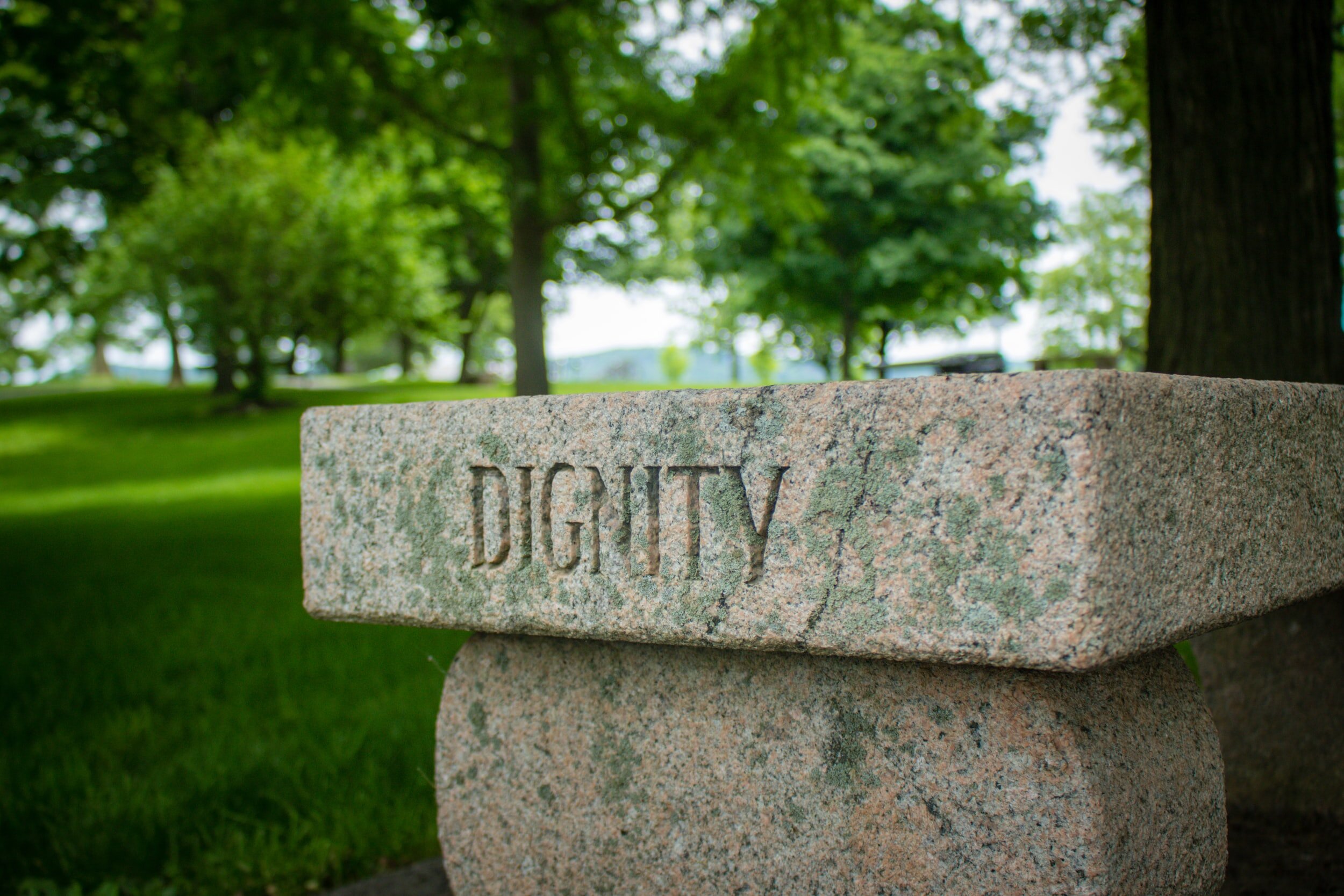
The Federation of Sisters of St. Joseph of Canada commends the federal government’s decision to offer vaccines to 600 elderly prisoners and those with pre-existing conditions. This decision is an affirmation of the dignity of each person, a foundation of morality.

The first wave of the pandemic showed that prisoners are much more likely to get COVID-19.  According to Correctional Services Canada, as of January 6th, there have been 1,196 total positive cases with 167 active and 3 deaths. Furthermore, a CBC analysis indicates that infection rates are five times higher in provincial jails and up to nine times higher in federal facilities than in the general population.  As this data shows, the prison context itself creates significant vulnerabilities to COVID-19 infection.

The guiding principle for decision-making for vaccine distribution should be the equal human dignity and worth of every person.  Human dignity is not something that is earned. It belongs to each person and is not forfeited or forgotten due to specific circumstances or behaviours. It is the task of governments and institutions to protect the human dignity of each person, without exception.  With regard to vaccines, respect for human dignity means the same two criteria, risk and vulnerability, should be used for the prison population as for the general population.

By design, prisons marginalize people from full participation in the community for a period of time.  But this must never leave people marginalized from what is theirs on the basis of their basic human dignity. 

Early access to a COVID-19 vaccine for at-risk persons in prison and other detention facilities is a simple question of human dignity and fairness.  We diminish ourselves as a society if we do not honour these values in our collective decision-making.

  - Office for Systemic Justice, Federation of Sisters of St. Joseph in Canada

From Generation to Generation

When something surprised my father (eg the cost of groceries) he would slap his hand to his chest over his heart, stagger back a few steps and say, “Carry me out!”

My brother decided that his 3 year old grandson River should know some of these family expressions and traditions.

Recently River was at day care and did not appreciate having to stand in line for something.  His mother- who is a teacher at the same school- observed that he slapped his little chest, staggered backwards a few steps and said, “Carry me out!”  Ah, tradition.

standing on shoulders.jpg

We inherit so much from those that go before us both genetically and culturally and what a blessing that can be.  To remember with love things that others did before us to take care of others, to assist others, amuse others can inspire us to pass that on to those with whom we connect as well as those who come after us.  We can appreciate all that past generations have done to allow us to be who we are today.

I have always liked the song ‘Standing on the Shoulders’ by EarthMama (Joyce Johnson Rouse, 1995)

“I am standing on the shoulders of the ones who came before me

 I am honored by their passion for our liberty

I will stand a little taller, I will work a little longer

And my shoulders will be there to hold the ones who follow me.”

Such an opportunity exists for all of us to act in such a way as to be the shoulders for those who follow us.  Let us make the most of this opportunity.

-Sister Nancy Sullivan, csj

Celebrating 100 Years in Pembroke

Celebrating the 100th Anniversary of the

Congregation of the Sisters of St. Joseph in Canada - Pembroke Site

Written by Mary McGuire, csj

During the next 11 months, we would like to share the amazing story of the Congregation of the Sisters of St. Joseph in Canada -Pembroke Site as we celebrate 100 years of our service and witness in the Diocese of Pembroke and beyond.  As we tell our story we would like to express our gratitude, love, and prayers to so many of you who have been with us on this journey. Our Congregation is witness to the love and support you have bestowed on our community and we will be forever grateful for these gifts. We would like to say a heartfelt thank you and invite you to read our story in the months ahead as a way of celebrating this important milestone with us.

pembrokemotherhouse archive.jpg

The Sisters of St. Joseph from Pembroke were canonically born August 25, 1921 in the village of Douglas, Ontario.  Just a mere three weeks after this birth our Congregation moved quickly to a fully operational farm known as the O’Kelly Farm. It was comprised of 147 acres located on the shores of the Ottawa River in the Town of Pembroke. (Photos here)

pembrokemotherhouse_1.jpg

Bishop Thomas Ryan had paid $16,000.00 for the property and had coordinated all of the needed renovations and expenses to house the Sisters of St. Joseph at this location. Residents in the area had always referred to this portion of the river as ‘the lake’, so when it came time to rename the property, Bishop Ryan named it ‘’St. Joseph’s-on-the-Lake”.  Forty acres were under cultivation at the time but the house on the property was an ancient structure, too small for a Motherhouse. By September 14, 1921 four Sisters had moved into the renovated farmhouse on this site.   Within a week, twelve postulants were received. In the years to follow, many more Sisters would join the Congregation at the Pembroke site.  In 1953, construction began on the large Motherhouse that was located at 1127 Pembroke Street West (part of the initial 147 acres).  The local Congregation’s community membership numbered 215 at its highest peak in the 1960s.

This original farm was fully functional with horses, cattle, hens, and pigs.  The novices and postulants were very much involved in its day-to-day activities while the professed Sisters were teaching within the local community.  Gathering the eggs, plucking the chickens, milking the cows, churning the butter, washing the milk and cream separator, and weeding the gardens were regular duties.  What a challenge for those young Sisters who had never lived on a farm!  One Sister recalled laundry days – using a hand-turning object inside tubs to clean the laundry, and then the irons were heated on a wood stove.  This same Sister recalled the ‘roothouse’ and retreating to it to enjoy the coolness and singing amongst the vegetables. She continued this ministry of music and song for the Congregation with her beautiful voice throughout her life with the Sisters of St. Joseph.  

For many of these Sisters, the Pembroke Motherhouse was their first home away from home.  After a discernment process of prayer, they felt called to dedicate their lives to God as religious Sisters.

One of the many stories that have been passed down is about a Sister from England who was sent out by the cook to gather the eggs from the hen house.  After what must have seemed a disproportionate amount of time, the Sister returned empty-handed.  When asked to explain, she said that she had knocked repeatedly on the hen house and that no one was answering!

Bishop Ryan, who presided over the destiny of the Pembroke Diocese from 1916-1937, had a dream that every child in the Diocese would have access to a Catholic education, no matter how small and remote the area might be. Consequently, many Sisters were dispatched daily to Catholic schools in the area.  These schools were located in Pembroke, Petawawa, Deep River, Renfrew, Barry’s Bay, Douglas, and small Quebec locations, to name a few, providing a vital service and access to a valuable religious education.  Many Sisters had long and full teaching careers in Renfrew County.  A later article will fully cover the many places that our Sisters taught.

Alongside the teaching profession, our Sisters provided nursing, counseling, administration, and various other ministries within our community and beyond.

The previous Motherhouse in Pembroke

The previous Motherhouse in Pembroke

Unlike other apostolates, the Sisters of St. Joseph in Canada/Pembroke Site chose not to own large institutions outside of the Motherhouse.  Upon completion of our ministries and having prepared lay people to carry on the duties, we simply relinquished the small institutions we did own, namely Radville Hospital and Marion Home in the province of Saskatchewan, likewise Barrhead Hospital in the province of Alberta.  The St. Joseph’s Academy in Renfrew was left to the Pembroke Diocese.  We administered and operated Santa Maria Home in Regina, St. Francis Memorial Hospital in Barry’s Bay, and St. Joseph’s Manor in Campbell’s Bay, Quebec. We also divested our duties at these institutions to the lay community.

From the days of a full Motherhouse, there currently remain 26 Sisters, including two Peruvian Sisters.  We are also proud to have 48 active Associates divided into 8 faith communities in Canada.  There are also 15 active Associates in Peru and 23 non-active Associates who form a group called ‘The Supporters in Spirit and Prayer.’

As our story unfolds you will appreciate that even from our humble beginnings and our small but mighty numbers, by the grace of God we were able to do extraordinary things and display incredible resilience.  Our preferential option for the education, health care, and spiritual needs of rural communities as well as for the needs of the poor, the orphans, the youth-at-risk, the frail and the elderly, led us to take on ministries in many localities, a total of 45 locations in Canada and abroad.

(with files from Nicole Aubé, csj - S.A.I.L. 2011)

Stay tuned as our story unfolds in 2021.