
The UnReal Reality

During the years of my hospital chaplaincy, I frequently wondered which is more difficult to bear, a physical or a mental illness.  As distortions of reality are common symptoms of many psychiatric conditions, whenever I engaged with patients struggling with mental illness, it was challenging to grasp what their perception of reality was.  While I respected and acknowledged what they considered to be real, it was vital to get some sense of what was real and what was distorted due to their illness.  

Even for those of us not suffering from any psychiatric condition, it can be a challenge to face situations where it can be difficult to differentiate between what is real and what is not.  We are all familiar, with ‘fake news’ à la Trump.  Ad nauseam on social media and elsewhere these days we have been inundated with false information leaving us unsure about what is or is not real. Take advertising of cosmetics, for instance.  In a variety of different ways, both subtle and not so subtle, we are plied with gimmicks about the magical properties of cosmetics.  More than ever before, our world is rife with distorted realities, virtual realities, photoshopped realities, to just name a few. 
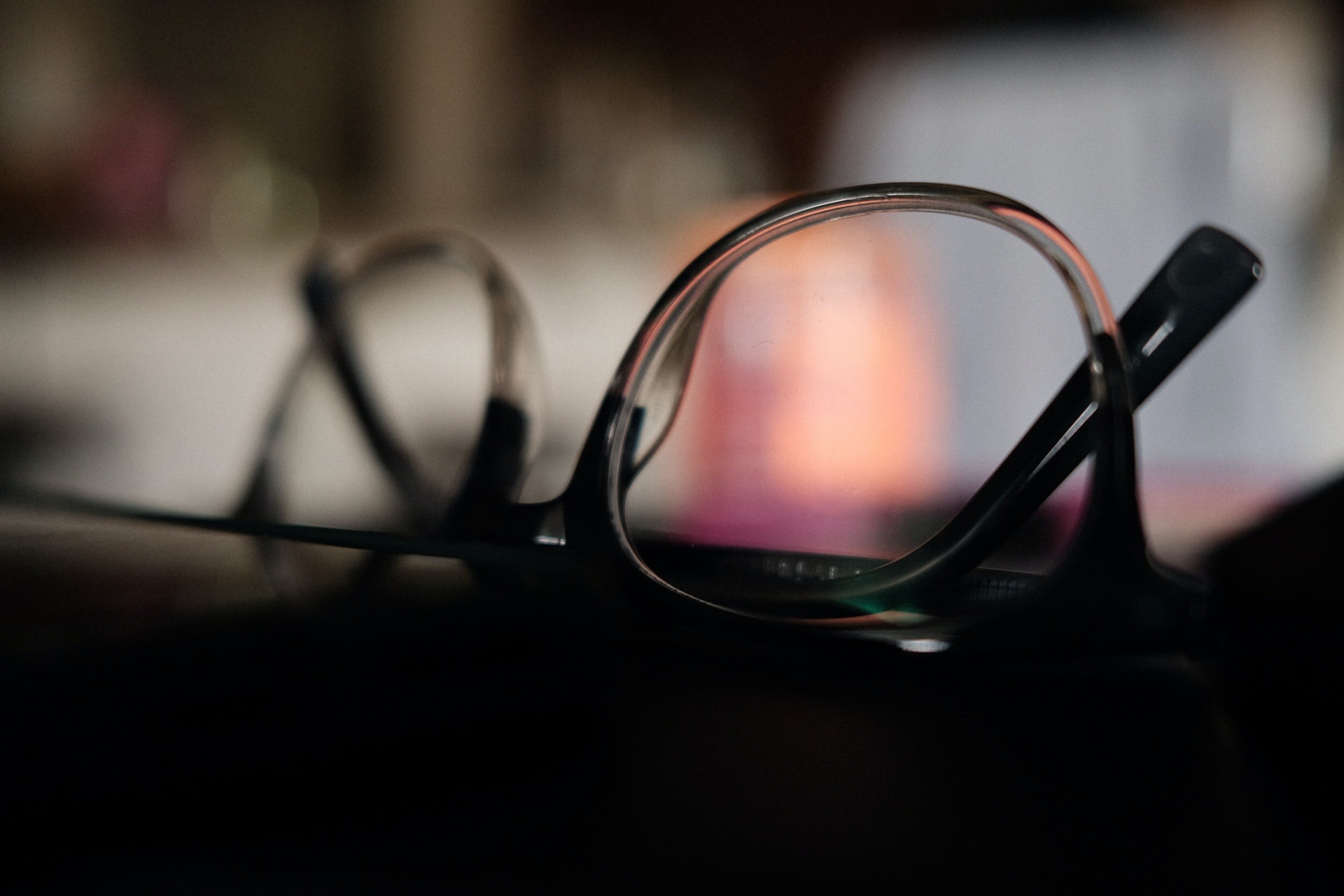
Yes, of course, we all know distorted or false perceptions of reality have always been part of the human condition. Just think how often we not only tell ourselves lies but also know from experience that we see things as we are not as they are.  At times, we choose to see things through rose coloured glasses, as perhaps we might do when we speak about someone in a eulogy highlighting all the good of the deceased, creating an incomplete picture of that person. At other times, we might speak unkindly about someone’s faults or weaknesses, failing to paint the full, true picture of who that person is.

we see things as we are, not as they are

If we own that even under normal circumstances our perceptions of reality can be distorted, just think of the impact this almost yearlong pandemic has had on our perception of reality.  We keep talking about this new reality of our lived experience permeating our entire world.  So, what is this real new reality?  Naturally, the way you see it is not the same as I see it, for we see things as we are, not as they are. For people everywhere, during this pandemic, the world feels bleaker.  Though so many of us are tired of the miserable drudgery of unchanging days and restless nights, for us in the northern hemisphere midwinter adds to the bleakness of our days. In other parts of the world where folks enjoy the warmth and sunshine of midsummer, things may possibly not look quite as bleak. 

“What we do see depends mainly on what we look for.”
John Lubbock

That things beyond our control hugely impact our lives, is a given. However, as we know, we still have a choice in how we view even those things beyond our control.  Though I am tempted to borrow Shakespeare’s phrase to dub my situation as ‘the winter of my discontent’ (or should that read the year of my discontent) might there be another way of looking at it? No, not through rose coloured glasses but rather with a mindset that prompts me to remember that “What we do see depends mainly on what we look for.” (John Lubbock) Granted, that is easier said than done, especially during these days of the pandemic that can dredge up all sorts of negative thoughts that blind us to what is real. 

Our minds can play tricks on us, as can our feelings and it is helpful to remind ourselves during these trying times of distorted realities, not to believe everything our minds and feelings tell us.  I have a fondness for A. A. Milne’s character Eeyore with his low mood, distaste for social situations, and not being in the best frame of mind much of the time.  He tends to show a distrust for others always expecting the worst out of people and situations. Does his personality perhaps reflect how we feel off and on during this pandemic?  I certainly have had my moments of such a distorted view of life during this pandemic.  In moments like these, it can feel as if an emotional contra-band sneaks into one’s mind, threatening to take over. The million-dollar question is, how do we extract ourselves from the clutches of these false perceptions? During these difficult times, when we at times fail to see reality for what it really is, there may not be an easy, instant remedy. With grace, patience, and the loving support of a beloved soul friend, however, we can restore our inner equilibrium and vision to help us see more clearly.

mirror dimly scripture.jpg

True, in our lifetime we will never have a perfect, unbiased vision of reality.  Since we bring our personality, our history, our life experience to all the situations we encounter, they colour the perception of everything we perceive. We can only hope that, as St. Paul wrote to the Corinthians, “Now that which we see is as if we were looking in a broken mirror. But then we will see everything. Now I know only a part. But then I will know everything in a perfect way.” (1 Cor. 13:12) For now, however, let us hold onto the promise in John's prologue that the light shines in the darkness and the darkness does not overwhelm it.  That is a promise we all need to see fulfilled.

-Sister Magdalena Vogt, cps

First Sunday of Lent

“Your paths, O God, are love and faithfulness” (Ps. 25)

The first Sunday of Lent is an invitation to examine one’s path. In Mark’s Gospel, we see Jesus driven into the desert by the Spirit after his baptism in the Jordan. He was immersed in the waters of cleansing and healing. Did he need cleansing and healing? No, but we might, and Jesus is always leaving an example if we choose to see it.

Jesus journeyed into the desert wilderness for forty days. We have been journeying in a COVID wilderness for much longer than forty days. We feel like we’re surrounded by wild beasts and angry politicians and sometimes feel tempted to impatience with disgruntled citizens. However, we have also been accompanied by angels in the form of committed and kind health-care workers, brave front-line men and women who daily cater to our needs and the needs of society.

When Jesus returned from his desert experience, he invited Galileans and all of us into the spirit of repentance as he announced the Good News of the Kin-dom. To repent, I need to enter into deeper reflection and discernment to recognize the incongruity of my ways and the ways of society. Sometimes I hear challenges posed by the media that stir up dissension and unrest, that spatter others with doubt and worry. Can I use these forty days to consider the invitation to believe and live and spread the Good News?  Can I renew the covenant of faith by recognizing the presence of angels in my midst, and by working to dispel the harm of critical and negative voices? Might I see the sign of a renewed covenant in the beauty of creation, in the wholeness of humanity, in the lower numbers of infections from the pandemic, and in the new life promised by the unfolding vaccination program? May I live in renewed hope and trust?

-Sister Helen Russell, csj

For the Love of Creation

FortheLoveofCreation.jpg

The Sisters of St. Joseph in Canada are part of a coalition of 35 Canadian churches and faith-based organizations mobilizing an unprecedented, months-long campaign of personal environmental action coupled with federal climate advocacy. 

For the Love of Creation's faith-in-action campaign mobilizes people across Canada to reduce their household greenhouse gas (GHG) emissions and demonstrate support for increased federal climate action by writing letters to key federal Cabinet Ministers on a range of climate justice issues: climate ambition, a just transition, Indigenous rights, and support for the Global South. 

Take Four Actions Now!

Make a personal pledge to reduce your GHG emissions and engage in acts of solidarity with justice-seeking communities!

 Make your personal pledge!

Share your pledge and call on federal Cabinet Ministers to commit the Government of Canada to:

A. Increase our national GHG emissions reduction target and invest in a just transition to a fair, inclusive, green economy.

Sign Letter A: Emissions & Transition

B. Implement the UN Declaration on the Rights of Indigenous Peoples, including, but not limited to, the right of free, prior, and informed consent.  

Sign Letter B: Indigenous Rights

 C. Commit equal support for climate change adaptation and mitigation measures in the Global South.

Sign Letter C: Adaptation & Mitigation

A Reflection for Ash Wednesday

“ENOUGH ALREADY!”
For those of us steeped in the traditions of Lent, beginning each year on Ash Wednesday, and historically associated with acts of “giving up” we may this year, want to cry, “enough already”! The past year has been, for all peoples, a time of struggle, fear, and loss. We have seen the tragic loss of thousands upon thousands of lives. Some of us will have experienced such loss personally. We have not even been able to accompany loved ones in illness and dying or to participate in the healing rituals of grieving. Many have lost homes, hard-earned businesses, jobs, and dreams and we have lost much of the close intimacy of our relationships because of necessary social isolation. “So please don’t ask me to give up chocolate too!” and that is true. This year has been a year of great sacrifice for so many and although sacrifice or “giving up”, if done for the right reasons and offered to God, is an act of love it is by no means the heart of the meaning of Lent.

An invitation to deepen our relationship with God

Rather, Lent is the season of relationship. The traditional practices of Lent - prayer, fasting, and almsgiving hold meaning and relevance if and only if understood as an invitation to us to deepen our relationship with God and to be in right relationship with ourselves, with one another, and with all of creation. This integrated understanding of relationship is what is meant by the term “integral ecology”. All is connected. In this season, and perhaps especially in the troubled context and fragmented world in which we find ourselves, this Lent offers us a fresh opportunity to heal broken relationships, to deepen our love and care, and widen our horizons of connection. It is more than a simple “giving up”. The ancient Lenten practices are first and foremost a call to a deeper relationship and they are more than relevant for this new day.

dust to dust.jpg

So, how might we more fully “live Lent” this year? Many, who attend church on Ash Wednesday and receive the mark of the ashes on their foreheads may recall much debate some years ago because of a growing discomfort with the words used during the imposition of the ashes: “Remember that you are dust and to dust you will return”. Somehow, these words smacked of guilt and a lack of appropriate self-esteem. We replaced them with “repent and believe in the Gospel” – for many a more comfortable and positive phrase. But perhaps a return to the original words speaks a truth we need to hear again as we seek to heal and to deepen relationships this Lent. For, as both science and faith now remind us, we are indeed a part of creation, “dust of dust” and created as such by God with love. To begin to heal our relationships we must first understand just how glorious this is. Our whole being is affirmed in this belonging in and with creation and in recognizing such reality, we can allow Lent to invite us into becoming ever more deeply who God created us to be: in relationship, defined by relationship, sustained in a relationship of love.  

ashwednesday.jpg

So what of the traditions and practicalities? In these difficult days, what is more healing than to go out into nature or if unable to do so to observe it from a window, in a plant, or flower in your home? Let this beauty embrace you, listen to it, see the reflection of God in it and give thanks, perhaps resolve one small way you can respond to the call to care for God’s earth. As Pope Francis says in his 2021 Lenten message, “Lent is precisely a season of hope when we turn back to God who patiently continues to care for his creation which we have so often mistreated.” From such a contemplative perspective, be led this Lent to the deepening of prayer, being present to the Divine Presence making time to deepen relationship with God whose love is unfailing even in the dark and stormy days of life. From this immersion in creation and in prayer allow yourself to know that you are loved and intrinsically connected to all others. Be gentle with yourself, an act often much harder than ascetic practices! Be gentle with others.

ash heart.jpg

But what of Lenten fasting? Perhaps there are ways of fasting that are especially meaningful today. Not simply fasting from something I like or motivated by a slimmer figure but fasting from something for the good of the Earth, have some meatless days, or fast from indiscriminate energy use, for example. For the love and care of others, perhaps fast from judgments, gossip, or harsh words and instead call someone who is isolated and alone, affirm someone, reach out to mend a broken relationship, finds ways even during isolation to let someone know he or she is in your thoughts, your heart and your prayers. Then Lenten almsgiving follows and becomes more than giving money, although gifts of some kind may help those who are struggling financially just now, it can also be the gift of your patience at home, imagining ways to touch the lives of others, to gift your time, widen the reach of your generosity.

As we begin Lent this year go deeper, reach out, pray and give thanks. On Ash Wednesday make it a day of prayer, reflection, and commitment anew for hope in your heart and in the world.  Indeed, this is “enough already”!

-Sister Mary Rowell, csj