
Blue Community in London Ontario

bcplogo-bluecommunity-300.png

London is now part of the worldwide Blue Community movement.  London City Council voted almost unanimously in favour of becoming a Blue Community on March 23, 2021.

This is a victory for water protection and social justice. London City staff and London City Council have supported requests from the Council of Canadians and our allies to pass the resolutions needed to become a Blue Community. Now Londoners know even more certainly that their needs for water are primary and placed before profit-driven interests. Instead, water itself is valued as essential for life, as a common good, cared for and distributed with equality and preservation in mind.

What does becoming a Blue Community actually mean? The motions passed by City Council state that:

  •  Water and water sanitization are recognized as a human right.

  •  The sale of single-use plastic bottled water is reaffirmed as banned at City venues and events where access to municipal water exists.

  •  The City will oppose privatization in any form of water delivery and water treatment.

City of London Blue Community (1).png

In making these resolutions London joins 78 Blue Communities in the world and 47 in Canada, a number growing rapidly with London’s Brescia University College becoming a Blue Community just days ago. Other Blue Communities include the Sisters of St. Joseph, Vancouver, Paris, Berlin, Los Angeles, and Bayfield.

Blue-Community-Federation-Circle - transparent.png

London has had a policy in place for some years regarding the phasing out of plastic bottled water sales in City venues and our utilities have a plan in place providing assistance to those who cannot pay their water bills. The Council of Canadians has been advocating since 2018 for the adoption of the full package of Blue Community resolutions, and we have been joined in this campaign by allies such as The Federation of the Sisters of St. Joseph, the Urban League of London, Climate Action London and the London and District  Labour Council.

Canadians care deeply about water and many know our seemingly endless gifts of water are actually threatened on many fronts. Blue Community resolutions are something municipalities and other communities can do to take a position for water protection and for water justice.

Imagine whole watersheds – such as the Thames /Antler River system - making these commitments.

Canadian Maude Barlow, past water advisor to the United Nations General Assembly and cocreator of the Blue Community movement in 2009 had a dream- “It is my hope and my dream that it (the Blue Community movement ) can unite us in the quest for sound water stewardship and water justice”.)  

London has been part of making this dream a reality as of March 23, 2021.

-Sister Loretta Manzara, csj | Federation of Sisters of St. Joseph of Canada
Weekly Pause and Ponder

Weekly Pause and Ponder

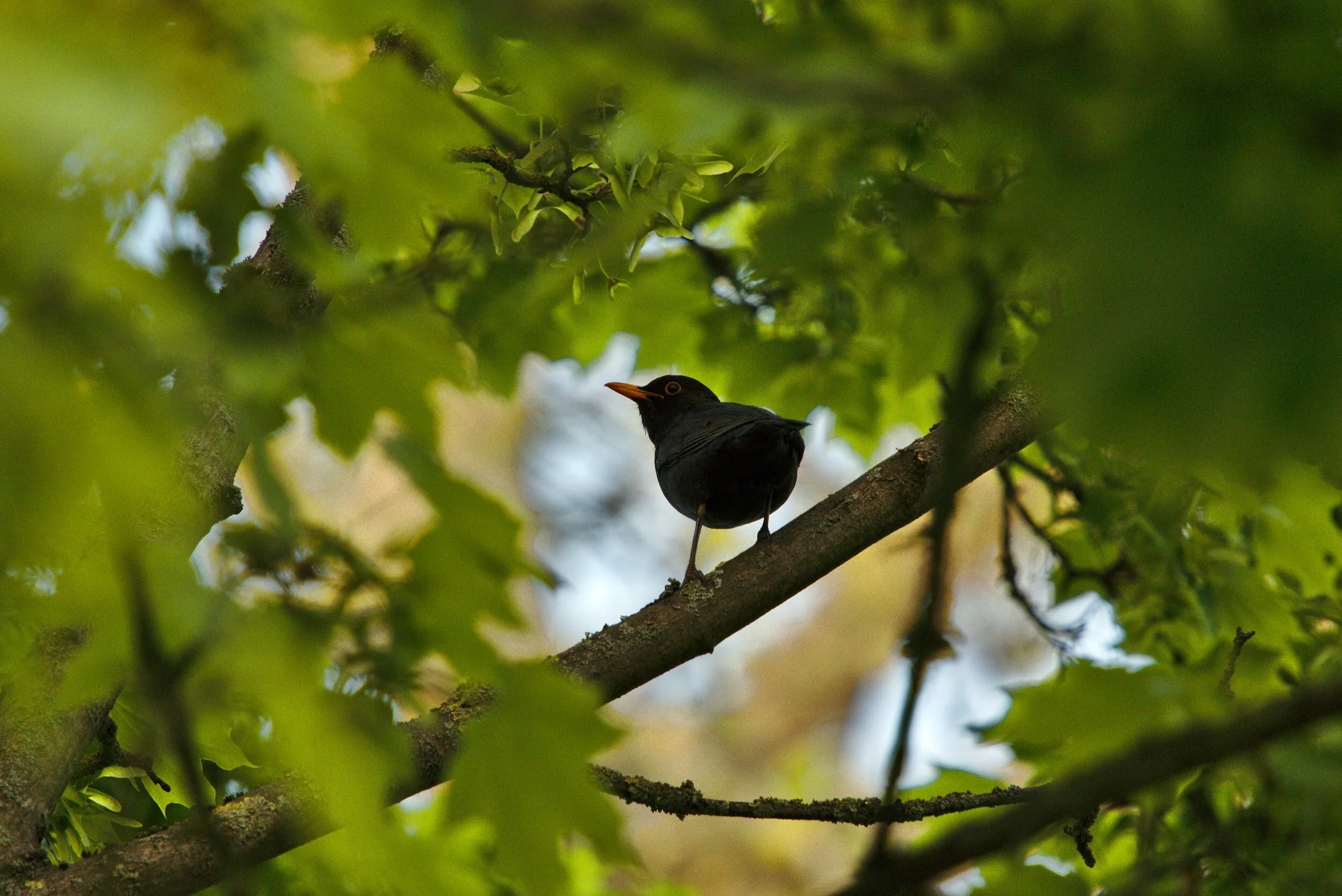
I don’t think anyone finds joy. Rather, we cultivate it by searching for the preciousness of small things, the ordinary miracles, that strengthen our hearts so we can keep them open to what is difficult: delight in taking a shower or a slow walk that has no destination, in touching something soft, in noticing the one small blackbird who sings every morning from the top of the big old pine tree … I need to give my attention to the simple things that give me pleasure with the same fervor I have been giving it to the complex things with which I drive myself crazy.

Dawna Markova.

Passover - A Conversation

Sister Ann Marshall interviews her friend Judy Rochwerg and they discuss Passover 2021.

Judy was my physiotherapist in 2004 following surgery, and since then, I am happy to say, that our lives have become intertwined. After all, we are daughters of the Patriarch Abraham. 

Judy worships with a Reform Jewish Temple in Hamilton, Ontario.  She has been happily married to Lorne for 45 years; they have two married sons and two healthy grandsons.  

We have chosen to make this interview both a conversation as well as an educational opportunity.  

happy-passover-with-leaves_23-2148485471.jpg

Q.  Thank you, Judy, for agreeing to this interview.  As the Jewish and Christian world prepares to celebrate Passover and Easter, I am wondering what was it like for you as a child to learn about the sacred story of Passover? 

A. Passover, or Pesach, in Hebrew, is my favorite holiday in the Jewish calendar.  It is a holiday celebrated mainly at home, rather than in the Synagogue. Passover connects me to my family, to Jews in my community and around the world who are celebrating the Exodus of the Jews from Egypt some 3000 years ago.  As a child, I would look forward to celebrating with my family including grandparents, parents, aunts, uncles, and cousins. 

Q. Can you give us some background on the rituals surrounding Passover? 

A. Passover is celebrated for eight days.  The most important Passover dates are the first 2 evenings where Jews celebrate at a dinner called a Seder.  Seder means order as each Passover ritual is performed in a certain order on these evenings.  In 2021 the Seders fall on March 27 and March 28. 

The Haggadah is the prayer book that is used during the two Seders on Passover eve.  There are dozens of Haggadah’s available for purchase. A modern Haggadah can include elements of social activism, environmental responsibility, feminism, comedy, minimalist, and Family Seder, to name a few.  I have written my own Family Haggadah that while having all the necessary ritual components, also includes additional commentary unique to my Passover experience. 

The word Haggadah means “telling” as its primary purpose is to facilitate the telling of the story of the Exodus from Egypt.  Children are encouraged to participate by asking “Why is this night different from all other nights”? 

A Seder Plate is placed on the table and each item on the plate has its own significance, as follows:  

SEDER.jpg
  • Maror or bitter herbs symbolize the harshness of the lives of the Jews in Egypt. 

  • Charoset is a delicious blend of sweet wine, apples, cinnamon and nuts that resembles the mortar used as bricks of the many buildings the Jewish slaves built in Egypt. 

  • Karpas is a green vegetable, often parsley or lettuce that is a reminder that Spring is sprouting up all around us. The Karpas is dipped in salt water to symbolize the tears of the Israelis. 

  • Zeroah or roasted shank bone symbolizes the sacrifice made to the great Temple on Passover. 

  • Beitzah or egg represents Spring and new life. 

  • Matzah is the unleavened bread we eat to remember that when the Jews fled Egypt, they did not even have time to let the dough rise in the bread.  During Passover Jews do not eat bread or bread products. 

Through the course of the Seder we drink 4 cups of wine.  There are numerous explanations of why four.  In Genesis 40: 11-13 when Joseph interprets the dream of the butler, the butler mentions the word “cup” four times. 

seder plate.jpg

The Passover meal is a festive meal that may contain time-honoured favorites, like chicken soup and gefilte fish, as well, there are usually selections of meats, vegetables, and desserts. 

Each Seder is unique.  I have participated in Seders from 4 -40 participants.  The Seder Leader sets the tone – traditional or liberal, ancient or modern, lecture or participatory. Prayers are adapted according to the ages of guests. If the Seder leader is more traditional, as was the case with my husband’s grandfather, the Seder was entirely in Hebrew with no participation from the guests.  A Seder teaches, and re-tells the story of the Exodus to all present.  This can range from puppets for the very young to researching topics specific to Passover for adult participants. 

Q.  Was there a time in your growing up years that you drifted from this tradition and if so, what caused you to return. 

A. No, I have been connected to my Reform Jewish faith all my life while growing up in my parents’ home, and later I taught the faith for many years in my Temple. I carried on this tradition when establishing my own home with my husband.  

Q. What are some of your fondest memories surrounding the celebration of Passover? 

A. My father and his 2 brothers would take turns hosting Passover. Each year we would attend a Seder at one of their houses.  Living room furniture was often moved out to the way to accommodate the long table, always set with the best china.  My father and uncles would lead the Seder and encourage discussion on what we were reading in the Haggadah.  I remember wearing my newest dress and enjoying time with my cousins. 

Q.  Tell me why you look forward to celebrating Passover with your family and especially with your grandsons? 

A. I feel fortunate that my 2 sons each married Jewish women who understand and have memories of their own childhood Passovers. When my children were younger, I enjoyed teaching them the story of the Exodus and the rituals of the Passover Seder.  I would often create games for my children, nieces, and nephews such as Passover Jeopardy to teach and entertain.  

Q.  Will you be able to celebrate Passover this year if COVID is still among us, and is the celebration of Passover important enough for a contingency plan to be in place? 

A. Last year my husband and I led a Zoom Seder.  Guests included family members who zoomed in from their own homes. I imagine this will be our plan for this years’ Seder on March 27 and 28.