Election 2021

A pattern has emerged on the federal election campaign trail: Party leaders and local candidates announce what they’re going to do for “you and your family.”  In so doing, they encourage us to think small and to focus on ourselves. 

unsplash-image-hzp_aT02R48.jpg

But we are interconnected with earth and each other.  And here’s the tension we must hold.  On the one hand, the crises which affect our lives (pandemic, colonialism, racism and other forms of bias, poverty, climate change, loss of biodiversity, pollution, and the deterioration of public dialogue, to name some of the key issues) affect us as a whole society (and indeed as a whole world), interacting with each other in ways which exacerbate their impacts.  On the other hand, we are all affected differently, with harsher impacts on people who are socially or economically marginalized. 

This means it’s not enough to consider how ‘we’ are affected, be it individually or as a social grouping.  If we are to address these crises, we need to identify who is most impacted and start there.  We elect governments to facilitate our efforts to do so.

Here are two different election bulletins that reflect on the current social, environmental, and economic context in ways that acknowledge our interconnectedness with earth and each other, identify key justice concerns, and offer questions for candidates.  The first is from Citizens for Public Justice and the second from KAIROS Canada.

-Sister Sue Wilson, CSJ

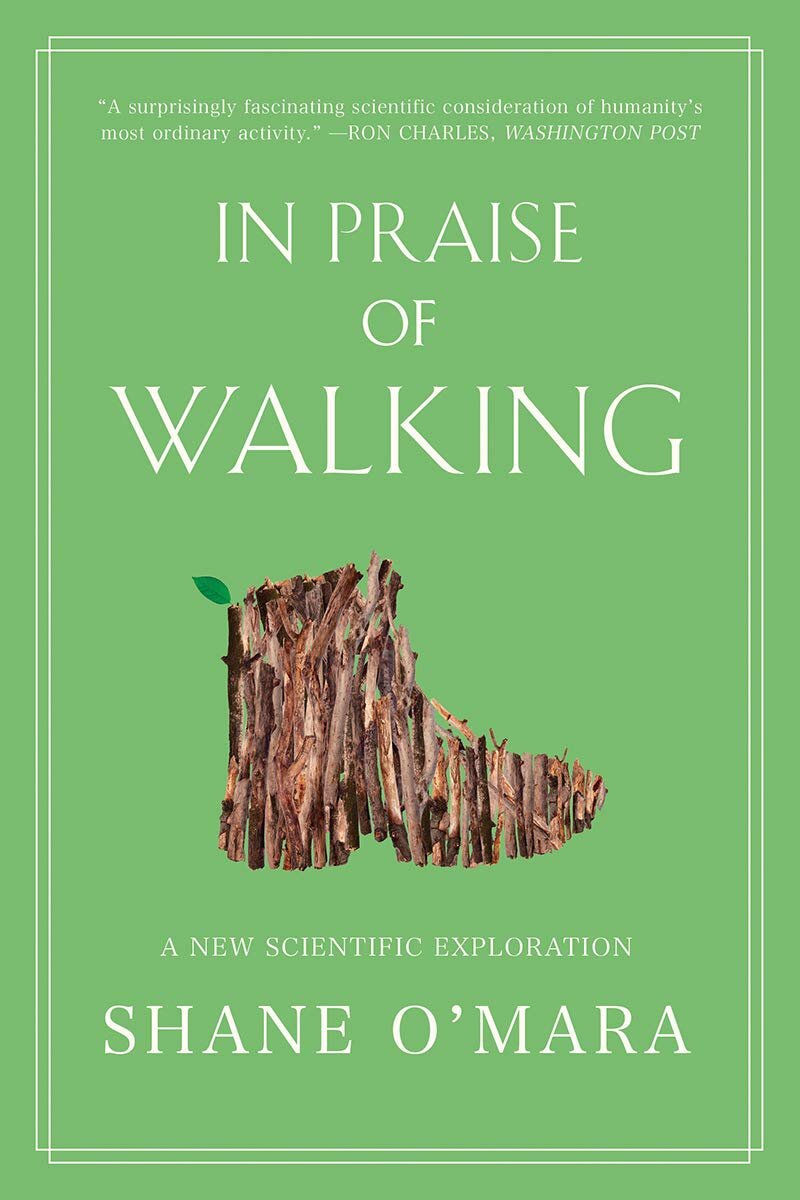
In Praise of Walking: A Book Review

WALKING.jpg

Before, and especially during the Covid-19 pandemic, I have acquired the habit of daily walking outdoors. I was not totally aware, however, of the benefits that walking provides until I read Shane O’Mara’s book.

O’Mara entitles one of his chapters “A Balm for Body and Brain”. He asks: “How does walking affect mood, mental health, and brain function? Regular walkers claim that being deprived of the opportunity to walk for even a few days, makes them feel sluggish and tired, and often a little bit down, and that the self-administered cure is simple – to go out for a good walk”. Exercising the heart by walking brings benefits to the head-heart axis. About 20% of the output of the heart goes to the oxygen-energy hungry brain.

A very interesting point that O’ Mara underscores is that when in a study he conducted, the participants were asked to estimate how they currently felt, then estimate how they would feel after a seventeen -minute walk outdoors compared to the same walk indoors in an underground tunnel. The effect of walking outdoors was compelling. Self-rated mood scores improved by about one-third.

the self-administered cure is simple – to go out for a good walk

Regular exposure to nature, which is backed up by scientific evidence, has effects on human health and welfare which are positive, measurable, and enduring.

O’Mara states “that the core lesson of his book is this: walking enhances every aspect of our social, psychological and neural functioning. It is the simple, life-enhancing, health building prescription we all need, one that we should take in regular doses, large and small, at a good pace, day in, day out, in nature and in our towns and cities.”    

-Sister Valerie Van Cauwenberghe, CSJ

International Sisters of St. Joseph Pray for Peace and Healing in our World

In the midst of the world’s woes of ragging fires, torrential storms, hurricanes, earthquakes, aggression, and violence, for one quiet hour on Saturday, August 28 hundreds of Sisters of St. Joseph and Associates throughout the world settled into a period of reflection and prayer for the sake of our cherished earth and its peoples.

The international CSJ Chambéry Congregation designed and hosted the prayer hour using quotes from Pope Francis’ encyclical Fratelli tutti. Readings and prayers were spoken in various languages: Italian, French, Portuguese, English, with music in those languages as well as being sung in Urdu. To focus our reflection the hour was divided into these topics cited in the encyclical: Social Friendship, Envisaging and Engendering an Open World, A Better Kind of Politics; A Heart Open to the World; Dialogue and Friendship in Society; Paths of Renewed Encounter; and Religions at the Service of the Our World. Each focus contained brief statements, prayer, and song.

If you wish to join in the prayer:

Go to the home page of the Chambery congregation: https://www.csjchambery.org/pt/inicial

Click on the symbol for Facebook.

Why was this moment significant?

The energy of solidarity and compassion released a deep hope across the earth, rising from major continents with a heartfelt cry for healing. We were blessed to participate.

We know that many other faith communities hold similar events of prayerful reflection, contemplation, and petition. We join this singular moment on August 28th in solidarity with all who strive to bring healing and wholeness to our world.

Image from Unsplash, created by Elena Mazhvila @miracleday

Election 44: Human Rights Op-Ed

Federal election 2021: We need to hear about human rights

by Alex Neve[*]

So, we are now into the second week of the federal election.  Pundits and commentators have been busy offering their assessment and critiques of what the parties appear to be prioritizing in their campaigning.

There is no shortage of pressing contenders, including the health and economic dimensions of COVID-19, the ravages of the climate crisis, accountability for the genocide of residential schools as well as reconciliation with Indigenous peoples more widely, dismantling systemic racism, addressing gender inequality, taking on the challenge of governing the digital world, improving refugee protection, and responding to Afghanistan, Haiti and other humanitarian hotspots and disasters around the world.

unsplash-image-P0JL8np1N6k.jpg

Beyond offering up pledges about those crucial concerns, however, what would be refreshing is to hear genuine, full-fledged readiness to uphold human rights from the leaders. That is the key to meaningful progress with respect to all challenges we face, nationally and globally.

Human rights protection is foundational, yet we rarely hear convincing commitments framed from a human rights perspective in elections. Platitudes and posturing, that’s easy. Heartfelt endorsement of the Charter of Rights and Freedoms is commonplace, from some parties. And commendable positions on specific human rights cases or situations do certainly arise, unevenly and sporadically.

But a compelling vision for concretely putting human rights at the heart of Canada? Not so much. In fact, not at all.

We need leaders to make it clear that they will assess issues, craft policy, reform laws, set budgets, and make decisions, always, through a human rights framework.

Not only when it is convenient. Not as a secondary afterthought. And certainly not just by putting feel-good human rights language in more press releases.

Taking human rights seriously is about equality, agency, accountability, remedies, transparency, and consistency.  That is essential when it comes to COVID recovery, climate justice, Indigenous rights, dismantling racism, advancing gender equality, governing the internet, and protecting refugees. That is fundamental in responding to crises in Afghanistan, Haiti, Ethiopia, China, Israel/Palestine, Venezuela, Syria, Yemen, Colombia, Myanmar, and elsewhere. 

Above all else, it is how we will ultimately realize an equitable and sustainable world.

We could (and certainly should) ask the parties to provide us with human rights laundry lists. How will they rectify Canada’s various human rights shortcomings? What international human rights treaties will they ratify among the many we have not yet taken on board? Will they reconceive our relationships with the many countries with whom we regularly prioritize politics and economics over human rights? That would of course be welcome.

But more crucially, we need commitments that are transformative, not only reactive.  Commitments that are overarching, not piecemeal.  Commitments that are not just in the moment but will stand the test of time.

Here are three that would make a difference.

First, ensure that Canada’s stance on the world stage is consistently guided by international human rights standards. The Trudeau government adopted a feminist international assistance policy in 2017 and has been consulting with civil society towards a broader feminist foreign policy. The government has also put in place new guidelines for our diplomats to better protect human rights defenders around the world. Those are all steps in the right direction. But there is much further to do. Will parties commit to a legislated requirement to implement an international human rights action plan across the entirety of Canada’s global affairs?

Ensuring equitable vaccine availability worldwide, responding to the downward spiral in Afghanistan, selling armoured vehicles to Saudi Arabia, pushing Iran for accountability for shooting down Ukrainian International Airlines flight 752, working to free Canadians imprisoned abroad, acting on concerns about Canadian mining companies in Latin America, setting refugee policy along the US border, calling Israel out on illegal settlements in Occupied Palestinian Territory, or squaring the Beijing Olympics with what is happening to Uyghurs and in Hong Kong? Human rights must reliably be the overriding consideration in setting Canada’s course globally.

Second, shut down the growing inclination to use the Charter of Rights’ problematic notwithstanding clause.  Provincial governments have recently recklessly used this escape hatch three times to avoid human rights obligations: twice in Quebec and once (almost twice) in Ontario.

Ottawa doesn’t write provincial laws. And we aren’t about to amend the Charter, a near-impossible (certainly Herculean) task. It would be helpful, however, for all federal parties to unequivocally promise – backed up by legislation – never to resort to section 33.

unsplash-image-C2keINMOhIE.jpg

Third, it is time for a truly national embrace of human rights across Canada. For decades we have been hobbled by an ineffective and secretive approach among federal, provincial, and territorial governments when it comes to complying with our vital international human rights obligations. Our governments must collaborate to uphold those obligations equally and meaningfully across the country, and do so openly and transparently. They do not. Not even close.

Last year, in a meeting of federal, provincial, and territorial ministers responsible for human rights cohosted by the federal and Nova Scotia governments, which was only the third such gathering in 32 years, an important decision was taken, largely unnoticed at the time or since, to set up a Forum of Ministers on Human Rights.

That’s all we know. It so very much needs to be a gamechanger when it comes to delivering human rights protection across the country. But it could so easily end up being yet another wasted opportunity. We need to hear from federal parties about their vision for this Forum, and what concrete action they will take to make that happen.

We do face immense challenges that understandably feel daunting. Taking human rights seriously, like never before, will put us on the right path.


AlexNeve.jpg

[*] Alex Neve is a Senior Fellow with the Graduate School of Public and International Affairs at the University of Ottawa. He was Secretary General of Amnesty International Canada from 2000-2020.  An edited and shortened version of this blog appeared as an opinion piece in the Ottawa Citizen on August 18, 2021.