

Elaine Cole

Reflecting on the World Day of Prayer

Sister Elaine Cole, left.

World Day of Prayer 2026 was held at Trinity Lutheran Church in North London on Friday, March 6.  The prayer service was prepared by Christian women in Nigeria with the theme, "Come Unto Me".  The program included testimonials of a Nigerian widow bearing the burden of systemic oppression; of a Nigerian woman bearing the burden of religious persecution; of a Nigerian woman bearing the burden of poverty and despair.  The members of the planning committee led the singing of the Theme Song that was written and composed especially for the service entitled "Come Unto Me".  The first verse is as follows: 

Are you down and feeling lonely, are you weary and oppressed, you don't have to be discouraged, Jesus says, "Come unto me".  

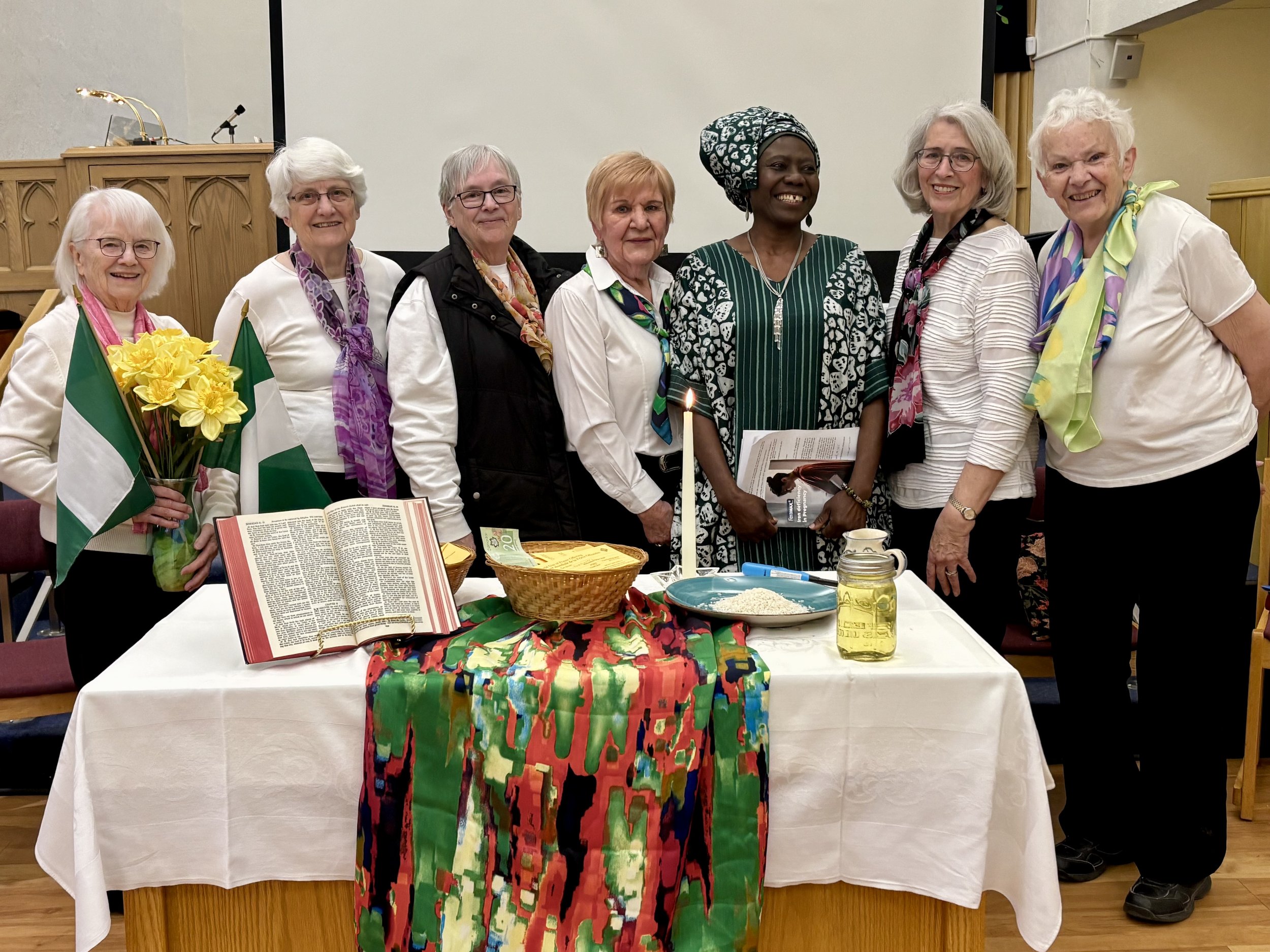
The women in the photo are members of the planning team for the event and are from the Anglican, Lutheran, United and Roman Catholic Churches.  Sister Elaine Cole, far left, was a member of the team representing the Sisters of St. Joseph.  You can find her behind the flowers and flags.   

In 2027 World Day of Prayer will be celebrating one hundred years of Christian women from around the world coming together in spirit, uniting on a common day to pray for relevant issues affecting women and children.  Amen!

Header Image: Milada Vigerova/Unsplash

The Spiritual Path of Lent  

Lent is that annual time of year when I am challenged to examine the spiritual path I’m walking on.  Am I even walking on a SPIRITUAL PATH?

To walk a spiritual path presumes there have been choices along the way which keep me focused on what I cannot see.  Here is one example.

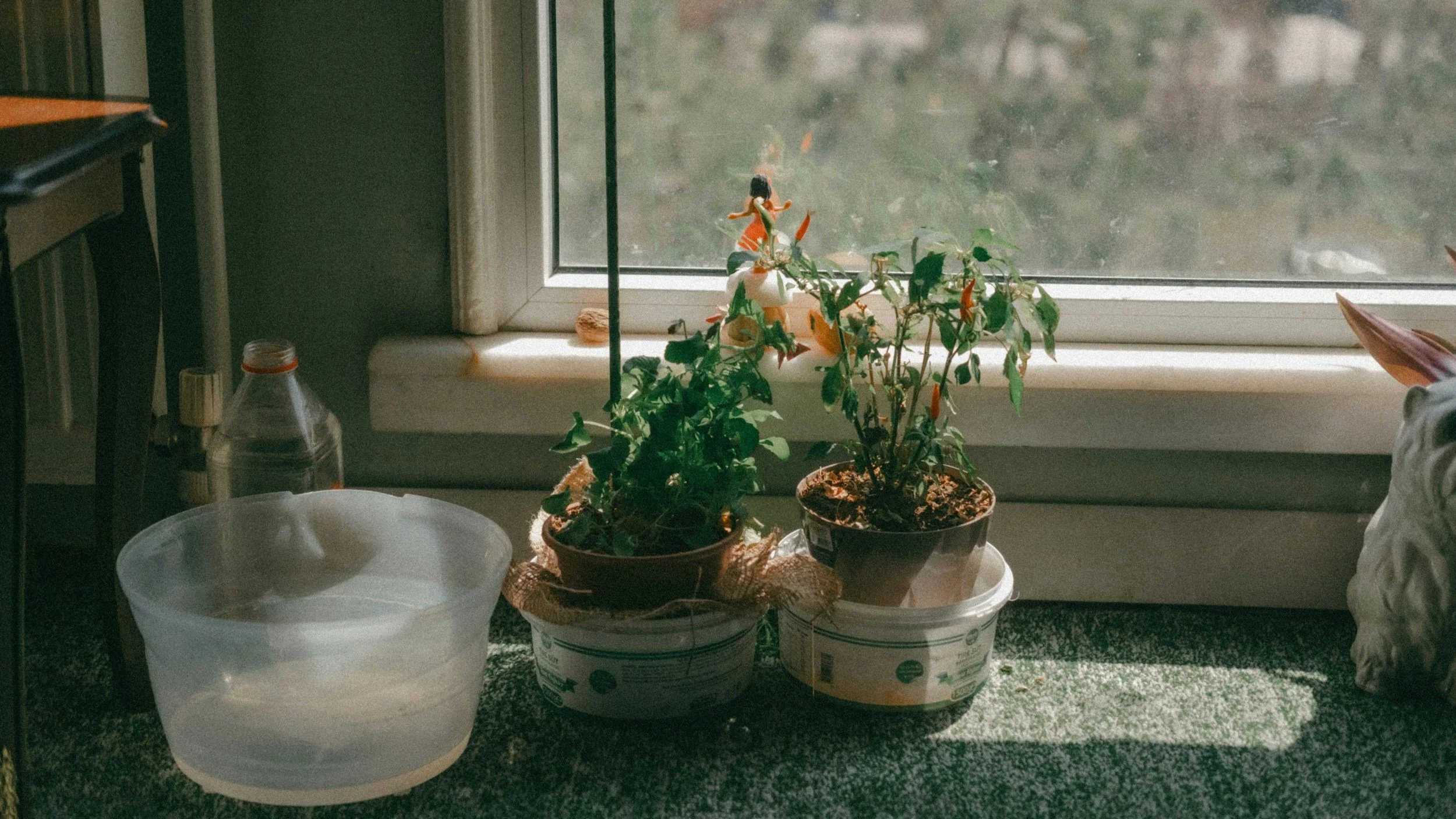
Why are the leaves on my plant all facing toward my window?  If I turn the plant, then over time the leaves again all face toward the window.  Do they have a longing to be outside growing beside that tree in the backyard?  Or do they have some inner awareness that their life depends on the light energy coming from outside my window?  I am a witness, not of the energy my plant is using for its life but I am a witness of the effect the invisible energy is having on the actions of my plant.

I think our lives are more complicated because we have to CHOOSE to face the direction of the energy we need for our lives.  Am I even facing in the direction of the energy I need to walk on a spiritual path?  Love is that energy.  Life is about experiencing being loved and respected and giving love and respect to another.  Life is about relationships, about receiving and about giving.  The way I receive and give love energy is a choice I make. 

During LENT we witness the life of Jesus; we witness all His loving relationships no matter the hardships he suffered.  His primary gaze was loving obedience to the will of the Father and then actively sharing that love with his followers.  Approaching Holy Week, I ask myself, am I even on that spiritual path with Jesus?

Finish this Lent, by going home and letting your plants teach you how to follow the energy you need for saving the life of your soul. 

-Sister Elaine Cole, csj

Images: Erika Osberg/Cemrecan Yurtman/Kelly Sikkema | Unsplash

World Day of the Sick

World Day of the Sick

World Day of the Sick will be celebrated on Wednesday, February 11, 2026.  The theme, for this day is, “The compassion of the Samaritan: loving by bearing another’s pain”. 

If you think about this parable in Luke’s Gospel (10:25+), you will recall that the Samaritan who was journeying along the road came upon the man who had fallen victim to robbers.  In the parable the Samaritan seemed bound by conscience to care for the injured man who was in his path.

When I read the passage, it seems to me that it’s not necessary to go looking for those who are sick and who I think might ‘need’ me, but rather it is necessary to notice those whom God places in my path.  This will require that I live fully conscious of those whom God places in my path.  It might also require that I at times must overcome feelings of impatience, or inadequacy, or guilt, or even disgust when approaching someone “in my path”.  It’s not always easy to smile.

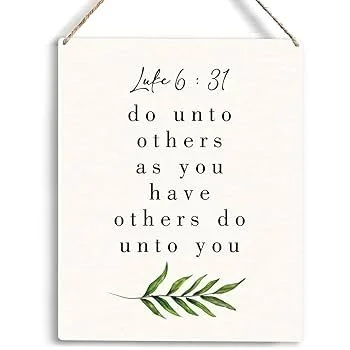
I am familiar with the quotation, “Do unto others as you would have them do unto you”.   I am also aware that love makes sacrifice easy and perfect love makes it a joy.  Reading the words then, living the words, will be the journey of a lifetime.  Ultimately, it is God’s love that I want to bring to my neighbour.  That requires faith and it requires consenting to God’s presence and action in me.  The Saints teach us how to love.  Mother Teresa would say,

“Stay where you are.  Find your own Calcutta.  Find the sick, the suffering, and the lonely right where you are—in your own homes and in your own families, in your workplaces and in your schools.”

-Do Something Beautiful for God The Essential Teachings of Mother Teresa, p.80.

-Sister Elaine Cole, csj

The Third Sunday of Advent

The Responsorial Psalm for the liturgy of the Third Sunday of Advent carries the theme for the day.  In fact, Psalm 146 outlines the reason for this holy season because we are promised one who will teach us about the transformation of all the ills of a society.  Today, more than ever we need to cry out again and again, “Lord, come and save us.”

Psalm 146 (7-10)

“It is the Lord who keeps faith forever,

Who executes justice for the oppressed;

Who gives food to the hungry.

The Lord sets the prisoners free.


The Lord opens the eyes of the blind

And lifts up those who are bowed down;

The Lord loves the righteous

And watches over the strangers.


The Lord upholds the orphan and the widow,

But the way of the wicked he brings to ruin.

The Lord will reign forever,

Your God, O Zion, for all generations.”

Lord, come and save us.

-Sister Elaine Cole, CSJ

Image: Vidar Nordli-Mathisen/Unsplash

Psalm 146 is a powerful declaration of God's character and compassionate actions, emphasizing His faithfulness, justice for the oppressed, provision for the hungry, liberation for prisoners, healing for the blind, support for the weak, love for the righteous, protection for foreigners, and care for the vulnerable (widows/orphans), concluding with His eternal reign and a call to praise Him. (AI Summary)

Second Sunday of Advent

At the beginning of the year, Pope Francis opened the Jubilee Door to the pilgrims of the world to begin a Jubilee Year of Hope.   

Today on this Second Sunday of Advent, St. Paul’s letter to the Romans 15:4-9 focuses our attention on Hope.  The reading explains how the early patriarchs adhered to Scripture.  The Scriptures encouraged them to be steadfast in their faith so that they “might have hope”.  They lived their lives hoping for a promised Messiah who would bring them lasting peace. 

In Matthew’s Gospel, John the Baptist is roaring in the wilderness “You brood of vipers. . . bear fruit worthy of repentance,” when he sees the Pharisees and the Sadducees coming to him.  John, the last of the ancient prophets, proclaims that the one who is to come will baptize “with the Holy Spirit and with fire”. 

Jesus was the fulfillment of the promises given to the patriarchs.  Jesus came so that now we might live in harmony and praise the Father of our Lord Jesus Christ with one voice. 

We are not there yet. 

We still need “hope”, an energy that keeps us consciously engaged, alive and moving forward and at the same time keeps us patiently waiting, desiring, and longing.  For what?  Do we even know? 

To live energized by hope and love could be the fire that makes us one earthly family, living in peace and harmony desiring the good of the other and sacrificing whatever it takes to sustain that “peace on Earth to all people of goodwill”.  May our human family soon turn to Jesus, the Way, the Truth and the Life. 

Teilhard de Chardin’s life discoveries considers love and hope as necessary energies moving the cosmos forward to greater consciousness and unity. 

Hope is a reminder that a longing/desire has not yet been realized.  Therefore, like Teihard we can agree that hope is an energy and that it keeps us consciously engaged, alive, and moving forward. 

Years ago, Henri Nouwen gave a series of meditations on The Spirituality of Waiting and showed how all the people in the first two chapters of Luke’s Gospel were waiting in Hope—Zacharia, Elizabeth, Mary, Joseph, Anna, Simeon.  

Jesus has fulfilled the promises given to the patriarchs.  Jesus came so that now we might live in harmony and praise the Father of our Lord Jesus Christ with one voice.   

We are not there yet.  We still live in hope.  During this season of Advent we are waiting, we are practicing living in hope by waiting in hope that someday soon we might live in harmony and praise the Father of our Lord Jesus Christ with one voice. 

-Sister Elaine Cole, csj

Images: wisconsinpictures/Unsplash