
Susan Hendricks

The Journey Through Lent

I remember our parish’s Good Friday pilgrimages, when we walked from our small village to the neighboring one, taking turns carrying the cross. It was a trek marked by enthusiasm, joy and excitement where we would transfer the cross from one pair to another so each of us would reach the end without a sense of agonizing pain. Some ran ahead with youthful abandon while others lagged.

Likewise, the journey through Lent follows a determined course that proceeds from beginning to end. Some actively count off the days and weeks until we reach Holy Thursday with a final focus on Christ’s journey during the Triduum. Even as I write, there is a temptation to note that we are in the Third Week of Lent – partway through – as if the destination is the goal. “Keep your eye on the prize,” as the saying goes.
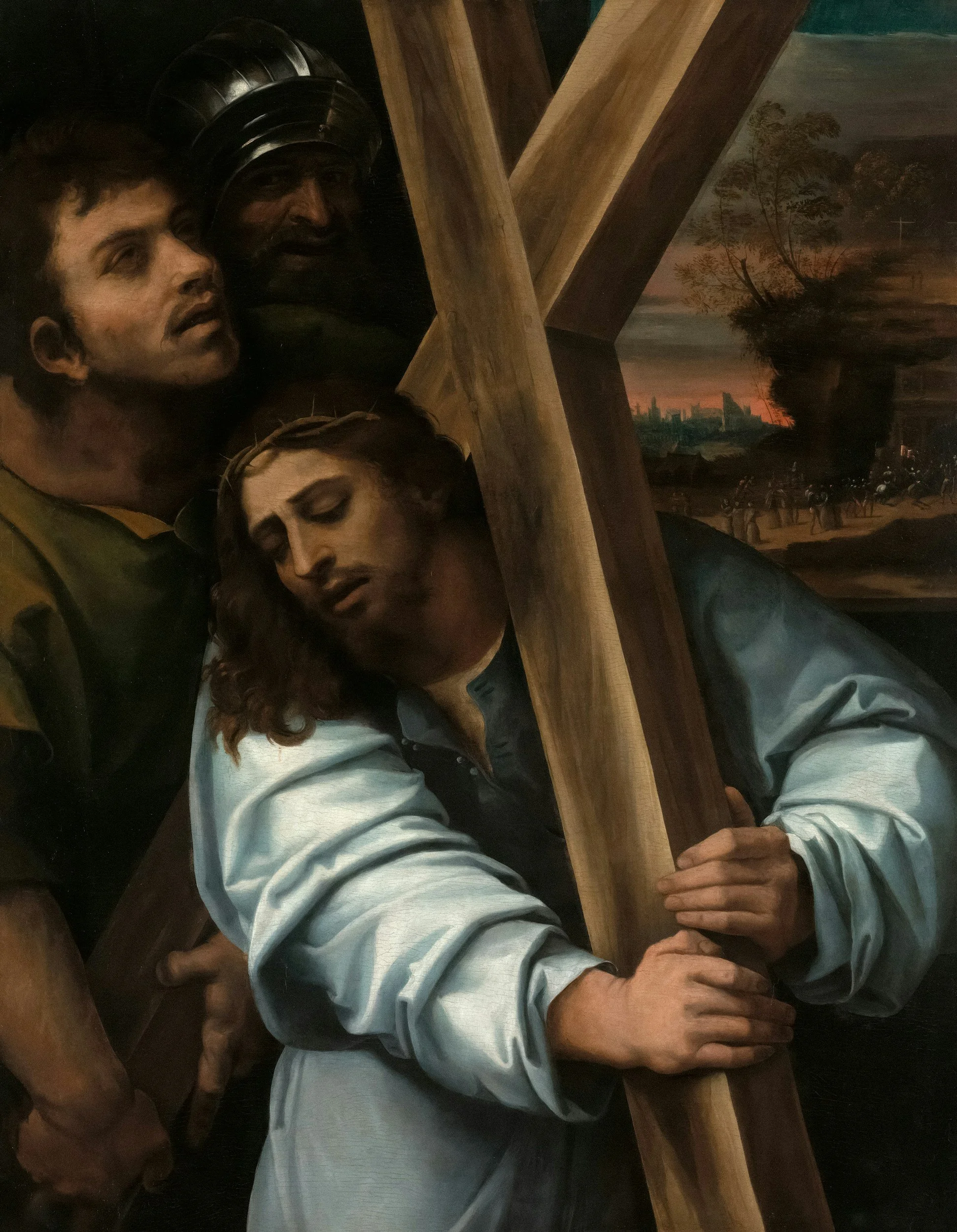
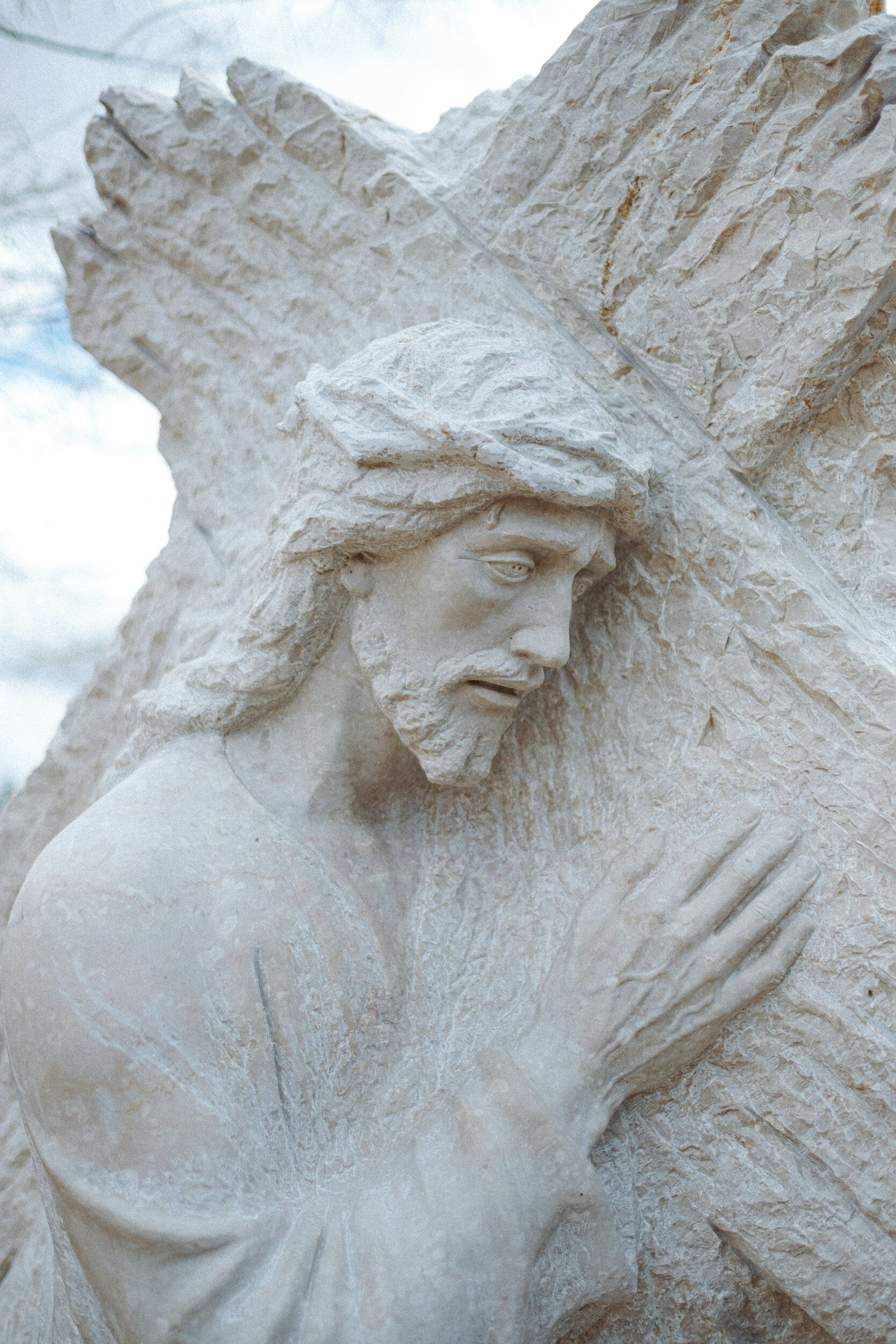
Christ suffered agonizing pain in his final hours; did he know beforehand the pain he would endure on our behalf? He did not pass the cross to another to make it easier on himself. In fact, each step he took throughout his mission required a dying to self so that we might live.

The 15-week Buddhist "Walk for Peace" from Fort Worth, Texas, to Washington, D.C. that concluded on February 10, 2026 has inspired me. In one of his daily teachings, the The Venerable Monk Bhikkhu Pannakara spoke of the need to look at ourselves in the mirror when brushing our teeth each day and then immediately wipe the spots of toothpaste off the reflection staring back at us. “Don’t leave it for later when it's much harder to get off,” he said.

“A journey of a thousand miles begins with a single step,” says the old Chinese saying or as my Spanish teacher used to say, “Poco a poco, se va legos” (little by little, one goes a long way). Focusing on each step, and the presence of God’s spirit within those steps, is what makes the Lent journey meaningful. Travelling the spiritual journey is a step by step walk on God’s Holy Ground.

-Susan Hendricks, csj associate

images: Jamie Ginsberg/Art Institute of Chicago @artchicago | Unsplash


I have been crucified with Christ and I no longer live, but Christ lives in me. The life I now live in the body, I live by faith in the Son of God, who loved me and gave himself for me. Galatians 2:20
RESURRECTION

Wesley Tingey/Unsplash

RESURRECTION

by Ronald Rolheiser

I never suspected resurrection

To be so painful

To leave me weeping

With joy to have met you, alive and smiling, outside an empty tomb

With regret – not because I've lost you

But because I've lost you in how I had you –

In understandable, touchable, kissable, clingable flesh

Not as fully Lord, but as graspably human.

I want to cling, despite your protest

Cling to your body

Cling to your, and my, clingable humanity

Cling to what we had, our past.

But I know that … if I cling

You cannot ascend and

I will be left clinging to your former self ...

unable to receive your present spirit.


For some reason, we needed all the time legally given to a parent to name our daughter, or perhaps as I think back, the name chose her.  She was Kristina, our little spark of the divine child on this earth.  She died at the age of 15 on Easter Sunday such that if we mark linear and not spiritual time, we experience the anniversary of her death twice each year.  A dear spiritual companion hoped that one day we would no longer associate Easter Sunday with her death but with resurrection.  And a dear friend sent me Rolheiser’s poem some time later.

But thirty-three years later, I know that a coin’s two sides co-exist in symbiotic relationship. The seasons – spring, summer, fall and winter – are all contained within each other as well, held in a continuous flow of life and death.  Even our thoughts and beliefs would not exist without the teacher who led us to them. Surely, we would not know the Resurrection if Christ had not experienced the Crucifixion. The continuing miracle of Kristina’s life and death as One is our family’s ongoing, sacred lesson in the unity of All.  

Christ has died.  Christ has risen.

-Susan Hendrick, csj Associate

Thoughts on the Summer Solstice

There’s Fire in the Heart

Passion and Compassion Thrive

An Alive Human

Fire in the Heart haiku - Gurunam Khalsa (2003)

Empty yourself continually in honor of the Incarnate Word who emptied himself with so much love for you (Phil.2:7).
Make your commitment to live in the practice of the most sincere, true and profound humility possible to you. 
— MAXIM 3

Many suns have passed since I was young and filled with unbounded enthusiasm. At that time, gatherings with friends centered around exploring issues like the feminine face of God, women’s spirituality, and our role in the Church. Though engaged in social justice work, the group also created opportunities for personal reflection and even solstice celebrations.  Both summer and winter solstices held different energies. We all did too.

IMAGE: Unsplash/Isi Parente

Burnt into memory is one particular Summer Solstice when members of our group gathered in the large garden of a friend to celebrate this zenith moment of the year around a solstice fire.  Did we know that jumping over the flames was supposed to bring us good luck and rid the soul of evil? That doing it three times would make the ritual even more powerful. And the higher the jump, the better?

As we partook in a potluck dinner together – each dish a reflection of the taste, skill and inventiveness of the individual cook – we reflected on the joy of being one despite a diversity in age, religious background, body type and sexual preference.  We were simply a group of women, gathering to celebrate our value and role in society. With wild abandon, the fire jumping began. Oh, it felt good until one of us twisted her ankle and fell, luckily not burning herself or her clothes but twisting her ankle quite badly. Frenzied fun gave way to anxious concern as we rushed to attend to her needs.

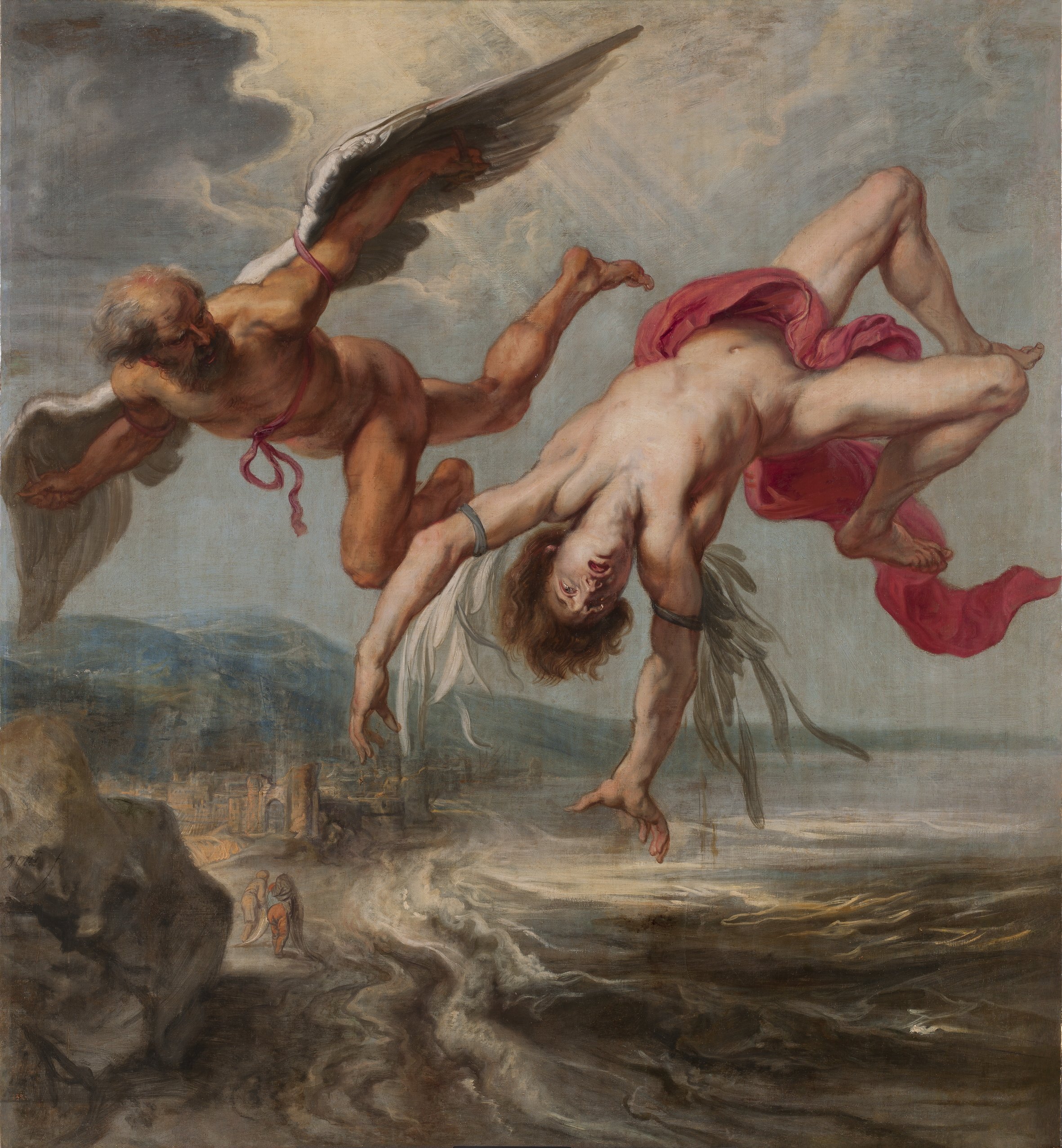
Jacob Peter Gowy's The Flight of Icarus (1635–1637)

Hints of the Icarus myth invade my mind: Icarus, though advised by his father to neither fly too high to the sun nor too close to the seas to escape imprisonment, instead soared high and beyond, so close to the sun that the beeswax holding his wings together melted from the heat. Perhaps it was fear that motivated him or a sense of his own strength and will but regardless, his actions were guided from within and not from a place of trust in his father.

Perhaps there is a bit of Icarus in all of us. A very wise Sister Shirley Tapp, csj once told me that the flute cannot be played unless it is hollow and allows the breath of God to move through it.  Aspiring to fly high like Icarus, fueled by our own will and desires or jumping over the Fire of the Sun/Son can have unfortunate outcomes.  Instead, on Summer Solstice and each day we wait for the Son-rise that warms and ignites the Holy Spark of Love within us. 

- Susan Hendricks, CSJ Associate | Winnipeg, MB


REFERENCES: 1) Fire in the Heart haiku - Gurunam Khalsa (2003). Haiku Heart: Vol. 1.  West Palm Beach: FL: HeartLuck Global Publishing. 2) Maxim 3 as quoted in https://www.sjabr.org/about/congregation-of-st-joseph/maxims.

World Book Day Canada - April 23

“In the beginning was the Word and the Word was with God, and the Word was God”. (John 1:1)

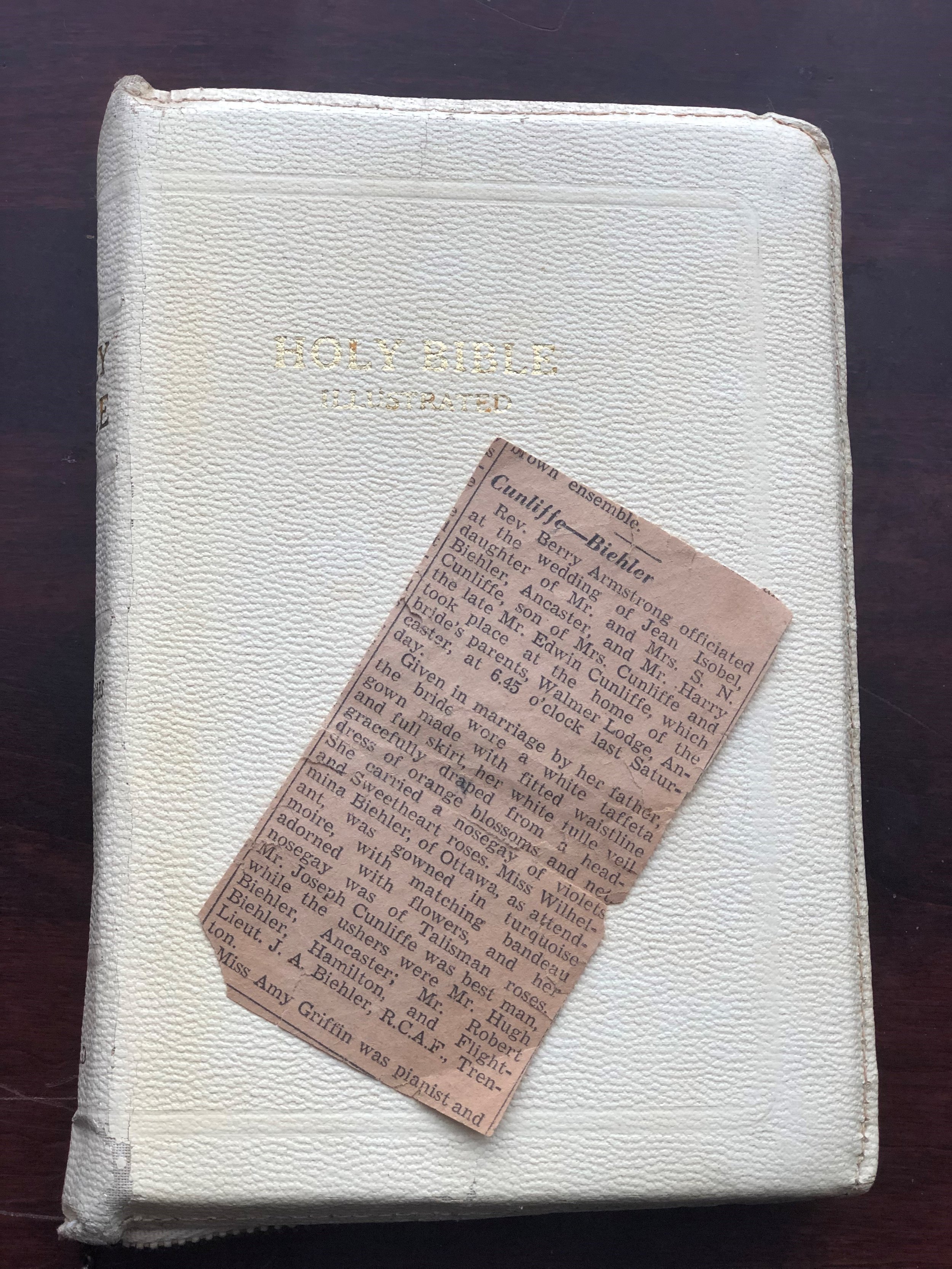
When we were teens, my grandmother gifted each of her granddaughters with a white bible – the kind with the leather cover that zipped up on the side with a cross as the pull tab. She had spent her childhood polishing the pews of the old Scottish kirk where her grandfather was groundskeeper and believed with all her heart in the saving grace of Jesus Christ. She wanted this for us. It was such a meaningful gift that I carried it with an orchid attached as my ‘wedding bouquet.’

I am looking through it now and am surprised to find the yellowing newspaper notice from my parent’s wedding in it. Curiosity made me turn it over only to find that the flip side of this happy notice holds part of a news article about a tribunal examining the Nazi treatment of their Jewish prisoners. It is hard to take in this juxtaposition of opposites: descriptions of taffeta gowns, orange blossoms and nosegays of violets and sweetheart roses opposed to our inhumanity toward others, with Jewish prisoners forced to stoke the fires of the death chambers of those who preceded them in the line of death.  My heart sinks and folds unto itself, wondering if we have learned anything in these intervening years. Wars continue; violence and inequity are rampant. In my own life, I do not always live up to the ideals of Christian love and each day is a lesson in humility and growth. How do I face this reality with the equanimity of gentleness, peace and joy that allows compassionate action?

As I flip through the pages of this precious Bible and take in the fact that it is split into two parts – Old and New Testaments – the structure of the book itself seems to be teaching the lesson of our being given a choice between opposites such as love and hate, peace and violence, life and death. All is one; the coin cannot exist without both its sides.  We each contribute to the Oneness that is life. Nothing is wasted or invaluable.  There is always movement to the ‘more’.

Where do you focus your attention? 

What book has been your guidepost through life?

- Susan Hendricks, Associate, Peterborough Neighbourhood | former librarian and lover of books since early childhood