World Day of Prayer for Vocations

BE BEARERS OF A PROMISE:
A REFLECTION FOR THE WORLD DAY OF PRAYER FOR VOCATIONS, 2021

VOCATIONS prayer.png

In these troubled days in our world, as we face the prolonged Covid crisis and all of its consequences, and as we experience social unrest globally, many of us long for a message of hope and promise. In his address for the 2021 World Day of Prayer for Vocations (April 25), Pope Francis reminds us that it is not simply a matter of waiting for these gifts of hope and promise to come to us but that we are all called to be the “bearers of promise” – God’s promise.

How? We are to listen for and search out God’s dream for our life and like the Apostles, Simon, and Andrew in Scripture (MK. 1: 16-20)  to follow it without hesitation.  More widely, in the gift of creation, we observe God’s design in the glorious diversity and unity of the Universe and as part of that design, we each have a vital part to play. It is to discover and embrace our particular call from God, for God, with God. As Pope Francis puts it, “We are called to be bold and decisive in seeking God’s plan for our lives”, and in turn to share that in our giftedness in the world. God does have a plan for each of us.

God has created me to do Him some definite service; God has committed some work to me which he has not committed to another. I have my mission … I have a part in a great work.
— St. John Henry Newman

As St. John Henry Newman said: “God has created me to do Him some definite service; God has committed some work to me which he has not committed to another. I have my mission … I have a part in a great work.” Each of us, no matter who we are, in our personal vocation (marriage, partnership, committed single life, consecrated life, diocesan priesthood), and whatever our particular gifts and vulnerabilities each have a part to play in a great work. Our own context matters – especially now, we change the world where our feet are and we do that by embracing and living fully our own call.

To embrace our vocation, Pope Francis says, is first to welcome an encounter with God. Francis reminds us, God’s call “is not an intrusion of God in our freedom; it is not a ‘cage’ or a burden to be borne. On the contrary, it is the loving initiative whereby God encounters us and invites us to be part of a great undertaking.” From that encounter with God, an encounter of joy and discovery, not unlike an encounter “with the person we wanted to marry or when we first felt the attraction of life of consecration”, we experience the exhilaration that is the source of our encounter with and commitment to the other in love.

unsplash-image-1xwVMnEiyKY.jpg

So we pray, on this 2021 World Day of Prayer for Vocations, to listen and discover our call, to hear its resonance anew in each day of our lives, to affirm and accompany one another as each of us contributes to the great work of God in our world today and as each of us finds the courage to risk becoming “bearers of promise” in these days so hungry for hope. 

Sister Mary Rowell, CSJ
President | National Association of Vocation and Formation Directors

Critical Environmental Issues in Canada

The Saturday, April 3rd edition of The Globe and Mail contains three articles that should concern us all and call our government to account.

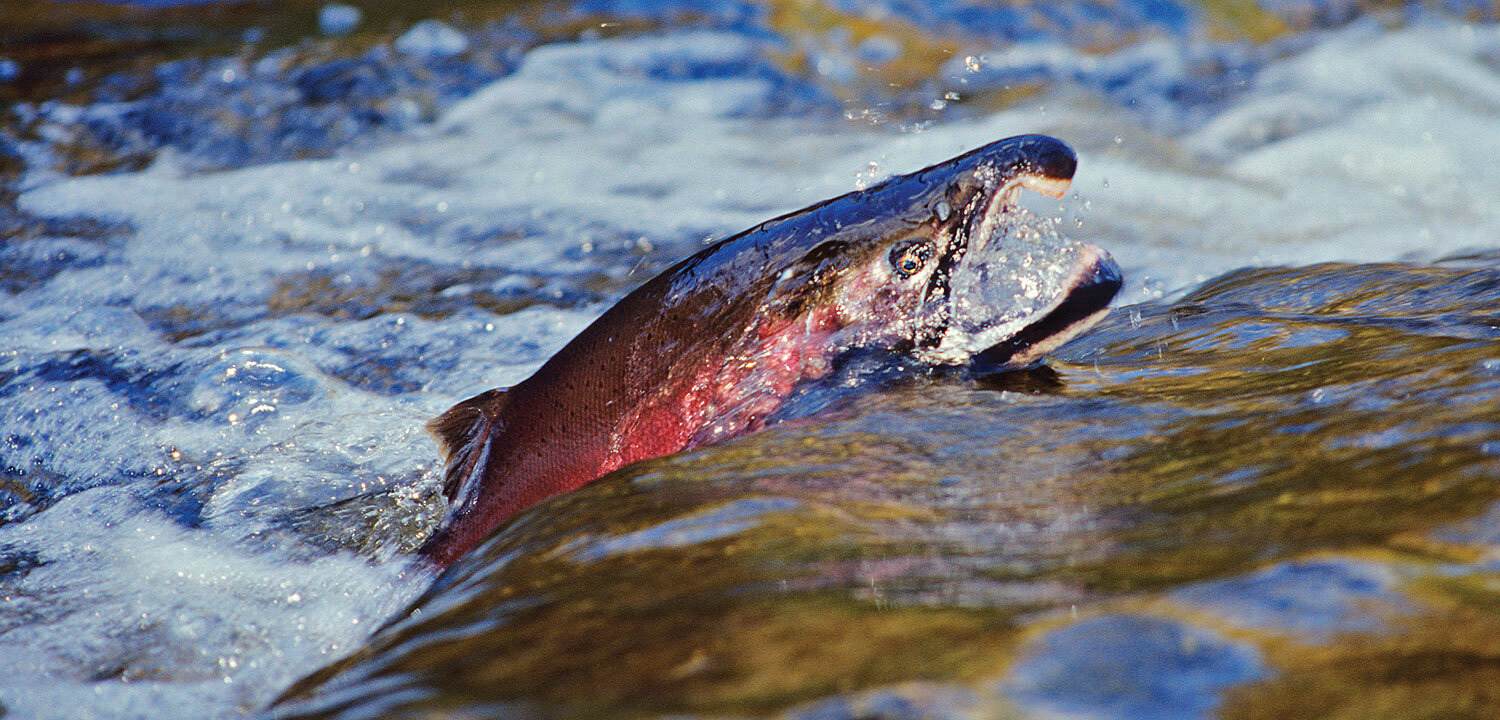
WILD SALMON.jpeg

“Troubled Waters” by Alexandra Morton describes the disastrous decline of wild salmon populations on Canada’s west coast. The article states: “Salmon farming in Canada was born on the wrong side of the law more than 30 years ago, and it has continued to bend the spirit and intention of Canadian fishery laws, no matter the successful legal challenges to its practices or the science measuring the harm it causes to wild fish.”  Morton cites instances of senior bureaucrats playing down and suppressing science reports on the impact of salmon farms on wild salmon. The Department of Fisheries and Oceans (DFO) refused to acknowledge evidence of their own and other scientists about a decimating virus traced to Norway that caused heart damage and the rupture of red blood cells of chinook salmon. Only 5% of the late-run Fraser River sockeye salmon lived to return to the river in 2020. Morton decries the government’s act of hiding evidence of an epidemic that could wipe out the last of the salmon in the Fraser River, the largest salmon river in the world. The renowned biologist issues a warning: This is a moment after which B.C. will never be the same.  Many wild salmon populations can no longer decline; if this abuse continues, they can only vanish.”

unsplash-image-FdKDKLoSa0M.jpg

In this same issue of The Globe and Mail, Delta in danger: Time is running out for Vancouver’s ecological wonderland” is equally troubling. Margaret Munroe, a Vancouver-based journalist describes abuses of journalists and wildlife photographers, and human traffic that has battered the Fraser estuary, one of the richest and dynamic ecosystems on earth.  In the past 200 years, the landscape has been transformed “Grizzlies and elk are long gone, and less than 30 percent of the wild habitat remains.”  The floodplain has been drained and diked to allow for farms and the sprawl of Metro Vancouver.  The Port of Vancouver’s plan for a 3.5 billion dollar expansion of a shipping terminal and a ship-to-ship LNG marine refueling service, and the continued development and encroachment of the estuary threaten the wetlands on which chinook salmon depend and the killer whales that, in turn, rely on the salmon.   A recent UBC study concludes that there is an urgent need for action to protect and restore the estuary in which two-thirds of the 102 species have less than a 50% chance of survival over the next 25 years.     

unsplash-image-19SC2oaVZW0.jpg

Finally, the third article by two-time Olympian, Scott Niedermayer, “Old-growth forests are an invaluable resource we can’t afford to lose” evokes sadness. These once vast forests which have been growing from the middle ages have been mostly lost. Less than 3% of the province’s forested land is made up of big tree, old-growth forests, an area of only about 400,000 hectares. Many species of animals are endangered. The role of the forests in storing carbon dioxide and mitigating climate change is critical. Unless these old-growth forests are no longer logged, they will be gone forever from earth, our common home.

We need a government that exercises its responsibility to the world in placing the protection of our environment above economic self-interests.  We also need each of us to demand that our government fulfill its responsibility.      

-Sister Pat McKeon, csj

Earth Day Canada 2021 | Jour de la Terre Canada 2021

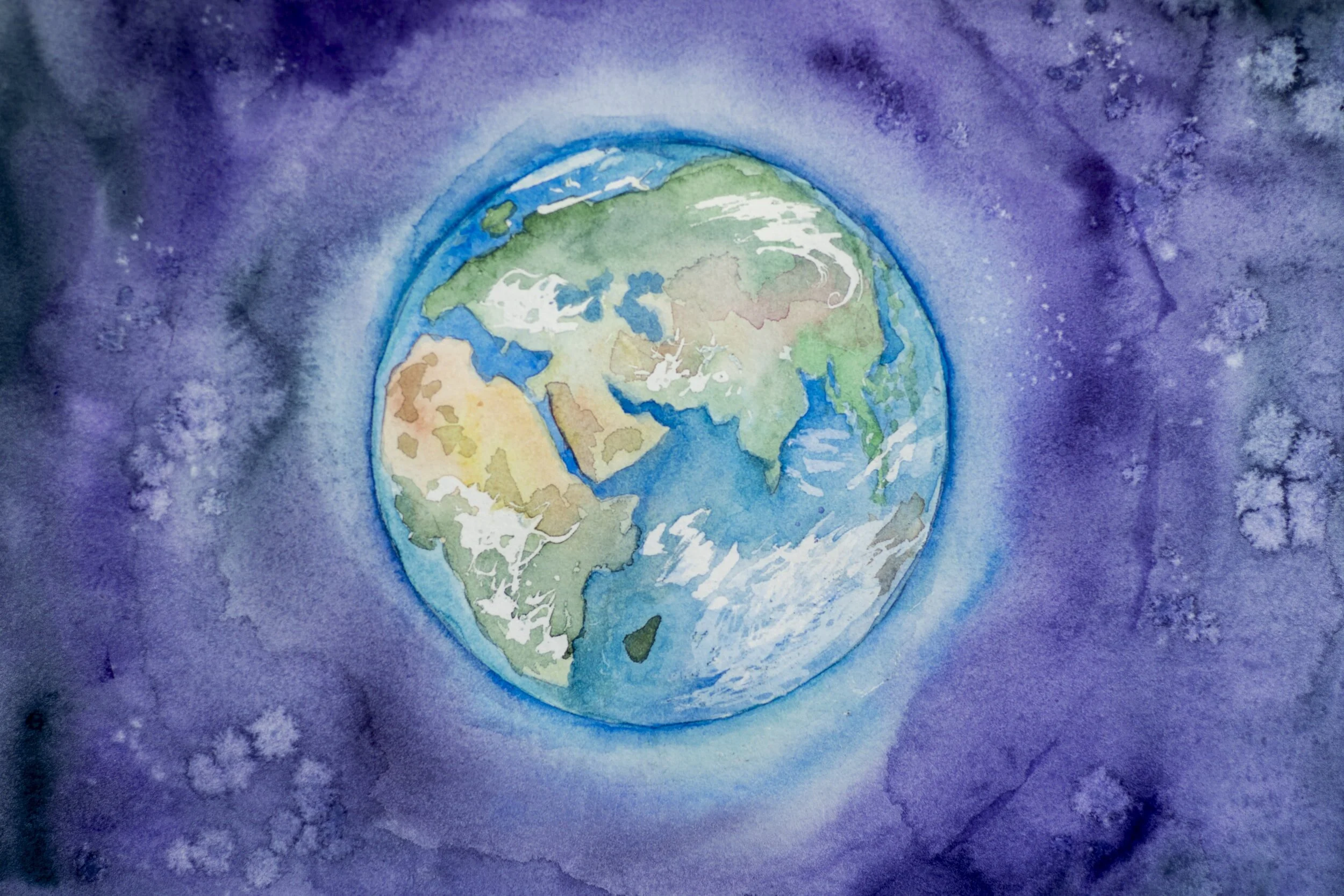
EARTH:  “This Floating Body We All Call Home”

For Earth Day 2021, we welcome the poetic words and thoughts, focused on climate change, written and read by Amanda Gorman. It is an inspiring poem by the 22-year-old US national youth poet laureate.  

Her poem was written and read in 2018 (the 48th anniversary of the celebration of Earth Day) during the Climate Reality Leadership Corps Trainings.  It was dedicated to Al Gore, as well as, the participants in the Corps Training Project taking place in Los Angeles.  

The Corps Training is an organization dedicated to increasing awareness about the urgency for action, as Amanda reads “And while this is training. There is no rehearsal. The time is Now, Now, Now.”   Amanda reads with the enthusiasm and convictions of her profound beliefs and promise...

“Earthrise”
By Amanda Gorman

Where despite disparities
We all care to protect this world,
This riddled blue marble, this little true marvel
To muster the verve and the nerve
To see how we can serve
Our planet. You don’t need to be a politician
To make it your mission to conserve, to protect,
To preserve that one and only home
That is ours,
To use your unique power
To give next generations the planet they deserve.

We are demonstrating, creating, advocating
We heed this inconvenient truth, because we need to be anything but lenient
With the future of our youth.

And while this is a training,
in sustaining the future of our planet,
There is no rehearsal. The time is
Now
Now
Now,
Because the reversal of harm,
And protection of a future so universal
Should be anything but controversial.

So, earth, pale blue dot
We will fail you not.

(This is an excerpt from “Earthrise,” written by Inaugural Youth Poet Laureate of the United States Amanda Gorman.

Read the full poem here.
“So, earth, pale blue dot We will fail you not”.
— Amanda Gorman
unsplash-image-eA32JIBsSu8.jpg

For more expanded information about Earth Day please visit www.earthday.ca

-Sister Mabel St. Louis, csj