
Book review

A Great Read

Theo of Golden, a Great Read
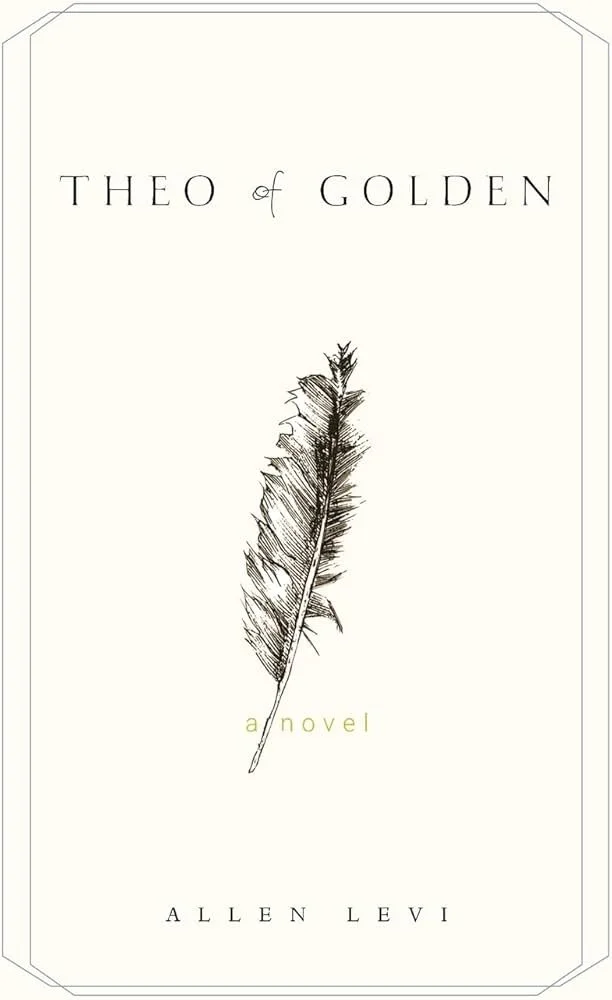
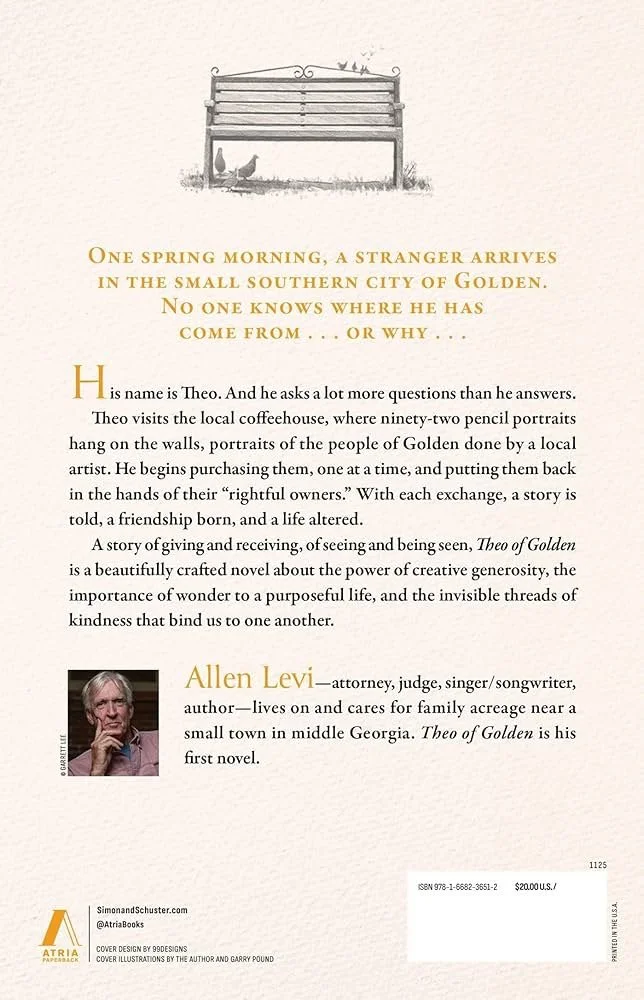
Theo of Golden, by Allen Levi, is an unprepossessing book, and the best book I have read in some time.  It leaves you deeply touched, and somehow moved to be a little more like Theo. 

Theo is an 86-year-old gentleman, possessed of a certain wealth, well-travelled in the world, who speaks five languages.  For some reason known only to himself, on a certain spring day just before Easter, he moves from   upscale New York City, where his office is, into the small town of Golden.  He is not yet certain how long he will live there.  On his first day in the town, he goes into the local coffee shop, and notices on the walls of the shop a large number of hand-sketched portraits of local people, all done in pencil, on white paper.  After drinking the excellent coffee, he decides to return later, when the shop is not so busy.  On his return he spends a long-time walking around the walls, gazing intently at the beautifully drawn portraits, studying both the artists fine work, and the faces he sees depicted there.    There are 94 of these portraits hanging on the walls of this café - art gallery.  Speaking with the owner of the café, he learns that the portraits are the work of a local artist, named Asher, whose wife was killed a while back in a car accident, and whose daughter, seriously injured, he cares for.  Theo is surprised to learn that although the portraits are of local people, are beautifully done, and are for sale at very reasonable prices, so many have not been purchased. An idea is born.  
Theo decides to purchase the portraits, one at a time, and to offer each of them as a gift to the person depicted.  However, he wants to meet the person involved, and so he hatches a plan.  First, he buys the portrait of a young woman with short hair, familiar eyes, and an unsmiling but not unfriendly face, because that one intrigued him most.  Then he writes a hand-written letter to this woman, Mrs. Minette Prentiss,  whose name is printed on the back of the portrait, introducing himself, and saying that he saw her portrait in the café, and wanted to gift  her with it, writing, “after all, it only seems right that the finished work should go to the one who inspired it.”  He then says that he will be sitting on a bench beside the fountain in the square nearest to the café, at 7 pm on a given evening, and would be honored if she would meet him there where he could give her the portrait as a free gift.  Aware that this would seem an odd request he assures her that he is a harmless old man, a widower, a father and asks nothing of her, except to meet him to receive it.   After much deliberation, Minette Prentiss shows up, and is struck by the old man’s warmth, his gentle, almost timid smile, and the impact of his looking intently into her eyes.  She feels that he has anticipated this meeting and now takes delight at being in her presence. There follows a beautiful conversation: she opening up her life and her heart to this very kind old man, and he truly listening intently and caringly.  After presenting her with the carefully wrapped portrait, Theo tells her what he sees in her face: strength, bravery, kindness, and even some sadness, the good kind.  Needless to say, after that meeting, Minette Prentiss goes home feeling a whole new sense of beauty and the goodness that is herself, and happy to have a new friend.   

And so it goes, with each of the many portraits Theo purchases over the year that he lives in Golden, gradually meeting many of the local people one by one, looking intently at their portraits, and then at their faces and getting to know each of them,  hearing their stories, telling them what goodness he sees in them, and leaving them with a new appreciation of themselves, and a new lease on life. 

I won’t tell you the end of the story, as I hope you will read this book.  After speaking about it with a friend, she sent me an excerpt from an LCWR booklet that expressed essentially what Theo had done, and how it had transformed the little town of Golden into a whole new kind of community.  The excerpt is entitled “Influencing by Listening”, and the writer is Nancy Murphy, DC. of St. Louis Missouri.   At the end of her excellent little reflection, Nancy writes,

“I believe we’ve been freed from our past responsibilities to have time to listen—to listen to the voice of God in our sisters and brothers--to help them realize their worth in the eyes of God.  Our “influence” is not what we do but how we listen.”

Theo of Golden left me wanting to look more closely at the stories written in the faces of all the people that I interact with, and to listen more intently to their stories. 

-Sister Mary Diesbourg, CSJ

Image: freestocks/Unsplash
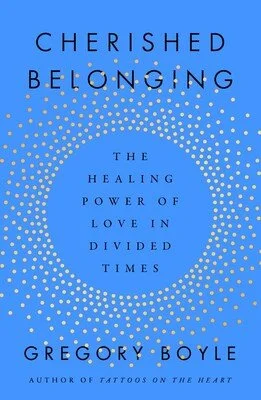
The Healing Power of Love in Divided Times: A Book Review

Recently, I read the book Cherished Belonging: The Healing Power of Love in Divided Times by Gregory Boyle, SJ. Father Greg works with gang members in Los Angeles through the organization Homeboy Industries, the largest gang rehabilitation program in the world. This book builds upon, enhances, reiterates, and reaffirms the message he shared in his previous books—namely, that compassion is the answer to every question.

The principles at Homeboy that apply to all situations are: (1) everyone is unshakably good (no exceptions), and (2) we belong to each other (no exceptions). In these times of deadlock and impasse in so many areas of our personal lives, our society, our country, and our world, imagine if we could all embrace these principles and live them fully.

Compassion is the answer to every question...
— Father Greg

He speaks of committing to creating a culture and community of cherished belonging, which is God’s dream come true. He says, “When we embrace relational wholeness, our divisions tremble.”

This is a big message to ponder and an even bigger one to live, but it is what we must do, day after day, to dissolve what divides us.

-Sister Nancy Sullivan, csj

Image: Martin Martz/Unsplash

A Moving Memoir

Adding My First Memoir to My Lending Library

I’ve just added my first memoir to my bookcase and what a heart-stirring introduction to the genre it turned out to be.

As my new colleague, ChatGPT, explains:
A memoir is a form of nonfiction where the author reflects on personal experiences and memories, typically focusing on specific events, themes, or periods in their life—rather than recounting their entire life story, as an autobiography does.

That definition came to life for me through The Migrant Rain Falls in Reverse by Vinh Nguyen, released on April 8, 2025, ahead of the 50th anniversary of the fall of Saigon.

Nguyen was one of the many Vietnamese “boat people”, refugees who fled the country by sea after the fall of Saigon in 1975. Alongside his mother and siblings, he escaped in a crowded boat, part of the mass exodus of those seeking safety and freedom across dangerous waters. His father fled separately and then vanished without a trace. The memoir traces not only Vinh’s harrowing escape but also the emotional terrain of absence, longing, and inherited memory.

The Migrant Rain Falls in Reverse contains all the key features of a memoir: it’s written from Vinh’s perspective, it focuses on his memories and reflections, and it shows, often through dialogue, how personal experiences shape an individual, through offering lessons and insights.

Nguyen himself describes the memoir in this way: “It begins with memory and it moves forward. As it moves forward, it hits the limits of memory. And so increasingly, the book becomes speculative. I moved towards thinking about what could have been—what did I want to have happened?”

I discovered The Migrant Rain Falls in Reverse through the Amnesty Book Club, which featured it in celebration of World Refugee Day on June 20th.

Amnesty also hosted an online interview with Vinh Nguyen offering listeners a thoughtful, vulnerable conversation that adds even more depth to the memoir’s reading experience. With Amnesty’s permission, I’m sharing the link to the recorded interview with Vinh Nguyen here.

If you’ve ever wondered how personal memory and historical events intersect on the page, this memoir is a beautiful, poignant place to start.

P.S. For those interested here is the link to join the Amnesty Bookclub.

-Sister Nancy Wales, CSJ

image: Nathan Dumlao/unsplash

Soul Food: A Book Recommendation

If you are on the lookout for a book recommendation for your spiritual reading, may I suggest, the new book (February 2024), “Come, Have Breakfast,” by Elizabeth Johnston, csj. As a lover of the psalms, beholder of God as creative mystery, and a member of our Federation Ecology Committee I found it a perfect fit for me.

I was pleasantly surprised to find how readable yet profound  this well known, erudite spiritual writer’s insights conveyed nourishment for my soul. I appreciated the author’s use of language laced with poetic and biblical images and the book’s format of individual one-sitting meditations.

Amazon eloquently introduces Johnston’s book to potential readers:

“In her latest work, prize-winning theologian Elizabeth Johnson views planet Earth, its beauty and threatened state, through the lens of scripture. Each luminous meditation offers a snapshot of one aspect of the holy mystery who creates, indwells, redeems, vivifies, and sanctifies the whole world. Together, [the meditations] offer a panoramic view of the living God who loves the earth, accompanies all its creatures in their living and their dying, and moves us to care for our uncommon common home.” -Amazon.ca

To sample Come Have Breakfast and have an opportunity to meet with its author, Elizabeth Johnston, csj I suggest viewing Sister Elizabeth in a one-on-one interview with her book’s publisher, Robert Ellsberg, below.

-Sister Nancy Wales, csj | Avid Reader

SUMMER READING

If you are on the lookout for an engaging book for backyard, front porch or cottage summer reading,  as one reader to another,  I offer you one of my picks for a good summer read. I suggest you find yourself a copy of The Maid. It was named one of the most anticipated books of 2022 by Glamour, Chatelaine, and Canadian Living among others and was an instant #1 bestseller. Nita Pronovost, writing under the pen name Nita Prose, is a Canadian author living in Toronto. Nita is a long-time book editor who has recently become a multiple award-winning mystery writer. The Maid, her first book, has sold over a million copies and has been published in more than forty countries in over thirty-five languages. Certainly, wanting to avoid being a spoiler, I sum things up as it is a tale of human dynamics, robbery, murder, and matters of the heart. I don’t hesitate to say, you’ll never look on a maid in ever the same way again.

“Reading is an exercise in empathy; an exercise in walking in someone else’s shoes for a while.”
— Malorie Blackman

If you enjoy the writing style of Prose, you can read The Mystery Guest, Nita’s second mystery featuring several of the main characters you will have met in reading The Maid.

You might also like to read Nita Pronovost’s own article which ran in the Toronto Star in December of 2023. In it, the author reveals in her own words how a novelist takes a tiny nugget from her real life and turns it into fiction.

-Sister Nancy Wales ,CSJ

image: Anna Hamilton @lovingdreamer/Unsplash