Christmas

Merry Christmas from the Sisters

May the moments of Christmas,
open hearts wider to love and kindness,
softly whispering hope
for a gentler New Year.

May this Christmas season
fill your heart with peace,
wrapping you and your loved ones
in the warmth of love,
flowing gently
into all the days ahead in 2026.

 -The Congregation of the Sisters of St. Joseph in Canada

Image: Kenny Eliason/Unsplash

The Hidden Light of Advent

Each Year as Advent approaches, I and others promise ourselves additional moments of quiet reflection to anchor Bethlehem’s gift into the ordinariness of the daily. As usual the obligations of the daily unfold, and moments of joy become added, as we celebrate Christmas (a bit early) with those with whom we live, meet and work. Often there is a trip to the mall, and we know for certain that upon departure we will hear echoed, “have a holly, jolly, Christmas, this year.” The days slip by.

It is not surprising that the Liturgy tries to recapture our attention with the beginning of  the “O Antiphons of Advent” on December 17th .  These antiphons will be with us until December 23rd. At first glance, we recognize that each of the seven is an attribute of the Child to be born in Bethlehem. For example, “O Wisdom” celebrates the creative and creating Word of God - a celebration and a hope/longing for truth/justice/peace to reign. We are conscious of the hunger of a world that cries for wholeness and seeks to acquire it- often by force.  As we probe the meaning of each of the antiphons, we find both an attribute of Bethlehem’s Child and an existential challenge.  “O Rising Sun” offers a supplication to God to intervene in the chaos we have created.  We seek justice, for peoples, for nations, for the poor, for families, for war-torn lands. Our exploration of the Great “Os” and their significance in our daily lives continues until December 23rd.

Our readings for the 4th Sunday of Advent continue our preparation for Christmas.  Micah (5:2-5a) notes that the ruler of Israel is from Bethlehem and that people will live secure and that “he” shall be peace. The second reading, from Hebrews. posits that Christ abolishes the offerings dictated by law and simply states “I have come to do your will.” The author notes that “it is by God’s will that we have been sanctified through the offering of the body of Jesus Christ once for all.”  (Hebrews 10:5-10). The gospel reading from Luke (1:39-45) recounts Mary’s travel to Ein Karem to greet her cousin Elizabeth who exclaims “as soon as I heard the sound of your greeting, the child in my womb leapt for joy.”  Undoubtedly this visit is linked to Mary’s earlier “fiat”. On the surface there is a warm greeting between cousins. However, travelling in the first century was not a simple task. The journey from Nazareth to Judea would take at least four days on foot or donkey. Often people travelled by Caravan. A woman, particularly a young unmarried girl, travelling alone leaves herself open to charges of shameful conduct. Luke brings together these two Mothers-to-be to recognize and celebrate the God who is so entwined in their lives and subsequently in the lives of their children.

On December 25th, the Birth of the Babe in Bethlehem underscores our belief that God is with us – yesterday, today, and tomorrow. On December 26th we walk confidently forward amid the graces and challenges of our time to gift 2025 with the love of neighbour, the CSJ Charism.

-Sister Anne Anderson, CSJ

Image: Greyson Joralemon; Max Beck | Unsplash

Reflecting on Christmas 2023

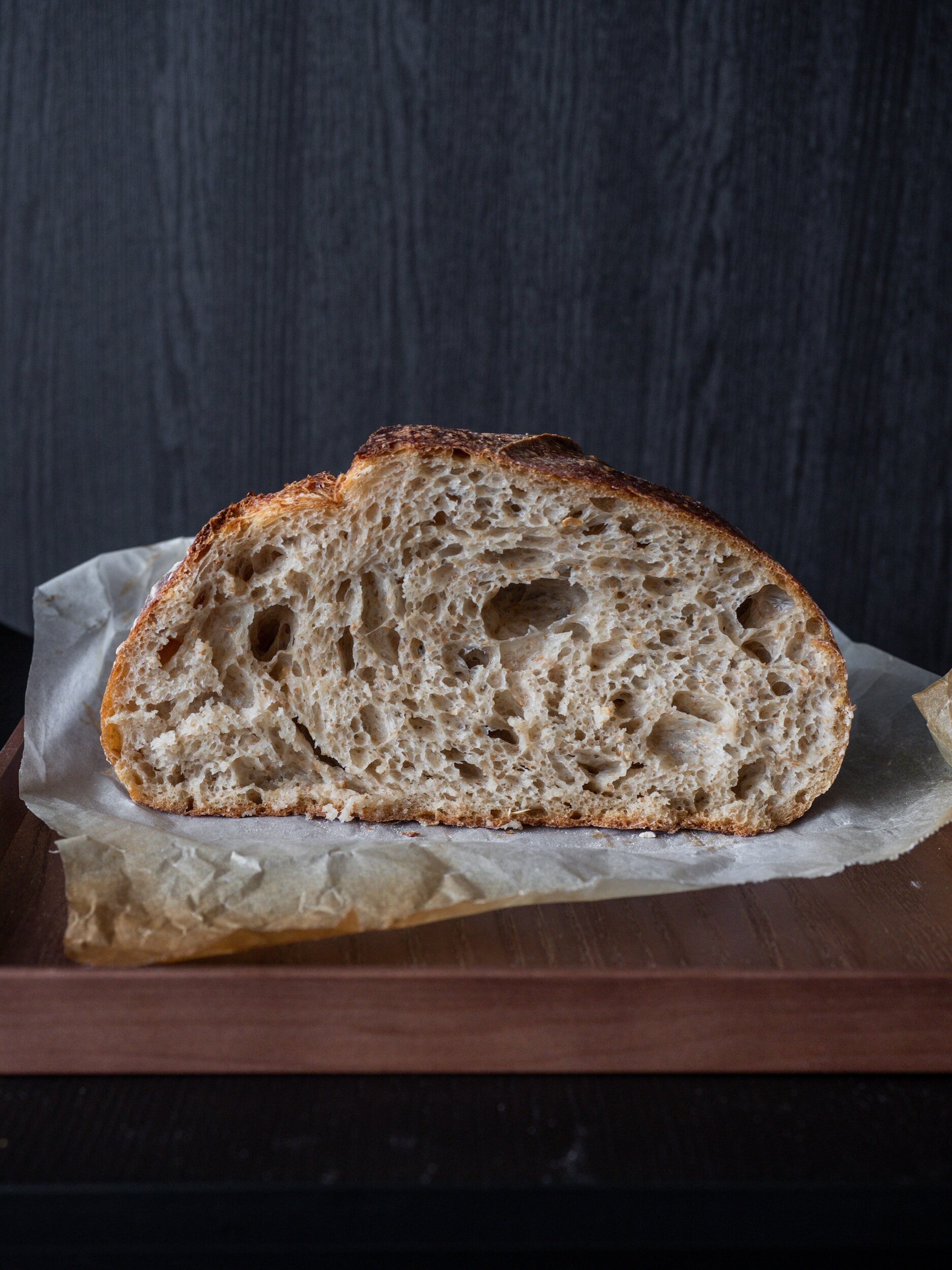
Reflecting on Christmas this year, has repeatedly drawn me back to an image of the kitchen table adorned with a freshly baked loaf of bread. It’s simplicity, promise of sustenance, nourishment, and comfort challenge me as I reflect upon what I am called to this Christmas.

I have spent much of the past year reflecting on hunger and food. Not just the hunger experienced in the pits of our bellies, but in the depths of our souls; that drives us to a downward spiral of greed and endless consumption. In Braiding Sweetgrass, indigenous author Robin Wall Kimmerer speaks of the Windigo, human creatures turned to cannibalism, consumed by insatiable hunger, spread by a bite from one to another. This sinister reality is apparent in the capitalist North American culture where desire for ‘things’ is easily spread from one person to the next, regardless of the harm it can cause to our bodies and planet.

The coming of Christ Jesus, in the form of a baby offers a break to this life-stealing pattern.

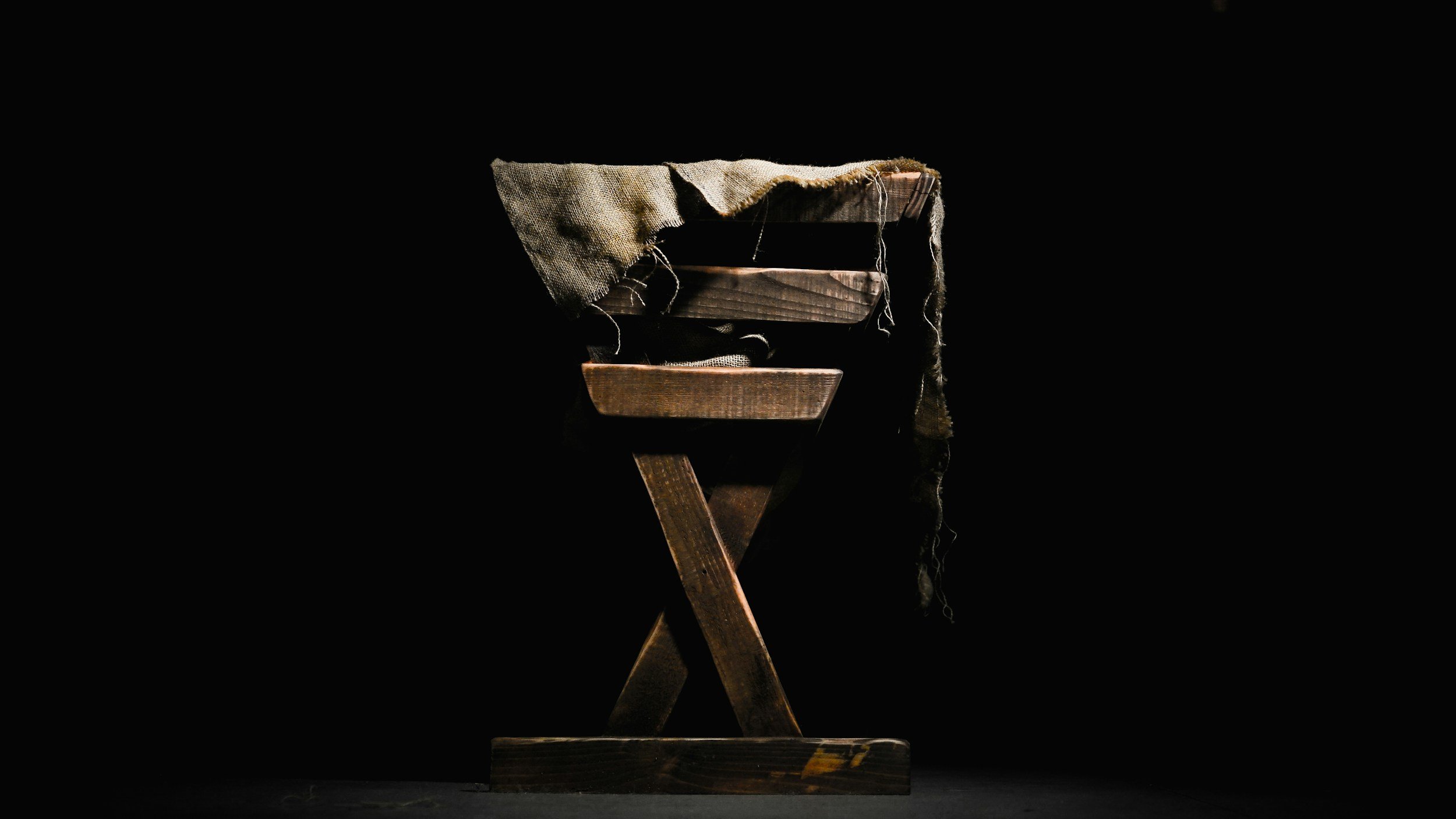
The illumination of Luke’s nativity (2: 1-7) in the St. John’s illustrated bible depicts a striking image of a gold column extending from a manger in a stable, to the heavens. In the St. John’s bible God is portrayed in gold. Holding this image with the manger, a source of food and the reminder that Bethlehem literally means town of bread, perhaps explains my focus on bread as an image of Christmas.

Through the incarnation God breaks into the world, bridging heaven and earth, in a profound way. The sacred is made present in the world, in creation, for creation, and through creation. It can be found in the very food we eat that sustains us, nourishes us, and gives life. This is the gift we are given in Christ Jesus.

Significantly, Emmanuel, God with us, is made present in the form of a baby in a stable, to a poor couple uprooted by a decree to be registered that engaged the whole world. ‘The world’ is busily engaged in its own priorities and activities. How many missed the birth of the Messiah? Had it not been for the shepherds’ openness, taking the time to pay attention to the angel in the fields, it may have been missed completely. How many times do we miss God appearing to us in simple moments in the busyness of our lives? How might recognizing God in these moments help still our hearts, and help foster right relationship with God, one another, and creation.

The invitation of Christmas is to pay attention to where and how God breaks into our lives, in surprising and simple ways. Recognizing the sacred that surrounds us fosters our gratitude for what we have. This in turn transforms our hearts towards God, helping fight off our Windigo tendencies, supporting our growth in God personally and as a community, locally and globally. This Christmas may we be able to share the bread that we have each been given, in whatever form it takes, with one another, that we might individually and collectively, grow into Emmanuel. 

-Annette Donovan Panchaud, CSJ Associate

Image: Unsplash/Anne Nygård; Vicky Ng; Jon Carlson.
Christmas is an Invitation

Christmas is an invitation for each one of us

To be in our world what Jesus was for his world;

A beam of light in the midst of darkness,

A ray of hop in the midst of despair.

If Jesus is to be born into today’s world,

It must be through us.

We must be the beam of light,

In the midst of darkness.

We must be the ray of hope in the midst of despair.

To the extent that we need the invitation of Christmas,

To the extend will the world receive the gift of Christmas:

Peace on earth and goodwill toward all.

-Sister Mary Jo Fox, CSJ

IMAGES: Unsplash/Robert Thiemann, Tiard Schulz