
Linda Gregg

On Wings of Wonder

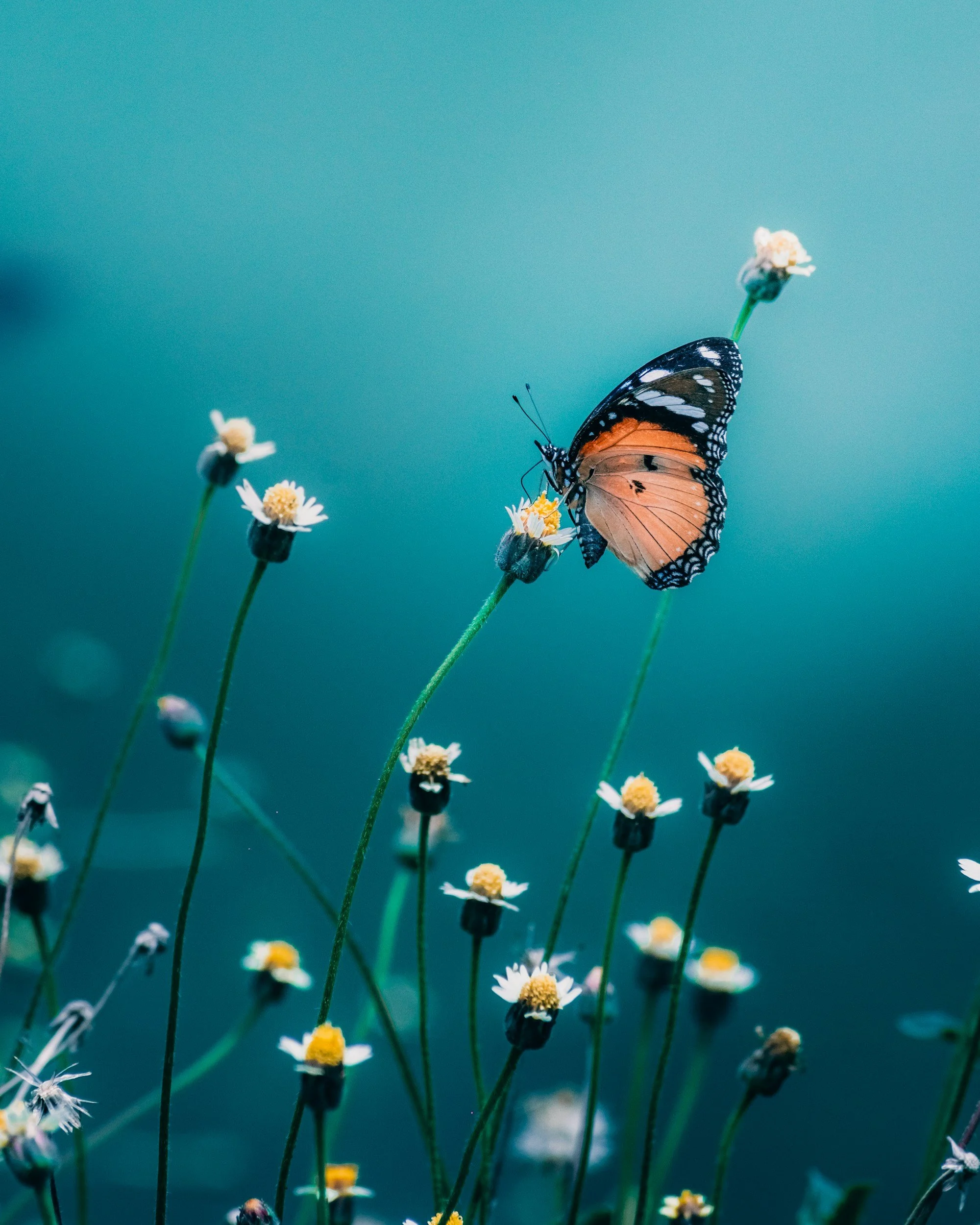
Have you ever felt the whisper of butterfly wings nearby? It is a soft mystery that evokes wonder and delight. It is poetry written on a wingspan. The butterfly is known as a powerful symbol in myth and religion.

In early Christianity butterflies were a symbol of the soul – of spiritual transformation, conversion and life in Christ. In China, butterflies represent longevity and marital bliss. Indigenous wisdom relates how Hopi women of the butterfly clan wore their hair in a butterfly shape. Elders have said that when a butterfly appears in your life it may be calling you to change or transformation. Others have experienced the appearance of a butterfly as a message from a loved one who has passed. A momentary kiss of remembrance.

Yet these creatures remain a marvel of engineering and are unique in the universe. Did you know that butterflies are solar powered? When you see them resting with wings outstretched, they are “powering up” in the sunshine. As butterflies are cold-blooded creatures, they need to soak up the sun to warm their flight muscles so they can fly. But they are also unique in their ability to taste with their feet. Nature equipped them with chemoreceptors in their tarsi(feet). They can taste flowers by” walking on them.” This sense of taste allows them to determine if a plant is safe for eating or to find a suitable place to lay their eggs.

... poetry written on a wingspan.

Butterflies see multimedia in a way we humans cannot. They have two eyes, as we do, but they are compound eyes with many lenses enabling them to see in many different directions at once. They have up to 17,000 mini eyes with lenses to empower their vision. We thought our colour perception was notable with our 3 cones (colour receptors) but butterflies have up to nine cones for colour, including ultraviolet. They call us to expand our vision and evolve into a new creation. Our eyes have only just opened.

There are of myriad kinds and colours of butterflies, and they fulfill important roles in nature’s ecosystem. They are key pollinators for many plant species and moths particularly are unique in this role. We need butterflies for our sustenance and to remind us to pause for beauty. How have we silenced this wonder? How can we protect them?

These are critical issues which imperil their survival:

  • Habitat Loss: Deforestation, urbanization, and land clearing destroy the native plants butterflies need to lay their eggs and feed. Nurture pockets of creation in your backyard or balcony.

  • Pesticides: Chemicals used in agriculture and gardening kill butterflies directly and eliminate the essential host plants they rely on. Use organic garden methods & sign petitions against pesticides.

  • Climate Change: Shifting weather patterns and rising temperatures can disrupt the timing of plant blooming and migration patterns, throwing their life cycle out of sync with nature’s harmony. Let us make small but critical personal lifestyle choices.

Yet at the heart of these marvelous and magical creatures there remains mystery and wonder. And an invitation into a sacred communion with all beings.
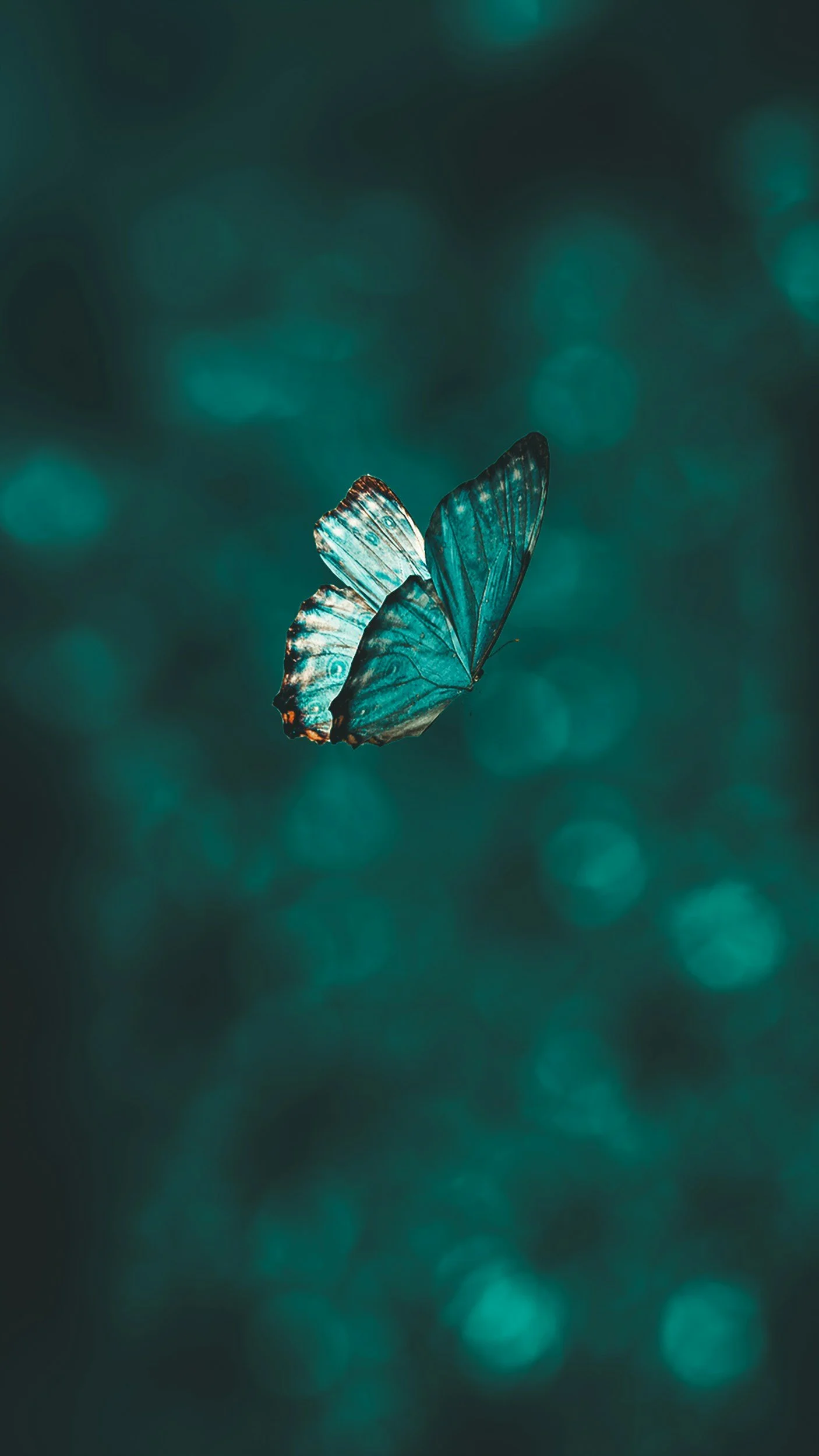
Butterflies universally symbolize transformation, rebirth, and spiritual evolution. Theirs is a remarkable journey—from an earthbound caterpillar to a chrysalis, and finally evolving into an exquisite, winged creature. Yet these fragile butterflies have the stamina to follow migration routes thousands of miles long. This reality can serve as a metaphor and the butterfly a personal guide for growth, overcoming hardship, and breaking old habits.

If today you feel the whisper of butterfly wings nearby, perhaps the Spirit has come to rest in your soul.

-Sister Linda Gregg, csj

Image: AARN GIRI/Unsplash

An Earth Day Reflection

In the Garden

In the morning

sometimes

there is a mist

that softly,

gently

touches everything

in the garden

and for a moment,

you can feel everything tracing

its connections one to another,

earth, spirit, human

and you know

in the stillness,

all is one….

and even after

the mist is gone

the memory

lingers in the soul

-Sister Linda Gregg, csj

Image: Noah Buscher/Annie Spratt/Unsplash

A Day for Trees

National Love a Tree Day – May 16, 2022.

With every tree there is a story. Tree Day was actually started quite recently by the people of Hyderabad in India. On 15 May 2016 the group Hyderabad Rising rose to protest against the government's plans to cut down thousands of trees around the KBR National Park, to make way for an expressway. Thousands of people of people from all walks of life rallied to protest. Successful, millions of trees were planted as the city residents became more devoted to and appreciative of their trees. It is now a recognized “Tree City of the World” by the UN & World Arbor Day.

But trees also become intertwined with our lives.

Some years ago, at our local St. Michael’s church, an old and respected maple tree was standing in the way of a parking lot. There was a great uprising from parishioners when the pastor announced that the maple tree would have to come down. The old tree held so many memories for the people. They had come to the venerable tree often to have pictures taken at significant and special occasions in their family - First Communions, weddings, funerals and reunions. The old maple tree was a part of their own family history, it had been with them and witnessed the most significant milestones in their family’s life.

An arborist was consulted to assess the health of the tree. It was reported to the congregation that the old tree was failing and there was concern that a branch might fall or the tree might collapse and cause injury to someone or a car. Insurance cost now became part of the concern and rationale. Eventually the pastor said that it would have to come down but in a nod to the concerns, a new tree that was 15 years old would replace it, planted to the side of the parking lot. We did lose old the tree and were consoled by the arrival of a new one was planted for the future generations. But that old maple, still in the hearts and treasured family photos of many had taught us a lesson. That tree is now kin to us all.

Sister Linda Gregg, csj

Finding Sacred Spaces - Earth Day

Image: Unsplash/Pascal van de Vendel

When I was about 9 years old, I set out one morning on an adventure along the beach by my home on the West Coast. I loved nature and the outdoors. I walked about a mile or so along the beach, crossed a stream balancing on fallen logs, then clamoured up a large rock outcropping. But the forest at it’s top was beckoning to me. I wandered into its shepherding branches and was soon entranced by the stalwart beauty reaching to clearest skies. It was like I’d walked into a cathedral of wonder. There was a glimmer ahead through the branches and I followed it. Then the woods broke open into a little space where sunlight sparkled upon a grove of purest white little woodland Easter lilies. It was so breathtaking I knelt down to behold it. Joy filled my soul.

Then I thought how I would love to share this beauty and bring some of the Easter lilies home to my mother. So, I gathered a little bunch up and set off home. Down the rock outcropping, along the beach and over the stream and just a little further to home. I was running now because I was so excited.  I burst into the kitchen with my joyful bouquet. But my mother’s reaction wasn’t what I expected. She was very upset with my gift because these Easter lilies were protected by law. And further I was a Junior Naturalist so I should have known better than to pick them. She was right. The Easter lilies I picked wouldn’t bloom for another 7 years. I was deeply saddened.

But I argued, there were so many of them. It wouldn’t matter, but my mother was firm. She would not take the Easter lilies from me. Instead, she ordered me to return them to their woodland home. Plus, she said, I was trespassing. But I didn’t think that counted though because there wasn’t a fence!

So down to the beach along the shore and over the stream I reluctantly trudged. Up the big rock outcropping I clamoured and puffed and then into the woods. As I knelt by the little woodland grove with my wilting Easter lilies, I realized somehow, in my child’s mind, that I had violated their sacred space. I remember crying and saying how sorry I was. The woodland with the sunlit grove was sacred space, a holy moment that I had been gifted with. I felt and knew in my heart the Easter lilies acknowledging my sorrow.

Image: Unsplash/Noah Buscher

There were many other years in the spring when I would return to that woodland grove, for it had become a sacred space for me. And I was gifted then with the realization that we do not need to take and have everything of beauty, peace, and sacredness else we lose it forever. We need to treasure it and protect it. The memory of that sacred space remains forever with me and has guided me.

Where might your sacred space be?

-Sister Linda Gregg, csj

Fourth Sunday of Lent 2022

Image: Unsplash/Tiffany Nguyen

Be sure and pick a rose for this Sunday. Yes, the Fourth Sunday of Lent is called Laetare Sunday, and the liturgical colour is rose. “Laetare” meaning ‘rejoice’, has its place in our Lenten journey similar to “Gaudete Sunday” in Advent when we pause to anticipate the joy of Christ’s coming. Laetare is a more solemn anticipation, but nonetheless a moment in our penitential Lenten path to remember our Creator is a God of love who invites us to healing of body, mind and spirit. The grace of God’s compassionate love is always beside us in our trials and struggles of life.

Simnel cake has been eaten since medieval times as both a rich, sweet treat and a symbolic ritual. The fruit cake is topped with eleven marzipan balls to represent the eleven apostles of Christ, minus Judas.

With the change of colour we recognize it’s a time to briefly glimpse the joy and celebration that awaits us at Easter, like a spring crocus unexpectedly breaking through the earth. In medieval England simnel cakes (special rich fruitcakes) were a treat given out on this day. It is a signal time of hope and encouragement. Always our Creator is a God of compassionate mercy. Our lives follow a cycle of God’s birth life, death, and resurrection and Laetare Sunday reminds us to keep our perspective of the whole journey in mind and heart. As we are born of the Earth, so our spiritual lives are birthed and rebirthed. Soon the fields will break into green garments, the song time of returning birds will be heard and flowers appear in tidy gardens - and in the most impossible cracks of our pathways. Hope will once again be birthed in God’s creation.

Soon the fields will break into green garments, the song time of returning birds will be heard and flowers appear in tidy gardens - and in the most impossible cracks of our pathways. Hope will once again be birthed in God’s creation.

In today’s scripture the themes of God’s generous nourishment and abundant forgiveness is traced through the readings. In Joshua there is the celebration of Passover with the first produce of the land of Canaan that year. And in the Gospel God’s unconditional love and forgiveness is illustrated in the parable of the ‘Prodigal Son’. Although we might well quibble that the lost son didn’t deserve such a feast upon his return from squandering his father’s inheritance, God’s stance in the father’s actions turns our worldly logic upside down. Repentance and sincere contrition are the only the grounds for God’s unconditional love. The way home to our true self in God’s heart and love is open to us.

Each of us have our lost and shadow selves that we would rather not admit to having. Although we’d rather hide them, sometimes our shortcomings and fears, unworthiness and self-doubts are calling out to us for acceptance and compassionate love. As John 4:18 writes, “perfect love casts out fear”. Fear can be an astute warning sign of danger, but when it overtakes us, fear becomes a self-punishment. That is not God’s way, and the message of Jesus constantly reminds and assures us of this ultimate reality. God’s embracing love is there to clothe us in resilient hope and new courage in all times and circumstances.

St. Paul calls us to be ministers of reconciliation, for as we know God’s forgiveness and compassionate love, so we are called to share the abundance of compassion with those we encounter. It is the way of the heart. And it is the message of the rose.

-Sister Linda Gregg, csj