
Loretta Manzara

4th Sunday of Advent

The Hands that First Held Mary’s Child

Every year I look forward to this fourth Sunday of Advent. The readings finally bring us closer to the mystery of God being born among us. Some years there are only one or two days of preparation for the Great Feast. Very rarely do we have the opportunity to enjoy the full week of expectation.

On Friday of Week Three we began reading the account of the birth of Jesus according to St. Luke. That day we heard of the plight of Zechariah and Elizabeth as the angel announced they would birth a child in their old age. Luke continues in the Saturday reading announcing that Mary of Nazareth will also conceive – a child who will be holy and called the Son of God. There is a hint her of the man Joseph to whom she was engaged. Now, here we come to the Fourth Sunday of Advent, with a return to the gospel of Matthew and who do we find – a sleeping Joseph! The angel appears and settles Joseph’s concern about publicly dismissing the pregnant Mary. Joseph awakes from his sleep and takes Mary as his wife.

There is such a burst of surprise, wonder and awe in these birthing announcements. Frequently my prayer focuses on the feelings Elizabeth and Mary experienced in facing these wondrous events. More recently my thoughts are turning to Zechariah and Joseph in the midst of their struggles to believe. I share with you a hymn I have grown to love. Perhaps it will also help you move into the human reality of this mystery. Thomas Troeger the hymn text writer muses on what Joseph as man, as father may have felt, feelings that well-up as he cradles the child, as he is overwhelmed by the dream memory, as he gently holds the tiny form in his palms.

The tune that is suggested for this hymn text is RESIGNATION. You can find that in most hymn books. In Catholic Book of Worship III it is number 538.

 -Sister Loretta Manzara, CSJ

The Hands that First Held Mary’s Child

1.      The hands that first held Mary’s child

Were hard from working wood,

            From boards they sawed and planed and filed

            And splinters they withstood.

            This day they gripped no tool of steel,

            They drove no iron nail,

            But cradled from the head to heel

            Our Lord, newborn and frail.


2.      When Joseph marveled at the size

Of that small breathing frame,

            And gazed upon those bright new eyes

            And spoke the infant’s name,

            The angel’s words he once had dreamed

            Poured down from heaven’s height,

            And like the host of stars that beamed

            Blessed earth with welcome light.


3.      “This child shall be Emmanuel,

Not God upon the throne,

            But God with us, Emmanuel,

            As close as blood and bone.”

            The tiny form in Joseph’s palms

            Confirmed what he had heard,

            And from his heart rose hymns and psalms

            For heaven’s human word.


4.      The tools which Joseph laid aside

A mob would later lift

            And use with anger, fear, and pride

            To crucify God’s gift.

            Let us, O Lord, not only hold

            The Child who’s born today,

            But charged with faith may we be bold

            To follow in his way.

Text: Thomas H. Troeger, b.1945, © 1985, Oxford University Press

Reprinted under OneLicense #A-711091

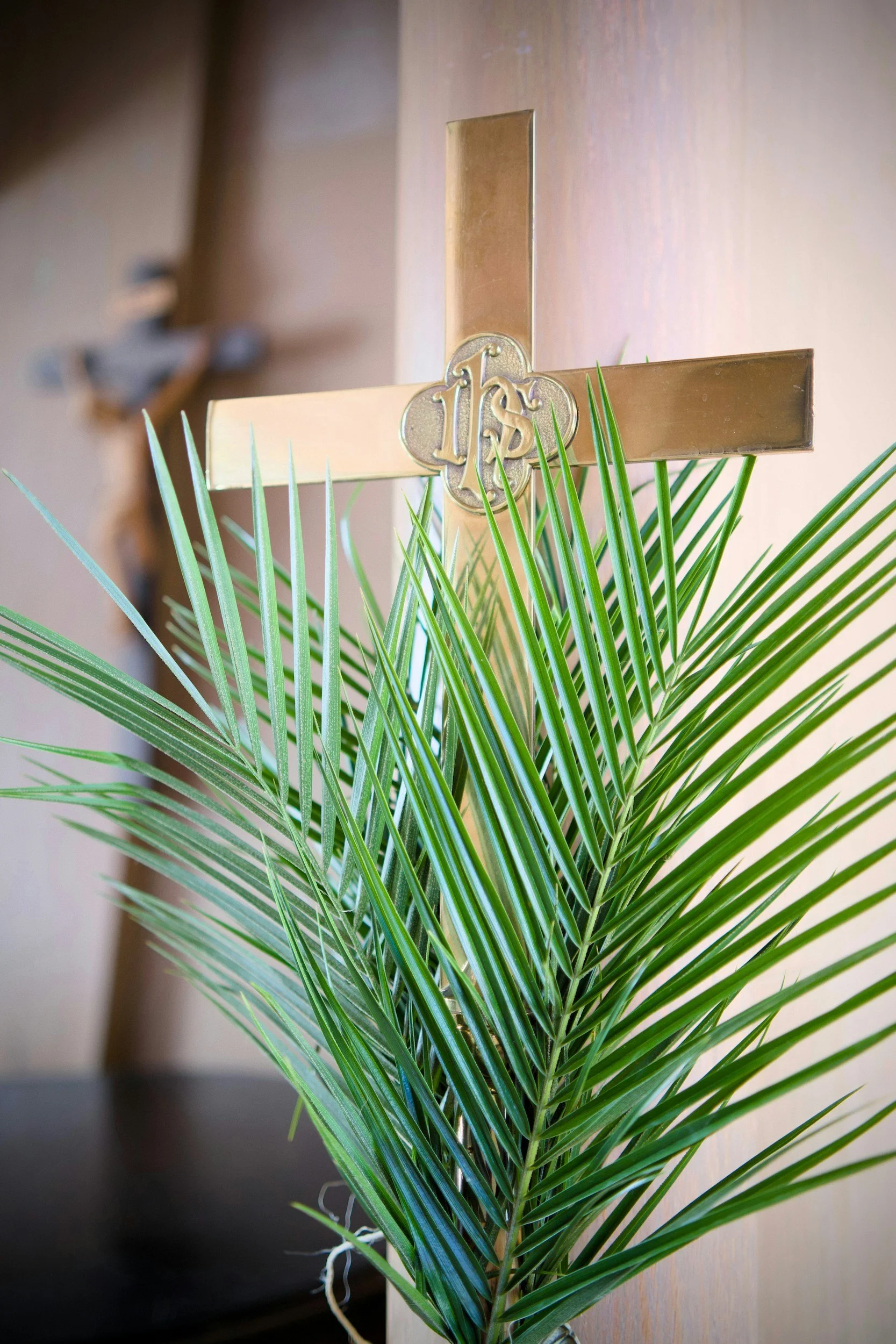
Image: ian borg/Unsplash

Jubilee Hope

These recent weeks have produced a whirlwind of unsettling news. Tariffs being announced,  delayed and then re-announced, natural resources being claimed for other countries benefits, national geographical lines of allocation seen as arbitrary, employment In manufacturing swinging in nets of insecurity.

Yet in spite of all of this there is an aura of hope around us, as citizens of Canada pull together to claim a deeper identity, and as provinces strive to create new trade agreements. For some of us this aura of hope is resonating with our faith and particularly in this year in the call for a Jubilee.

Pope Francis designated 2025 as a Jubilee Year of Hope way before most of these uncertainties listed above took shape. Diocesan offices have quickly pulled together resources, planned pilgrimages to historic churches and organized trips to Rome. What strikes me with the greatest intensity is the underlying principle of a Jubilee year.

“The term Jubilee reflects an older Jewish tradition where every fiftieth year the land was to lie fallow, debts were forgiven and slaves were freed. Holy Year Jubilees are now celebrated every 25 years unless a special occasion warranted an extraordinary year be proclaimed as with the Extraordinary Jubilee of Mercy in 2015-2016.”  (info from London Diocese website)

With each Jubilee, advocacy groups focus on the forgiveness of debt. This year a number of groups have come together under the banner Turn Debt into Hope.

I cite a couple of resources that explain this opportunity far better than I. Here is a wonderful video by Development and Peace:

On March 18th a webinar From Ecological Debt to Ecological Hope was presented by ORCIE (Office of Religious Congregations for Integral Ecology).  Guest speakers were Journalist Elton Bozzetto, Sr. Nilva Dal Bello, CSJ Brazil & Dr. Sue Wilson, CSJ Canada, with Sasquia Antunez Pineda, ORCIE Advocacy and Communications Officer. Learn more with ORCIE’s new position paper: Linking Ecological Debt to Global Financial Exploitation. A shorter executive summary is available.

 Let’s continue to look for the signs of hope in our world.

-Sister Loretta Manzara CSJ

WORLD WATER DAY 2025 - OUR JOURNEY AND OUR FOCUS

Periodically I receive reports of how our CSJ in Canada Congregational donations are supporting access to clean drinkable water around the world. I am so very grateful that we are participants in change globally by helping to dig water wells, to restore water towers, expand water lines, and provide water filtration systems, and in Canada collaborating and advocating for water protection with Indigenous peoples.

In 2017 we became a Blue Community along with our sister congregations in and with the Federation. Our pledge was to promote the recognition of water and sanitation as human rights, to promote safe water and wastewater services, and to phase out the sale of bottled water at municipal events (because water sold this way becomes a commodity for profit).

This year to celebrate World Water Day, March 22, the United Nations’ focus is on the preservation of glaciers.

The UN agencies in charge of the International Year of Glaciers' Preservation have drawn up a dozen key messages, highlighting the importance of glaciers worldwide.

We cite only one message in this blog:

“A glacier is a large accumulation of mainly ice and snow, that originates on land and flows slowly through the influence of its own weight. Glaciers are found on every continent. They exist in many mountain regions and around the edges of the Greenland and Antarctic ice sheets. There are more than 275 000 glaciers in the world, covering an area of around 700 000 km². Glaciers are considered as important water towers,  storing about 170 000 km3 of ice, which amounts to approximately 70% of the global freshwater. Glaciers are a source of life, providing freshwater to people, animals and plants alike.”

With global warming our glaciers are melting. The melting changes life on earth as we know it: sea levels rise, fresh water is added to the oceans, less salt disturbs the gulf stream and changes its pattern. Watch this 4 minute video from National Geographic, Climate 101: Glaciers.

The relationship of human activity and the gift of water is a fine-spun web. Let’s learn all we can about how our actions affect the gift of water. This year focus on glaciers as we mark World Water Day 2025!

-Sister Loretta Manzara, on behalf of the Federation Blue Community Steering Committee

Image: Sime Basioli/Unsplash

Pilgrims of Hope

Have you heard the song, “Pilgrims of Hope”?

It is something I am certainly going to add to our community’s hymn repertoire!

Composed to celebrate the Jubilee Year 2025, it is filled with a heart-felt longing for hope as we continue to move through the challenges of the previous years of pandemic, economic strife, mistreatment of migrant people, racism and hatred. Hope is the desire of and the call on the lips of many who are striving to make a difference in society.

Starting in Rome, the Jubilee year begins on Christmas Eve 2024 and then resonates throughout the Christian world as of December 29, 2024.

The composer of “Pilgrims of Hope”, Francesco Meneghello crafts the opening notes of the refrain melody with a beautiful leap into hope. Pierangelo Sequeri words are strikingly heart-felt: “Like a flame my hope is burning”. And then the second phrase leaps higher as we sing: “may my song arise to you”. Melody and text are creatively wed together.

I hope you will listen to this beautiful hymn and make it your own – a prayer to gather the scattered into God’s tender and patient care. Filled with a sense of trust, the Jubilee theme calls us to recover a universal care for one another, refusing to turn a blind eye to the tragedy of rampant poverty. As pilgrims on this earth may we contemplate the beauty of creation and care for our common home. May this year be celebrated with deep faith, lively hope and active charity.

-Sister Loretta Manzara, csj

The song and many other resources may be found here.

Listen to the song here:

images: Brett Wharton @brettwharton | Unsplash

Meeting with Friends

The train sped through lush countryside, fields promising harvests, backyards strewn with bicycles, swimming pools and childrens’ toys. I was heading home to London from a rich experience of three days of singing with my friends. For many, many years I have been a member of the Hymn Society in the United States and Canada. These friends enrich me with new hymn texts, melodies, and sheer joy.

We are a group of congregational song practitioners who live from the stance that the holy act of singing together shapes faith, heals brokenness, transforms lives, and renews peace. The Society’s mission is to encourage, promote and enliven congregational singing in the United States and Canada.

Gathered in Montreal, this month at McGill University, we renewed friendships, made new ones, told stories of congregational perseverance through the years of covid, laughed together and praised God for the gift song.

Image: Unsplash/David Beale

About 230 of us sang through three evening hymn festivals, attended various sectionals of our choice, and began each day with sung prayer in multiple languages.

Inspired by Indigenous presenters such as Kenny Wallace, who presently lives among the Munsee Delaware nation, who shared gospel songs that  helped him claim his original heritage of Choctaw. And Jonathan Maracle, from Tyendinaga Mohawk Territory near Belleville, Ontario who shared his songs rich with cultural roots of the First Nations people of North America. His mission is that of healing through song.

Both engaged us in a deeper understanding of how land, and language offer solid roots for claiming one’s inner freedom.

So many of the presentations this year opened our hearts to further ways of living inclusively, praying inclusively, and gathering inclusively.

-Sister Loretta Manzara, csj

You may wish to check out this promotional video:

Images: Unsplash//Michael Maasen