
environment

Love and the Environment

Outside the windows of my residence, I have witnessed this spring of 2026 as being a spring of many memorable oddities, spectacles, wonders, and disasters.

The pair of Canadian geese came back rather early to nest on the edge of our roof garden again.  Mother Goose sat on her nest for way over a month without hatching a single gosling.  This was odd and yet during her time on the nest there were hot days then snowy days and even a little hail on one occasion.

The wild turkeys are amusing with their flamboyant plumage and careful but intentional moves and behaviours during the mating season.  Usually, three birds travel past the dining room window.  Two males strut side by side with their tail feathers fully fanned while following a female sauntering slowly ahead or sometimes dashing out in front. They are huge birds and to see them fly into the trees where they safely roost at night is a sight to behold at sundown.
Every spring I enjoy watching the leaves grow on the trees turning quickly from a green fuzzy appearance to small then large leaves.  But this year was different.  The fluctuating temperatures this spring caused the leaves to grow slowly.

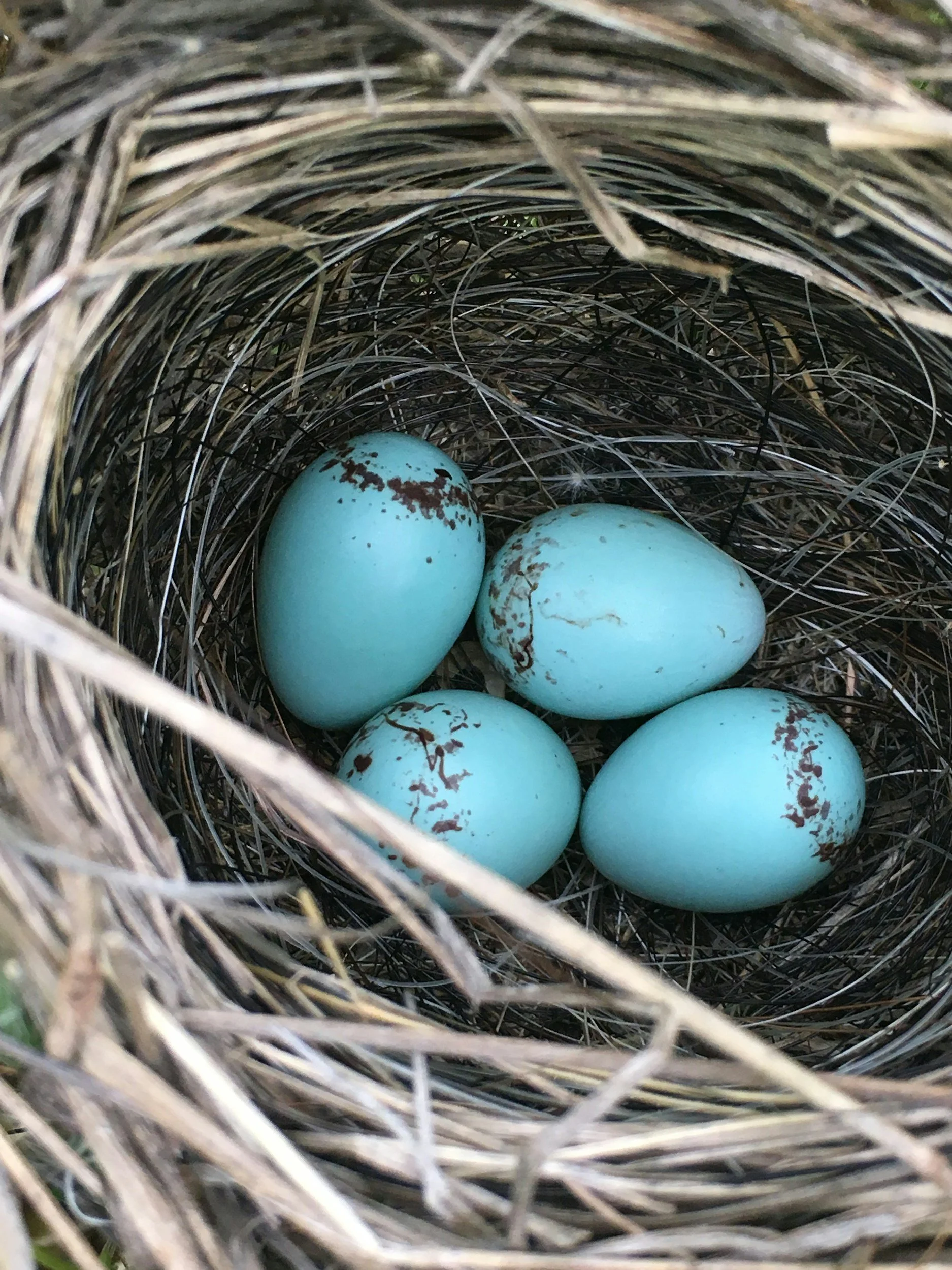
The fact that the leaves grew slowly had a ripple effect on the bird population.  Two robins chose the tree outside my window to build a nest.  Since the leaves took a long time to develop, I was able to watch the amazing architectural achievement right to the depositing of the four tiny blue eggs into the well-built nest.  Then disaster struck.
The disaster I witnessed took place on a cold, rainy, windy spring night when the mother robin was no longer able to protect her eggs from the wind and water and she was forced to abandon the nest.  The pair of robins assessed the damage, cleared out and cleaned up the nest, and proceeded to lay four more eggs as the temperature warmed up and the leaves began to grow larger.  Not long after the rebuilding and repopulating the nest with eggs, we experienced a tornado passing through the south of our city.  Once again, the mother robin had to abandon the nest, and the pair of robins haven’t been seen since.

Living so close to the environment and seeing the effects of changing weather patterns on the bird population has an emotional effect on me.  The obstacles faced by the nesting birds, the courage they demonstrated while protecting their eggs and the helplessness I felt as a silent observer, profoundly moved me.  Is it love?

-Sister Elaine Cole, csj

Images: Hannah Schulte/Unsplash; Elaine Cole

MAY 20 - WORLD BEE DAY 🐝

World Bee Day - A few years ago a local organization started a community beekeeping program in Peterborough. I have always found bees fascinating creatures and so I decided to join an enthusiastic bunch of other people. What I learned took me down a path of self-discovery, which was both educational and illuminating. It was nothing like the path the Israelites took out of Egypt (Exodus 3:8) but it was still a turning point for me -- and although beekeeping did not flow with milk there was always lots of honey.

There are over 20,000 species of bees. Safeguarding bees, safeguards biodiversity.

It is estimated that in the world today there are between 20,000 – 30,000 species of bees, with approximately 4,000 species native to North America. Up to 75% of our crops rely on bees and other pollinators like butterflies. At the same time all pollinators are seeing a dramatic drop in their populations due to climate change, use of insecticides, loss of habitat, and other factors. And the main culprit of all this damage is humans.

The star of the bee world is the honeybee. We see it everywhere, from packages of seeds to a Cheerios box. Often overlooked but just as important are solitary native bee species like the Leafcutter, Mason or Sweat Bee. The European honeybee was brought by settler colonialists 400 years ago to Turtle Island (North America), for the sole reason that it produced honey and beeswax. This type of bee is not a native species but is considered by biologists to be an invasive species.

Image: Unsplash/Art Rachen

In our human history, honey has been a constant. For example, honey has been found in the pyramids in Egypt. It was coveted for its purity and sometimes became more valuable than gold. It was also used by many cultures through the ages as a medicine, taken internally or used as a salve for burns or other injuries.

In our world now, stories of bees and insects often fill the news; in the past few years we’ve read about killer bees and murder hornets. These are chilling images, but not new ones, as these scary harbingers of fear and death show up elsewhere in the story of the Israelites. (Exodus 23:28 and Deuteronomy 7:20). I would wager that the majority of people would prefer the honeybee over a murder hornet any day. Having worked with honeybees and having had unfortunate run-ins with hornets I would definitely take the former.

We live in a world struggling to come out of a pandemic, seeing the terror of war, facing climate change and addressing so many existential crises coming at us we can easily become overwhelmed and discouraged. The decline of bees and other pollinators has affected the ecological balance of the planet. What can each one of us do to be the change in the world? It starts with educating ourselves (and those around us) and being aware of the world. To look at things with a child’s viewpoint. There is nothing more wonderful then when I work with children at a hive or in the classroom, and when I see the wonder of this blue orb in space (we call Earth) through their eyes.

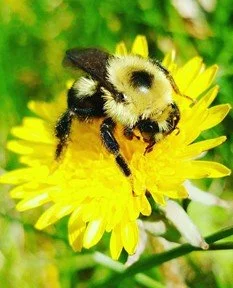
We – adults and children—can help bees and other pollinators by planting flowers which attract them. We can help bees by buying honey from local beekeepers, not using insecticides, letting dandelions grow in the spring (as they are one of the first sources of nectar) or by learning more about native bee species in our gardens. If we help one species we help all the world. That would be a good lesson for humanity to finally learn. It’s appropriate that the purpose of the UN World Bee Day is “Bee engaged: Build Back Better for Bees”.

United Nations World Bee Day, May 20

By: Tom Childs

Tom is a husband, father and grandfather, was born and raised in Toronto and now lives in Peterborough. He is also an ordained elder and lay missionary in the Presbyterian Church in Canada.  


Timeline leading to World Bee Day

20 May 1734 – Breznica, Slovenia Birth of Anton Janša, who came from a long line of beekeepers, became a pioneer of modern apiculture. Bees were a frequent topic of conversation with neighbouring farmers, who would gather at the village and discuss farming and bee-keeping practices.

1766 - Anton enrolled in the first bee-keeping school in Europe.

1769 – Janša worked fulltime as a beekeeper.

1771 – Published the book Discussion on Bee-keeping in German.

2016 – At the FAO Regional Conference for Europe, the Republic of Slovenia proposed World Bee Day to be celebrated on 20 May each year, with the support of Apimondia, the International Federation of Beekeepers’ Association.

2017 – Proposal for World Bee Day was submitted for consideration at the 40th Session of FAO Conference.

2017 – UN General Assembly unanimously proclaimed 20 May as World Bee Day.

20 May 2018 – First Observance of World Bee Day.

*source: https://www.fao.org/world-bee-day/en/

World Bee Day - May 20th

A few years ago a local organization started a community beekeeping program in Peterborough. I have always found bees fascinating creatures and so I decided to join an enthusiastic bunch of other people. What I learned took me down a path of self-discovery, which was both educational and illuminating. It was nothing like the path the Israelites took out of Egypt (Exodus 3:8) but it was still a turning point for me -- and although beekeeping did not flow with milk there was always lots of honey.

It is estimated that in the world today there are between 20,000 – 30,000 species of bees, with approximately 4,000 species native to North America. Up to 75% of our crops rely on bees and other pollinators like butterflies. At the same time all pollinators are seeing a dramatic drop in their populations due to climate change, use of insecticides, loss of habitat, and other factors. And the main culprit of all this damage is humans.

The star of the bee world is the honeybee. We see it everywhere, from packages of seeds to a Cheerios box. Often overlooked but just as important are solitary native bee species like the Leafcutter, Mason or Sweat Bee. The European honeybee was brought by settler colonialists 400 years ago to Turtle Island (North America), for the sole reason that it produced honey and beeswax. This type of bee is not a native species but is considered by biologists to be an invasive species.

In our human history, honey has been a constant. For example, honey has been found in the pyramids in Egypt. It was coveted for its purity and sometimes became more valuable than gold. It was also used by many cultures through the ages as a medicine, taken internally or used as a salve for burns or other injuries.

In our world now, stories of bees and insects often fill the news; in the past few years we’ve read about killer bees and murder hornets. These are chilling images, but not new ones, as these scary harbingers of fear and death show up elsewhere in the story of the Israelites. (Exodus 23:28 and Deuteronomy 7:20). I would wager that the majority of people would prefer the honeybee over a murder hornet any day. Having worked with honeybees and having had unfortunate run-ins with hornets I would definitely take the former.

We live in a world struggling to come out of a pandemic, seeing the terror of war, facing climate change and addressing so many existential crises coming at us we can easily become overwhelmed and discouraged. The decline of bees and other pollinators has affected the ecological balance of the planet. What can each one of us do to be the change in the world? It starts with educating ourselves (and those around us) and being aware of the world. To look at things with a child’s viewpoint. There is nothing more wonderful then when I work with children at a hive or in the classroom, and when I see the wonder of this blue orb in space (we call Earth) through their eyes.

We – adults and children—can help bees and other pollinators by planting flowers which attract them. We can help bees by buying honey from local beekeepers, not using insecticides, letting dandelions grow in the spring (as they are one of the first sources of nectar) or by learning more about native bee species in our gardens. If we help one species we help all the world. That would be a good lesson for humanity to finally learn. It’s appropriate that the purpose of the UN World Bee Day is “Bee engaged: Build Back Better for Bees”.

By: Tom Childs

Tom is a husband, father and grandfather, was born and raised in Toronto and now lives in Peterborough. He is also an ordained elder and lay missionary in the Presbyterian Church in Canada.  

Critical Environmental Issues in Canada

The Saturday, April 3rd edition of The Globe and Mail contains three articles that should concern us all and call our government to account.

WILD SALMON.jpeg

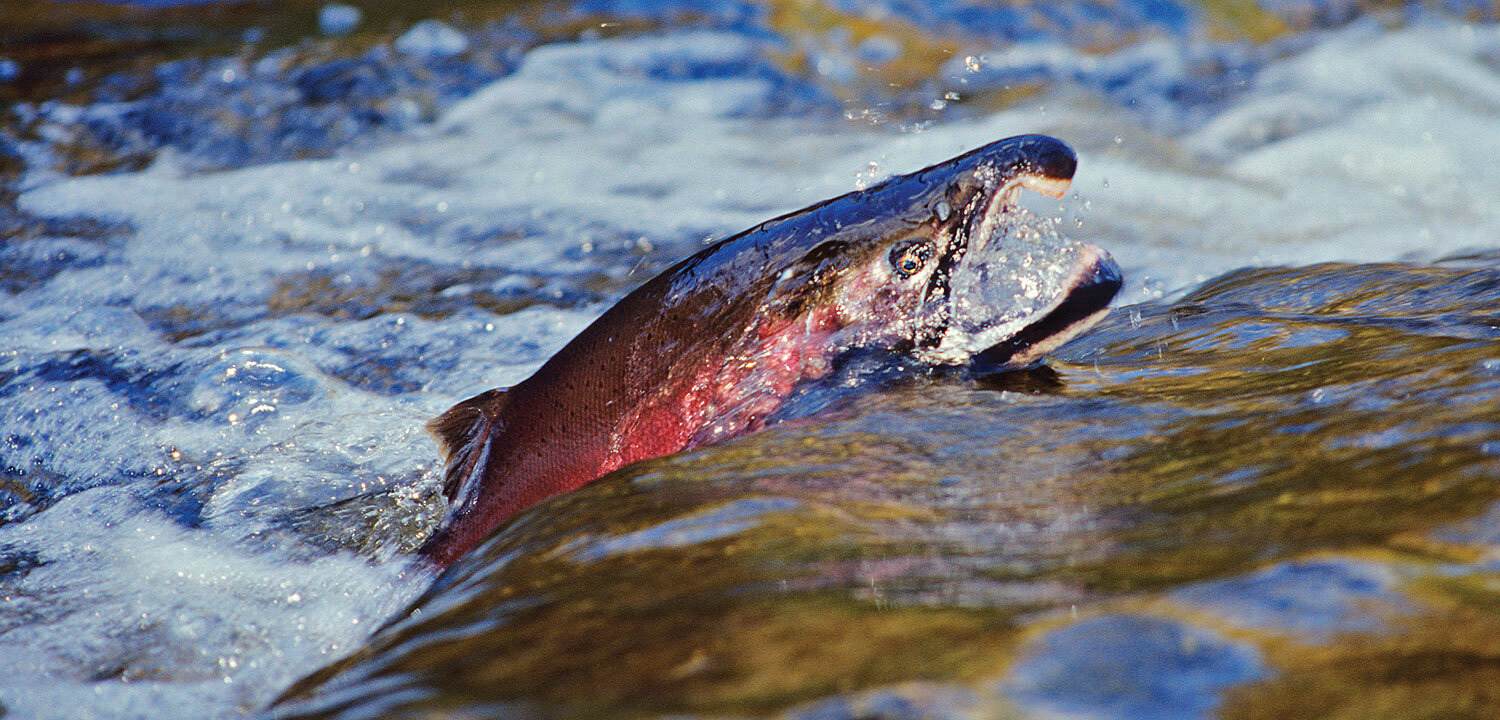
“Troubled Waters” by Alexandra Morton describes the disastrous decline of wild salmon populations on Canada’s west coast. The article states: “Salmon farming in Canada was born on the wrong side of the law more than 30 years ago, and it has continued to bend the spirit and intention of Canadian fishery laws, no matter the successful legal challenges to its practices or the science measuring the harm it causes to wild fish.”  Morton cites instances of senior bureaucrats playing down and suppressing science reports on the impact of salmon farms on wild salmon. The Department of Fisheries and Oceans (DFO) refused to acknowledge evidence of their own and other scientists about a decimating virus traced to Norway that caused heart damage and the rupture of red blood cells of chinook salmon. Only 5% of the late-run Fraser River sockeye salmon lived to return to the river in 2020. Morton decries the government’s act of hiding evidence of an epidemic that could wipe out the last of the salmon in the Fraser River, the largest salmon river in the world. The renowned biologist issues a warning: This is a moment after which B.C. will never be the same.  Many wild salmon populations can no longer decline; if this abuse continues, they can only vanish.”

unsplash-image-FdKDKLoSa0M.jpg

In this same issue of The Globe and Mail, Delta in danger: Time is running out for Vancouver’s ecological wonderland” is equally troubling. Margaret Munroe, a Vancouver-based journalist describes abuses of journalists and wildlife photographers, and human traffic that has battered the Fraser estuary, one of the richest and dynamic ecosystems on earth.  In the past 200 years, the landscape has been transformed “Grizzlies and elk are long gone, and less than 30 percent of the wild habitat remains.”  The floodplain has been drained and diked to allow for farms and the sprawl of Metro Vancouver.  The Port of Vancouver’s plan for a 3.5 billion dollar expansion of a shipping terminal and a ship-to-ship LNG marine refueling service, and the continued development and encroachment of the estuary threaten the wetlands on which chinook salmon depend and the killer whales that, in turn, rely on the salmon.   A recent UBC study concludes that there is an urgent need for action to protect and restore the estuary in which two-thirds of the 102 species have less than a 50% chance of survival over the next 25 years.     

unsplash-image-19SC2oaVZW0.jpg

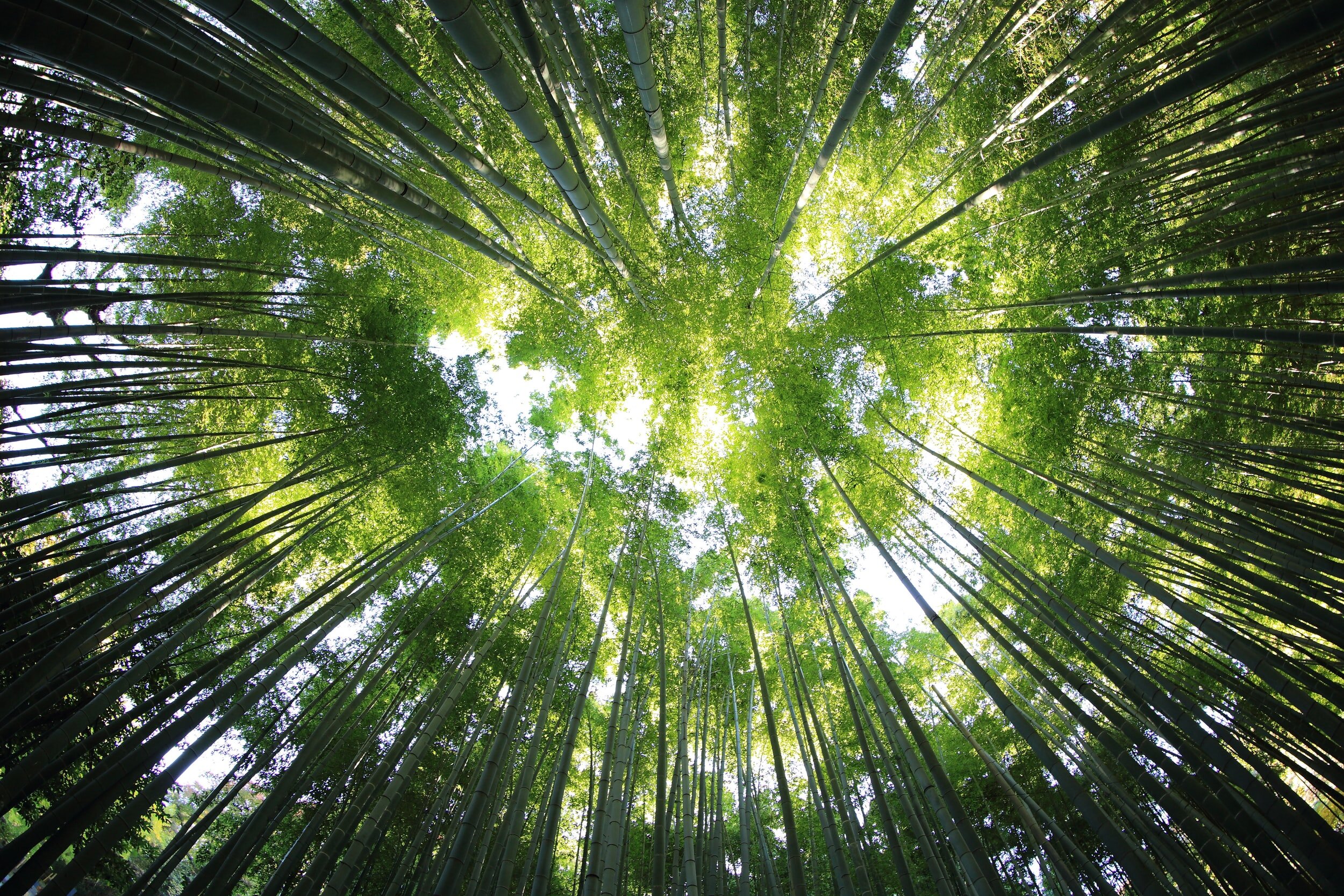
Finally, the third article by two-time Olympian, Scott Niedermayer, “Old-growth forests are an invaluable resource we can’t afford to lose” evokes sadness. These once vast forests which have been growing from the middle ages have been mostly lost. Less than 3% of the province’s forested land is made up of big tree, old-growth forests, an area of only about 400,000 hectares. Many species of animals are endangered. The role of the forests in storing carbon dioxide and mitigating climate change is critical. Unless these old-growth forests are no longer logged, they will be gone forever from earth, our common home.

We need a government that exercises its responsibility to the world in placing the protection of our environment above economic self-interests.  We also need each of us to demand that our government fulfill its responsibility.      

-Sister Pat McKeon, csj