
Many governments have an ethics commissioner. Generally, this person’s job is to ensure that public officials avoid conflicts of interest (that they don’t use their position for personal or financial gain).
What an ethics commissioner does not do is give an ethical evaluation of the impacts of budgets, policies, and government choices. That’s up to the public. It’s up to us. But to do so, we need to pay attention to what governments are doing. We need to ask: What patterns and priorities are emerging in their policy choices?
Consider how some of the lowest-income people in Ontario are being impacted by government policies:
First, at a time when many companies aren’t hiring due to trade disruptions, and costs are soaring, Ontario Works’ basic rate (social assistance) is stuck at $733 monthly. That amount hasn’t changed since 2018. In those intervening years, inflation has eroded the purchasing power of $733 by more than 20 %. What does one have to do to survive on so little money? And how could one possibly get job-ready when one is just trying to survive?
Second, in June, provincial funding for Ontario’s last eight publicly funded supervised consumption sites will end. Will these closures lead to more overdose deaths and increased health-care costs?
Third, given the provincial government’s closure of these supervised consumption sites, and the earlier push to get people out of encampments, one would imagine that the government would be “all in” when it comes to supporting programs such as London’s House of Hope.
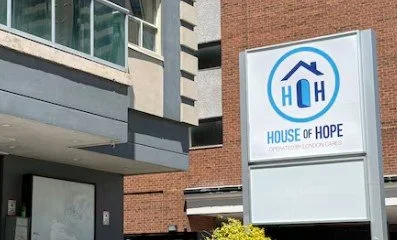
London, Ontario’s House of Hope set to close after province denies funding.
House of Hope has 48 units and has been supporting people with physical and mental health issues, including addiction. In less than three years of operation it has proven to be effective in providing the wrap-around services that help people stay off the street. It has also reduced pressure on shelters, hospitals, and emergency services. And yet, so far, House of Hope has been unsuccessful in securing $1.37 million in ongoing provincial funding. Without this funding, House of Hope will be forced to close when its funding runs out in November. And how many similar stories are occurring in communities across Ontario? In your community?
The political conversation has been predictable. The city council blames the province for cutting funding. The provincial government lists all the money it spends on such services province-wide, and insists the city needs to better allocate its money. Who does one believe? And is there any point to the “blaming game” other than skirting responsibility?
Might the people of Ontario make a difference by taking an ethical stance?
It’s just not right for people who live on the lowest incomes to continually be the target of insufficient funding and loss of services, be it OW, safe consumption sites, or wrap-around services. When we have programs that work, we need to fund them.
-Sister Sue Wilson, CSJ | Executive Director, Office for Systemic Justice
Image: Lady Justice statue, Philippe Oursel@ourselp/Unsplash