
Guest Bloggers

Hope - A Matter of Perspective

We often get overwhelmed by the breadth and depth of problems facing our world today.  When we see the big picture, it is often hard for us to come up with solutions that might help us find hope in our world today.  I can get caught in this trap and realize that not much good comes from getting stuck in a place that offers little in the way of solutions to problems facing us today.  Some of work I do, involves helping our city (London, Ontario) find safe, affordable housing for the hundreds of people who are in search of a place to call home.  These are people who have limited income, face enormous barriers to work, child care, and education.  Some are paying 50 to 60% of their income on housing.  Some live with mental illness, others are unable to work until their young children are in school, because they cannot afford child care.

These are barriers individual people struggle with each day.  To help improve changes for these people, there are many in our city who are trying to increase the stock of housing for the hundreds of people who are in need.  I belong to a small non-profit housing group.  We are all volunteers, and what we have learned over the years is that nothing seems to be able to move ahead quickly.  One of my observations is that getting to a “how” to make housing available happens at a policy level at all levels of government but that alone is not enough.  Our local communities also need to invest in housing issues to assist some of our vulnerable citizens.  Gatherings where both policy makers and local communities can work together to help design solutions that work in each community could create the change needed to make housing happen more quickly. One size does not fit all.  I wonder if bringing multiple stake-holders together with the shared goal of finding or creating more affordable housing might be a new approach with better outcomes.  I think it is worth a try.

Sister Joan Atkinson, CSJ | London Affordable Housing Foundation 

London, Ontario
A Tale of Two Summers

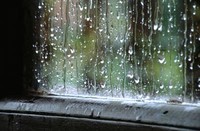
Calmly, I sit by my window on a rainy, late August morning, my thoughts roll back to earlier summer months. May comes to mind with its early spring buds. Daffodils, narcissus, tulips push through the warming ground to bright sunlight.  June explodes with nature in full bloom.  Birds cheer from the thicket, trees burst forth in full leaf, and grass is green and lush.

July and August offer months of freedom for children to cherish. Brides and grooms offer their lives to each other. For students, it’s a time of happy holidays. Fun and freedom abound as life changes gears. Family vacations, staycations and everything in between become the norm.  Reunions, barbecues and outdoor living spring up everywhere.  Regular, bountiful rain and life-giving showers are generously bestowed on the earth and gratefully received.

However, as I ponder wonderful summer, an unease stirs within me. The rain seems wetter, colder, more persistent under thick, low-hanging gray skies.  My mind turns to those in our beloved country who suffer under forest fires and long for blessed rain to relieve their misery.  Theirs has been a summer of danger and grief bringing with it lives forever changed.  While we have rejoiced these many weeks, they have lived with despair.

Musing on life’s blessings and challenges, I sense in the air a hint of fall to come.  Nostalgia visits my heart. Summer is waning. Sunrise appears a little later; I begin the struggle of rising in the dark.  Is this the first whiff of the coming cocooning and hibernation?  Holidays are dwindling. Stores are hacking back-to-school supplies. Routine is on the horizon.

Sadly, there were no holidays, barbecues or fun in the sun for families in the furnace of forest fires. I wonder will their workplaces still exist?  Will children return to school as usual?  One can only hope and pray for winds to turn direction and copious rain to fall upon the burning inferno. Meanwhile, let us hold in our hearts those who knew not summer’s joys. - Sr. Jean Moylan, csj

Lots of Jobs Available! Really??

It seems not long ago that Canadians searching for employment were mostly out of luck.  Well-paying positions were scarce, unskilled jobs scant and student summer work, not likely. Freshly minted teachers needed not apply for teaching positions.  Skilled trades students vied for the few apprenticeship openings.  People holding PhD credentials were driving taxi cabs.  Job seekers seldom found work in their areas of expertise.

Now, a decade later, a front-page article in “The London Free Press” heralds, “Worker shortage is holding back Southwestern Ontario’s economy with no simple solutions.”  Suddenly, the economic engine is roaring back to life.  Or is it?  True, the Free Press article is an awakening call to inform readers that many jobs need workers immediately.  However, it leads me to ponder what might be some of the obstacles that are causing job seekers to hesitate before rushing to pick up the phone and fill out applications.

Might a significant number of positions be low-paying, part-time jobs which reinforce the term “the working poor” who barely subsist, have little job security, no benefits and certainly no pension plan?

Might the work be quite a distance from where the job-seeker lives without public transit, vehicle or means of relocating family, if necessary?

Might the employment opportunity involve precarious duties, poor working conditions and undue physical/mental stress?

Unless we can engage at the levels of business and government and find creative solutions such as the now cancelled living wage initiative etc., there will “no simple solutions”, as the Free Press article asserts.

-Sister Jean Moylan, csj

Do Women Count?

Most of the pictures we see, or we have in our mind’s eye, concerning homeless people are images of men.  A search of much of the literature reporting on homelessness show pictures of homeless men.  Does this mean that more men than women experience homelessness?  Or are we missing something because of the way we tend to count homelessness?

Abe Oudshoorn, an Assistant Professor at the school of Nursing at Western University notes in a Blog for the Homeless Hub, that women may experience homelessness in different ways.  For instance, women are less likely to be visibly present at services for people experiencing homelessness.  Some of reasons for this might be because women are more likely to have children in their care and are worried to have them apprehended, or because they want to avoid men who have harmed them, or have other safety concerns.  So just counting numbers who use these services does not give us a real picture of homelessness in our city.

Other research looked at this question by tracking those who enter the emergency department in Pennsylvania.  They screened 4,395 patients on housing and gender.  These were people needing some kind of medical attention.  They hoped to get a more realistic picture of the population who were homeless.  Their findings indicated (limited as the study was), of those who were homeless, 7.4% were male, 6.8% were female, with 0.07% identifying as transgender.  

This is only a small sample, but it raises some important questions for us.  Where do the studies on homelessness include the experience of women, and could other data, seek better solutions to assist women who are living such a precarious life.  They too need support.  

Joan Atkinson, CSJ,   Office for Systemic Justice, Sisters of St. Joseph in Canada

BEE-wildered

Recently I had one of those strange Déjà vu moments. It was triggered by a photo of our sisters in Rome standing in front of the imposing baldacchino in St. Peter’s Basilica. It brought back the memory of the first time I was bee-wildered by the Barberini bees.  ‘What kind of bees are they?’ you might ask.  Undoubtedly, you know about honey bees, but Barberini bees? Well, they are honey bees, and there are literally hundreds of them in St. Peter’s.  You can find them on those four imposing pillars of the baldacchino and throughout the Basilica, carved in stone, cast in metal, embroidered on silks. As I said, I was bee-wildered by the swarming bees.

So, why bees in St. Peter’s Basilica? Well, “the Barberini were a family of the Italian nobility that rose to prominence in 17th century Rome.  Their influence peaked with the election of Cardinal Maffeo Barberini to the papal throne in 1623, as Pope Urban VIII.” (www.wikipedia.org) Displayed on his family’s coat of arms were three golden bees, which before long were pushed into the spotlight. During Urban’s reign bees were scattered over buildings, fountains, sculptures, tapestries and various artefacts - and of course in St. Peter’s Basilica.  The famous Bernini was commissioned to design a massive bronze baldacchino in the centre of the Basilica, above the high altar. The upper parts of these massive columns are decorated with sprays of gilded bay leaves in which, yes, you guessed it, bees flutter.

Not only were bees considered symbolic of moral virtue, but their sweet honey was even compared to the Word of God as can be read in psalm 119.  In addition, they produced wax for candles. Then, as now, bees appear to work extremely hard.  (And to this day we refer to the hard working as ‘busy bees.’)  However, there are far greater reasons for the bee-wildering presence of these innumerable bees.  “In this context [they] indicate the role of the Pope as a type of Christ, and the healing power of the papacy generally … [the bee] is also an emblem of virginity standing for the Virgin birth, and the purity of Christ.” (https://Theframeblog.com/201708/22)

In spite of its relatively unimpressive size, the bee has found itself in the presence of popes.  Quite an accomplishment, one might say, for such a small creature.  However, how much more impressive when we think of the bee’s significance in our own daily lives.  Perhaps not so much as symbolic or ornamental, but as essential to our survival.  Yes, of course, we still frequently use the bee in a symbolic context.  I already mentioned the ‘busy bee’.  What about the ‘bee’s knees’ or ‘a bee in one’s bonnet’ or teaching kids about ‘the birds and the bees’ or taking part in a ‘spelling bee’ or helping in a ‘sewing bee?’  Ah, and then there is the ‘queen bee’.  However, we are all acutely aware that bees perform a task that is vital to our survival: pollination. Did you know, one third of our global food supply is pollinated by these tiny busy bees? Simply put, bees keep plants and crops alive. Without bees, you and I wouldn't have very much to eat. How bee-wildering a thought is that?

Glory-Bee, let’s save the honey bee!  Coming back to Popes and bees, did you know that on the Day of the Protection of Creation in 2011, “Italy’s largest farming association gave Pope Benedict XVI eight beehives containing more than 500,000 bees?” (www.zenit.org).  Furthermore, there is a traditional practice of blessing bee hives on the feast of St. Benedict. All of us might do well to occasionally pray this blessing for these tiny creatures.

“May [your] holy blessing descend upon these bees and these hives, so that they may multiply, be fruitful and be preserved from all ills and that the fruits coming forth from them may be distributed for [your] praise and that of [your] Son and the holy Spirit and of the most blessed Virgin Mary.” (www.catholicculture.org)

As we have seen, bees, both in ancient times and in more recent centuries, have always had around them a powerful symbolic aura. For centuries people have benefitted from these industrious little creatures.  Now it is our responsibility to help them survive so we, too, can survive.  Sound bee-wildering?  Just be bee-friendly!  - Sr. Magdalena Vogt, cps