Reflections

“To Dream the Impossible Dream”

Imagine yourself in the intensive care unit of your local hospital.  Now imagine that the medical team, after a number of procedures, indicate to you that you are in critical condition and could die unless you give permission to try a number of other procedures to restore you to health. You are asked, “Do you want to live?”

In light of not knowing fully what “the other procedures” will be what do you reply? What does it mean when you say, “Yes, I want to live”? Perhaps in this “second chance” at living, that word is meant to take on a new meaning:

  • maybe it is to focus on the possibilities for good in living  life with more intentionality than you had before;
  • maybe it is to truly appreciate all as gift and not as possession;
  • tmaybe it is o more freely express gratitude for so much received from God, others, life;
  • or perhaps it is to be more mindful of  the power that resides within you by your very BE-ing to be a presence for positive change.

When I was faced with this question, I said “Yes, I want to live” and gave the medical team my assent to whatever needed to be done. They used all their expertise to help me move through this illness. After more than six months in hospital, I am home and continue to reflect on how my illness continues to speak wisdom to me. In that appreciation, I am finding the need to meet old familiar challenges in new ways, and to dream new possibilities for really living.

To dream the impossible dream” was illustrated very vividly to me when I attended the Stratford performance of the Man of La Mancha. At one point in the performance Don Quixote says, "Take a deep breath of life, and consider how it should be lived". 

May we all learn to take a deep BREATH of LIFE and consider how it should be lived, and in taking that deep breath, be grateful for the ability to inhale it and return it to the universe for more life to the whole.

I was faced with the question, “Do I want to live?” Although I felt spiritually ready to die, there was something in me that said, YES I want to live. What would YOU say and why?

Kathleen Lichti, CSJ

‘Ordinary Time’

According to the church calendar we are now in “Ordinary Time.” I don’t know about you but is there any such animal? Could it be because it is “summer time and the living is easy?” Walking the dusty roads of Galilee in the heat – living was not easy. Jesus’ life was never humdrum. Ordinary time for most of us is defined as ‘the work week;” weekends are meant to be “easy.” Talking with a number of our lay staff, weekends are anything but “easy” – there are activities for children, grandchildren, needs of aging parents. Ordinary today is defined as “fill every minute of the day.”

We need to make a conscious effort to get back to the real meaning of ordinary – work, play, pray. This is the trinity of ordinary.

There is a restaurant near here that advertises “NO TIPPING if phones or other electronic devices are not used.” Imagine talking face to face! This would be back to “ordinary time.”

Encouraging children to go out and play – back to ordinary time. Sending a card or letter instead of text or email – back to ordinary time. Sitting down for a meal as a family – back to ordinary time.

Dropping in for a visit – back to ordinary time. Returning the favor – back to ordinary time. I could go on and on – but you know what I mean.

This is ordinary me wishing each of ordinary you some ordinary “easy living.”

Barb Vaughan, CSJ


Eat, Pray, Love

At a retirement dinner with colleagues last year, I was given a small cement brick with the words ‘Eat, Pray, Love’ indented into it. I had read the book by the same title and had not been overly impressed. However, as I have recently gazed at this gift new meaning seemed to pour forth, and some questions.

Eat
As living beings, eating is essential to maintaining life. We fortunate ones can choose what we eat.  Do I respect my body enough to mainly eat only those things which are truly nourishing? Do I buy locally produced food? Do I limit the consumption of meat and animal products or consider eliminating these items entirely? Metaphorically speaking, what else am I ‘eating’ from books, movies, the ‘mass media’ and the internet? How well am I nourishing my thoughts?  I have a choice.

Pray
As human beings, we seem to have an innate longing to connect with the ‘Divine’, to the ‘Source’, to ‘God’ however we name what Karl Rahner has coined as “the unfathomable holy mystery”.  Do I make time everyday to remain in silence for a while?  Do I seek times of solitude?  Do I attempt to find the ‘sacred’ in the ‘ordinary’ stuff of everyday life?  Do I regularly connect with a faith group to join in a shared worship experience? Do I engage with the natural world through gardening, visiting parks or hiking? I have a choice.

Love
Well what can be said of ‘love’, this English word with multiple meanings?  Yes, we know about ‘romantic love’. And, perhaps our culture has become enslaved to the ‘love’ of ‘things’, to possessing material goods. One definition of ‘love’, however, is ‘agape’ that love that is selfless and unconditional, the ‘love’ that Jesus always talked about.  With a well nourished body and soul, do I go forward to express this ‘agape’ love to all I meet?  How are my relationships with others? Am I taking steps to work towards justice in the world? Do I move from meditation to action? I have a choice.

Maybe there is more to this saying,”Eat. Pray, Love”, and in those three small words, than I had initially grasped!   Maybe we do just need to ‘Eat, Pray and Love’  ...  intentionally.

Ann Steadman, Associate

Peter & Paul

Peanut butter & plums, plants & palms, pink & purple—NO Peter and Paul. We recently celebrated within the Catholic community the feast days of Peter and Paul.  Two totally different men! One Simon called Peter, one Saul called Paul but both followers of Jesus Christ, each coming to know Him in a different way, time and place. One was a fisherman and one a tent maker. I wonder what it was like when Peter met Paul for the first time, face to face. Their single bond was the desire to spread the good news of Jesus Christ. They may not have agreed about each other’s methods but they did agree on the Message.

Thinking about these two disciples, we have many lessons to learn. Peter reached out to his Jewish brothers and sisters. Paul moved beyond the Jewish community and brought the good news to his Gentile brothers and sisters.  They knew the message of Jesus was for all people. Our present Pope Francis, understands this well and is finding ways to reach out to so many diverse people across the world.  Beginning with the example of Peter and Paul, we also are called to meet “all our neighbours” with an open mind and an open heart.

Recently, I watched the fireworks over the Detroit River, and my thoughts took me to another Peter and Paul moment.  We are two countries, with many diverse points of view, yet we share an underlying belief of “Freedom for all”.  And so there is much to learn from a few moments of reflection on these two early mentors and leaders of faith. Perhaps their example might help us in our day to day encounters with the people and events that challenge us.

Barbara Vaughn, CSJ

Celebrating the Elderly in a Throw-away Society

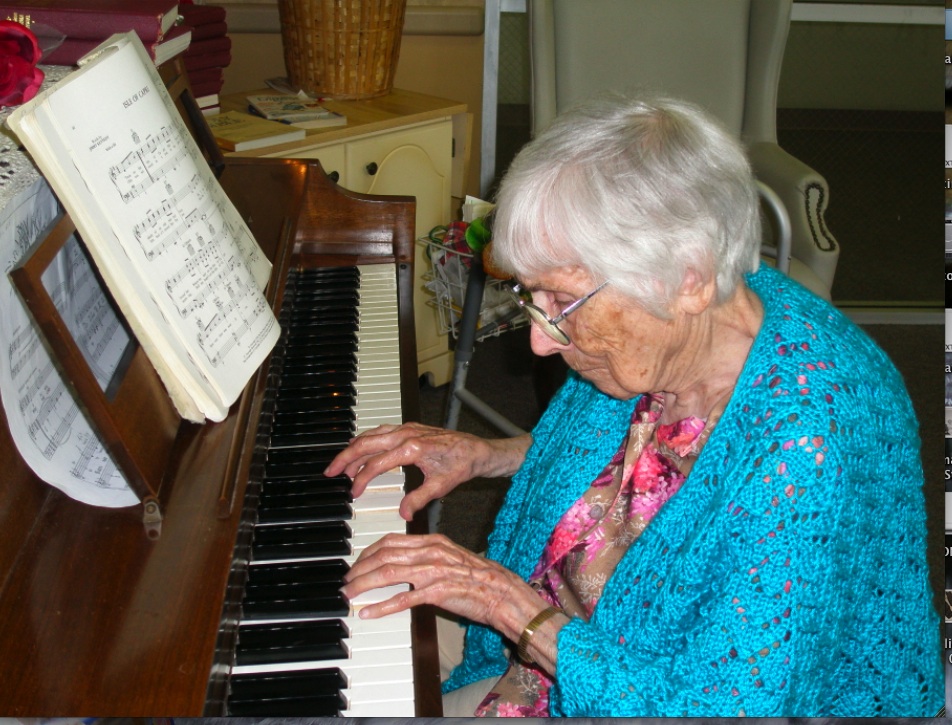
Have you ever wondered what it might feel like to celebrate your 100th birthday?  Have you even taken the time to think about it?  Who would possibly be present and how would they look upon you?  The probability of such a celebration becomes increasingly likely, as it has been reported that more than 2000 in Canada will reach such a milestone this year.  Within our congregation, there are three Sisters born in 1914, and three celebrations, different in tone and style to match the context and the wishes of the woman feted.

In a society where youth is idolized, millions of dollars are annually invested in the production of goods and services that promote the illusion of youth. In this context the markings of old age are often disdained.  With an emphasis on performance in our world, those who cannot produce are considered an unwanted burden. In our frenetic pace of life, there is no time for those who can’t keep up. With the breakup of the traditional family system, and the growing urbanization of our world, neglect and loneliness among our elders becomes an increasing phenomenon. And so we hear horror stories of elder abuse in many forms; we are aware of the need for increasingly more spaces and better-staffed facilities for vulnerable seniors. As a society we are slow to address this critical situation.                          

Almost a year ago I was missioned by my congregation to be local leader for 27 Sisters at our motherhouse, 12 of whom were more than 85 years old.  Although I knew that this assignment was fitting for me, I was most aware of my limitations because of total inexperience in health or senior care. I was also one who had often felt drawn to visit our sick and elderly on occasion, but was always too busy.  And so I approached this task with some trepidation. A wonderful system for meeting the needs of our Sisters was well in place, and my first challenge was to discover my role within the context of the mandate I had accepted.   I had recently ministered at a retreat centre where I had learned to really listen to those who came, and set out to do the same in this new assignment. I listened to the stories of those who spoke volumes about their life and mission; I listened to the silence of those who said very little; I listened to the struggle of those who could not find the words as mental acuity decreased, and I listened to the concerns and compassion of those who were much in tune with suffering in our world. And I have learned that I am not immune to the values of the society in which I live.  There were moments when I thought that I could find more productive things to do.  There were moments when I felt very uncomfortable because my future of frailty, loss and diminishment was right in front of me and I wanted to run from the reminder.

But I have learned much more.  During this year I have encountered an incredible zest for life that astounds me. I have met with the deep pain of helplessness that breaks my heart and I have found a practical wisdom, culled by experience, that calls me to ponder. In walking with our elderly, I am slowly experiencing a transformation that is freeing me of a perspective I unknowingly held.  Because I have come to know women who face with courage, compassion and serenity the diminishment of old age, I can more easily look ahead without anxiety.  I have come to appreciate the wisdom of experience, the powerful effect of prayer as life diminishes, and the commitment to mission that finds new expressions as circumstances change.  In my own journey, I have come to value these women as a source of inspiration, guidance and support and find much to celebrate.

In a myopic society that does not see the needs of the elderly, we are called as Christians to respond in love. I am most impressed by those around me, family, friends and co-workers, who have dedicated their lives to the service of the vulnerable elderly, who go out of their way to make life easier for those who have lost their independence.  I admire those who enter the political arena to draw attention to an increasing lack of care for our elderly. At the heart of the matter is a need for a change of attitude that calls us to honour and appreciate those who may have lost the precious gifts of youth, but hold a treasure that our world has no time to rediscover. To find that treasure and to celebrate its value makes the journey toward our own 100th birthday a more wholesome and enriching experience.  What do you think?

Joan Driscoll, csj