

Reflections

Labour Day

We will soon be celebrating the statutory holiday known as Labour Day which always falls on the first Monday in September.  Most of us think of it only as the end of the summer holiday season or the end of the season for wearing white.  Google helped me go back to the origins of Labour Day.

In 1869 labourers were required to work 12 hours a day. A movement began in Hamilton, Ontario called the “Nine-Hour Movement,” to advocate for a shorter work week.  The request of this union spread to Toronto where the demands for a shorter work week were refused by the owners of printing shops, “most vehemently by George Brown of The Globe.”  By 1872 the request had turned into a demand and finally a threat to strike, resulting in a printers strike on March 25.
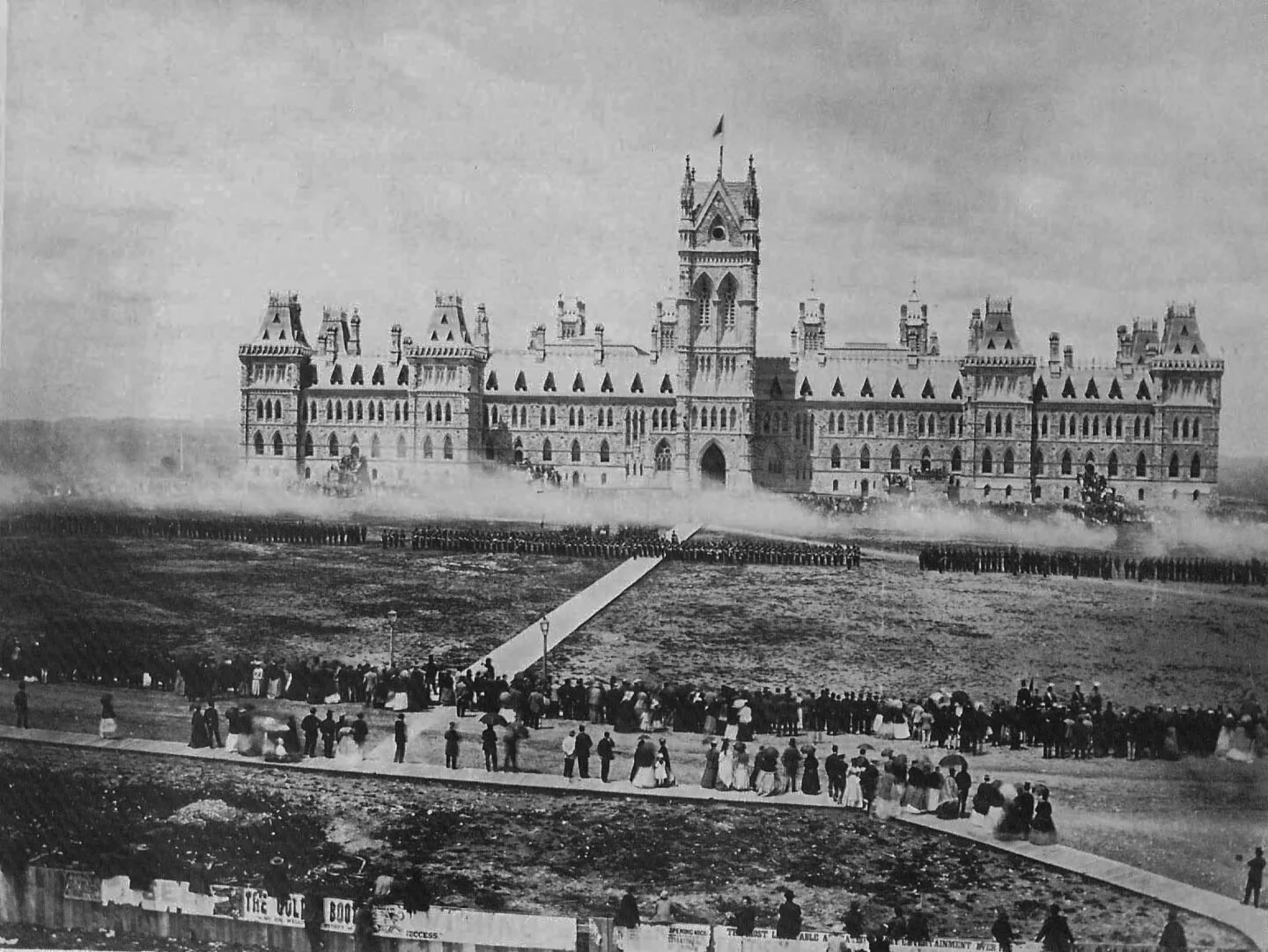
A series of protests, dubbed the Nine Hour Movement, led to the government enacting The Trade Unions Act, which, for the first time, made unions legal in Canada. (Photo: Parliament Hill, Ottawa. Wikimedia Commons/Library and Archives Canada. C-002837.)

To show solidarity with the printers’ strike, 2,000 workers in Toronto paraded through the city led by marching bands.  The parade ended at Queen’s Park and had increased to 10,000 sympathizers.  George Brown fought back by accusing and successfully jailing members of the strike committee for breaking a Canadian law of 1792-making union activity a criminal offense.

Sir John A. Macdonald embarrassed George Brown by passing the Trade Unions Act on June 14, legalizing and protecting union activity and rescuing the strike committee from prison.  Macdonald became a friend of the working class.

The movement spread and so, on September 3, 1894, 3,000 workers met on Market Square in London, Ontario which was acknowledged to be the first nationally recognized Labour Day in Canada.  According to Craig Heron and Steve Penfold in their book entitled The Workers’ Festival: A History of Labour Day in Canada,“the first union contingents headed off down the city’s main streets under the blazing noonday sun.  Leading the way was a group of seventy-five butchers on horseback, who set the tone of respectable craftsmanship with their crisply white shirts and hats and clean baskets on their arms….”

With this bit of new-found knowledge, I intend to pay more attention to the first Monday of September and pray that workers will find a way to survive the downward trend in the job market.  Difficult decisions are being made by business owners; workers are facing the possibility of jobs losses.  The experience of COVID was a bit of preparation for what the future holds for workers and now we see Artificial Intelligence making its debut on the horizon.  The labour-force survived the Industrial Revolution and I believe the creativity of the human soul will help us evolve our way through the AI revolution.  

-Sister Elaine Cole, CSJ
Mercy in the Making: How We Meet Our Moment in History

Poet and philosopher David Whyte makes some pretty provocative statements about the human race, about God, about mercy. He thinks in terms of decades and centuries somewhat reminiscent of the newest book by John Paul Lederach’s, “the centuries wrap round us.”

1.      Does our human conditioning of the past become a present-day obstacle in our evolution into the future? What is the role of stillness on a collective level?

2.      How do we humans discover our common call of belonging to and with each other?

3.      He presents a view of God who refuses to step in [and is unable to], wave a magic wand and solve the dilemmas we are in.

This last point is not really all that new. Walter Brueggeman, author and theologian spoke about this decades ago when he clearly asserted that “What God does first and best and foremost is to trust us with our moment in history.”

David Whyte, along with many of us, wanders through the days sometimes wondering if we are in fact trustworthy. That wondering is followed by,

“How do we make practical choices now that lets mercy guide us?”

-Sister Margo Ritchie, CSJ

Image: NADER AYMAN/Unsplash

Community, Compassion & Connection

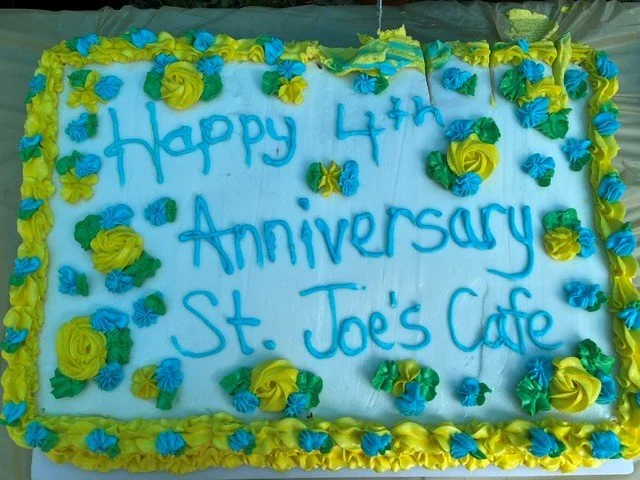
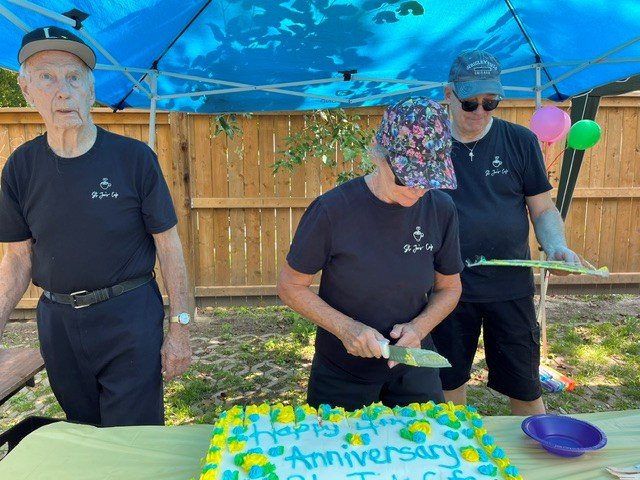
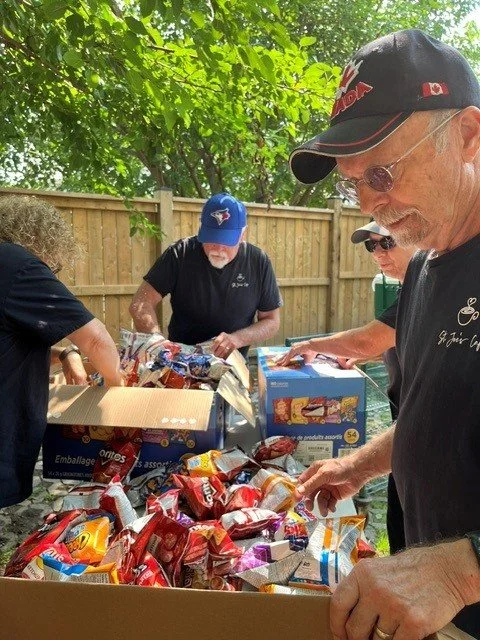
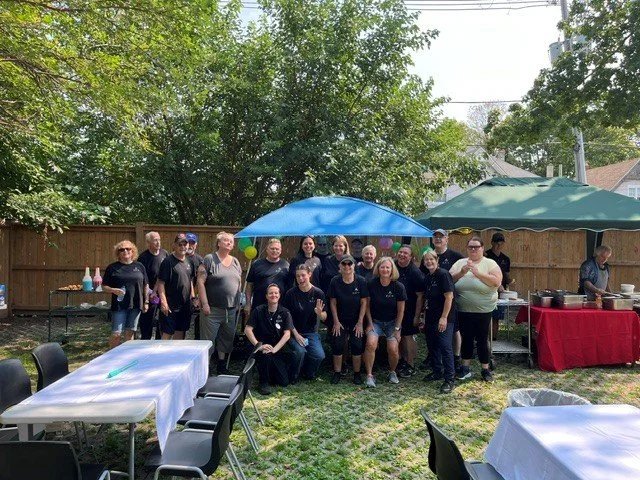
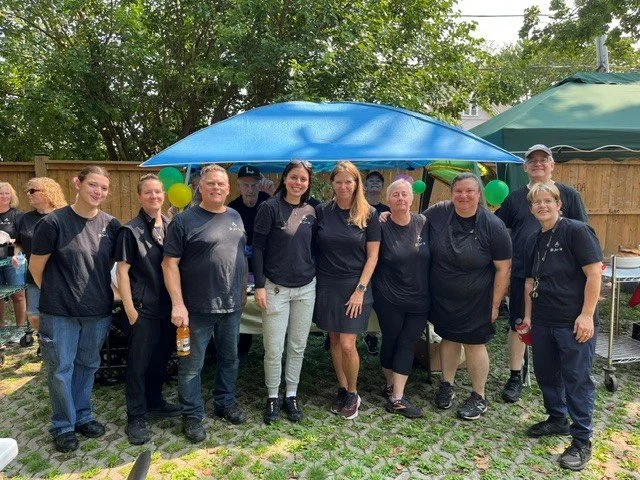
Last week our St. Joe’s Café celebrated four years at our new location at 602 Queens Ave in London — and what a celebration it was!

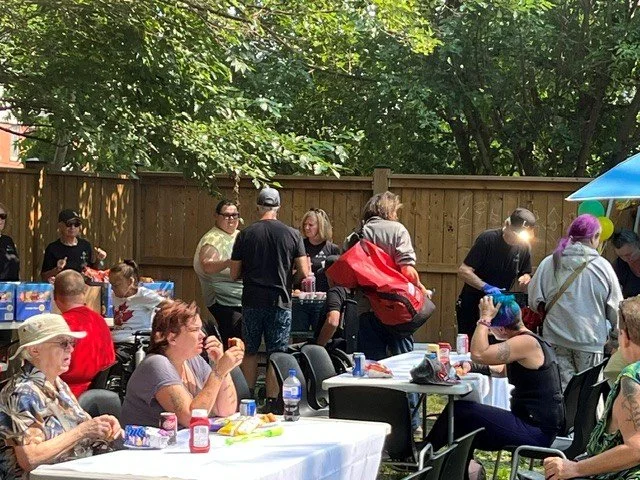
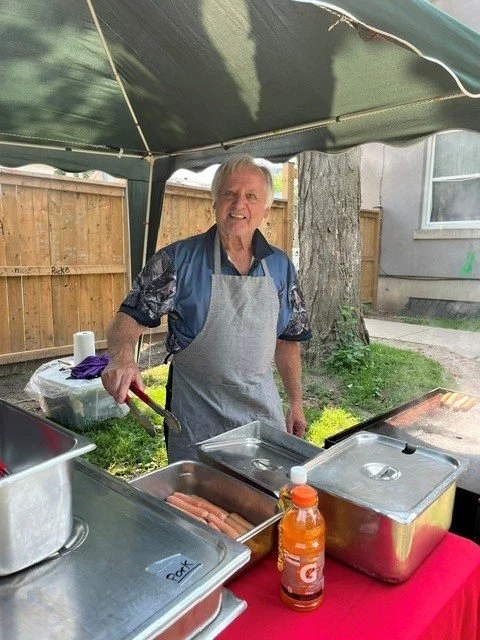
We were honoured to welcome 300+ of our clients for an afternoon BBQ filled with good food, prizes, snow cones, bubbles, laughter and connection. Our guests told us it felt like being at a fair or carnival — a beautiful reminder of the joy that community can bring.

We are constantly humbled by this ministry and incredibly proud of our St. Joe’s Café team - our amazing staff and volunteers who continue to show up week after week.

Thank you to our volunteers, donors, partners, staff and supporters who make this ministry possible. Most of all, thank you to everyone who walks through our doors and makes St. Joe’s Café what it is.

These pictures tell only part of the story. Behind every smile is a relationship, behind every meal is an act of generosity, and behind every successful day at St. Joe’s Café is a community that continues to care. Countless connections, and always a place at the table. 💕

Walking the Camino Nova Scotia

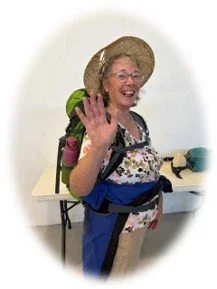
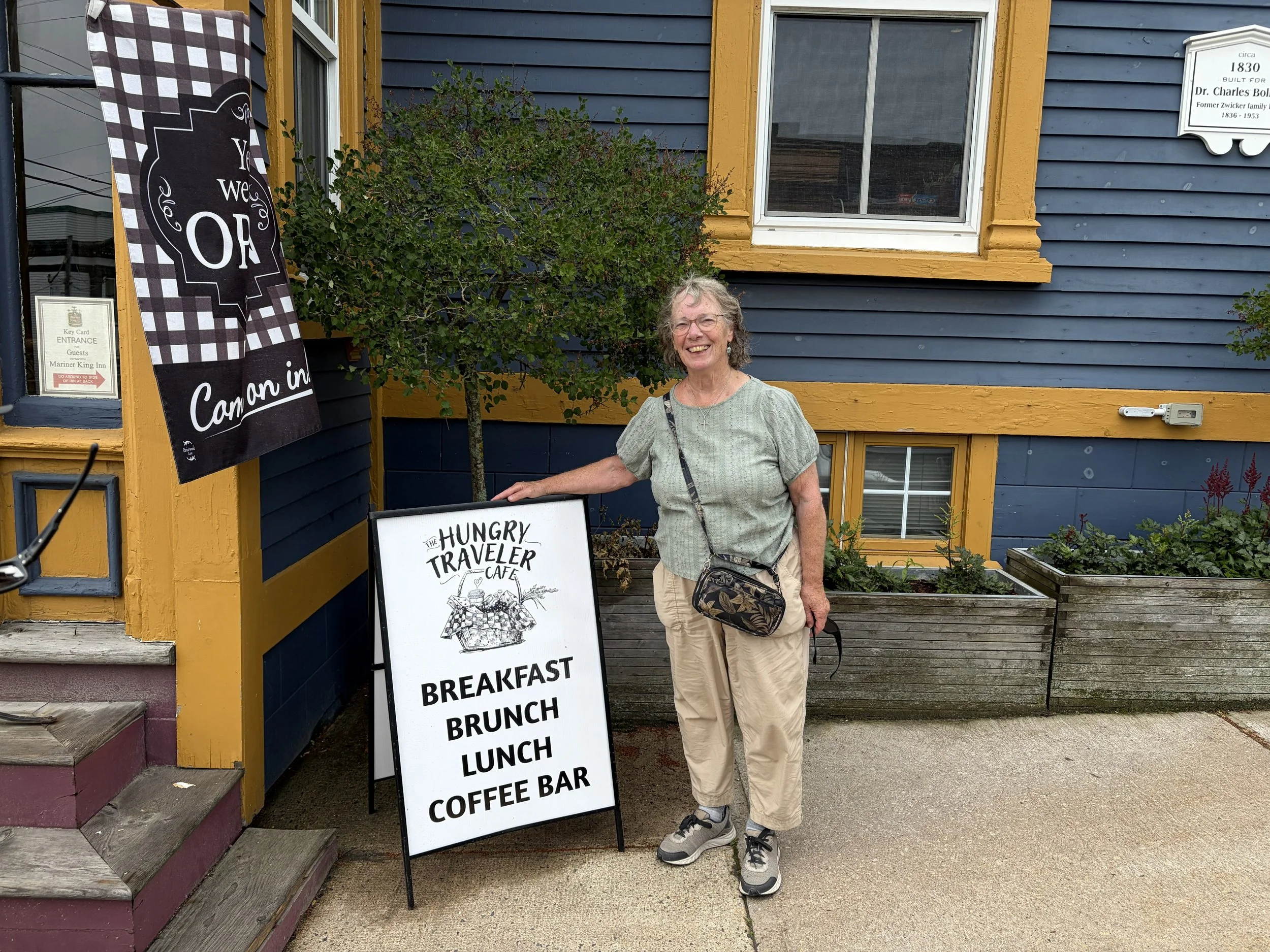
Sister Maggie walking the Camino Nova Scotia

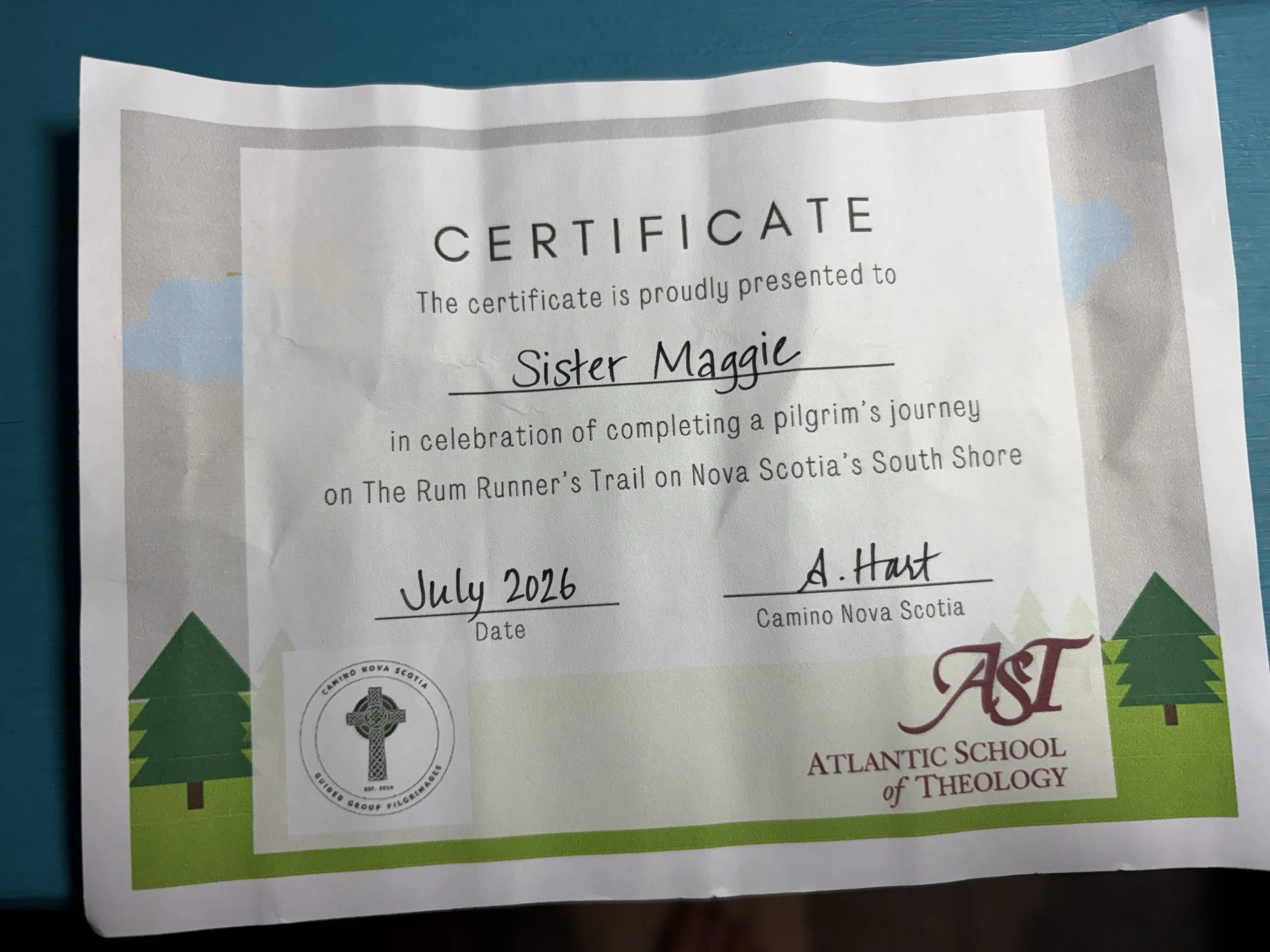
July 2, 2026, marked my 60th year as a Sister of St. Joseph. Reflecting on the significance of this time, the many blessings and graces, the challenges, rich experiences, the ups and downs of ordinary life, I wanted to experience a different kind of retreat. A friend told me about Camino Nova Scotia. Once I Googled the site, I knew this was exactly what I had on my heart to do. The pilgrimage would be an opportunity for personal growth, and spiritual nourishment, as well as a physical challenge. For me it would involve a willingness to let go of my need for control and surrender to the unfolding of each new day.

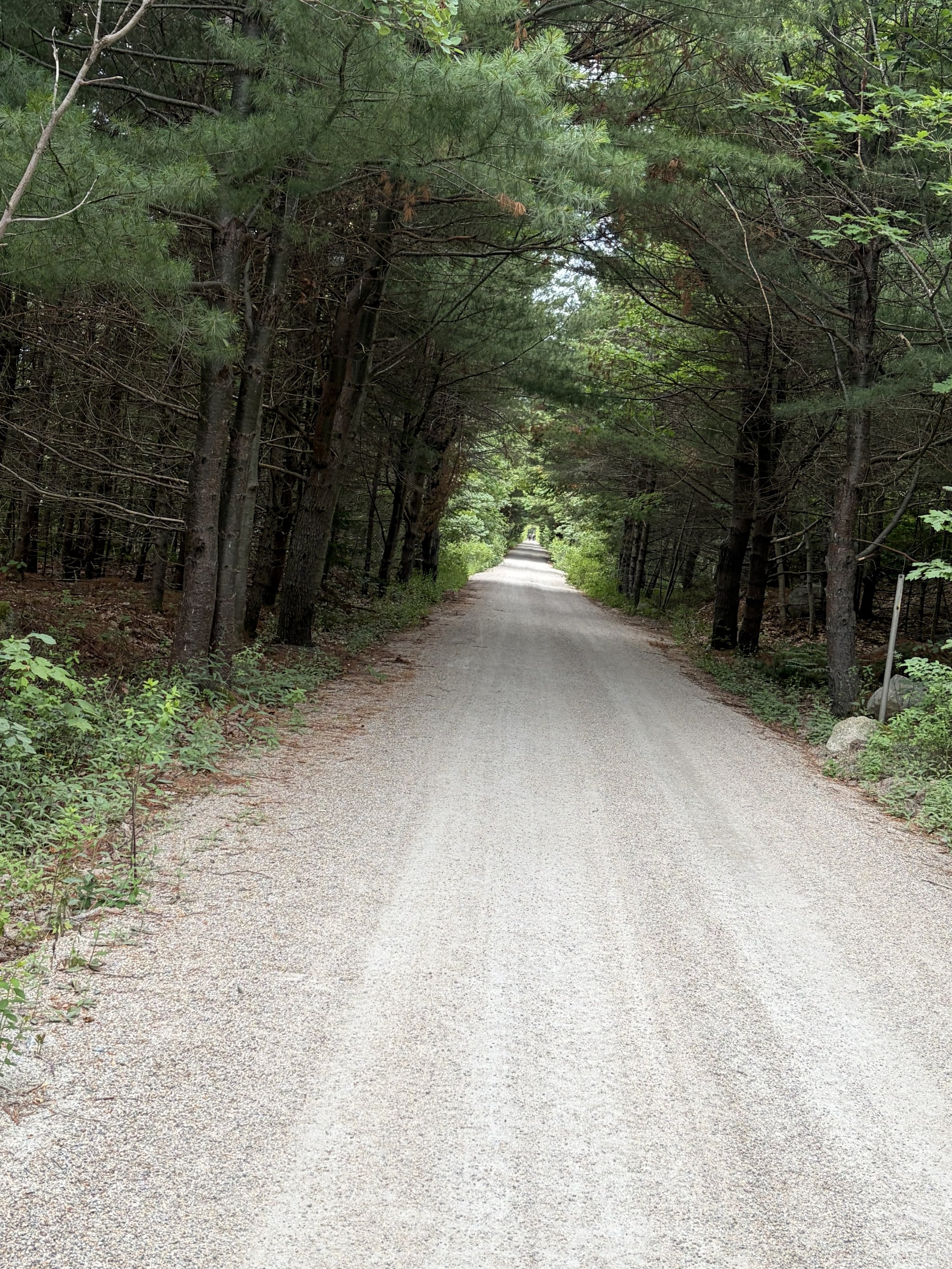
Camino Nova Scotia is sponsored by the Atlantic School of Theology. Dr. Rob Fennell, of the Atlantic School of Theology was aware that many people he knew would have loved to walk the Camino de Santiago de Compostela in Spain, but finances, employment, and family responsibilities were often real barriers. Thus, Camino Nova Scotia was born, using trails in beautiful Nova Scotia. After exploring former rail tracks that were now walking trails in the province, four trails were chosen as suitable for a pilgrimage experience.

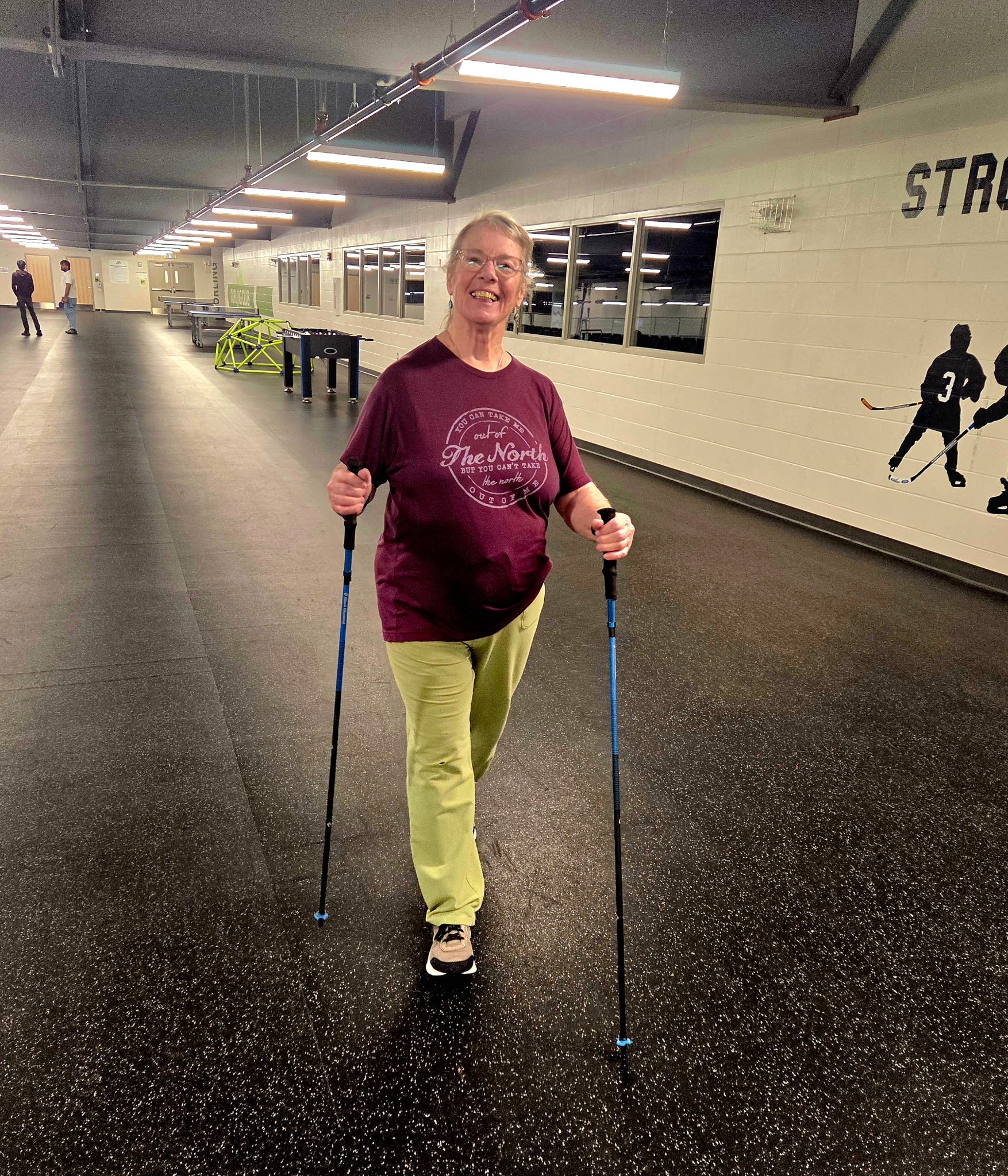
Sister Maggie training at the Rec Centre

At the beginning of March 2026, I registered to be a pilgrim walking the South Shore from Bedford, Nova Scotia to Lunenburg, Nova Scotia. It would be a 6-day experience with 5.5 days of walking. I began training March 18th at our indoor walking track in Hay River, Northwest Territories. When I first started, I could walk only 35 minutes before I needed to stop. Gradually I was able to walk for one hour easily. I did not concentrate on distance but on endurance. I soon realized that as my endurance improved, so did the distance. I trained every second day from March 18th indoors until our snow and ice finally left the first of May. Then I could walk outside!

Listening to my body, especially my arthritic knees, wearing excellent hiking sneakers and Merino wool lightweight socks, eating healthy snacks and drinking sufficient water, kept me in shape to advance my progress. On May 18th I walked my longest distance of 7.5 km in 2.5 hours.

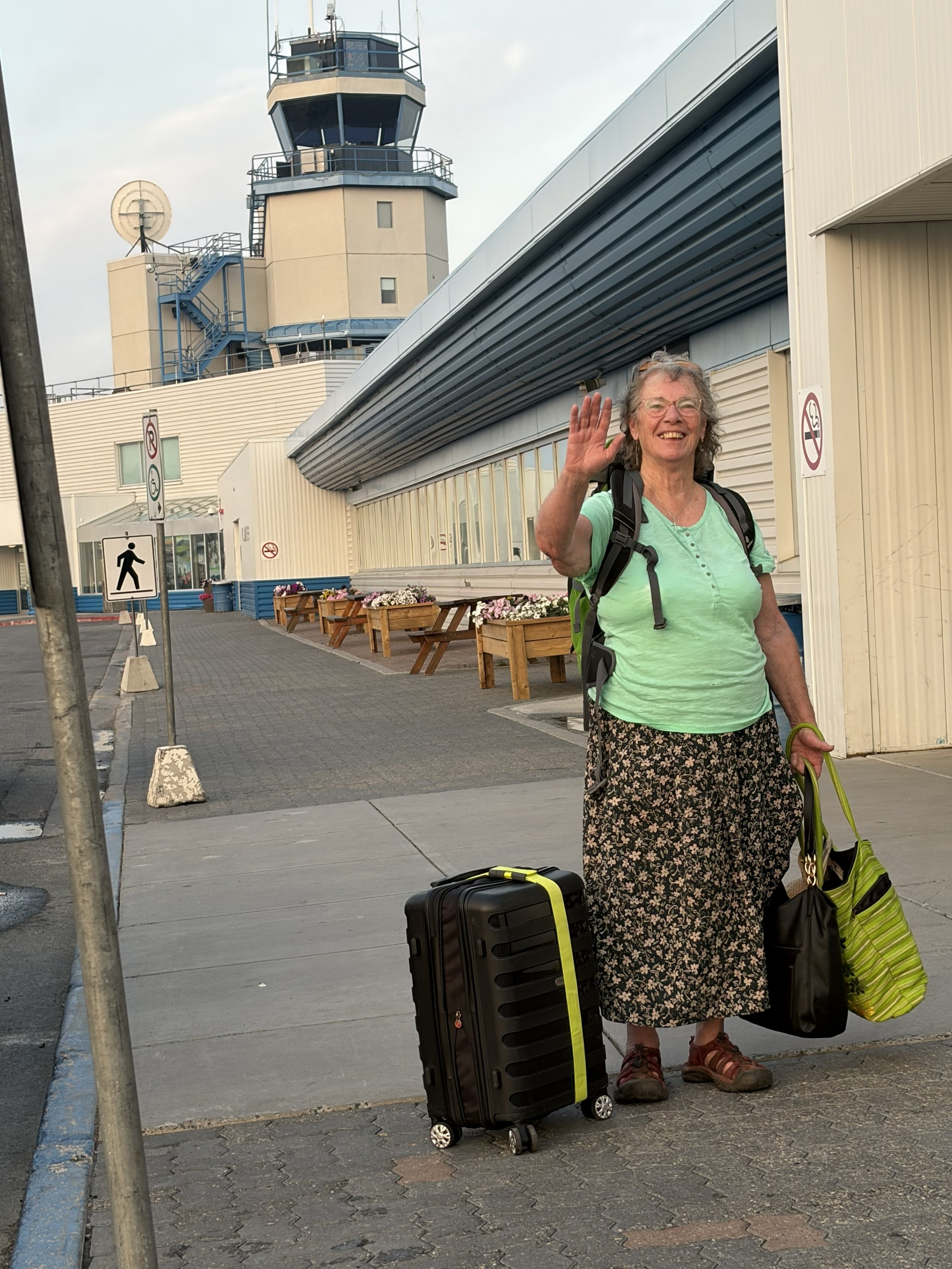
Leaving from Yellowknife

I flew from Yellowknife, NT to Halifax, NS on July 3rd. I was filled with mixed emotions. Joy, expectation, apprehension, excitement, openness, were a bundle of emotions. I was overwhelmed with the support of prayers, encouragement and positive energy from my Sisters in community and friends. I knew I would be okay!

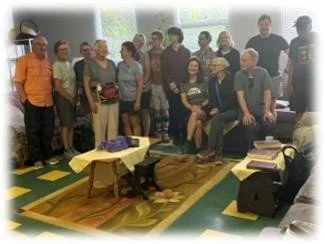
Fellow pilgrims on the journey

Our first day together was July 5th, 2026. 13 pilgrims gathered in Bedford with a supportive team of three. I knew no one. There is a saying that “Strangers are friends we have not met”. How true! The bond that developed among us during the week was amazing.

Each day we were up at 7 am. A healthy breakfast was ready, supplies to make our lunch were laid out, and our sleeping gear and belongings packed and put in the cargo van. At 8:30 we gathered for morning prayer, singing hymns, and a short reflection. Then we went to the trail to begin our walk. That day I managed 14.5 km and the next day 23 km. Usually walking about 6 hours each day, stopping for lunch at our leisure, walking at our own pace, we arrived at our place of rest for the night. We slept in churches along the way. Each evening at 8:30 we gathered for prayer and sharing how our day unfolded. Then lights out at 10 pm.

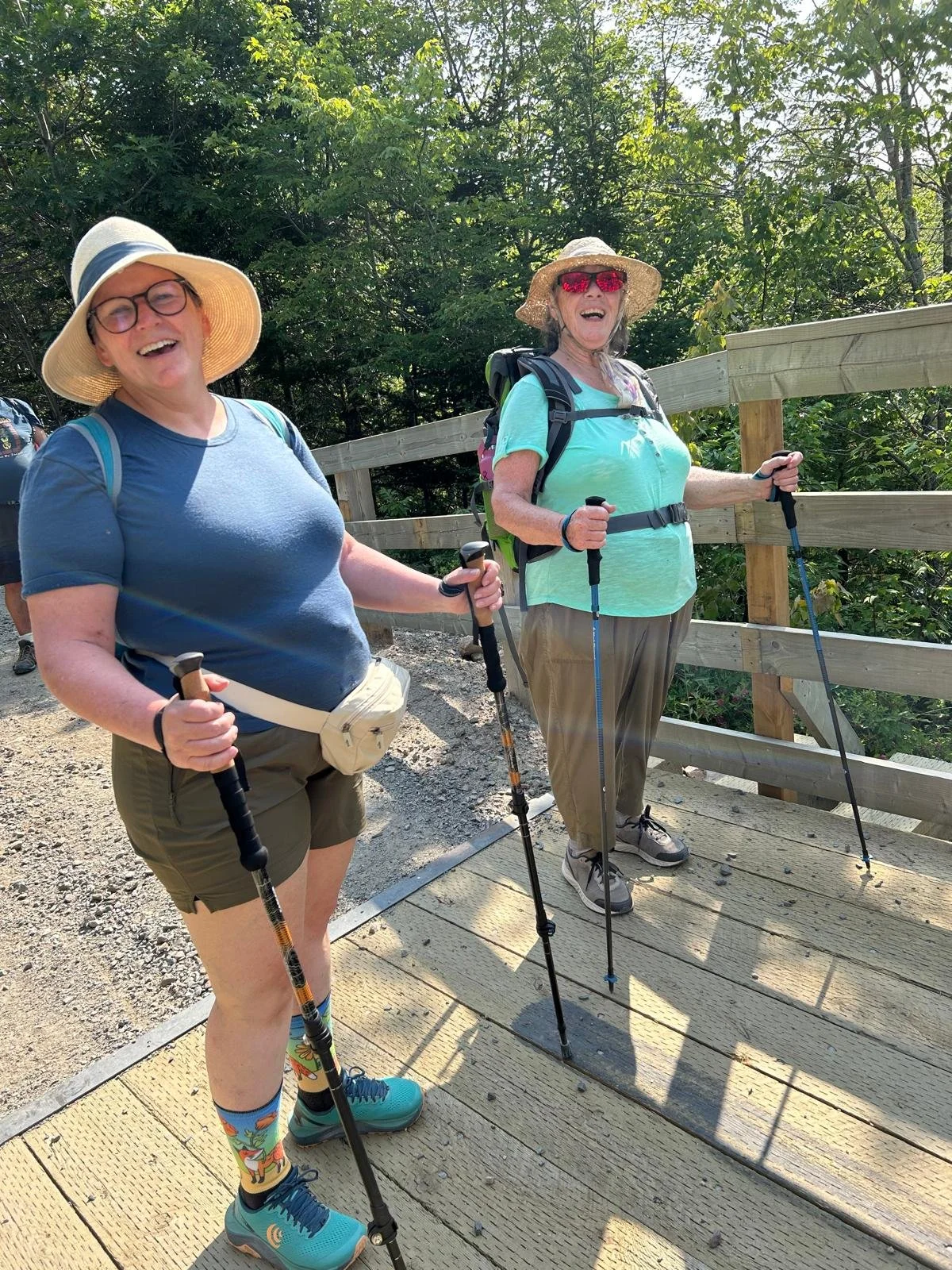
My camino companion, Victoria

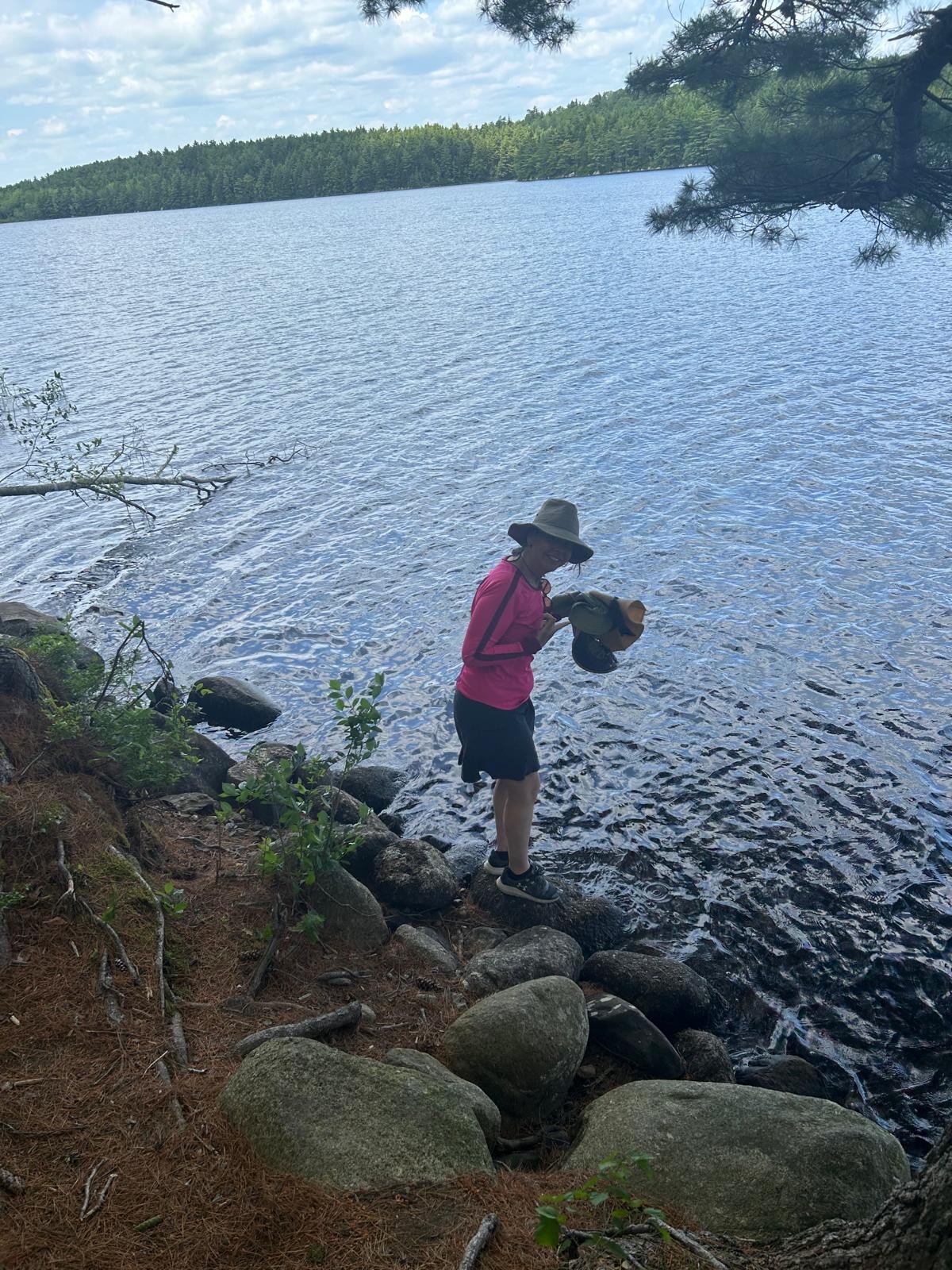
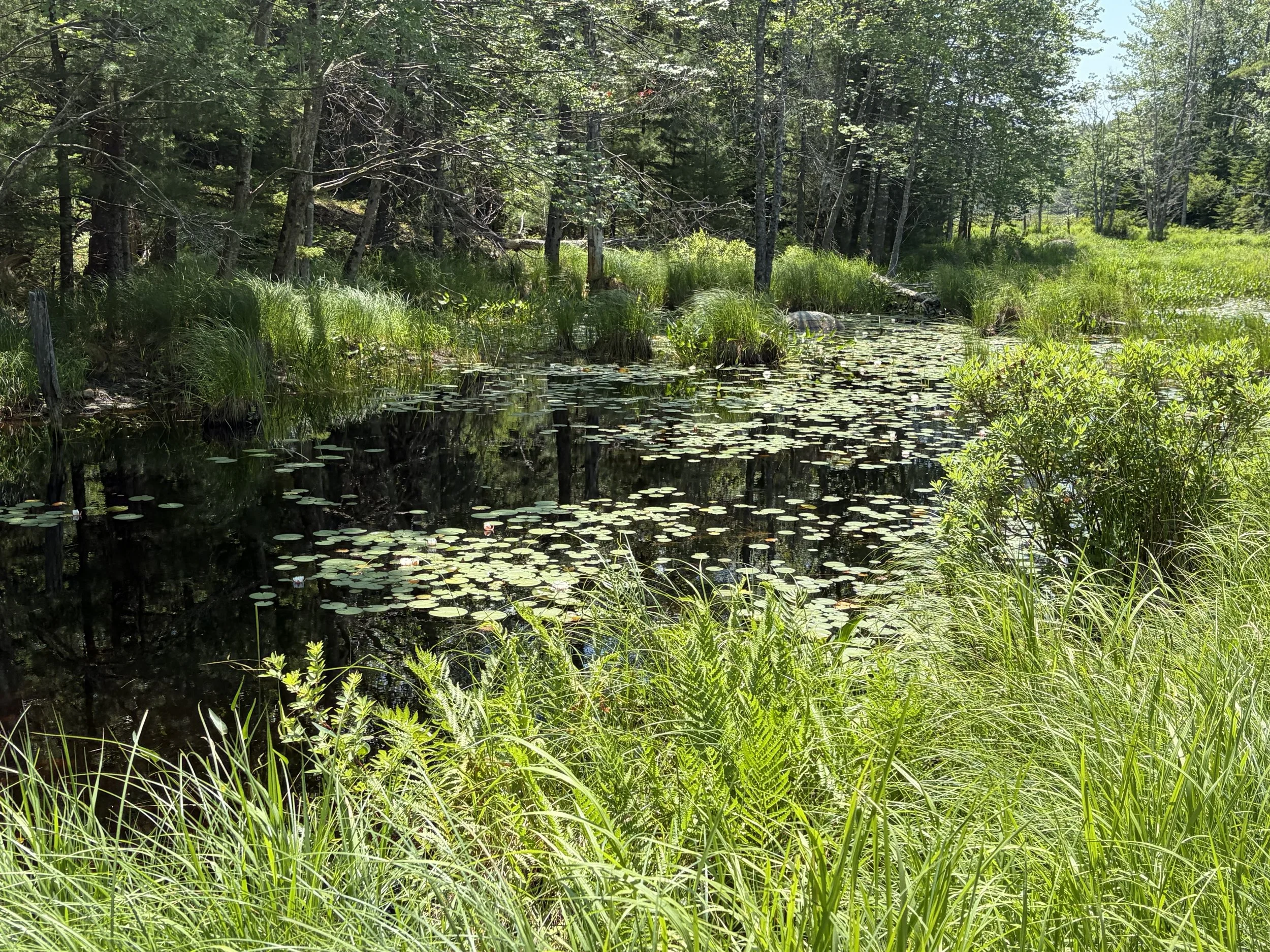
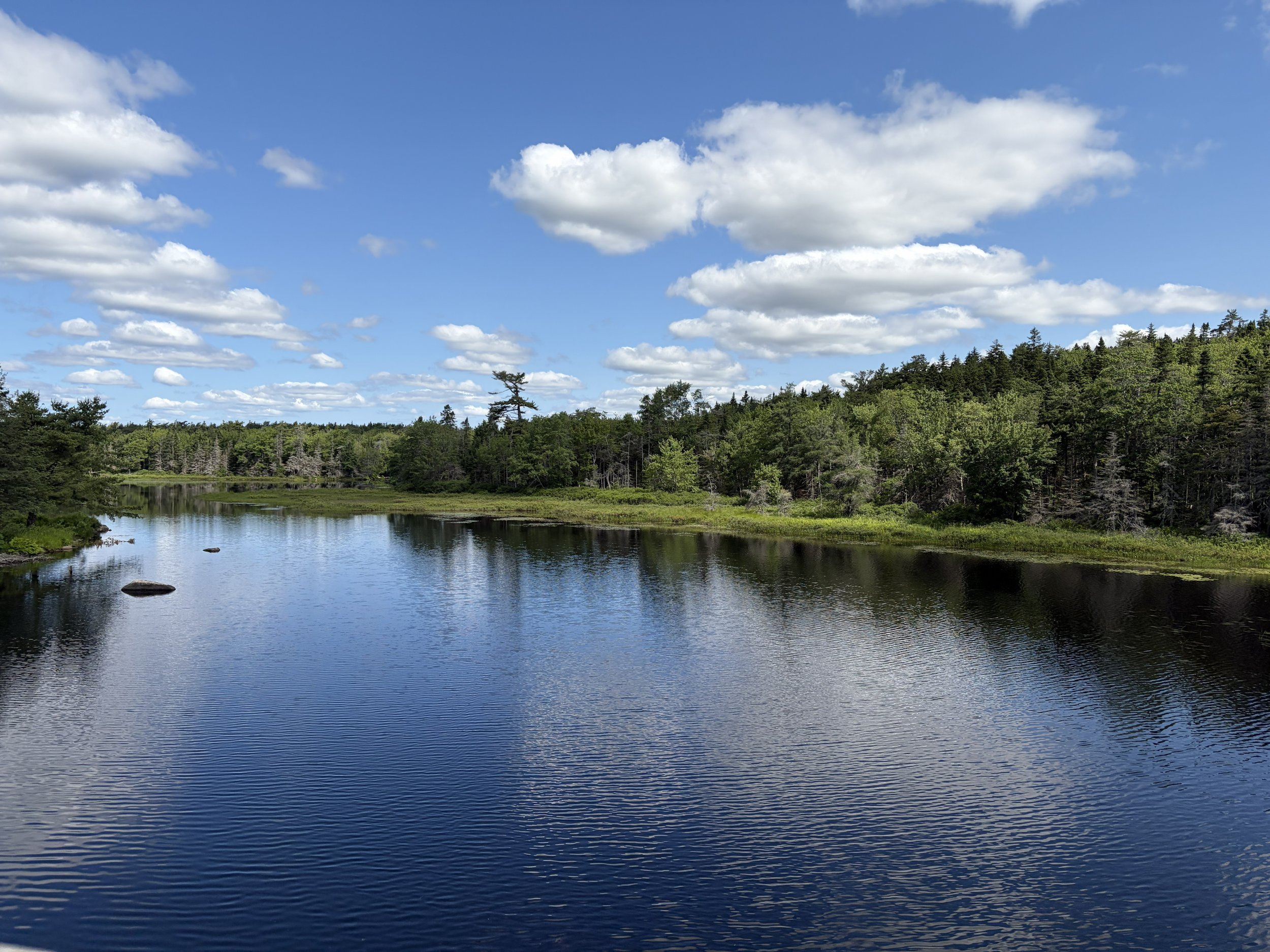
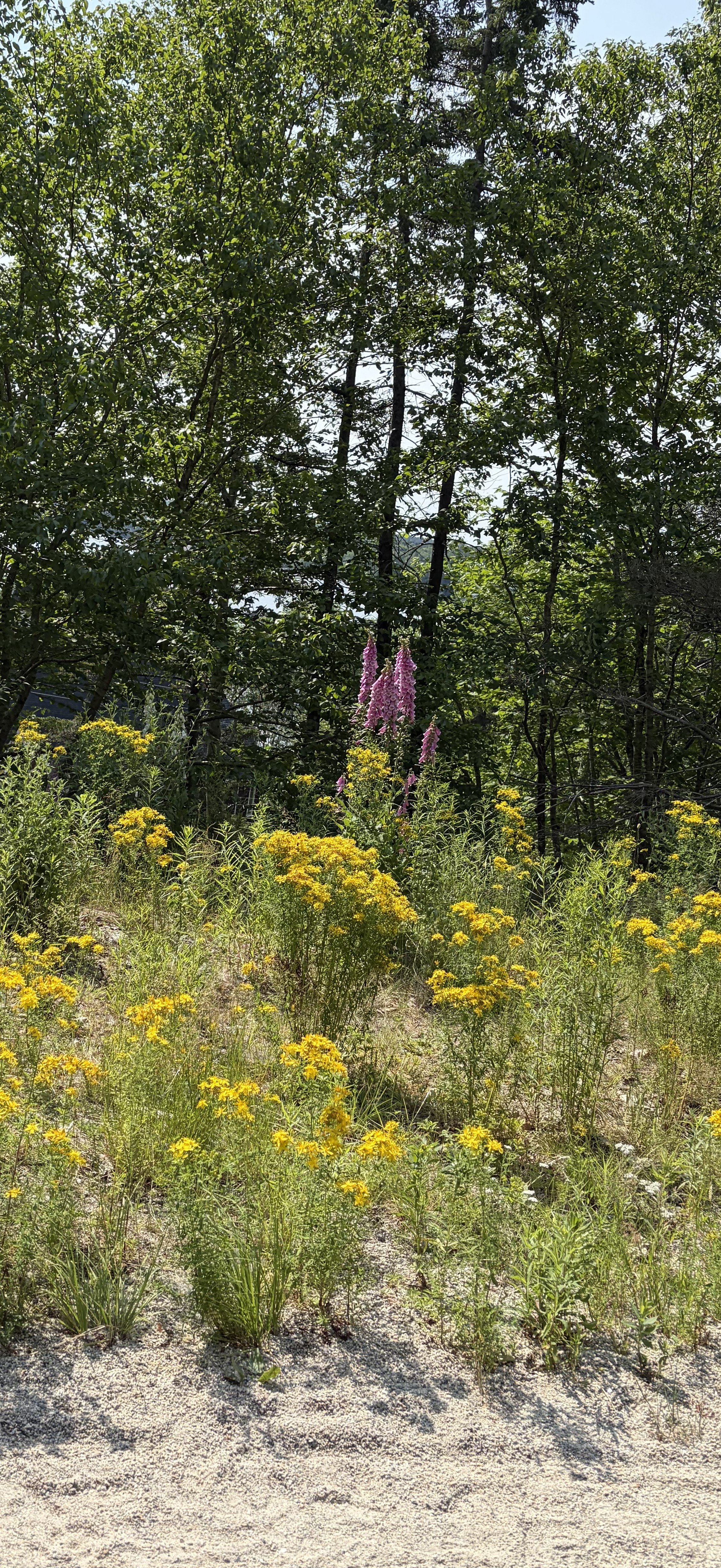
I was by far the slowest walker and Victoria from Ontario walked with me. We had wonderful conversation and sometimes walked in silence. The scenery was beautiful including wildflowers, lakes and rivers, a mother doe and her fawn. One day as we walked, coming down an incline were a group of children from a day home, running and waving at us, big smiles on their faces and full of young energy. This was the last sight we ever thought we would encounter! I must say that the children gave us new energy!

I had decided to walk very intentionally for specific persons in my life who are experiencing challenges of one kind or another in their lives. These folks helped me to walk as I prayed with each step.

Completing the Camino Nova Scotia

Our last evening, Keith, who led the prayer sessions reflected how all week we had been gathering pollen through what we saw, conversations we shared walking, being together at meals and helping each other whether with encouraging words or helping to roll sleeping bags and sleeping mats. Then Keith asked, ”What is the honey that you will make with this pollen as you leave from here?“

And that is the question I take to prayer these days. The experience will stay with me weaving in and out of my prayer, my ministry, and relationships.

-Sister Maggie Beaudette, CSJ

Photo Credits: Maggie Beaudette, Joy Waterbury

Celebrating Two Paths to Nationhood

Canada Day is celebrated every year on July 1st to commemorate the birth of Canada as a country. It marks the day in 1867 when the British North America Act came into effect, joining three colonies — Province of Canada (which became Ontario and Quebec), New Brunswick, and Nova Scotia — into a new federation called the Dominion of Canada. This event is known as Confederation.

Originally called Dominion Day, July 1st was a day to recognize Canada’s creation and the beginning of its journey toward becoming a self-governing nation. Over time, Canada continued to grow, with new provinces and territories joining Confederation and the country developing its own identity.

In 1982, the holiday was officially renamed Canada Day when the Canada Act 1982 brought Canada’s Constitution fully under Canadian control.

Today, Canada Day is a time to celebrate the country’s history, diversity, and shared values. It is marked by ceremonies, citizenship celebrations, concerts, community gatherings, fireworks, and expressions of pride in being Canadian.

At the same time, many Canadians use the day as an opportunity for reflection and reconciliation, recognizing that Canada’s history includes the experiences and contributions of First Nations peoples, Inuit, and Métis peoples, as well as the challenges created by colonization and past injustices.

Some people celebrate this day by attending a Pow Wow in recognition of our shared responsibility to forge a country mindful of its responsibility to create harmonious relationships with the Indigenous peoples of this land.

Canada Day is celebrated close to July 4th (Independence Day in the United States) because the two dates come from two separate historical events that happened around the same time period, not because one was created in relation to the other.

So, while the celebrations happen only three days apart, they represent different paths to nationhood: one through revolution and independence, the other through federation and political evolution.

On July 1st, I will proudly sing “O Canada, Glorious and Free” and “we stand on Guard for thee”, for it is so necessary in these days of chaos and land grabbing, to be ever vigilant and mindful that we ARE two independent nations with common values and rich connections that bring us together as having the potential of being true neighbours.

-Sister Kathleen Lichti, csj

image: Hermes Rivera/Hudson Thomas courtesy of Unsplash