

Margo Ritchie

Mercy in the Making: How We Meet Our Moment in History

Poet and philosopher David Whyte makes some pretty provocative statements about the human race, about God, about mercy. He thinks in terms of decades and centuries somewhat reminiscent of the newest book by John Paul Lederach’s, “the centuries wrap round us.”

1.      Does our human conditioning of the past become a present-day obstacle in our evolution into the future? What is the role of stillness on a collective level?

2.      How do we humans discover our common call of belonging to and with each other?

3.      He presents a view of God who refuses to step in [and is unable to], wave a magic wand and solve the dilemmas we are in.

This last point is not really all that new. Walter Brueggeman, author and theologian spoke about this decades ago when he clearly asserted that “What God does first and best and foremost is to trust us with our moment in history.”

David Whyte, along with many of us, wanders through the days sometimes wondering if we are in fact trustworthy. That wondering is followed by,

“How do we make practical choices now that lets mercy guide us?”

-Sister Margo Ritchie, CSJ

Image: NADER AYMAN/Unsplash

Partners in Hope: Supporting Housing, Dignity, and Community in London

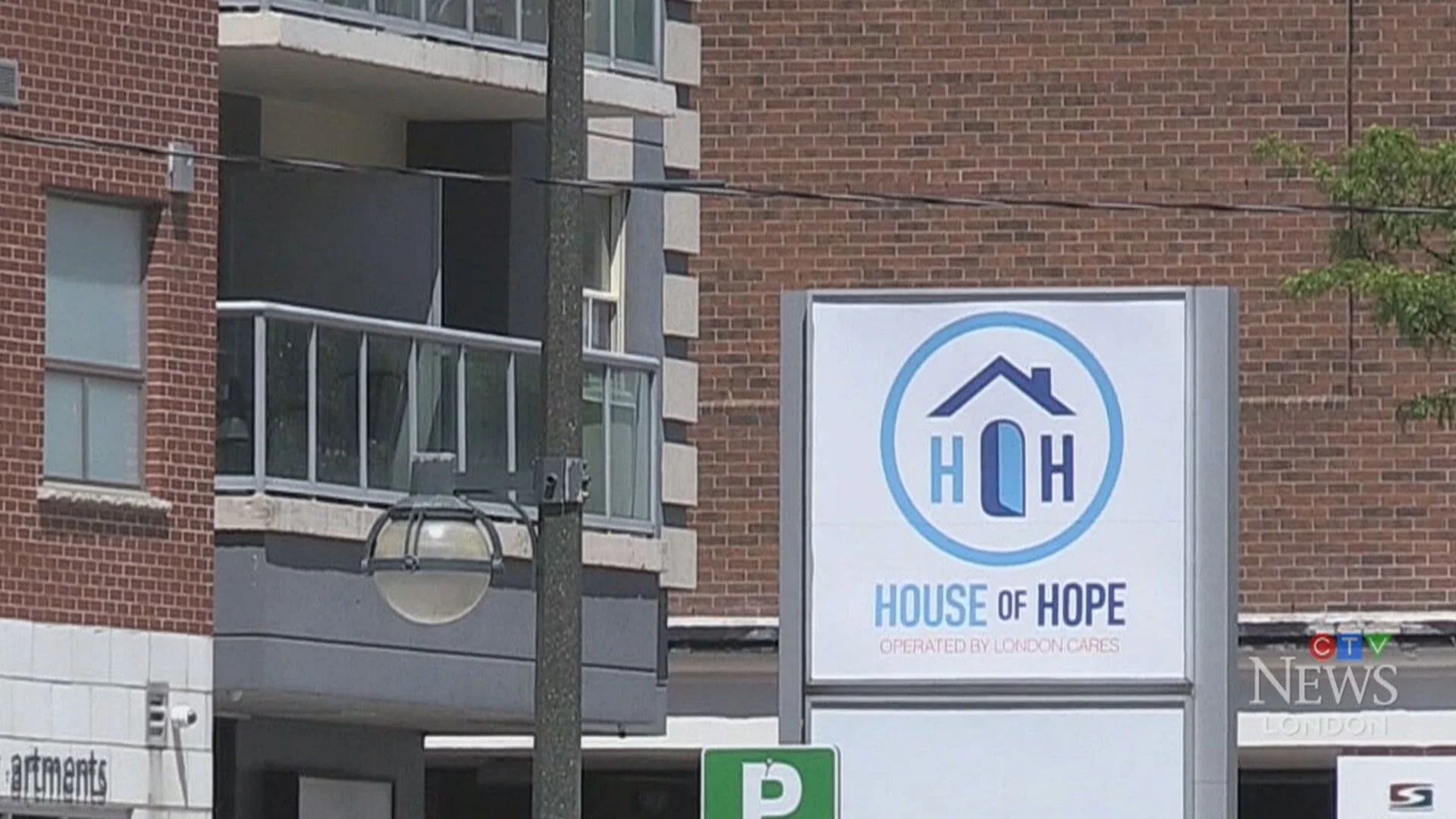
On the Closure of House of Hope

The Sisters of St. Joseph in Canada partner with London Cares Homeless Outreach and Regional HIV/AIDS Connection. Across London, organizations have worked deliberately to build a community where everyone can access the housing and support they need to live with stability and dignity.

House of Hope is a vital part of that housing continuum. For many residents, it bridged the gap between encampments or shelters and more stable supportive or affordable housing. Closing this deeply supportive housing creates a serious void and leaves both residents and staff facing renewed uncertainty and distress.

Too much of the time and energy of London Cares leadership—and of many across the social service sector—is consumed by securing, protecting, and renegotiating funding. That outlay of energy is needed in supporting frontline staff, and helping residents move toward stability. This work strengthens not only the lives of House of Hope residents, but the well-being of the wider London community.

Displacing residents and staff is an avoidable setback to the Whole of Community Response to Homelessness. We trust that the province and the city along with those most affected can resolve this together. At a time when communities are already under strain, preserving effective supportive housing is both necessary and do-able.

-Sister Margo Ritchie, csj

image: Adam Papp/Unsplash

Read about it here.

As Morning Breaks...

I received an email from a friend in the United States two days ago.

Some days I awake, simply ready for the new day. Other times, like today, I wake up feeling “old” or a certain fatigue. For sure the terrible stuff going on in the country and world are part of it. A sense of how long it will take before the “new” begins to reveal itself. So many conflicting values are still in the way.

Yesterday, early morning, the sky did its ordinary magic colouring the sky in pinks and fuschias.

Today, everything is blanketed in thick fog with no noticeable sign of lifting.

This pattern of sun and sky seems to mirror my friend’s personal human experience. And this alternating experience is common to us all. In fact, we might say that it helps us know we belong to each other. More deeply, we belong to earth.

I am reminded of a hymn that we sing on Holy Saturday, that “hold one’s collective breath” day between Good Friday and Easter Sunday in the Christian tradition. That immobile space between tragedy and hope. The words of the hymn go like this:

As morning breaks

I look to you

I look to you O God, to be my strength this day

As morning breaks.

Perhaps this moment of our experience on the planet also calls us to look to each other to be our strength this day. Perhaps we can also look to sun and sky, to river and ocean to be our strength this day. Perhaps in these discouraging days, we are more surrounded by what might give us strength than we have imagined.

As morning breaks…

-Sister Margo Ritchie, CSJ

IMAGE: Zetong Li/Unsplash

All That A Life Can Bear

This morning, as I sit quietly looking out my window, the sky begins to paint itself deep pink verging on red. The colour bleeds into the expanse of the sky and within minutes, the magic recedes again into blue-grey sky. I know that this will happen again and again for the watching.

As I look down at my iPad, news breaks of war in Iran. The United States have cemented their bond in a joint attack on Iran. The goal explicitly and somewhat confusingly expressed is regime change. People are both exhilarated in the hope of some form of liberation and terrified. They realise that to kill the Ayatollah and a few visible leaders is not the end of a violent and repressive system. The world is holding a common collective breath.

The world is holding a common collective breath.

Time to shift and get ready to see my brother who is hospitalized after a stroke leaving his right and dominant side severely compromised. We are close. I watch as he works hard and methodically to open a single serving milk carton solely using his left hand. He lifts the milk carton with the same hard-working left hand and drinks. One more mission accomplished for now.

These three events all within the opening hours of a Saturday morning in late February, 2026. They are clearly not unique to me. They are common in their own way to all of us.

These questions surface:

  • How much can the human nervous system bear?

  • How much of life can we digest in these short time frames?

  • And most importantly, how can we become safety and belonging for and with each other?

-Sister Margo Ritchie, csj

Images: Victoria Morgan/Tim Christopher Klonk/Unsplash

Looking at the New Year through the Lens of Belonging

I am reading the book Cherished Belonging by Jesuit priest Gregory Boyle. For over 30 years he has worked with street gangs in Los Angeles in what is called Homeboy Industries. They provide support in trauma and employment in their social enterprises which include electronics and recycling, homegirl café, homeboy bakery, catering, silk and embroidery work to name a few. Mostly, they are laser focused on belonging as the prime mover in edging people closer to wholeness.

Belonging [and not belonging] is a primal experience in our bodies, in our minds and in our spirits. It cuts across every form of relationship possible: belonging to my family and friends, to my neighbourhood, to my country, to Earth herself and ultimately belonging to myself. This sense of belonging is one thing we mean by the phrase experiencing the Sacred in life.

And yet one might use the lens of not belonging as a way to describe the violence of our time, the polarization of our time, the dislocation from oneself of our time.

As we begin this new year that many of us hope will not be simply “more of the same”, perhaps the lens of belonging will reveal something new to us.

Looking for a good read - try Cherished Belonging.

-Sister Margo Ritchie, csj