
Resurrection

March Winds and April Showers

“MARCH WINDS AND APRIL SHOWERS” - A REFLECTION FOR EASTER MONDAY
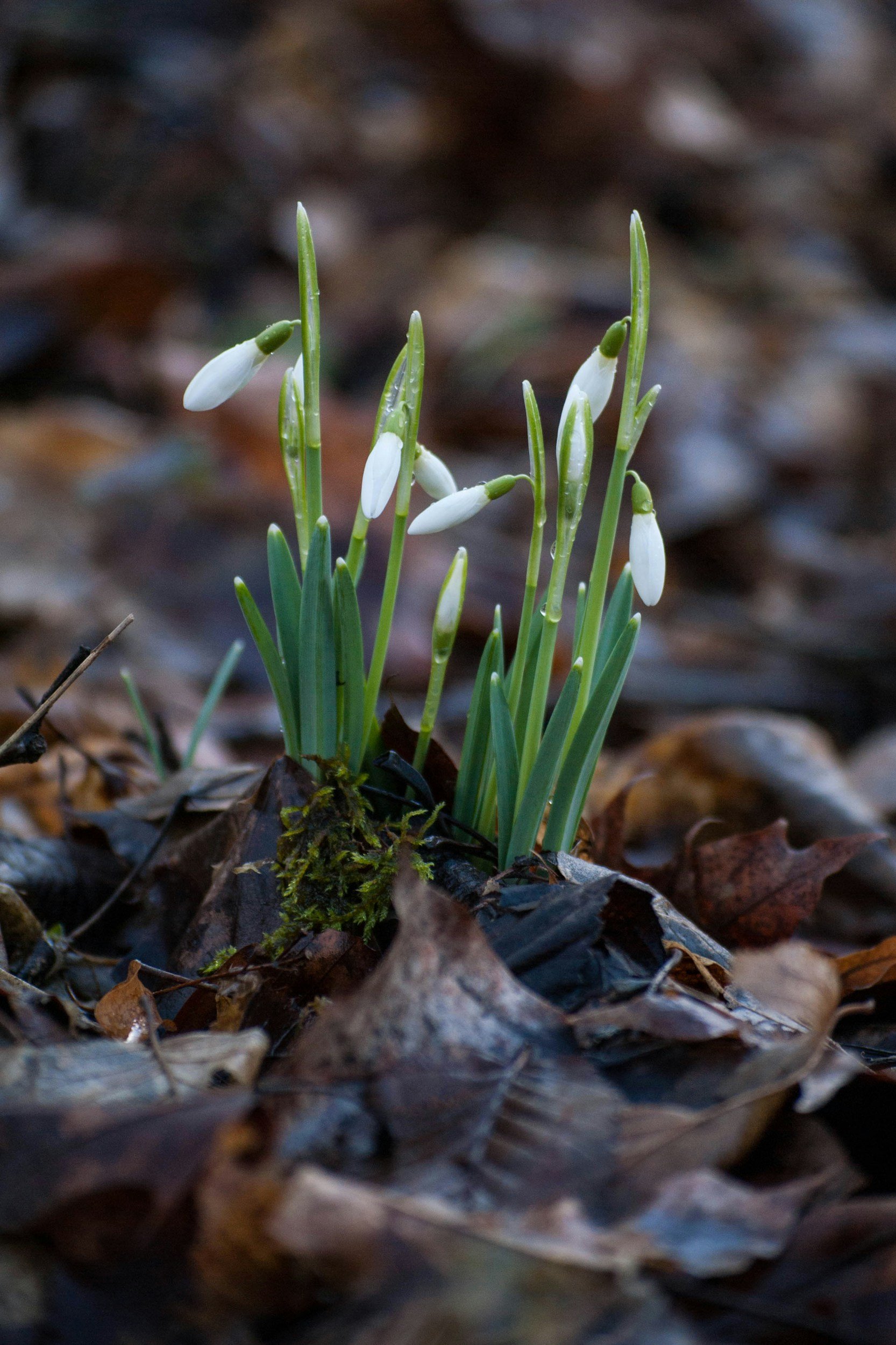
A few mornings ago, as I was walking the grounds of Villa St. Joseph, our Ecology and Spirituality Centre on the shores of Lake Ontario in Cobourg, I realized that despite the persistent cold there was a hint of Spring in the air and in my footsteps too! Suddenly, I was reminded of the predictable words of my mother as Spring approached, “March winds and April showers bring forth sweet May flowers”; a traditional English proverb dating back centuries. The literal sense of the proverb refers to the necessity of the cold winds of March and the rains of April (typical early Spring weather in the U.K. and in Western Canada especially) for the moist conditions in the soil necessary for the growth of the fresh flowers of May.

The phrase is often used to encourage those experiencing temporary hardship of the possibility of better times ahead. It has been expressed in various ways, including music. An example is the song, composed in 1935, by Walter G. Samuels and performed, in typical music hall fashion, by American singer, Ruth Ettings. The song and the various articulations of the proverb imply that growth and transformation can result from a certain dying, struggle and rising cycle – a cycle that points to hope and new life. The whole process as we experience seasonal change and as we celebrate the beautiful hope of Easter reminds us that the Paschal Mystery is writ large in the natural world and has been from the very beginning of God’s creation.
The Paschal Mystery encompasses the passion, death and resurrection of Jesus, just celebrated with gratitude and joy in our churches. That mystery is revealed and echoed in nature as a cosmic pattern of life, death and renewal. We are aware of it as we plant Spring seeds with hope for a flowering yet to come. In nature and in faith we can begin to grasp the life and promise that arises in patient waiting for “the gifts of God for the people of God” as the Anglican a book of Alternative Services reminds us. In both faith and in nature we see a revelation of divinity - the divinity of the risen Christ and of the emergent pattern of hope in the natural world. In both we discover an invitation to touch God – to enter fully into the sufferings, joys and beauty of the world. In it all we are called to lifelong transformation.  
The Jesuit priest and paleontologist, Pierre Teilhard de Chardin (1881-1955) put this beautifully when he wrote in his great Hymn of the Universe: “Bathe yourself in the ocean of matter; plunge into it where it is deepest; struggle in its currents and drink of its waters. For it cradled you long ago in your pre-conscious existence, and it is that ocean that will raise you up to God.”

May we be raised up to God and encounter joy, hope and rejoicing in the emerging world of Spring as we continue to celebrate together the great season of promise beginning this Easter Monday!

-Sister Mary Rowell, CSJ

Images: Sabbra Cadabra/Photogitthi/RODOLFO BARRETTO | Unsplash

Thinking Fast and Thinking Slow

Resurrection has many faces and many paces…both fast and slow.

In the Christian tradition we celebrate Jesus rising from the dead which on the face of it appears to be a one-time event causing us to rethink a conclusion that death is the final word.

Over and over, we experience resurrection’s faithful and irrepressible pattern…. if we open our eyes wide enough.

Think of how over half a million people marched peacefully in the United States on April 5 to cry out for justice and security for people, for the primal instinct of caring. Is this not also resurrection?

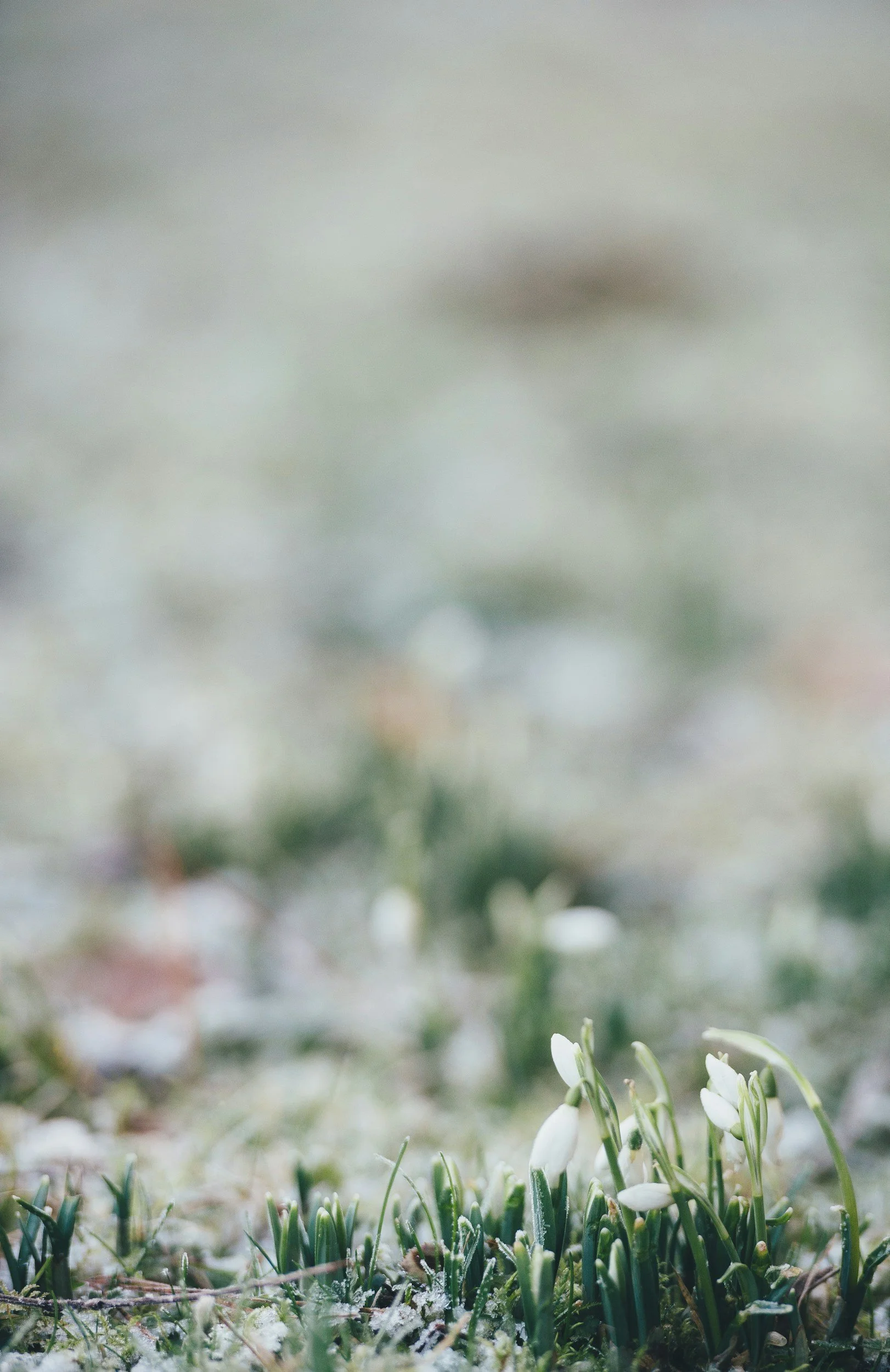
Think of the snowdrops that are coming through the frozen earth, again, against all odds. Is this not also resurrection?

Think of the long painful process of reconciliation which seems to move both at a snail’s pace with every now and again, a leap forward. Some resurrections take generations to complete their arc toward truth.

Think of the present world chaos and disruption of everything we thought was reliable and steady (at least for some of us on the planet). Now we wonder if there is something new trying to emerge in terms of relationship and interdependencies and fresh seeing.

Think of the gestures of connection that can occur everyday…an open door, a sincere gratitude, a recognition that all of us belong to and with each other, not turning away from pain, both our own and that of another, the simple fact of the sun shining.

-Sister Margo Ritchie, Congregational Leader, Sisters of St. Joseph in Canada

Image:Simon Berger/ Pisit Heng/Annie Spratt/Unsplash

AWAITING: A Reflection on Holy Saturday

Today, across the world, we encounter a profound stillness. Symbolically, on Holy Saturday, churches, chapels, and tabernacles are empty - sanctuary lamps extinguished, and altars are stripped bare. This bareness mirrors the tomb itself and draws us into the mystery of Holy Saturday.

Holy Saturday, often overshadowed by the solemnity of Good Friday and the jubilance of Easter Sunday, calls us to pause, to wait, and to reflect. Today occupies a unique space between two defining moments of the Christian faith.

What insights does this day offer us? Might this day of invitational waiting speak to us of the quiet, hidden processes that precede transformation. Can we, like the disciples of old, sit with our doubts and hesitations, acknowledging that the path to new life is often paved with darkness, difficulty, and deferred answers? Holy Saturday beckons us to acknowledge that inner change often comes not with instant clarity, but in the spaces in between, where our belief is stretched and refined.

Transformation is not a future event. It is a present activity.
— Jillian Michaels

Holy Saturday’s spiritual richness lies in its invitation to trust even when we cannot see the way forward. Our hope has the capacity to sustain and reassure us that God’s love holds us through all the seasons of life.

Let us pause to embrace this sacred, solemn interlude, and allow its stillness to deepen our awareness of the God of Goodness, who is always birthing new life.

-Sister Nancy Wales, csj

The slow work of God is so much greater than the instantaneous. We can’t rush things into existence.

Image: Alicia Quan/Unsplash

Our Weekly Pause and Ponder

Our Weekly Pause and Ponder

In Jesus, God reveals to us that God is not different from humanity.  Jesus’ most common and almost exclusive self-name is “The Human One” or “Son of Humanity.”  Jesus’ reality, his cross, is to say a free “yes” to what his humanity daily asks of him.  It seems we have been worshipping Jesus’ journey instead of “doing” his journey…. we are spiritual beings on a journey toward becoming fully human.

-Richard Rohr

RESURRECTION

Wesley Tingey/Unsplash

RESURRECTION

by Ronald Rolheiser

I never suspected resurrection

To be so painful

To leave me weeping

With joy to have met you, alive and smiling, outside an empty tomb

With regret – not because I've lost you

But because I've lost you in how I had you –

In understandable, touchable, kissable, clingable flesh

Not as fully Lord, but as graspably human.

I want to cling, despite your protest

Cling to your body

Cling to your, and my, clingable humanity

Cling to what we had, our past.

But I know that … if I cling

You cannot ascend and

I will be left clinging to your former self ...

unable to receive your present spirit.


For some reason, we needed all the time legally given to a parent to name our daughter, or perhaps as I think back, the name chose her.  She was Kristina, our little spark of the divine child on this earth.  She died at the age of 15 on Easter Sunday such that if we mark linear and not spiritual time, we experience the anniversary of her death twice each year.  A dear spiritual companion hoped that one day we would no longer associate Easter Sunday with her death but with resurrection.  And a dear friend sent me Rolheiser’s poem some time later.

But thirty-three years later, I know that a coin’s two sides co-exist in symbiotic relationship. The seasons – spring, summer, fall and winter – are all contained within each other as well, held in a continuous flow of life and death.  Even our thoughts and beliefs would not exist without the teacher who led us to them. Surely, we would not know the Resurrection if Christ had not experienced the Crucifixion. The continuing miracle of Kristina’s life and death as One is our family’s ongoing, sacred lesson in the unity of All.  

Christ has died.  Christ has risen.

-Susan Hendrick, csj Associate