
World Food Day

WORLD FOOD DAY.jpg

Children, thin and bone-weary, and mothers too emaciated to feed their young line up with empty bowls before a UN Food truck – a scene in too many countries in our world today. This is the stark reality for millions of people in our world, in our global community.

Recently the headlines gave us the glad news that the United Nations World Food Program had won the 2020 Nobel Peace Prize. It was a spotlight on the need to eradicate hunger, a mandate the UN has faithfully done its very best to fulfill for 50 years. It has been said that Canadians can rightly share in this recognition as our country has been the seventh-largest donor to this program for 50 years.[1]

But what causes world Hunger? Is it a lack of the right technological agricultural fix because we can’t grow enough food? No.  Here are some facts:

  • The world produces enough food to feed everyone, yet, about 800 million people suffer from hunger. That is one in nine people. 60% of them are women.[2]

  • Hunger kills more people every year than malaria, tuberculosis and aids combined.

  • Around 45% of infant deaths are related to malnutrition.

  • 1.9 billion people – more than a quarter of the world’s population – are overweight.

  • One third of the food produced worldwide is lost or wasted.

  • War, climate change and troubled economies are the key reason for the rise of hunger in the world,[3]

So what can we possibly do, as individuals, as communities in the First World? Here are some words from an Eco-theologian Sallie McFague and Pope Francis for reflection:

First: The eco-theologian Sallie McFague tells us that,

“we cannot in good conscience ‘love the world’ -its snow-capped mountains and panda bears -while at the same time destroying it and allowing our less well-off sisters and brothers to sink into deeper poverty”[4]…hence I believe Christian discipleship for the 21st century North Americans means ‘cruciform living,’ an
alternative notion of the abundant life, which involve a notion of enoughness”
[5]

She is calling us to a philosophy and practice of “enoughness” with limitations on energy and sacrifice for others. It is the call to turn back from a consumerist culture that always wants more -whether its variety for our jaded appetites of food, clothing, technology – and turn to the freedom of learning to live with less.

Second: In a recent speech to the UN, Pope Francis said,

The pandemic “can represent a concrete opportunity for conversion, for transformation, for re-thinking our way of life and our economic and social systems which are widening the gap between rich and poor countries with its unjust distribution of resources… or the pandemic can be an occasion for a defensive retreat into greater individualism and elitism.”[6]

What are some choices everyday people can make on World Food Day?

1. Listen to the above facts and pick one issue that you can pledge to do something about.

2. Eat leftovers – yes, they can be boring but be inventive or make it an act of prayer and solidarity.

3. Reduce food waste by the above or composting. Most urban centres now have a compost stream - or compost at home.

4. Have a Fast Day once a week for world hunger.

5. Eat less red meat or become vegetarian.

6. Buy local & organic if possible -transportation costs drive up the carbon footprint

7. Donate to your local food bank or support local food groups.

8. Enjoy your food and give thanks!

A Table Grace

We pray a blessing of gratitude in this season of Autumn

Our hearts are thankful for the breath of wind, the warmth of sun

The waving fields of grain, the landscape of hills turning gold

Giving light to our souls and wonder in our being

We give thanks to our Creator and all the Earth who hold us close

We give thanks for our friends- our Elders the trees, flowers of beauty and the sparkling waters, the soaring winged ones and the precious human friends who hold our heart

May our lives bring life to others and all the Earth

May our gratitude be a Thanksgiving for all.
Amen.

                                                                                     - Sister Linda Gregg, csj

[1] Toronto Star, World Food Program Wins Nobel Peace Prize, Oct.10,2020, A23

[2]  Kerry Health and Nutrition Institute. https://khni.kerry.com/news/articles/ten-facts-you-need-to-know-about-hunger-on-world-food-day/ 

[3]  The Star Tribune, “World hunger continues rising amid war, climate change, UN reports” July 16, 2019,  https://www.startribune.com/world-hunger-continues-rising-amid-war-climate-change-u-n-reports/512801492/  

[5] Sallie McFague, Life Abundant: Rethinking Theology and Economy for a Planet in Peril,(Minn.MN  Augsburg Fortress, 2001), 14. 

[6] Catholic Register, “Pope Charts a Post-Pandemic Course,” Oct. 4, 2020, 4.

The Sport and Prey of Capitalists

SPORT AND PREY.jpg

The front cover of the 2019 book by the brilliant journalist, Linda McQuaig, captures in six words and one picture the theme of her latest work, an exposé of the blatant betrayals the Canadian people have endured at the hands of their own governments.  The words SPORT and PREY above the dying Canada goose plummeting to earth, its feathers trailing behind it, encapsulate a century of greed, arrogance, and robbery of our nation’s public institutions.

The phrase “the sport and prey of Capitalists” was coined by James P. Whitney, Premier of Ontario in 1905. He was expressing his wish that the Hydro system in Ontario forever remain in the hands of the citizens and not fall victim to privatization.

McQuaig introduces her examination of 20th-century institutions transferred from public to private hands with this story of the scandalous current case of the Canadian Infrastructure Bank promised by Justin Trudeau following his election in 2015.

monopoly man.jpg

The Prime Minister’s team to head up the creation of the bank was led by Bill Morneau, former Canadian finance minister, who chose for his advisors several Wall Street profiteers anxious to lend their millions to a project that would bring them ample returns. Consequently, the plan presented to Parliament for approval was molded to fit the dream of the private investors for significant returns.  The original plan to borrow from “the people’s bank” the Bank of Canada, at a modest rate was replaced by one that suited the greed of a small team of avaricious millionaires from the United States. Thus, Canadian citizens will be required to pay unnecessary millions for their own roads and bridges while a few investors proceed to, as Kevin Page, the first parliamentary budget officer, declared, “rob us blind”. (p.30)

Following this example from our own time and place, McQuaig plunges into the scandalous historical details of some of the worst deals done by prime ministers and premiers against the best interests of the citizenry. The sale of the Connaught Laboratories,  and the privatization of Hwy. 407 are two examples.  

The give-away of Alberta’s oil for the most meager of royalties, combined with the Alberta government’s deference to Big Oil, resulted in massive losses for Alberta’s citizens who owned the resource but were denied the profits.

McQuaig compares successive Alberta governments to the national government of Norway that insisted that the oil in Norway’s territories belonged to the Norwegian people, not the big oil companies. “…Norwegians have managed to save up about one trillion dollars more in their rainy-day fund than Alberta.” (pg. 198)

Thankfully, when the reader has turned the last page of chapter seven, now scandalized and outraged, she or he will find that Linda McQuaig sings the praises of “the common”, which Canadians know, have experienced, and are good at. In most of her examples of Canadians being sold out, the institutions in question were being well run, were self-sustaining, and sometimes made a profit for the people. Once in private hands, it was the share-holders that mattered. The workers and the general public mattered not a whit, as we all witnessed at the closing of Sears Canada on December 18, 2017.

The author's last words are to urge us who care to practice the courage of the Norwegians who realized early on that even if a corporation left because it didn’t like how the government defended its citizens, it couldn’t take the oil with it.

Reviewed by Joan Tinkess

Our guest blogger, Joan Tinkess, is an avid book club participant of nonfiction. Her years of empowering women’s groups in the Dominican Republic broadened her local and worldview.

For a deeper dive, and some interviews with the author

Praying during the Pandemic

I knew, eventually, I could no longer ignore that persistent little voice within urging me to write a blog about praying. I do not mean writing about praying per se, but about praying during this pandemic. Don’t worry, I am not about to write a dissertation or manual about prayer. People much better equipped than I am have literally written millions of books about prayer.  In my small eclectic collection of prayer books and books about prayer, you can find the writings of Joyce Rupp, Thomas Merton, Margaret Silf, Anne Lamott, Anthony Bloom, Nan Merrill, and others.  I also have a copy of the impressive anthology, Prayers for a Thousand Years.

During my forty-plus years as a Missionary Sister, I have done a fair amount of praying.  Yes, there is a time for everything. There is a time for “doing praying” as we do in formal communal prayer.  People gather and pray in groups in a vast array of different ways. Think of the Sufi Whirling Dervishes who whirl in communal prayer, on the one hand, and the sedate prayer form practiced by those who prefer the Taizé form of prayer or the contemplative prayer of women and men in religious communities, in small groups, and by individuals around the world.

prayer is not a contest but, “a doorway … into thanks and a silence in which another voice may speak.”

Mostly, we tend to use words when we pray, and therein lies the rub.  I should think all of us have experienced how easily words can be misunderstood.  However, I would think we have also experienced how loudly and clearly silence can speak.  In her poem Praying, the wonderful poet Mary Oliver concludes that when we pray there is no need for elaborate words.  For her, prayer is simply patching a few words together since prayer is not a contest but, “a doorway … into thanks and a silence in which another voice may speak.”

prayer.jpg

Some might say this is an oversimplification of prayer.  I, however, have come to view her description of prayer as a wonderful invitation to pause and pray as we are, where we are.  It confirms what I discovered long ago; prayer is more listening than speaking with God. While musing and praying during these pandemic times of quarantines and lockdown, I have often thought how apt these words by C. S. Lewis are, “God whispers to us in our pleasures, speaks in our conscience, but shouts in our pains: it is his megaphone to rouse a deaf world.”  I would say during this pandemic God is doing a great deal of shouting, a shouting which seems to fall on deaf ears, unless we spend time in “a silence in which another voice may speak.”  God shouting during these days of the pandemic may not only threaten to burst our eardrums; for many this pandemic is more a space to doubt God or prayer.  When we do listen, underneath the “shouts in our pains”, and easily missed, we will hear that small, still voice reaching into our hearts. It is only when we pause in silence and listen attentively, and not turn a deaf ear, that we may hear what God is really saying to us during this graced time of enormous global and personal upheaval.

“God whispers to us in our pleasures, speaks in our conscience, but shouts in our pains: it is his megaphone to rouse a deaf world.” - C. S. Lewis

None of us is immune to the impact of this dreadful pandemic nor remains untouched by it in every aspect of our lives.  It most certainly has touched and transformed the way I have communed with God during these past six months. Yes, at times these weeks and months have been incredibly challenging, however they have also been surprisingly graced.  In her book on prayer, “Help, Thanks,Wow” Anne Lamott offers us her insight into grace, “I do not understand the mystery of grace -- only that it meets us where we are and does not leave us where it found us.” Indeed, so true.  Whether I sit silently on my balcony bathed in the early morning light or in the glow of a candle at the end of the day, these intimate moments of mostly silent communing with God, these times of prayer are a great source of comfort and strength.  Here, grace has met me and has not left me where I was.

- Sr. Magdalena Vogt, CPS

Praying

It doesn’t have to be
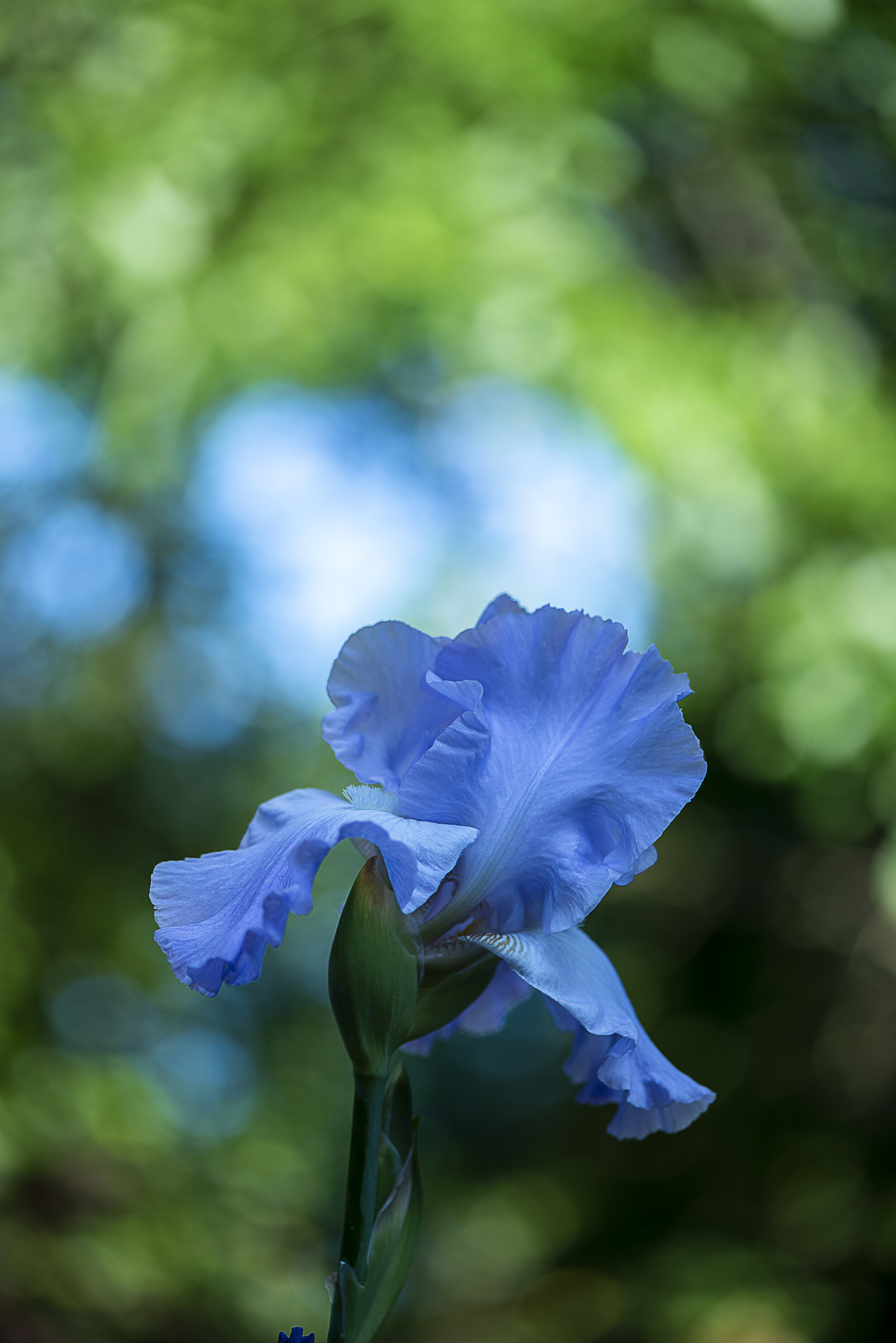
the blue iris, it could be
weeds in a vacant lot, or a few
small stones; just
pay attention, then patch

a few words together and don’t try
to make them elaborate, this isn’t
a contest but the doorway

into thanks, and a silence in which
another voice may speak.

Mary Oliver, Thirst, Beacon Press 2006

With Gratitude in Our Hearts

I am delighted that Canadian Thanksgiving occurs amidst the glories of autumn.   Fall has a beauty all its own.  During my morning walks, I’m in awe of the amazing changes occurring all around me.  The sun is still warm on my skin but there is a pungent smell in the air as trees begin to change their leaves from green to yellow, orange, and red. The sumac wears her crimson gown. Roses fade while asters, zinnias, and fall flowers show their purples, rusts, and golden hues. It reminds me of the school fair displays of flowers long ago. Grass grows longer and dew covers the lawn.  Overhead, I imagine the chirping birds are telling each other it’s time to fly south to the warmer climes.  Even the resident turkeys are keeping their distance from us these days.

how great thou art.jpg

Often, the autumn scene causes me to break into a quiet song as I wander throughout the neighbourhood.  Thanksgiving hymns from my childhood that are still sung today rise spontaneously from deep within my being.  I find the famous, “Now Thank We All Our God” surfacing and “For the Beauty of the Earth” giving voice to my elation.  Sometimes, it’s “God Created Earth and Heaven”; other times it’s “How Great Thou Art.”  No, I don’t forget The Old 100th tune, “Praise God from Whom All Blessings Flow.”

“With gratitude in your hearts, sing psalms, hymns and spiritual songs to God” (Colossians 3:16).

I think I’m in good company with autumn praise. St. Paul himself encourages us by exhorting, “With gratitude in your hearts, sing psalms, hymns and spiritual songs to God” (Colossians 3:16).  Probably, you too, often respond to thanksgiving with song. Whether alone or in smaller groups to celebrate Thanksgiving this year, let us remember that God’s blessings are abundant and renewed each day and in every season of our life.

- Sister Jean Moylan, csj