
The Community Hub - Bringing People Together in London, Ontario

Sisters of St. Joseph in Canada &
London Cares Homeless Response Services

The Community Hub

More and more in our local community, we are seeing people struggling with mental health and addictions with nowhere to go and the system in place to support them often feeling intimidatingly difficult to navigate.

Both the Congregation of the Sisters of St. Joseph in Canada (CSJ) and London Cares Homeless Response Services (London Cares) serve these individuals in need in their own ways. The Sisters of St. Joseph operate St. Joseph’s Hospitality Centre – a place individuals can visit to get a hot meal and find fellowship. London Cares is a housing-first organization that prioritizes getting individuals into homes and providing wraparound supports after. While organizations like these have been getting better and better at serving the needs of their clients over the years, the underlying issues have been getting worse.

When I first started, we’d serve maybe 150 individuals a day,” says Bill Payne, Coordinator of the St. Joseph’s Hospitality Centre. Over the last 26 years we’ve seen more and more people come in with increasingly severe substance abuse and mental health issues. We serve about 400 meals a day now.”

Thanks to a Community Vitality Grant, the CSJ and London Cares will collaborate on The Community Hub, a new location that will house many of the support services our most vulnerable citizens need, all under one roof. With additional partners in Regional HIV/AIDS Connection and London InterCommunity Health Centre potentially offering services out of the new location, the Community Hub will make navigating our city’s support systems easier for everyone.

With the COVID-19 pandemic complicating so many lives throughout the city, the need for simplicity has never been more apparent.

While closures and restrictions have certainly impacted service delivery, the sense of closeness and community that accompanied shared spaces like the soup kitchen is an equal loss.

“I think the thing that’s struck me the most is that at the soup kitchen, while it's obvious we do food, it has always been about community, and because of the physical distancing guidelines designed to keep everyone safe, we’ve lost some of that,” says Bill. “Our folks are so resilient and I'm so proud of how they face their situations with a smile, and how they’re able to pass that smile along to me.”

it has always been about community

The Community Hub aims to be a model for the future of service delivery, centered around collaboration between partner agencies to ensure that everyone has the opportunity to seek and receive the help they need to thrive. Taking a trauma-informed approach and providing specialty training to staff will ensure that service comes from a place of compassion and understanding.

Ultimately, the Community Hub is about bringing people together, both agencies and people in need of support, building community, encouraging a greater understanding of the issues our city is facing, and collaborating on solutions to help our most vulnerable populations.

“I don't think we're under any illusion that we're getting rid of poverty or we're going to solve everything,” says Bill. “My hope is that with the Community Hub, we’ll have made a hospitable, welcoming place that makes life just a little easier for our clients.”

There is no doubt there is a crisis in supportive housing, mental health and addiction in our community. At the heart of the collaboration to create a hub with these amazing organizations is community. Community is the most radical idea to create substantial change. We have collaborated for two years from a base of shared values. We will offer services in shared space and hope to create a welcoming environment where people can more easily get the supports they need.
-Sister Margo Ritchie, Congregational Leader for the Sisters of St. Joseph

Neighbours on Downie Street

From my second-floor window – at 7:30 a.m. each day I watch a young mother, a teacher, wheel her 2-year-old twin daughters down the steps and get them settled in their van.  This daily routine also includes her interaction with a middle-aged man from our neighborhood.  His name is Kelly and he is a regular visitor sharing his news early in the morning in a rather loud tone – which could be about his dog or what his plans are for the day.  The mom, while getting her children settled takes time to listen to Kelly and offers encouraging words to him as he retells (a couple of times over) the story about his dog and what his plans are for the day. 

BE KIND.jpg

Kelly approaches the window of the van and offers a wave and blows kisses to the children and then crosses the street and returns to his own home, giving this mother some positive affirmations as she heads to her classroom for another day.

With this pandemic and my own inability to volunteer with the marginalized, I think I have received a gift that is happening right outside my window every morning.  I feel that I am participating in this exchange between these neighbors – as I witness the respect for one another, and kindness being given freely to Kelly – who represents many in our society today who are not treated with respect or dignity.

I am realizing that being present can happen in many different ways…

-Sister Ann MacDonald, csj

Goodbye and Good Riddance!

Canada to ban six single-use plastic items next year.

This month, the federal government announced it would be adding plastics to the Toxic Substance List under the Canadian Environmental Protection Act (CEPA). This is a crucial step towards regulations that would reduce plastic production, use and disposal. It’s about time.

plastic2.jpg

Canada to ban six single-use plastic items

Photo credit: Ruth Hartnup/Flickr Creative Commons

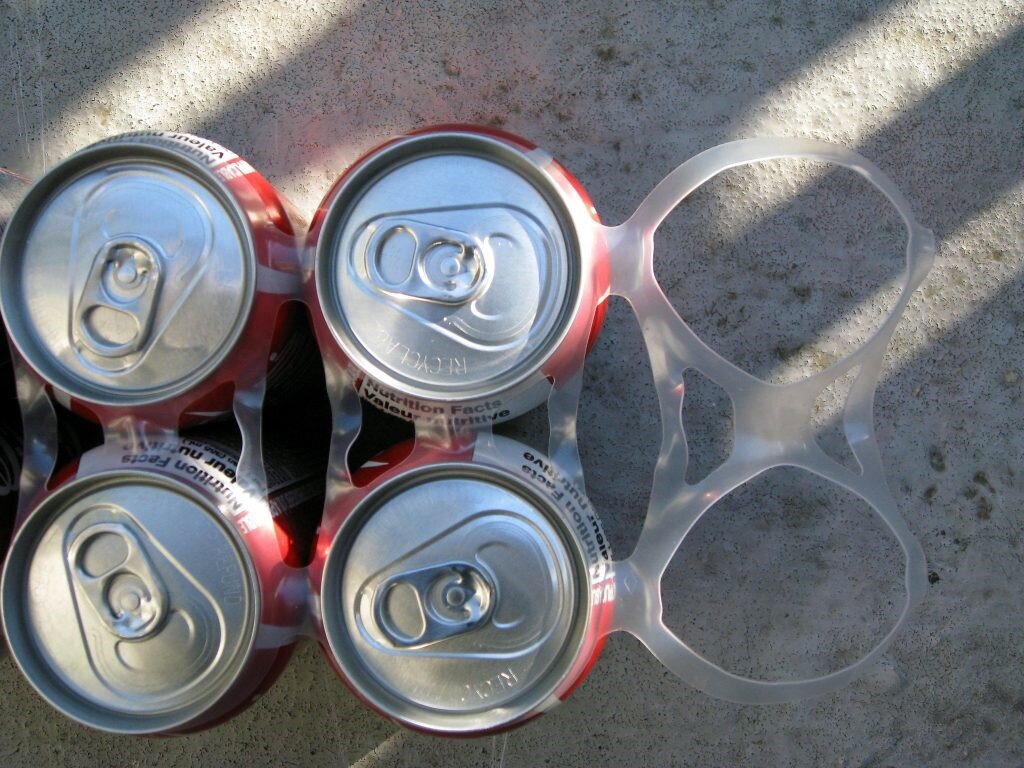
As part of the same announcement, Environment Minister Jonathan Wilkinson released a draft management plan outlining the actions his ministry is considering to eliminate plastic waste. One of those actions is banning some single-use plastic items, specifically: grocery bags, straws, cutlery, six-pack rings, some takeout containers, and stir sticks.

The list itself is a good start. Canada has obviously been taking cues from the European Union (EU), which already moved to ban most of the same items last year. But Canada needs to do much more than ban plastic straws and spoons if it’s serious about a zero plastic waste future.

Much more is needed to tackle the plastic crisis

The truth is that our current, linear economy—where disposable products and packaging are the norm—is unsustainable. Instead, we need to transition to a circular economy, where reduction, reuse, and repair are prioritized and materials stay in the economy and out of landfills, incinerators and the environment.

Unfortunately, notwithstanding the bans, it looks like the government is going all-in on recycling as a silver bullet solution to plastic waste. But the reality is that recycling was a lie sold to us by the same industry committed to filling our cabinets, landfills and oceans with plastic —the petrochemical lobby.

Beyond the fact that many kinds of plastic are impractical or impossible to recycle, there are limits on the number of times plastic can be recycled before the polymers are too degraded and the material needs to be thrown away.

That’s why Canada needs to impose and enforce reduction and reuse targets, in addition to recycling and recycled content targets.

Next steps for Canada to tackle plastic pollution

plastic3.jpg

Between now and December 9, the government is asking Canadians, businesses, and other stakeholders to provide feedback on their proposed management plan. We’ll be at the table, pushing hard for the regulations we need to eliminate plastic waste in Canada, including:

  1. Finalizing the addition of plastics to the Toxic Substance List, under Schedule 1 of the Canadian Environmental Protection Act, 1999 by the end of 2020;

  2. Banning at a minimum the six items proposed in the draft management plan by the end of 2021, and adding additional plastic items to the ban list in future years;

  3. Working with provinces and territories to make the companies that produce plastic products and packaging financially and operationally responsible for plastic waste (Extended Producer Responsibility, EPR), and ensuring harmonization from coast-to-coast-to-coast; and

  4. Establishing and enforcing high reduction, reuse, recycling, and recycled content targets to support Canada’s transition to a circular economy.

The plastic crisis has been growing for decades, and there is no immediate solution. It will take actions from all levels of governments, industry and society to overcome it. But this announcement is a step in the right direction.

- Ashley Wallis, Plastics Program Manager, Environmental Defence

World Food Day

WORLD FOOD DAY.jpg

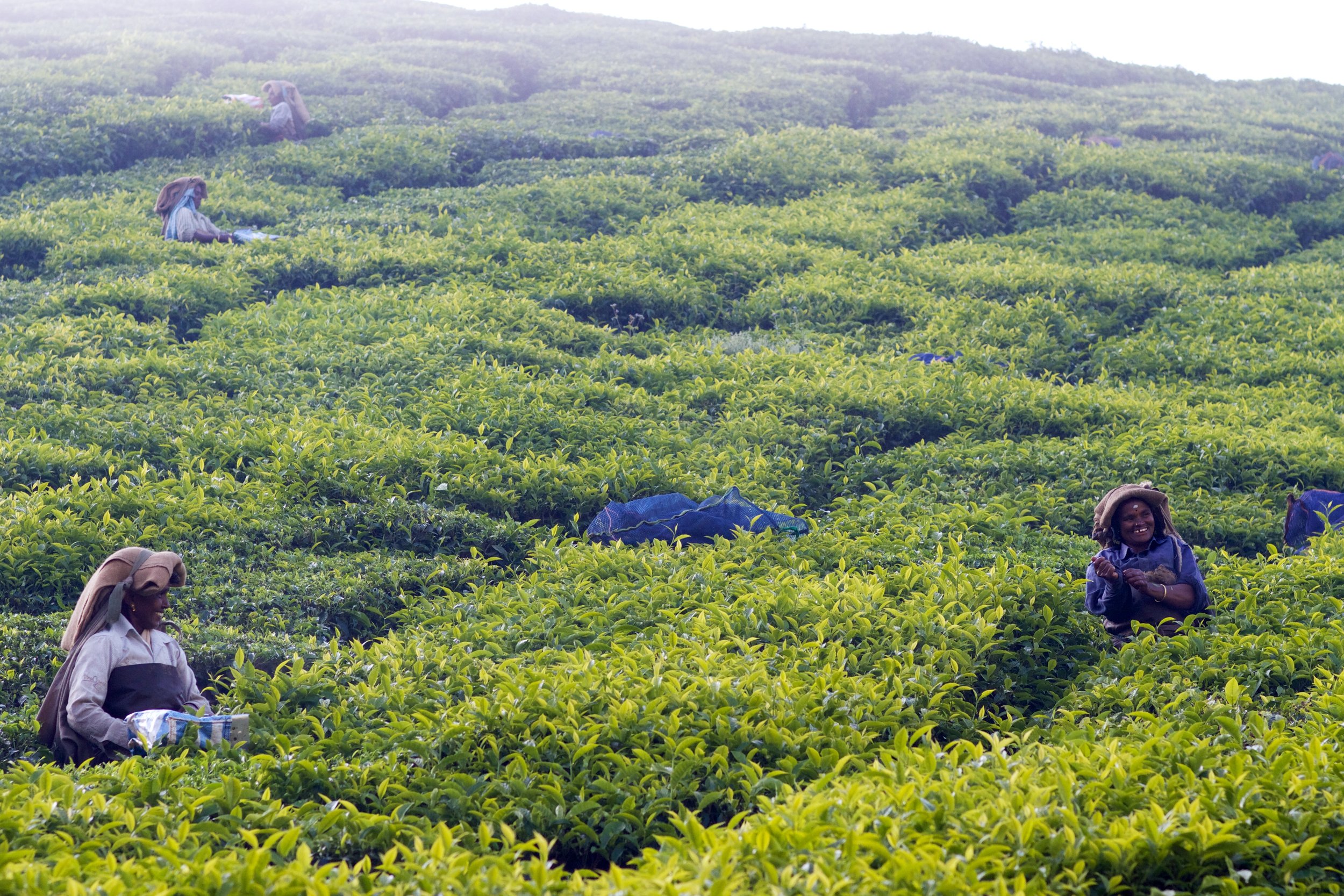
Children, thin and bone-weary, and mothers too emaciated to feed their young line up with empty bowls before a UN Food truck – a scene in too many countries in our world today. This is the stark reality for millions of people in our world, in our global community.

Recently the headlines gave us the glad news that the United Nations World Food Program had won the 2020 Nobel Peace Prize. It was a spotlight on the need to eradicate hunger, a mandate the UN has faithfully done its very best to fulfill for 50 years. It has been said that Canadians can rightly share in this recognition as our country has been the seventh-largest donor to this program for 50 years.[1]

But what causes world Hunger? Is it a lack of the right technological agricultural fix because we can’t grow enough food? No.  Here are some facts:

  • The world produces enough food to feed everyone, yet, about 800 million people suffer from hunger. That is one in nine people. 60% of them are women.[2]

  • Hunger kills more people every year than malaria, tuberculosis and aids combined.

  • Around 45% of infant deaths are related to malnutrition.

  • 1.9 billion people – more than a quarter of the world’s population – are overweight.

  • One third of the food produced worldwide is lost or wasted.

  • War, climate change and troubled economies are the key reason for the rise of hunger in the world,[3]

So what can we possibly do, as individuals, as communities in the First World? Here are some words from an Eco-theologian Sallie McFague and Pope Francis for reflection:

First: The eco-theologian Sallie McFague tells us that,

“we cannot in good conscience ‘love the world’ -its snow-capped mountains and panda bears -while at the same time destroying it and allowing our less well-off sisters and brothers to sink into deeper poverty”[4]…hence I believe Christian discipleship for the 21st century North Americans means ‘cruciform living,’ an
alternative notion of the abundant life, which involve a notion of enoughness”
[5]

She is calling us to a philosophy and practice of “enoughness” with limitations on energy and sacrifice for others. It is the call to turn back from a consumerist culture that always wants more -whether its variety for our jaded appetites of food, clothing, technology – and turn to the freedom of learning to live with less.

Second: In a recent speech to the UN, Pope Francis said,

The pandemic “can represent a concrete opportunity for conversion, for transformation, for re-thinking our way of life and our economic and social systems which are widening the gap between rich and poor countries with its unjust distribution of resources… or the pandemic can be an occasion for a defensive retreat into greater individualism and elitism.”[6]

What are some choices everyday people can make on World Food Day?

1. Listen to the above facts and pick one issue that you can pledge to do something about.

2. Eat leftovers – yes, they can be boring but be inventive or make it an act of prayer and solidarity.

3. Reduce food waste by the above or composting. Most urban centres now have a compost stream - or compost at home.

4. Have a Fast Day once a week for world hunger.

5. Eat less red meat or become vegetarian.

6. Buy local & organic if possible -transportation costs drive up the carbon footprint

7. Donate to your local food bank or support local food groups.

8. Enjoy your food and give thanks!

A Table Grace

We pray a blessing of gratitude in this season of Autumn

Our hearts are thankful for the breath of wind, the warmth of sun

The waving fields of grain, the landscape of hills turning gold

Giving light to our souls and wonder in our being

We give thanks to our Creator and all the Earth who hold us close

We give thanks for our friends- our Elders the trees, flowers of beauty and the sparkling waters, the soaring winged ones and the precious human friends who hold our heart

May our lives bring life to others and all the Earth

May our gratitude be a Thanksgiving for all.
Amen.

                                                                                     - Sister Linda Gregg, csj

[1] Toronto Star, World Food Program Wins Nobel Peace Prize, Oct.10,2020, A23

[2]  Kerry Health and Nutrition Institute. https://khni.kerry.com/news/articles/ten-facts-you-need-to-know-about-hunger-on-world-food-day/ 

[3]  The Star Tribune, “World hunger continues rising amid war, climate change, UN reports” July 16, 2019,  https://www.startribune.com/world-hunger-continues-rising-amid-war-climate-change-u-n-reports/512801492/  

[5] Sallie McFague, Life Abundant: Rethinking Theology and Economy for a Planet in Peril,(Minn.MN  Augsburg Fortress, 2001), 14. 

[6] Catholic Register, “Pope Charts a Post-Pandemic Course,” Oct. 4, 2020, 4.