
Week of Prayer for Christian Unity

18 - 25 January 2021

week of prayer.jpg

At least once a year, Christians are reminded of Jesus’ prayer for his disciples that “they may be one so that the world may believe” (see John 17:21). Hearts are touched and Christians come together to pray for their unity. Congregations and parishes all over the world exchange preachers or arrange special ecumenical celebrations and prayer services. The event that touches off this special experience is the Week of Prayer for Christian Unity.

The 2021 theme – Abide in my love and you shall bear much fruit (John 15:5-9) – calls us to pray and to work for reconciliation and unity in the church, with our human family, and with all of creation. Drawing on the Gospel image of vine and branches, it invites us to nourish unity with God and with one another through contemplative silence, prayer, and common action. Grafted into Christ the vine as many diverse branches, may we bear rich fruit and create new ways of living, with respect for and communion with all of creation.

Please join us during these challenging times of the pandemic, to pray for unity not only among Christians but among all peoples.

https://www.weekofprayer.ca/2021-week-prayer-christian-unity

-Sister Magdalena Vogt, cps

A Book for our Time

to speak trees.jpg

Diana Beresford-Kroeger is the author of many books including an extraordinary book for our time, TO SPEAK for the TREES - My Life’s Journey from Ancient Celtic Wisdom to a Healing Vision of the Forest. I hope that each of you either have or will read this book and will take its message to heart. Diana Beresford-Kroger’s life work reminds me of what is at the heart of the work of the Sisters - deep and profound listening and responding to the needs of our time. The author has spent a lifetime of listening deeply and profoundly in the natural world and has actively been at the forefront of conservation and advocacy for forests and all life. She helps us to understand the complex interconnectedness of the nonhuman and human realms.

In her autobiography, Diana Beresford-Kroger shares her story of growing up in Ireland being schooled by elders in the ancient Celtic wisdom practices with a “vision of nature that saw trees and forests as fundamental to human survival and spirituality”.  Diana Beresford-Kroger unfolds her journey of becoming a scientist particularly in the fields of Botany and Medical Biochemistry. She shares her work, successes, and challenges as a professor and researcher in Ottawa early in her career. Diana Beresford-Kroger then settles locally on a farm property to continue her life work integrating scientific knowledge and the traditional concepts of the ancient world as well as Indigenous knowledge and wisdom.  

Photo by Anton Darius, UNSPLASH

Photo by Anton Darius, UNSPLASH

In To Speak for the Trees, Diana Beresford-Kroger “eloquently shows us the intricate ways in which the health and welfare of every living creature is connected to the global forest and how to strengthen those connections. If we do so, she argues, we can pause the climate crisis long enough to have a fighting chance to mend our self-destructive ways.” I encourage you to read TO SPEAK for the TREES and respond accordingly. This book is available at your local public Library - although the waitlist may be long!

-Sandy Bell-Cameron, CSJ Associate

Creating a Beloved Community

Creating a Beloved Community…. It’s still our desire

“Our goal is to create a beloved community, and this will require a qualitative change in our souls as well as a quantitative change in our lives.”  -Martin Luther King

These words of Dr. King have a call that reaches to needs of our world even more urgently.  They are as true today and needed even more so, given the many tragic events unfolding in the United States and around the world.  In this blog, the story I want to shed some light on is the millions of migrants and refugees on the move seeking a more safe and secure life for themselves and their families. However, this is a story not just about the difficult and tragic circumstances of the lives of these people, but it is a story that is also about us. 

I think most of us came from somewhere else in our home country or in a new country.  According to the UN, 244 million live in a country other than where they were born; 20 million of these we call refugees and asylum seekers escaping violence or persecution and a pandemic in their home countries.  They are seeking home somewhere else, and some among and with us. We are part of this story and we contribute to how this story will evolve.

let love lead.jpg

So many of us are yearning for a better ending to many stories we see on our TV screens or in the books we are reading.  We long for stories of love rather than hate, or creativity rather than destruction, of win-win cooperation rather than a win-lose competition of peace rather than war.  I am unable to do this alone, and it must be more than a wish.  Our wish is part of the qualitative change that happens internally in our souls, but it also calls for a quantitative change in our lives.  We can all be involved. To be part of creating a “beloved community” starts with some very practical actions and one person at a time.  It is letting love lead the next chapters of this story. Part of this story is one of justice and joy, love, and peace, and we still get to win, just not at everyone else’s expense.  We can move into a reality in which we can live in harmony with one another.  Then we can be part of creating conditions in which peace and well-being are not only possible but normal, and in which inevitable conflicts can be resolved through justice, kindness, wisdom, and love.  Let’s each contribute to writing the next chapters of this story.

-Joan Atkinson, CSJ

Sailing to America - A Story from the Calendar of Remembrance

1836-Carondolet.jpg

In 1836 six Sisters of St. Joseph of Lyon set sail from Le Havre, France for the St. Louis Diocese in the United States. Sisters Fébronie and Delphine Fontbonne, Marguerite-Félicité Bouté, Fébronie Chapellon, St. Protaise Deboille and Philomène Vilaine were the first missionaries to North America.

We mark this day in remembrance that our Canadian communities are rooted in this history. It is said that when Mother St. John Fontbonne became the first superior after the French Revolution, the birth of new CSJ communities proliferated “like a swarm of bees”.

For an interesting commentary, we invite you to view:


This video was made by Mount Saint Mary’s University - History of the Sisters of St. Joseph - Mother St. John, Part II. The story of being missioned to America begins at 4:32.

Angels on Earth

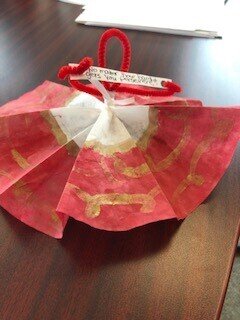
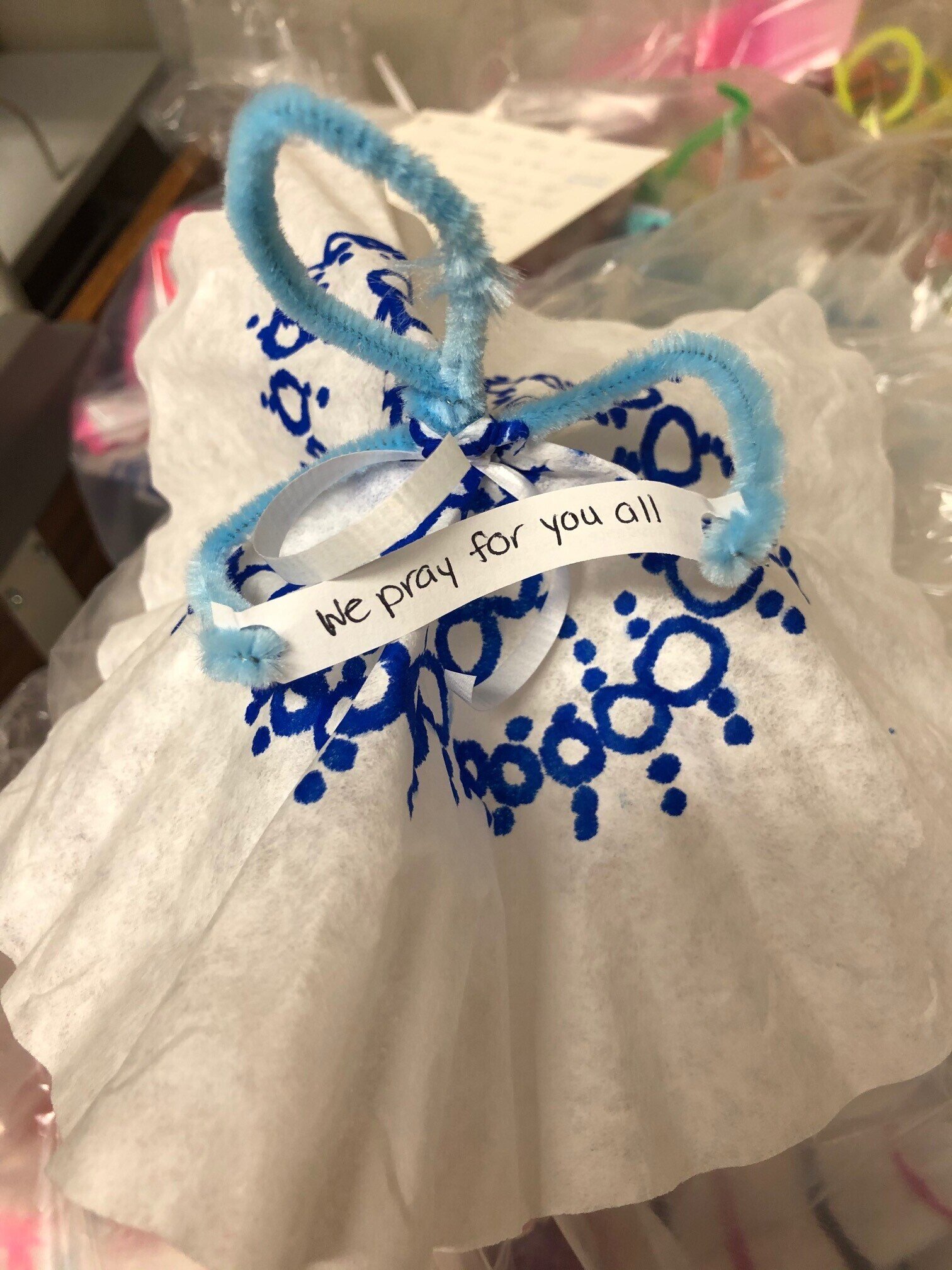
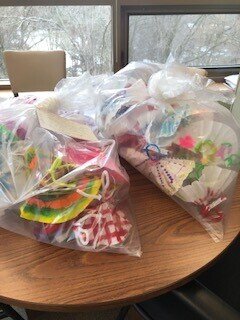
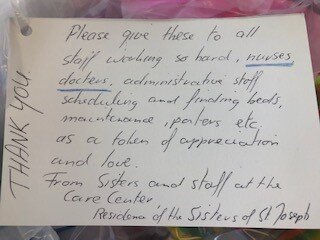
Sisters & staff in our Care Centre handmade and delivered paper angels for the staff at University Hospital in London, ON with this note:

Please give these to the staff who are working so hard. Nurses, doctors, administrative staff etc. As a token of our appreciation and love

From the Sisters and Staff,

The Sisters of St. Joseph