
Hooked!

I could say I am hooked on crocheting during this latter part of the pandemic. It is incredible what a ball of yarn and a crochet hook can do for you. Did you know research found knitting and crocheting lowers heart rate and blood pressure? Besides many other benefits, it also calms anxiety. Perfect during this long pandemic, for what could make any of us more anxious than this pandemic with its numerous unfathomable unknowns. Studies also show that people in my age range and up who are “knitters and crocheters have the healthiest brains and memories.” (https://littlethings.com/lifestyle)
Besides the mental and psychological benefits of crocheting, there are also physical ones, such as improved hand-eye dexterity and coordination. It is not surprising, then, that crocheting has been popular for a long time. For one thing, it is portable, as all you need are a simple hook and yarn. I would say, let us keep knitting or crocheting and if you do not know how, this just may be the perfect time to learn these skills.

Perhaps you are wondering what causes me to write about a hook and yarn in this reflection. Trust me, I am not about to spin a yarn, but here is my tale. While crocheting a baby blanket recently, I began to cogitate about how this pandemic continues to impact our lives in so many ways. While looking at the crochet hook in my hand, and the yarn wrapped around my fingers, it struck me what a great symbol a hook and yarn are for what we are busy doing right now during this pandemic - shaping a new reality.
Life tends to be bittersweet much of the time. I dare say, this pandemic is no different. When planet earth hooked the Covid-19 virus, we were thrust into this global catastrophe. For many, this pandemic has been a devastating experience. Yet, if we take a moment to cast a backward glance over these past fourteen months, we may just be amazed to also discover many blessings. We all know about the many tragedies and how much in our world has changed during this pandemic. It has not only changed our lives, it has changed us, or as author Charlie Mackesy puts it, "Isn't it odd, we can only see our outsides, but nearly everything happens on the inside.”
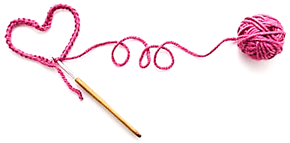
Yes, so much of what has happened has impacted and changed our innermost being. You may have come upon the saying doing the rounds on social media, “There are 4 ways you can come out this pandemic. A chunk, a drunk, a monk, or a hunk.” There is undoubtedly some truth to this, which brings me back to the hook. In response to the stress of the pandemic, what may have happened on our insides that got us hooked on things on the outside? Are we now hooked on something lifegiving, like crocheting for example? Or are we hooked on something destructive, causing us to flounder or even to fall for it, hook, line, and sinker? Getting unhooked from any destructive habits, whatever they may be, is never easy. However, getting unhooked from such habits triggered by the pandemic is a step in the right direction to reclaim our happiness and freedom, especially now that there seems to be light at the end of the tunnel.
In crocheting a hook is used to interlock loops of yarn. Not all hooks or yarns are created equal; neither are we. Our individual life threads are unique ‘yarns’ and we each have unique hooks (talents) to interlock the threads of our present reality into a new, life-giving reality. What has been unveiled during this pandemic, is that we really are one, and not merely one in a virtual reality. We need each other to shape the new reality we all long for.
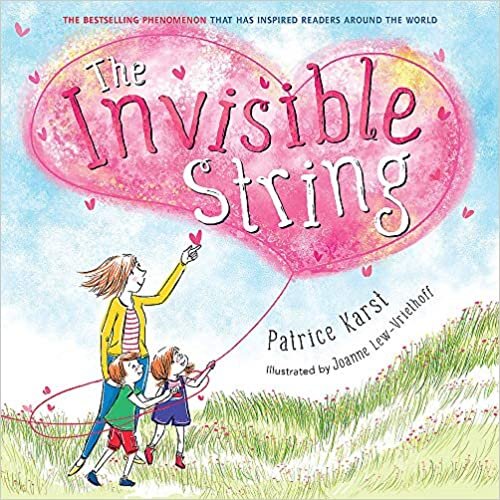
To create such a reality, we all need to discover anew our own hook, our own gifts. Even if it is just one hook, let us use it for the good of all, for the future of all of us. In her delightful children’s book, The Invisible String, Patrice Karst writes about people being connected by love over long distances by an ‘invisible string.’ If this pandemic has taught us nothing else, it has shown us how our invisible, individual life threads are hooked and interlocked with the threads of everyone else throughout the entire world. Even more importantly, let us remember, we are interlocked by a life-giving ‘invisible string’ with God, gracing us with all we need to shape our new reality.
“we are interlocked by a life-giving ‘invisible string’ with God, gracing us with all we need to shape our new reality. ”
Blessed and strengthened by this grace, and relying on each other’s goodwill, we can shape a new future, a life-giving reality. I dare say if we are hooked on hope - we can do it, together.
-Sister Magdalena Vogt, cps
Weekly Pause and Ponder

Summer Reading

Jacqueline Winspear has written and published a yearly novel for the past sixteen years. The setting is England during WWII. Maisie Dobbs and her associate, Billy, become involved in undercover work which is both dangerous and very important. Maisie’s life has been a series of unfortunate personal happenings which reveal not only her interesting background but also her desire to improve the “lot of the less fortunate”. Since the main characters remain consistent, the plot in each book always presents a new and novel revelation of Maisie’s life. It is like meeting an old friend once a year. Maisie’s psychological training with a renowned professor has enabled her to be a keen observer of the actions and motivations of others.

The mysteries of why people commit crimes or become involved in corrupt practices are motivated by any number of reasons. Maisie’s training and experience are key to her investigations as well as her efforts to bring forth justice and healing for both the victim and the perpetrator. The Consequences of Fear is a “must-read”.
Sister Valerie Van Cauwenberghe, csj
Pt. II - A Peruvian Story of Living Amid Covid-19
from Our CSJ ASSOCIATES IN ZAÑA, PERU
Part TWO
Between August and September 2020, the lockdowns and restrictions were still in place, but by October, the Peruvian Government permitted people to leave their homes 3 days per week, at certain times (e.g., only after 11AM) and on certain days, including children and the elderly, but all citizens had to stay at home on Sundays. Churches would not open until November. However, new cases continued to emerge, especially because of crowding at the markets. Sadly, on October 27th, 2020, Delicia’s father, Armando Romero, died – he was 99 years old, and had served the community of Zaña especially in the agriculture sector, most of his life – a man respected and looked upon as friend by all.
By December 1st, another donation had arrived, which was very much needed and very much appreciated by the people - it helped to provide food before/by Christmas, and again, much-needed medicine. Deaths in and around Zaña however, were constant – isolation and restrictions were a constant – and getting in and out of Zaña or surrounding towns were all hardships (police permission was needed, buying gas for whatever vehicle would take one to the city and then paying for this service); also getting food somewhere was a daily hardship, and not having seeds or enough water to plant seeds etc.
2021:
In January, Peru experienced many strikes of doctors, workers, and many other service providers, who had not been paid for many months – as a result, people all over Peru, as well as Zaña and surrounding areas, were experiencing disruptions of all kinds, especially being cut off from supplies and food, as well as not being able to get into the towns and cities for so many needed services. In late March, Associate Pola Montenegro, whose health had been failing since January, caught Covid-19, and her family was experiencing ill health as well. Associate Cecelia Odar had been helping Pola get to medical appointments in Chiclayo since the New Year; now, together with a Zaña nurse, Cecelia was able to get oxygen for her, as well as some nursing help from the Zana Medical Post. Pola began to respond to medicine and the oxygen, but after 2 weeks, the oxygen supply in Zana and the city of Chiclayo had run out. However, Pola was able to breathe easier, and is still slowly recuperating. In April, Covid deaths in Zana continued, and many friends/people from Zaña, who were known to the Sisters of St. Joseph who had lived in Cayalti, Oyutun, and Zaña, had died from Covid.

However, in the first week of May, the town of Zaña announced that the first vaccinations would begin on Mother’s Day, May 9th, and asked all the women of Zana over 60 to be available for the vaccination process. Afterward, the younger residents and then all the residents would be able to be vaccinated – a miracle that had been waited and hoped for!!
May God accompany always our 7 Associates in Zaña, and all the people of Zaña and the nearby and surrounding areas, so that people may recuperate, and grow together as a community of love and support, becoming as our Associates in Zaña bear the name, “Milagro de Amor”, translated in English, “A Miracle of Love” (after a phrase from our Founder, Jean Pierre Medaille’s, writings).
Written by Zana Associates,
Delicia Ampuero and Cecelia Odar, and Janet Zadorsky, CSJ
“Milagro de Amor” /”A Miracle of Love” – Associates in Zaña, Peru

Rosa Pola Delicia Carmen Iris Cecelia Fela