
Our life is an apprenticeship to the truth that around every circle another can be drawn; that there is no end in nature, but every end is a beginning, and under every deep, a lower deep opens.
-Ralph Waldo Emerson
Blog
Celebrating Our Grandparents and Elders
In 1969, a 9-year-old boy wrote to President Richard Nixon asking the President to consider naming one day a year to celebrate grandparents. The idea from this youngster took another 8 years before the US Senate signed legislation into law proclaiming that the First Sunday after Labor Day would be known as National Grandparents Day.
In January 2021, Pope Francis established a World Wide Day to honor and recognize grandparents and the elderly. This day will take place yearly on the 4th Sunday in July close to the Feast Day of St Anne and St. Joachim, the grandparents of Jesus. Pope Francis, in establishing this day, wanted to remind all of us of the role that our grandparents and elders have played in helping each of us develop into mature adults.
“hearing the words “I love you” seemingly for no reason at all”
Having a chance recently to ask some friends and family members who are grandparents “what is the best thing about being a “Nana or Papa” – “a Nona or Nonno” - “a grandma or granddad?” All of them said, “it was the best time in their lives and sometimes it was one of the most difficult.” The best times included sleepovers; cheering on the grandkids at baseball and hockey games; cooking their favorite foods which included lots of ice cream and pizza; playing laser tag (and letting them win); as well as receiving spontaneous hugs and hearing the words “I love you” seemingly for no reason at all but just for being present.
Some of the difficult times came when hurts were expressed from not being included in a game at school; being bullied in the schoolyard or on the ice rink – and as the grandparent, we needed to offer words of encouragement and show examples of treating those who hurt them with kindness. Other times came when they were confronted by an unexpected family breakdown and as a grandparent being called to listen to the feelings of confusion as they were expressed; being there when sudden death came of a pet or a sibling or another grown up. “We just did not want our grandkids to suffer hurts or sadness so, as their Nana and Papa, we wanted to take the hurt away as best as we could.”
“Angels cannot be everywhere and that is why God created grandparents”
I noticed a small plaque on the side table at the home of a friend. It reads: “Angels cannot be everywhere and that is why God created grandparents.” In listening to her grandchildren – actually teenagers now - who have come through the days of childhood - talking about their jobs, their girlfriends/boyfriends, and their new interests brought a smile to the face of the “esteemed grandparent who could proudly claim ‘I had something to do with this person – and WOW did I do a great job!”

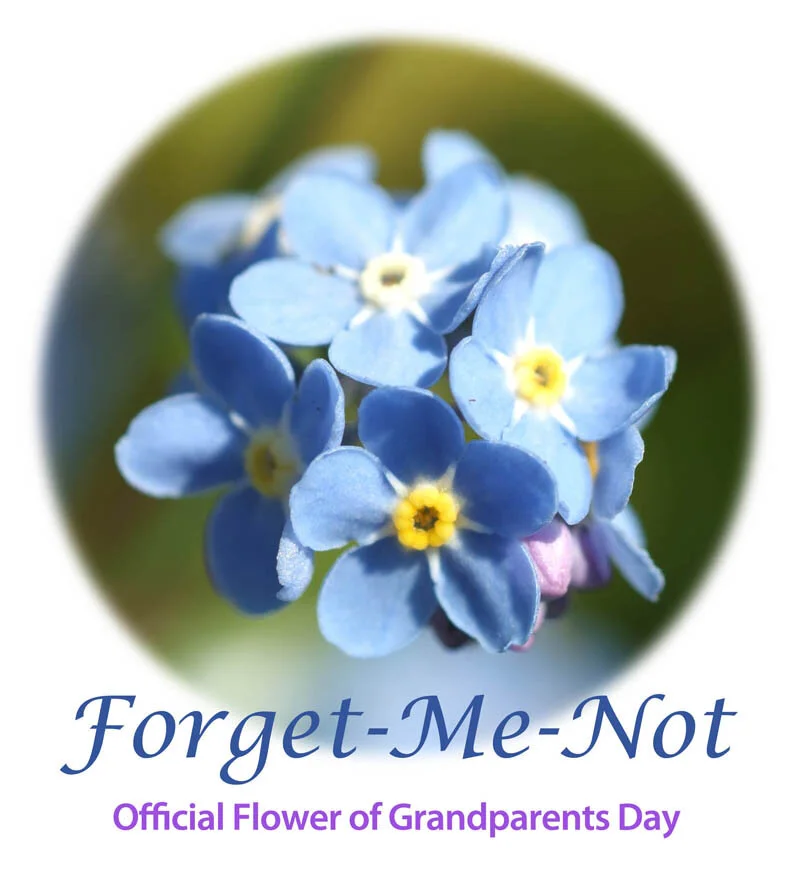
The flower named to honor our grandparents and elders is the Forget-me-Not. A rather appropriate flower to recall and remember times with our grandparents and the elders in our families as we celebrate their day on September 12, 2021.
-Sister Ann MacDonald, CSJ
Just reading this blog means that you can count yourself among those in the world who are literate. Being able to read and understand what you are reading brings many privileges into your daily life that you probably don’t even think about: following a recipe, reading the newspaper, helping your child with their homework, and simply enjoying a good book.

Today is International Literacy Day. Each September 8th since 1967, the world has set aside this day to advocate for closing the gap in global literacy. In Canada, literacy rates are 99% but many other places around the world are not so fortunate. In the Republic of South Sudan, for example, only 26.8 percent of people aged 15 or older are literate. How can a child reach their full potential if they cannot read and understand a simple sentence?
We know too that literacy drives all other forms of development. Gains in education are linked to improved health, fewer child marriages, economic growth, a greener planet, and more peaceful societies. Education is life-changing.
Eight years before UNESCO designated International Literacy Day, CODE was born in a church basement in Toronto. In 1959, a group of educators, librarians, and publishing professionals began packing unused books to ship to Africa in tea chests. Today we intentionally supply schools in Ghana, Liberia, Mozambique, and Sierra Leone with books that are written and illustrated by local authors and illustrators, often in African languages, so that children can relate to the stories and see themselves and their culture valued.

CODE is Canada’s leading international development agency focused uniquely on education and literacy. In addition to books, CODE provides training to teachers in the use of instructional strategies that transform education from a one-way transfer of information (rote learning) to a dynamic process where the student is reading the text themselves, engaged, asking questions and developing critical thinking skills. Students are not only learning to read but reading to learn.
Before coming to CODE, I had lived for almost 20 years in Africa. While the state of education and quality of schools varied from place to place, I observed that the push for education and the drive to break the cycle of poverty is universal.
In September 2019 I had the pleasure to meet Whyteline, a 12-year-old girl living with her mother in Ashanti Region in Ghana where CODE has been working since 1990. Whyteline is in her first year of junior high school and is eager to learn. Each morning she walks 45 minutes to get to school and every afternoon makes the same trek home. She loves to read the books that CODE has provided to her school. She reads them aloud to her mother whose English is poor. Whyteline said this to me,

"My grandmother didn’t go to school because in those days, that is what happened. My mother finished junior high school, but I will go even further…. I want to be a doctor.”
I believe and CODE believes that Whyteline has the potential to be a doctor and contribute to the health of her community and the development of her country. On this International Literacy Day, take a moment to be thankful for your own opportunity to learn to read, and read to learn - and remember those around the world who are yearning for the same chance.
-Janet Phillips | Fund Development Manager | www.code.ngo
The Sisters of St. Joseph are proud to support the work of CODE.

ROSH HASHANAH AND YOM KIPPUR
Falling in autumn, the Jewish Days of Awe, or High Holy Days are the most sacred holidays in the Jewish calendar.
This is the time of year for introspection and examination of one’s self.
Rosh Hashanah means head of the year or New Year. Celebrations take place at festive family dinners and in Synagogue. This year, during Covid, many synagogues are offering masked, distanced services for members who are fully vaccinated or the option for online services.
During the meals, we dip apples into honey for a Sweet New Year, or a year of goodness—Shanah Tova.

Yom Kippur, or Day of Repentance, is a solemn holiday where Jews over the age of Bar or Bat Mitzvah, age 13, fast from sundown to sundown. At this time we ask G-d for forgiveness for sins we have committed during the year.
Yom Kippur ends at sundown, with a meal including family and friends to Break the Fast.
Guest Blog from Judy Rochwerg.