
Garnishes of Beauty - Edible Flowers

At Stillpoint House of Prayer, we are blessed with Karen and Jasmine, a mother and daughter team, who prepare nutritious and appealing meals for our guests.  Admiring their presentation of food, someone on retreat commented “They have a spiritual gift.”  This statement got me thinking.  When someone takes a bit of extra time to add a garnish as a creative touch, this gesture shows that person cares.  The added ‘ingredient’ brings beauty with the potential to touch a person’s soul and can stir up a natural response of gratitude to God. Edible flowers are garnishes that offer a delightful sensory experience. The thought of eating them may seem unnatural to some; however, for centuries, cultures around the world have brightened their recipes by adding flowers. When innovative cooks use flowers and artistically arrange them on a plate, they enhance our lives with a burst of colour, interest, taste, and texture.  The flowers are meant to harmonize with the foods and accurately represent what is contained within the dish, give a clue to the flavour of the meal, complement the taste of the dish, enhance food’s aromatic qualities, and fill empty space on the plate.

There are many options for edible flowers that can be used throughout most seasons.  Nasturtium, pansies, marigolds, tulips, cornflowers, verbena, geraniums, honeysuckle, johnny jump-ups, and calendula flowers are just some of the varieties available.  When the anthers are removed, gladiolus act as lovely receptacles for sweet or savory spreads or mousses.  Roses are sweet with subtle overtones, ranging from fruit to mint to spice, reminiscent of strawberries and green apples.  Although all roses are edible, the darker varieties have a more pronounced flavour.

Always check to make sure a flower is edible and, when in doubt, don’t eat it!  Azaleas, buttercups, daffodils, delphinium, and wisteria are poisonous. Never use pesticides or other chemicals on any part of any plant that produces blossoms you plan to eat.  Roadside flowers are not to be harvested because they may have been exposed to vehicle exhaust and salt runoff from the winter months.  Anyone with allergies proceed with caution.  When dining out, ask if a flower used as a garnish is edible.   

Edible flowers are always best when picked fresh from the garden at a cool time of day; morning is often best.   Be sure to wash the flowers and check to be sure that no insects are stuck inside your flowers. The petals are the best parts of many edible flowers so remove the heel at the base of the petal as well as the stamens, pistils, and calyx of larger flowers.  Some, like pansies, however, can be eaten whole.  After cutting the petals away from the bitter base of the flower, carnations can be steeped in wine, candied, or used as cake decorations.  

Every year when planning the landscape of your garden, be sure to add varieties of edible flowers.  These flowers not only add beauty to your landscape, but valuable nutrients as well.  As perfect companion plants, they will naturally enhance your gardening success.  Most edible flowers like roses and lavenders contain vitamin A, C, and E.  Antioxidants also protect the body from damage linked to disease and ageing. Now, this is “flower power”!

-Sister Kathy O’Keefe, csj on behalf of the Federation Ecology Committee


RESOURCES from Google:  The Ten Best Edible Flowers to Grow in Your Garden    Stephanie Rose      Mission on The Tabernacle:  The Spiritual Gift of Creating Beauty    Becca Hermes          10 Benefits of Edible Flowers    Teleflora

IMPORTANT CONSIDERATIONS:

  • BEFORE CONSUMING ANY PLANT OR FLOWER, CHECK WITH A MEDICAL OR PLANT PROFESSIONAL.

  • NOT EVERY FLOWER/PLANT IS EDIBLE – In fact, sampling some flowers can make you very, very sick.

  • You also should NEVER use pesticides or other chemicals on any part of any plant that produces blossoms you plan to eat.

  • Never harvest flowers growing by the roadside.

  • Identify the flower exactly and eat only edible flowers and edible parts of those flowers.

  • Always remember to use flowers sparingly in your recipes due to the digestive complications that can occur with a large consumption rate.  Most herb flowers have a taste that’s similar to the leaf, but spicier.  The concept of using fresh edible flowers in cooking is not new.
Making Notes on Sugarcane

Making Notes on Sugarcane - Another way to get your copy

Sister Linda Gregg,csj on behalf of the Federation Ecology Committee


Recently, I have been doing some work away from home and only brought my laptop, thinking what a great opportunity to make do without paper. Then I found how much I needed paper! It was a lesson in reverencing and appreciating more deeply the gift of paper. Paper is everywhere in our everyday living, from notebooks to newspapers and from books to a thank-you card from a friend. Even the scraps that hold our grocery lists.

Trees are the main source for creating paper. Yet we have been rapaciously destroying this resource. We are clearcutting vast sections of our Canadian landscape and particularly now the boreal forest.[i] Clearcutting is a practice of harvesting all the trees in a given area, leaving nothing behind. In the process it destroys the structure of soil, breaking apart the sensitive ecosystems of natural peatlands and wetlands. With the loss of trees, all these vital carbon stores are disrupted and vast amounts of carbon are released into the environment.

Image: Olena Sergienko/Unsplash

In the past, we have been assured that our unique and beautiful boreal forest is an immense carbon sink that takes up more of the carbon and greenhouse gases that we produce. That is what the politicians and forest industry would like us to believe. But we can no longer rest in that assurance.[ii] The combination of clearcutting of old growth forests, slash burning, insect infestations and wildfires now change the figures to reveal that the boreal forest has not been a carbon sink or offset since 2001.

What about alternatives to clearcutting and destroying the boreal forest? We haven’t always relied exclusively on trees for a paper source. Since early times humans have yearned to write their stories and share their experiences. We see this in the ancient cave drawings in various parts of the world. Then we progressed to stone tablets, papyrus paper from reeds, vellum scrolls, onion skins, wood panels, slate tablets, and now laptops and photocopiers. These are a few of the sources humans have invented to share their thoughts and ponderings. Originating earliest in China, it wasn’t until the Middle Ages that the paper making process from trees became developed and by the 13th century was the norm.[iii]

When it came to the moment when I had to submit my thesis in book form I was seeking estimates when I chanced upon a copier business tucked away in a basement level mall on Bloor Street, run by a little elderly man from India. The proprietor extolled the benefits of sugarcane paper and its similar price to regular tree paper. He was quite proud of the sustainable process used in his native India. I was intrigued and the price was right, so my thesis was printed on sugarcane paper. The experience led me to re-think what paper could be. Given the carbon cost of our forestry industry and the destruction it works on fragile ecosystems, might we consider options once more?

“do I need to print this?”

The University of British Columbia published a study on the use of sugarcane paper for the university, looking at carbon inputs, foreign investment and sustainability.[iv] Their study concluded that sugarcane was the best option environmentally & economically. The drawback is that it is imported and workers conditions need to be monitored. Although I have purchased sugarcane paper easily from office supply stores, currently sugarcane paper is available in notepads and various compostable serving ware, Covid seems to have disrupted the supply.

“there is a cloud floating in each sheet of paper, as well as the rain and sunshine”
— Thich Nhat Hanh

There are options to tree paper and we can encourage seeking alternatives. Of course, asking the question “do I need to print this?” and printing both sides save more trees than we might imagine! But perhaps it is our awareness that each piece of paper is a gift, not only the tree but the whole earth community is most precious. For as Thich Nhat Hanh has said, “there is a cloud floating in each sheet of paper, as well as the rain and sunshine.” It takes an ecosystem to make a sheet of paper.

-Sister Linda Gregg,csj on behalf of the Federation Ecology Committee


[i]  “Canada’s Boreal Cutting Is A Climate Threat,” Joshua Axelrod, Nov.1,2017. https://www.nrdc.org/experts/josh-axelrod/canadas-boreal-clearcutting-climate-threat#:~:text=Clearcutting%20disturbs%20soils%2C%20wetlands%2C%20and,ecologically%20harmful%20form%20of%20logging. Accessed March 17, 2022.


[ii] “Our managed forest land hasn't been a net carbon sink since 2001,” Robson Fletcher CBC News, Feb. 12, 20219, https://www.cbc.ca/news/canada/calgary/canada-forests-carbon-sink-or-source-1.5011490   Accessed March 17, 2022.


[iii]  “The History of Paper,” Wikipedia.                    https://en.wikipedia.org/wiki/History_of_paper#:~:text=By%20the%2011th%20century%2C%20papermaking,mills%20using%20waterwheels%20in%20Spain. Accessed March 18, 2002


[iv] “An Investigation Into Sugarcane Versus Wood Fibre Paper,” Ryan Carnito et al, APSC 262, April 4, 2013. UBC

Ever-expanding Horizons

Ever-expanding Horizons: The Wondrous Gift of the James Webb Telescope 

By Sister Mary Mettler, Toronto, csj

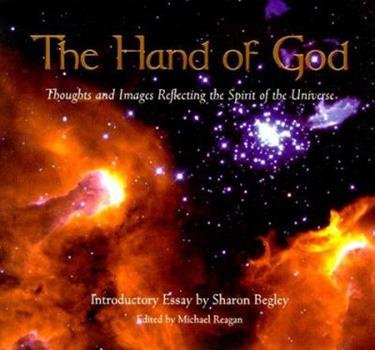
A new telescope – the James Webb space Telescope has arrived and is delivering absolutely stunning pictures of the cosmos.  Do you remember when the book, “The Hand of God: Thoughts and Images Reflecting the Spirit of the Universe,”(1.) first came into your hands?

It was printed in 1999 and showed amazing pictures of galaxies with stars forming and others dying.  For many of us non-astrologers it was the first most significant revelation of the majesty of the universe and the wonder of space and of God’s creative activity.

These past months, we have had our minds truly blown wide-open with the pictures shown by the James Webb Space Telescope.  It reveals a truly infinite expanse of deep space, far beyond the work of the earlier Hubble telescope which has been beaming back jaw-dropping photographs of psychedelic nebulae whirling galaxies and radiant gas formations for more than 30 years.  Those are the pictures in the book referred to above.  Until the Hubble telescope, few of us ever knew that beyond the visible stars, moon and occasional planet, there lay worlds without end.  Yet the stars have always drawn us and like the ancient artists drawing petroglyphs on cave walls we too experience both awe and terror at the unknown. The universe has always captured us with its beauty and its mystery.  It has also left us with the existential question of its purpose and meaning.

Image: Pixabay

Brian Swimme reminds us that “we are the first humans to look into the night sky and see the birth of stars, the birth of galaxies, the birth of the cosmos as a whole.  We are the first generation to live with an empirical view of the origin of the universe.  Our future as a species will be forged within this new story of the world.” (2.)

In 1992, there was a gathering of scientists and religious leaders who came together in Assisi to hear and learn from each other.  The era of the separation of religions and science, brought about at the time of the Enlightenment needed to end.  The scientists were awestruck by what they were learning about the universe and knew that there was another dimension here beyond science but they didn’t have the language to speak of it.

And the religious leaders and thinkers of the time knew that the story of the universe being revealed through science needed to be brought into the religious sphere of knowledge and truth.

In his book “The Phenomenon of Man,” de Chardin wrote,

“Neither in its impetus nor its achievements can science go to its limits without becoming tinged with mysticism and charged with faith”. 3

The question for us today is: will these two, science and religion, once again come together as One – science expanding religion and religion enriching science?  May we live creatively in these challenging and awesome times.

- Sister Mary Mettler, Toronto, csj

_______________________________________________________________

1.       Reagan, Michael, editor. The Hand of God: Thoughts and Images Reflecting the Spirit of the Universe. Templeton Foundation Press. 1999

2.       Ibid pg. 156

3.      Ibid pg. 90

The Many Faces of Poverty

Mahatma Gandhi is quoted as saying, ‘Some people are so hungry that they only see the face of God in bread’. One can witness this every day on the news from Yemen, Tigray, refugee camps in Kenya, Bangladesh, Haiti and closer to home in shelters for migrants in Western society.

Sometimes when I watch the news, I weep with the mothers who are desperately seeking food for their starving children walking hundreds of kilometers in hope.  Some stories are particularly poignant and remain with me:   a mother who set her dead baby by the side of the road, too weak to bury the body, as she struggled to get her remaining children to a camp in hope of help. Mothers who do not have the luxury of grieving the death of a child because her other children are looking to her for survival. The story of the father who had to make an unconscionable decision to leave his near dead child on the side of a road himself depleted from hunger and responsible for carrying his other children who were too weak to walk while being pursued by gruella warfare. Doctors at camps who cannot hold out hope for pleading mothers because they no longer have medicines or food for these extremely malnourished and starving children.

This is the chaotic world we share brought on by human activity: war, climate crisis, greed, and indifference.  However, it need not be the end of the story if we, you, and I, choose to make a difference, step out of our comfort zone and do that one thing of which we are capable and which we have been avoiding.  Listen to your heart and act now - later will be too late. 

-Sister Ann Marshall, csj

Resources of note:

Remember your local Food Bank this season.