
Reflections

Do This In Remembrance of Me

A REFLECTION FOR HOLY THURSDAY
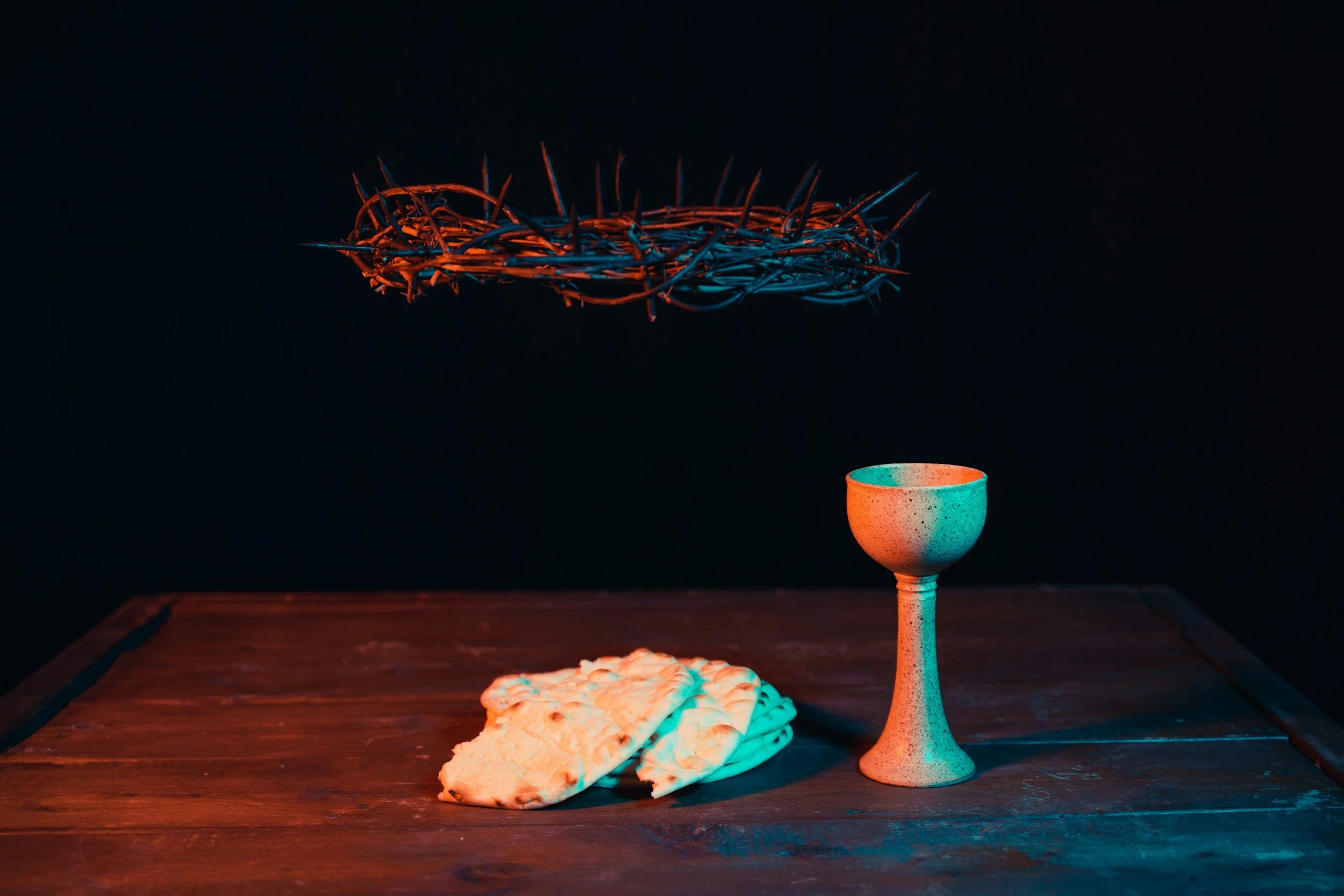
Since childhood, I’ve loved and looked forward to the diversity of narrative and liturgical richness of Holy Thursday.  It is at once a celebration of the institution and gift of the Eucharist and of the priesthood of all believers, it calls us to action in God’s world, and then presents us with the vulnerability, desolation and pain of Jesus in the Garden of Gethsemane. Holy Thursday which marks the beginning of the great Paschal Triduum seems to hold within it the very essence of a vibrant life of faith. There is so much on which to reflect. It’s hard to find just one focus!

The words of Jesus that remain with me consistently as this day comes around each year and at every celebration of the Eucharist are recorded in Luke’s Gospel and echoed in St. Paul’s first letter to the Corinthians (11: 23-26): “Do this in remembrance of me”. Immediately the question arises, “do what in remembrance of me?”
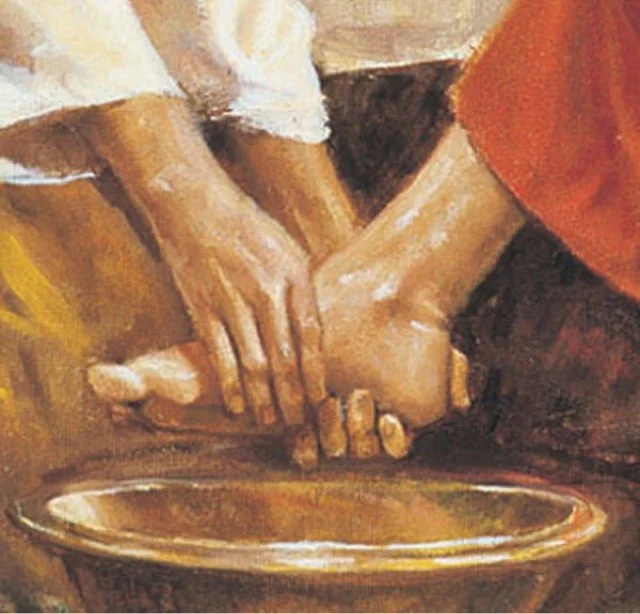
As we gather at the table of the Eucharist where Jesus offers himself totally - to what are we called in remembrance of him? The answer is found in this year’s reading from St. John’s Gospel “wash one another’s feet” and in the symbolic practice of foot-washing during the ritual of Holy Thursday. What might this look like? Jesus shows us by his witness to ultimate love in the giving of his body, and in calling all to the table where everyone is to be welcomed– no exclusions! His presence for all time promised here is a presence of mercy and justice. His is the love that feeds us in sacrifice and service and calls us to an oftentimes costly discipleship.

Psalm 11 poses the question “when the world falls apart what can the good do?” Today, we so often experience helplessness in the context of all that is happening in our world – a world that sometimes feels as if it is, indeed, falling apart. So, what can we do? We can wash one another’s feet, one small yet significant act of respect and kindness at a time. Having been nourished at the Eucharistic table we can create tables at which all are to be welcomed and nourished materially and spiritually.  We wash other’s feet by listening to the inseparable cry of the Earth and of the poor, by the “realization” of inclusion of all peoples, by  accompanying the abandoned, lonely, desolate like Jesus in the Garden of Gethsemane; by ‘staying awake’ and confronting the cruelty, violence and systems of injustice often so evident at this time in the world.

Kimberly Lymore, who will speak on the inspiring series, “Catholic Women Preach” on this Holy Thursday (video below) says as she links the themes of Holy Thursday: “We cannot receive the Body of Christ (in the Eucharist) while degrading the bodies crushed by poverty, violence and neglect. We cannot proclaim, ‘Amen’ at the table and then remain silent when dignity is denied.”

On this Holy Thursday may we be drawn into the depths of Eucharistic love that through the cross leads ultimately to resurrection in the world.

“Do this in remembrance of me.”

-Sister Mary Rowell, csj

Image: James Coleman/Rey Proenza | Unsplash
Palm Sunday

Palm/Passion Sunday, March 29, 2026

Walking the journey of Lent we consciously and unconsciously hold onto melodies, images, and words. What has stayed with you? Mine are deeply embedded melodies of compassion, mercy, pleas for courage, Kyries, and ultimately praise for God’s constant love in the midst of our chaotic world. The celebration of liturgy does this to me.

A world torn by war, hatred, violence is evil personified. A Eucharistic heart grown large out of the mystery of dying and rising is indeed Love personified. When the texts of our liturgical prayer draw in the reality of our world situation, we breath in and out Divine compassion.

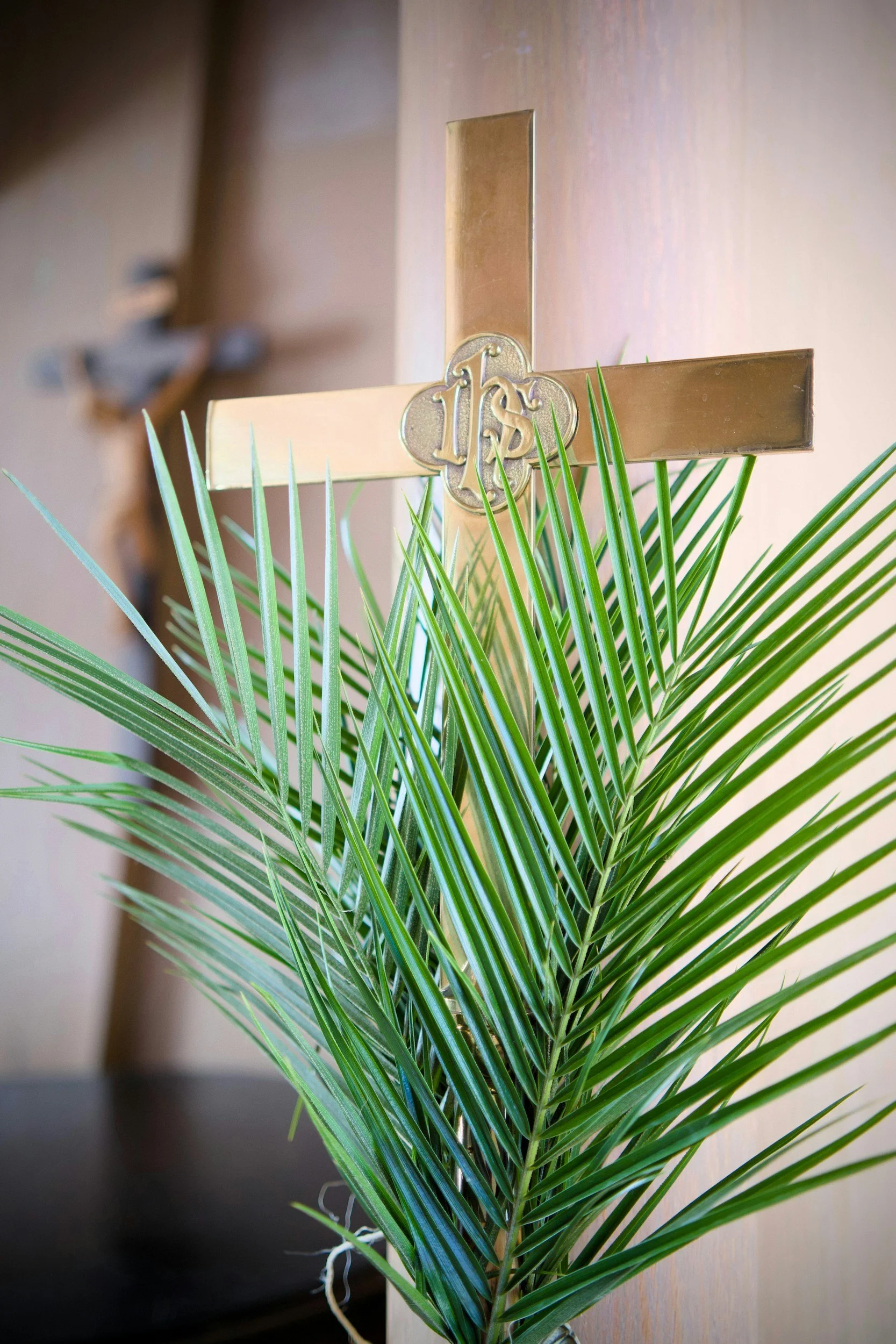
This Sunday, Palm/Passion Sunday, we praise as we parade with palm branches, then we try to settle our joy into a deep listening, making space for the suffering of the Anointed One, the Messiah, Jesus, the Christ.  The proclamation of the Passion is indeed a sustained poignant experience.

There is an earlier moment in the liturgy that makes way for the hearing of the passion story: the singing of Psalm 22, “My God, my God why have you forsaken me.” The melody in Catholic Book of Worship III was written by Brother Donatus Vervoort, (1931 – 2014) a deeply spiritual man who strove to serve persons in need with an understanding mind and a warm heart. I dare to say in the shaping of the melody for Psalm 22 his lived experience of war in the Netherlands, stretched and molded his understanding heart. When we sing that plaintive antiphon, our hearts are stretched to encompass the passion of the Christ, and the passion of our world.

But let me introduce you to another setting of that psalm. This is the composition of David Willcocks, SJ. This 6-minute video begins with a brief commentary on Psalm 22, followed by the cantor’s prayerful ministry.

Jesus lived among the people of his time in humanness not clinging to his divinity. He came to show us how to manifest God’s love in our world.

This Palm/Passion Sunday might we be shaped by the liturgy and carry into our lives the remembrance of his suffering, and all who know abandonment, cruelty and the horror of war.  May our liturgy this Palm/Passion Sunday reveal to us Christ’s compassionate heart for the whole world and all creation.

-Sister Loretta Manzara, CSJ

All four gospels record this significant and prophetic event. You can find them in Matthew 21:1-11; Mark 11:1-11; Luke 19:28-44; and John 12:12-19.

Image: Paul Moody/Unsplash

A Visit from Sister Kitty for World Poetry Day

From time to time, Sister Kitty appears at my office door with a poem to share. She doesn’t email it or send a link — she recites it, right there in the room. Those brief visits have become a small joy in the rhythm of the week.

With World Poetry Day coming up, I asked if she might offer something new for the occasion. She happily obliged, arriving this week with a fresh poem and, after reciting it aloud, sharing a few of the poets she loves to read and return to.

We’re delighted to share Sister Kitty’s new poem here for World Poetry Day, along with a few of the poets who inspire her. In the words of Sister Kitty, “I learned it in school. People will think we only learned sad poems in school…and maybe we did...the Irish tend to be melancholy!”

Take a moment to enjoy the poem — and perhaps discover a new poet along the way.

To Daffodils By Robert Herrick

Fair Daffodils, we weep to see

You haste away so soon;

As yet the early-rising sun

Has not attain'd his noon.

Stay, stay,

Until the hasting day

Has run

But to the even-song;

And, having pray'd together, we

Will go with you along.

We have short time to stay, as you,

We have as short a spring;

As quick a growth to meet decay,

As you, or anything.

We die

As your hours do, and dry

Away,

Like to the summer's rain;

Or as the pearls of morning's dew,

Ne'er to be found again.

Sister Kitty, “I also love Padraig O'Tuama in this podcast and so do over a million other people. Try him out. https://onbeing.org/series/poetry-unbound/

- Connie Rodgers, and Sister Kitty Stafford

images: Álvaro Serrano/insplash

St. Joseph's Day

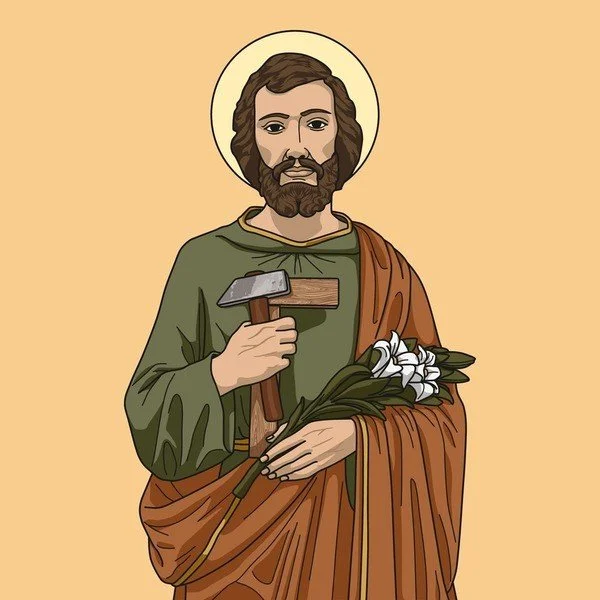
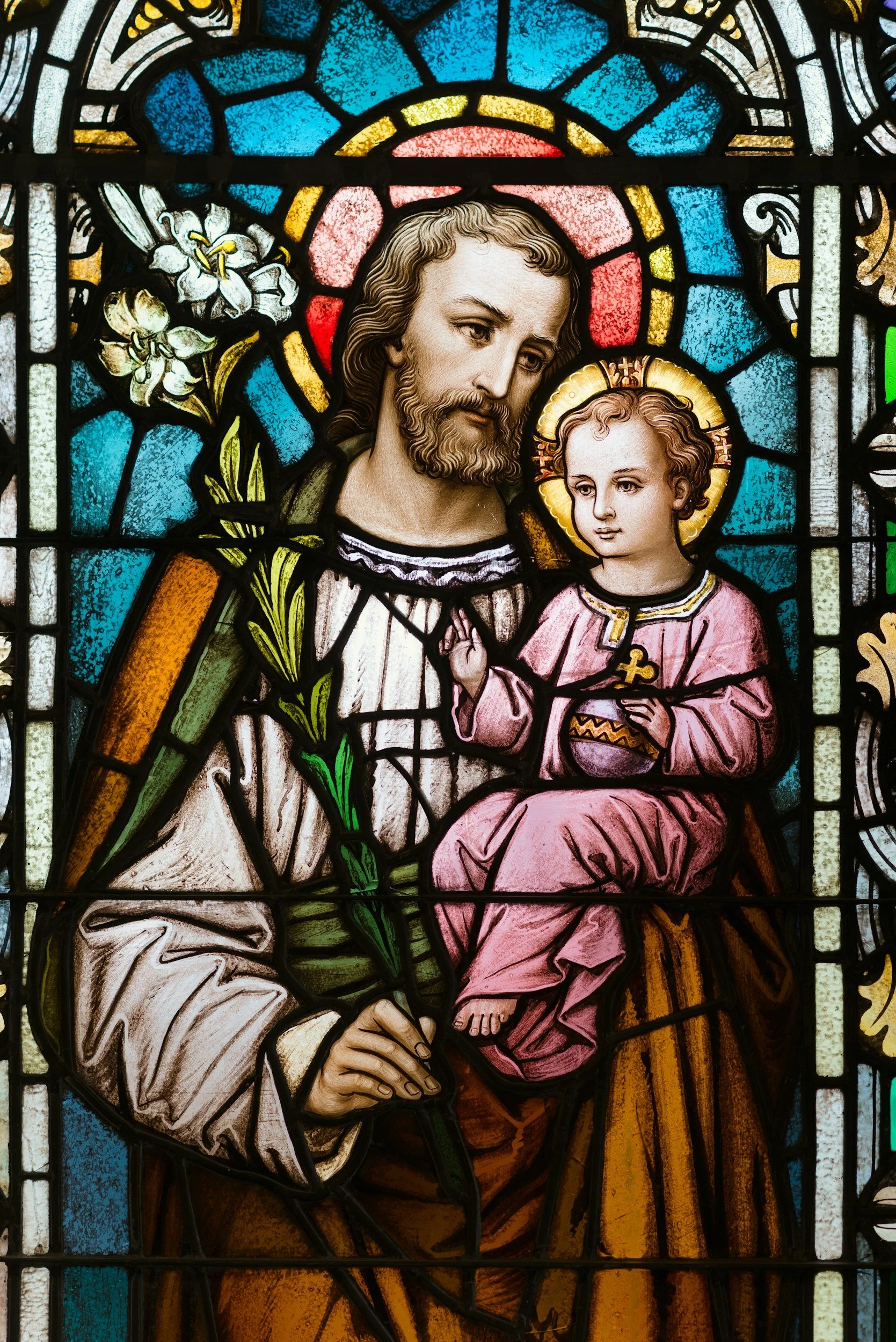
Yes, he was a simple carpenter from Nazareth. He was a man in love with a young woman, Mary of Nazareth, and together they dreamed of building a life.

What might those dreams have been? Perhaps that his small carpenter’s shop would provide for their needs, while Mary’s hope, in time, would be to bring forth children who would continue the ancestral line of David. Like many young couples, they likely imagined an ordinary life—quiet, faithful, and rooted in their community.

Little did they know that everything would change. Mary was already with child.

One can only imagine what went through Joseph’s mind when he learned of Mary’s pregnancy. In their culture, a woman found to be pregnant outside of marriage faced the harshest consequences—stoning to death. The situation must have filled Joseph with anguish. Was he confused? Did he question Mary’s faithfulness? Such questions would be natural under ordinary circumstances. Yet these were anything but ordinary circumstances.

Matthew’s Gospel tells us that Joseph was deeply troubled:
“Joseph, being a righteous man and unwilling to expose her to public disgrace, planned to dismiss her quietly.” (Matthew 1:19)

Joseph was a man of honour. Even in his turmoil, he sought a way to protect Mary.

image: Josh Applegate / Unsplash

Then Matthew recounts what happened next:
“Just when he had resolved to do this, an angel of the Lord appeared to him in a dream and said, ‘Joseph, son of David, do not be afraid to take Mary as your wife…’” (Matthew 1:20)

Mary’s unconditional “fiat”—her yes to God—opened the way for Joseph to trust as well. Listening to the message carried in his dream, he followed where God was leading. Together they set out on a journey that would be filled with uncertainty and trust.

Later, amid the political turmoil of King Herod’s reign, Joseph again listened to the guidance of dreams. Warned of danger, he protected his family and fled. When it became unsafe to return to Bethlehem because Herod’s son Archelaus ruled Judea, Joseph was once again guided in a dream. He turned toward Galilee and settled in the small town of Nazareth.

Joseph was a man who trusted God’s quiet guidance.

Today, we see the spirit of Joseph alive in those who welcome the stranger, the unwanted, the unrecognized, and the displaced. In their compassion and courage, they reflect the inclusive spirit of Jesus—a spirit that refuses to treat anyone as a stranger.

We give thanks for Joseph, patron of the universal Church, and for the thousands of Sisters of St. Joseph who claim him as their patron. Like Joseph, they continue to listen for God’s voice in the dreams and uncertainties of our time, courageously moving into the unknown territories of today.

-Sister Kathleen Lichti, CSJ

Reflecting on the World Day of Prayer

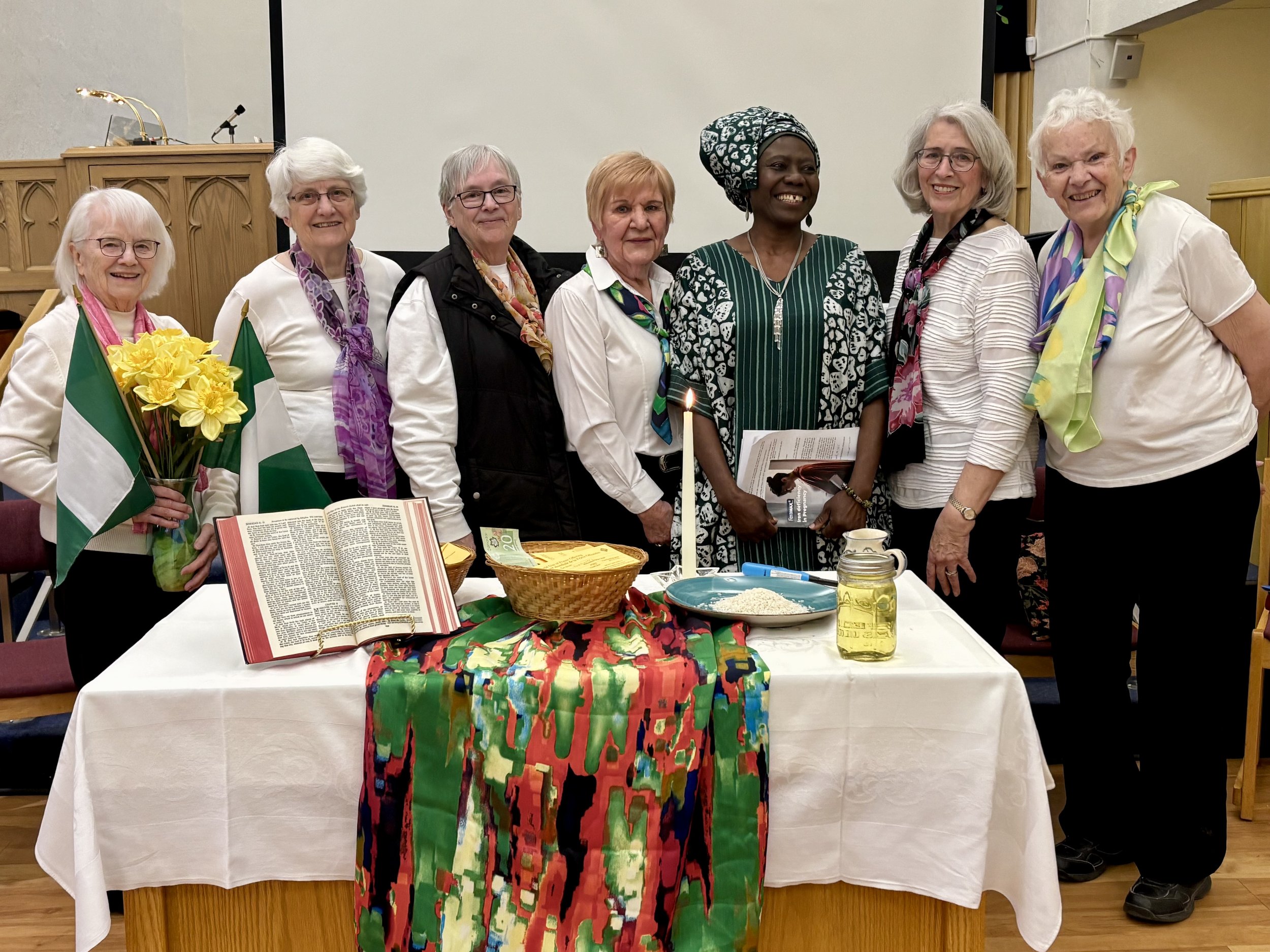
Sister Elaine Cole, left.

World Day of Prayer 2026 was held at Trinity Lutheran Church in North London on Friday, March 6.  The prayer service was prepared by Christian women in Nigeria with the theme, "Come Unto Me".  The program included testimonials of a Nigerian widow bearing the burden of systemic oppression; of a Nigerian woman bearing the burden of religious persecution; of a Nigerian woman bearing the burden of poverty and despair.  The members of the planning committee led the singing of the Theme Song that was written and composed especially for the service entitled "Come Unto Me".  The first verse is as follows: 

Are you down and feeling lonely, are you weary and oppressed, you don't have to be discouraged, Jesus says, "Come unto me".  

The women in the photo are members of the planning team for the event and are from the Anglican, Lutheran, United and Roman Catholic Churches.  Sister Elaine Cole, far left, was a member of the team representing the Sisters of St. Joseph.  You can find her behind the flowers and flags.   

In 2027 World Day of Prayer will be celebrating one hundred years of Christian women from around the world coming together in spirit, uniting on a common day to pray for relevant issues affecting women and children.  Amen!

Header Image: Milada Vigerova/Unsplash